
Search
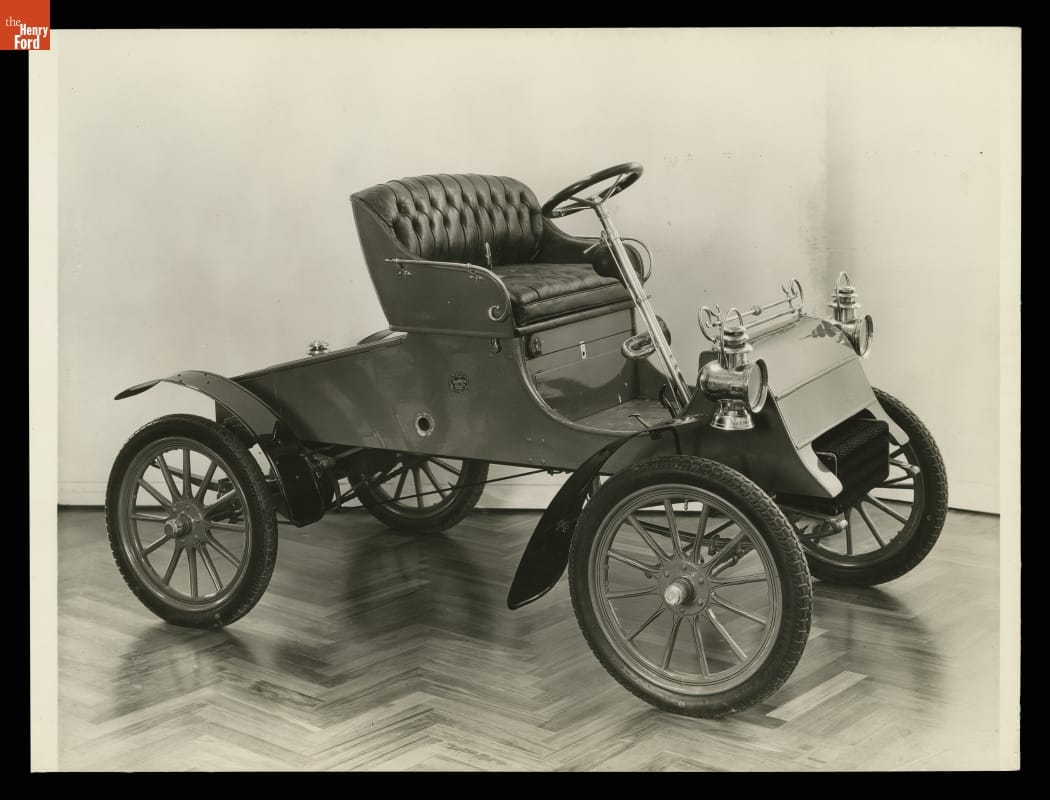
- 1903 Ford Model A Roadster in Henry Ford Museum, circa 1934 - A 1934 exhibition at Henry Ford's museum in Dearborn, Michigan, featured this Model A roadster, the first automobile produced and sold by the fledgling Ford Motor Company. In many ways, the original Ford was typical -- it looked like a carriage without the horse. But unlike other early autos, the 1903 Model A had a steering wheel rather than a tiller.
- April 20, 1934
- Collections - Artifact
1903 Ford Model A Roadster in Henry Ford Museum, circa 1934
A 1934 exhibition at Henry Ford's museum in Dearborn, Michigan, featured this Model A roadster, the first automobile produced and sold by the fledgling Ford Motor Company. In many ways, the original Ford was typical -- it looked like a carriage without the horse. But unlike other early autos, the 1903 Model A had a steering wheel rather than a tiller.
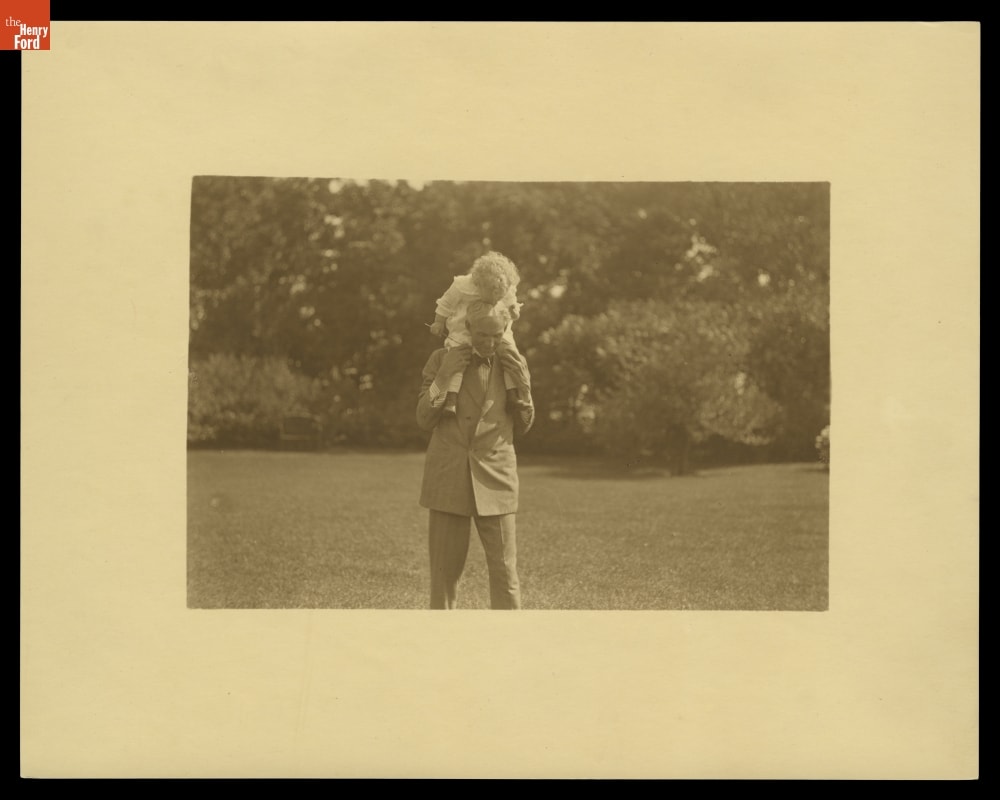
- Henry Ford Carrying Grandson Henry Ford II at Fair Lane, Dearborn, Michigan, 1919 - In the early 1910s, Henry and Clara Ford selected 1300 acres of farmland in Dearborn, Michigan, as the site for a new home. They called the estate Fair Lane. Surrounded by woods, meadows, gardens, and the nature they loved, Henry and Clara found this home a peaceful respite. Here they could wander the landscaped grounds, entertain guests, and play with grandchildren.
- 1919
- Collections - Artifact
Henry Ford Carrying Grandson Henry Ford II at Fair Lane, Dearborn, Michigan, 1919
In the early 1910s, Henry and Clara Ford selected 1300 acres of farmland in Dearborn, Michigan, as the site for a new home. They called the estate Fair Lane. Surrounded by woods, meadows, gardens, and the nature they loved, Henry and Clara found this home a peaceful respite. Here they could wander the landscaped grounds, entertain guests, and play with grandchildren.
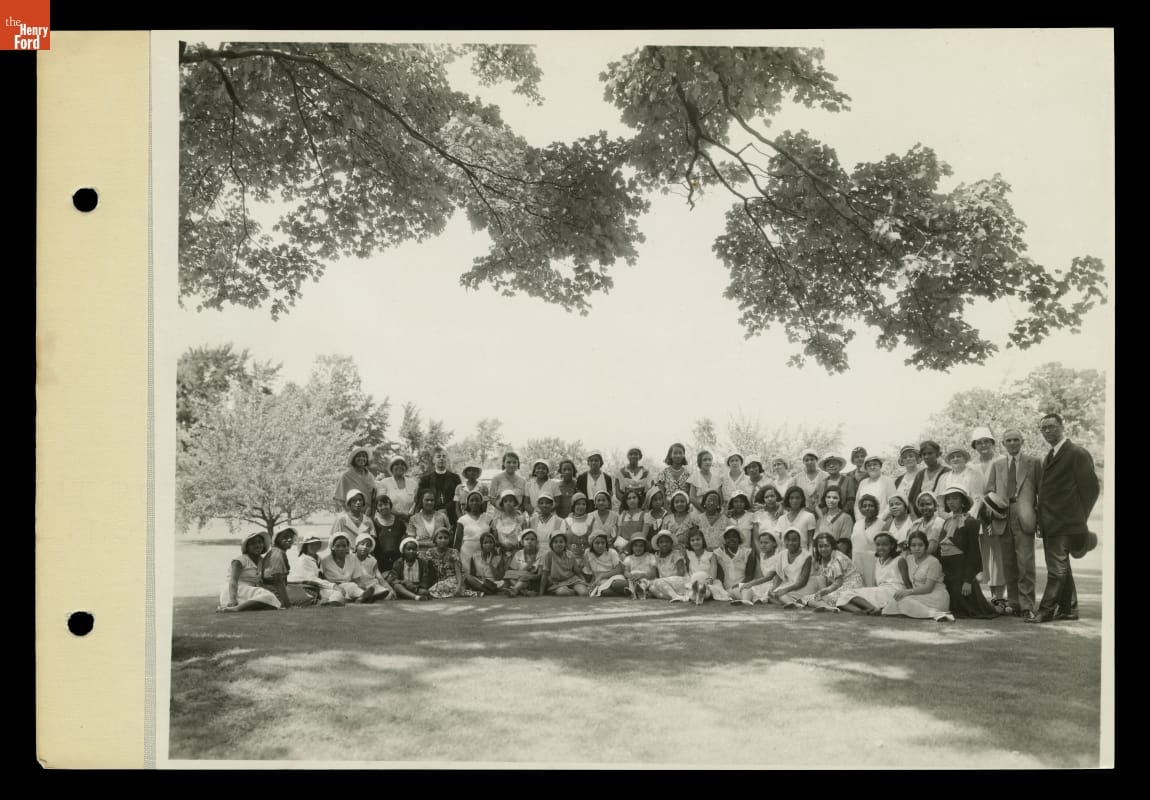
- Henry Ford and Clara Ford with Group on the Grounds of Fair Lane, 1932 - In the early 1910s, Henry and Clara Ford selected 1300 acres of farmland in Dearborn, Michigan, as the site for a new home. They called the estate Fair Lane. Surrounded by woods, meadows, gardens, and the nature they loved, Henry and Clara found this home a peaceful respite. Here they could wander the landscaped grounds, entertain guests, and play with grandchildren.
- July 09, 1932
- Collections - Artifact
Henry Ford and Clara Ford with Group on the Grounds of Fair Lane, 1932
In the early 1910s, Henry and Clara Ford selected 1300 acres of farmland in Dearborn, Michigan, as the site for a new home. They called the estate Fair Lane. Surrounded by woods, meadows, gardens, and the nature they loved, Henry and Clara found this home a peaceful respite. Here they could wander the landscaped grounds, entertain guests, and play with grandchildren.
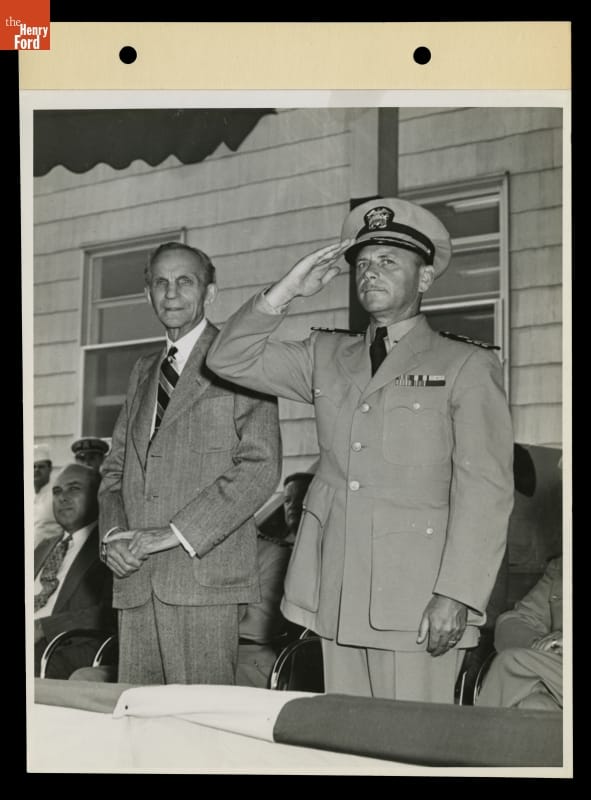
- Henry Ford on His 80th Birthday, U. S. Naval Training School at the Ford Rouge Plant, July 1943 - Personnel at the United States Naval Training School in Dearborn, Michigan, invited Henry Ford to celebrate his 80th birthday at the base. Ford was feted with gifts, a military drill, and a large cake modeled after the school buildings. The school -- built on land at Ford's Rouge Plant and leased to the Navy -- trained thousands of recruits in various skilled trades during World War II.
- July 28, 1943
- Collections - Artifact
Henry Ford on His 80th Birthday, U. S. Naval Training School at the Ford Rouge Plant, July 1943
Personnel at the United States Naval Training School in Dearborn, Michigan, invited Henry Ford to celebrate his 80th birthday at the base. Ford was feted with gifts, a military drill, and a large cake modeled after the school buildings. The school -- built on land at Ford's Rouge Plant and leased to the Navy -- trained thousands of recruits in various skilled trades during World War II.
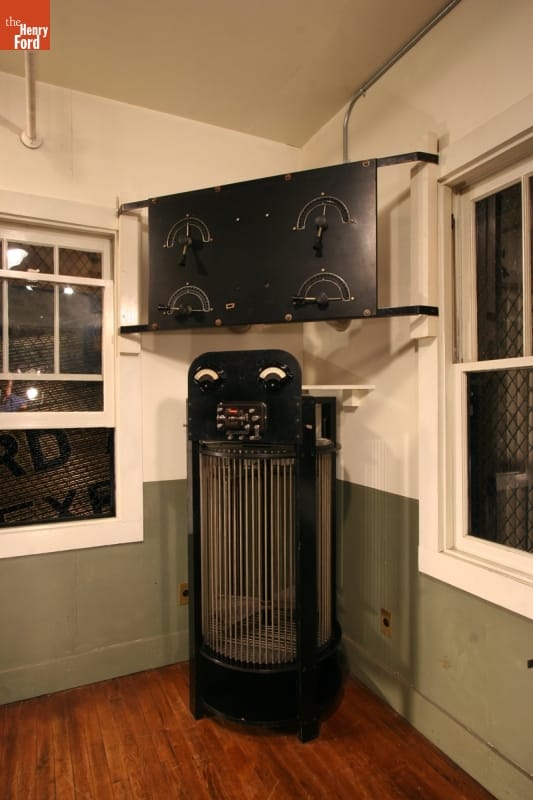
- Radio Goniometer Used at Ford Airport, circa 1927 - The radio beacon may be Henry Ford's most important contribution to aviation. Early pilots depended on landmarks, preventing reliable navigation in bad weather. Ford's engineers developed a radio beacon that simultaneously transmitted the Morse code letter "A" (dot-dash) in one direction and the letter "N" (dash-dot) in another. The pilot steered until the separate signals merged into a steady hum.
- circa 1927
- Collections - Artifact
Radio Goniometer Used at Ford Airport, circa 1927
The radio beacon may be Henry Ford's most important contribution to aviation. Early pilots depended on landmarks, preventing reliable navigation in bad weather. Ford's engineers developed a radio beacon that simultaneously transmitted the Morse code letter "A" (dot-dash) in one direction and the letter "N" (dash-dot) in another. The pilot steered until the separate signals merged into a steady hum.
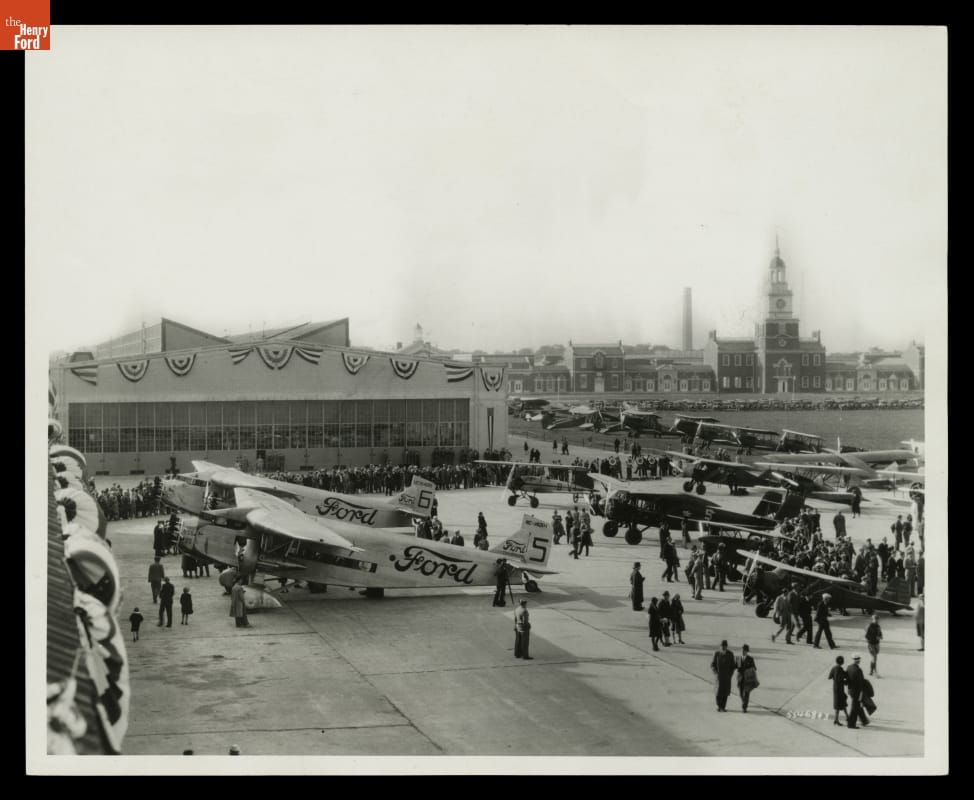
- Ford Reliability Tour at Ford Airport, Dearborn, Michigan, 1930 - From 1925-1931, Ford Motor Company sponsored annual air tours to promote reliability and safety in commercial aircraft. Pilots flew to pre-determined cities, and their airplanes were rated on the ability to take off and land quickly and maintain consistent speeds. The 1930 tour included 18 entries and visited 29 cities in the United States and Canada.
- September 27, 1930
- Collections - Artifact
Ford Reliability Tour at Ford Airport, Dearborn, Michigan, 1930
From 1925-1931, Ford Motor Company sponsored annual air tours to promote reliability and safety in commercial aircraft. Pilots flew to pre-determined cities, and their airplanes were rated on the ability to take off and land quickly and maintain consistent speeds. The 1930 tour included 18 entries and visited 29 cities in the United States and Canada.
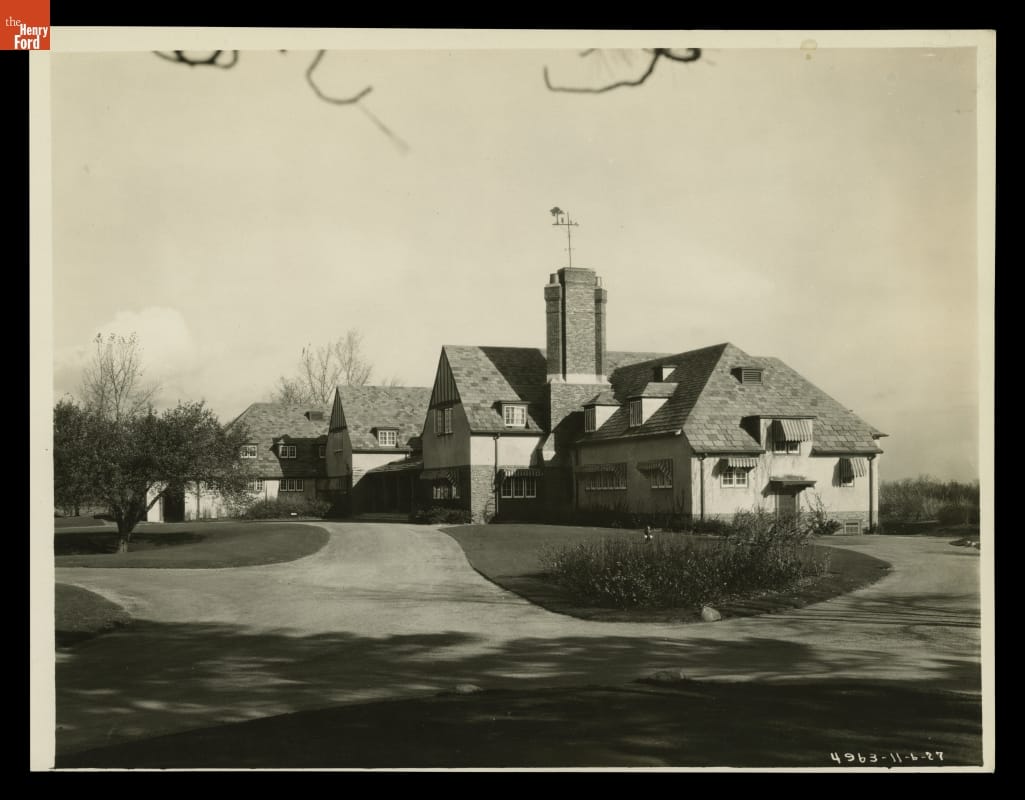
- Dearborn Country Club, Dearborn, Michigan, 1927 - Henry Ford established the Dearborn Country Club, with an 18-hole golf course and a clubhouse designed by Albert Kahn, in 1925. Ford himself was not a golfer, but the club helped attract and keep executive talent at Ford Motor Company's Dearborn, Michigan, offices. Club members purchased the facility from Ford interests in 1952.
- November 06, 1927
- Collections - Artifact
Dearborn Country Club, Dearborn, Michigan, 1927
Henry Ford established the Dearborn Country Club, with an 18-hole golf course and a clubhouse designed by Albert Kahn, in 1925. Ford himself was not a golfer, but the club helped attract and keep executive talent at Ford Motor Company's Dearborn, Michigan, offices. Club members purchased the facility from Ford interests in 1952.
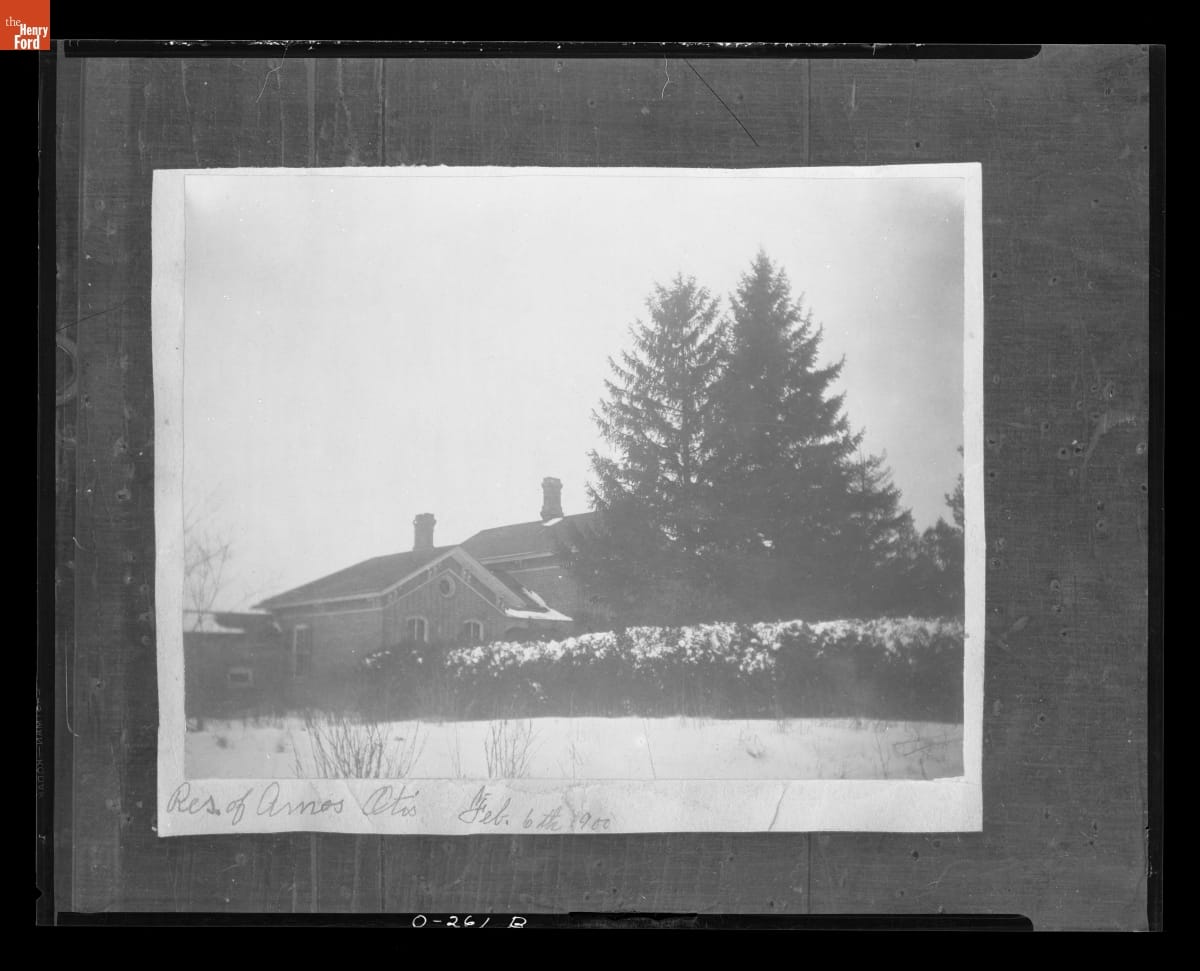
- Amos Otis Residence, Dearborn, Michigan, February 1900 -
- February 06, 1900
- Collections - Artifact
Amos Otis Residence, Dearborn, Michigan, February 1900
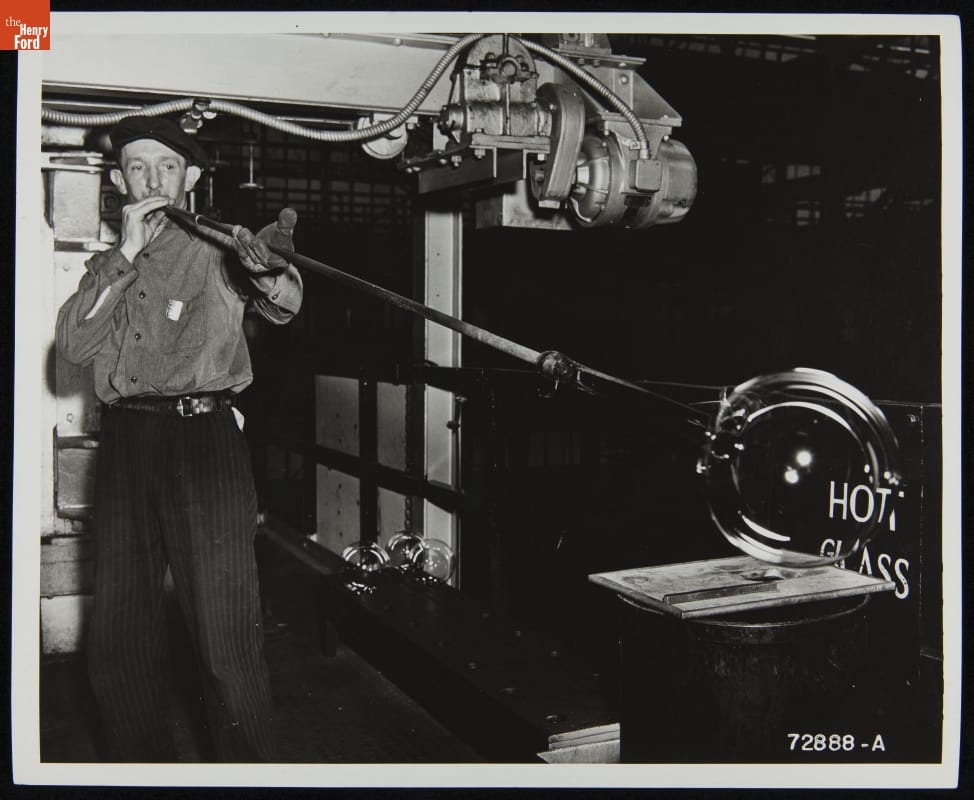
- Testing Batches of Glass at the Ford Rouge Glass Plant, 1940 - Unsatisfied with glass from outside suppliers, Ford Motor Company established its own glass plant at the Rouge in 1923. Furnaces produced molten glass, while overhead grinders and polishers worked the material to a perfectly smooth and clear finish. Two other Ford glass plants, in Pennsylvania and Minnesota, combined with the Rouge to manufacture 20 million feet of glass each year.
- January 03, 1940
- Collections - Artifact
Testing Batches of Glass at the Ford Rouge Glass Plant, 1940
Unsatisfied with glass from outside suppliers, Ford Motor Company established its own glass plant at the Rouge in 1923. Furnaces produced molten glass, while overhead grinders and polishers worked the material to a perfectly smooth and clear finish. Two other Ford glass plants, in Pennsylvania and Minnesota, combined with the Rouge to manufacture 20 million feet of glass each year.
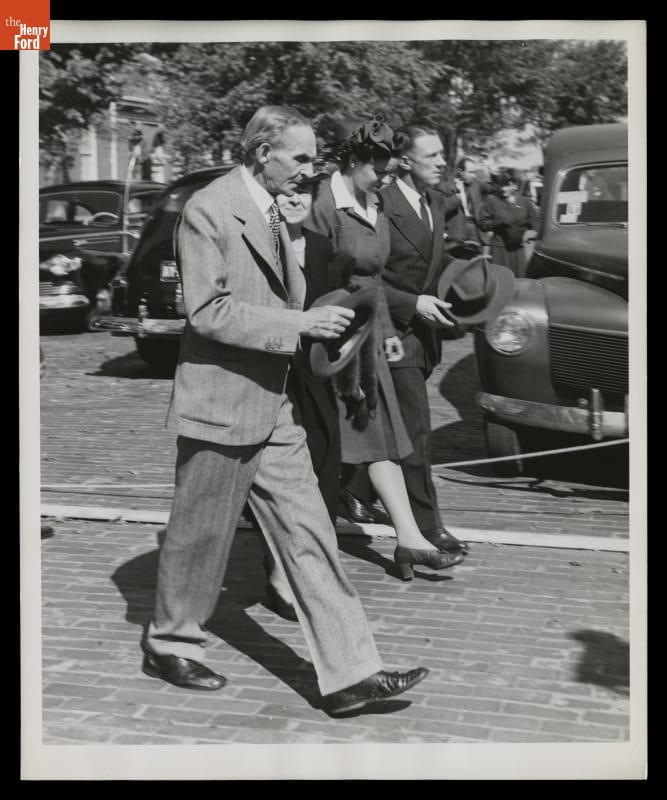
- Henry Ford and Clara Ford at Henry Ford Museum for the Presentation of the Sikorsky VS-300 Helicopter, October 7, 1943 - Henry Ford never intended his Edison Institute -- today's The Henry Ford -- only to be about the past. Henry Ford Museum and Greenfield Village would inspire the institute's students and visitors to create the future. Ford collected modern inventions alongside historic items. He acquired the VS-300 helicopter from inventor Igor Sikorsky in 1943 -- only four years after the aircraft's introduction.
- October 07, 1943
- Collections - Artifact
Henry Ford and Clara Ford at Henry Ford Museum for the Presentation of the Sikorsky VS-300 Helicopter, October 7, 1943
Henry Ford never intended his Edison Institute -- today's The Henry Ford -- only to be about the past. Henry Ford Museum and Greenfield Village would inspire the institute's students and visitors to create the future. Ford collected modern inventions alongside historic items. He acquired the VS-300 helicopter from inventor Igor Sikorsky in 1943 -- only four years after the aircraft's introduction.