
Search
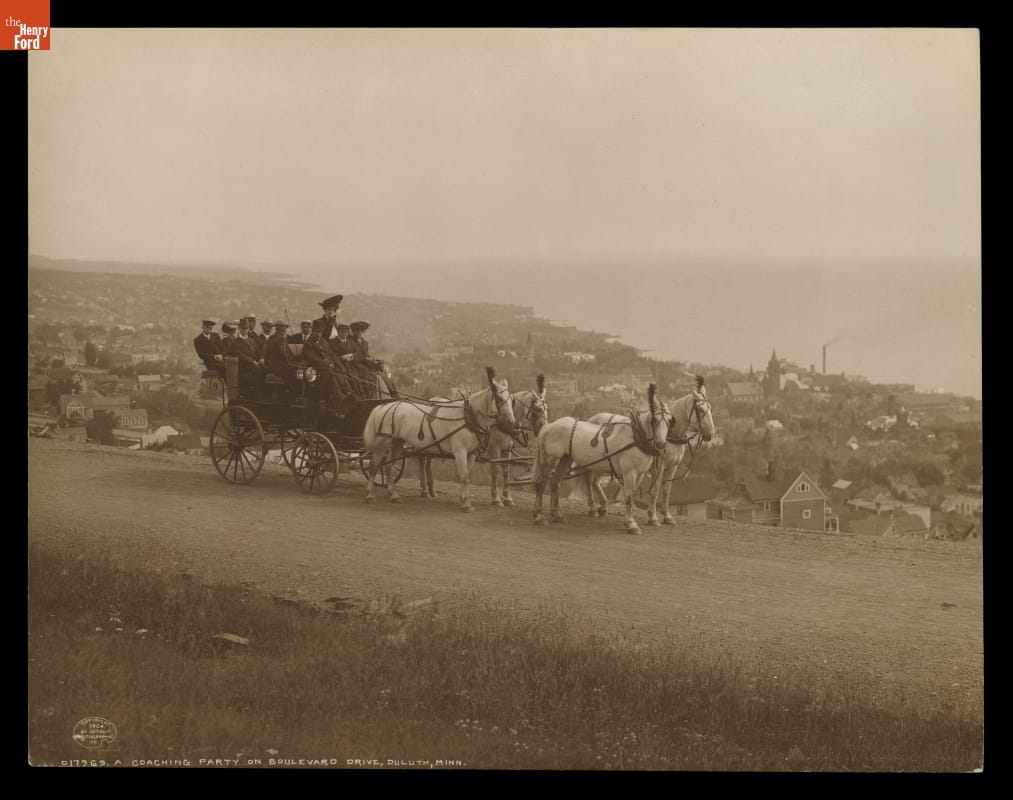
- "Coaching Party on Boulevard Drive, Duluth, Minnesota," 1904 - From 1895 to 1924, the Detroit Publishing Company was one of the major image publishers in the world. The company's wide-ranging stock of original photographs documented life and landscapes from across the nation and around the globe. From the tens of thousands of negatives, the company created prints, postcards, lantern slides, panoramas, and other merchandise for sale to educators, businessmen, advertisers, homeowners and travelers.
- circa 1904
- Collections - Artifact
"Coaching Party on Boulevard Drive, Duluth, Minnesota," 1904
From 1895 to 1924, the Detroit Publishing Company was one of the major image publishers in the world. The company's wide-ranging stock of original photographs documented life and landscapes from across the nation and around the globe. From the tens of thousands of negatives, the company created prints, postcards, lantern slides, panoramas, and other merchandise for sale to educators, businessmen, advertisers, homeowners and travelers.
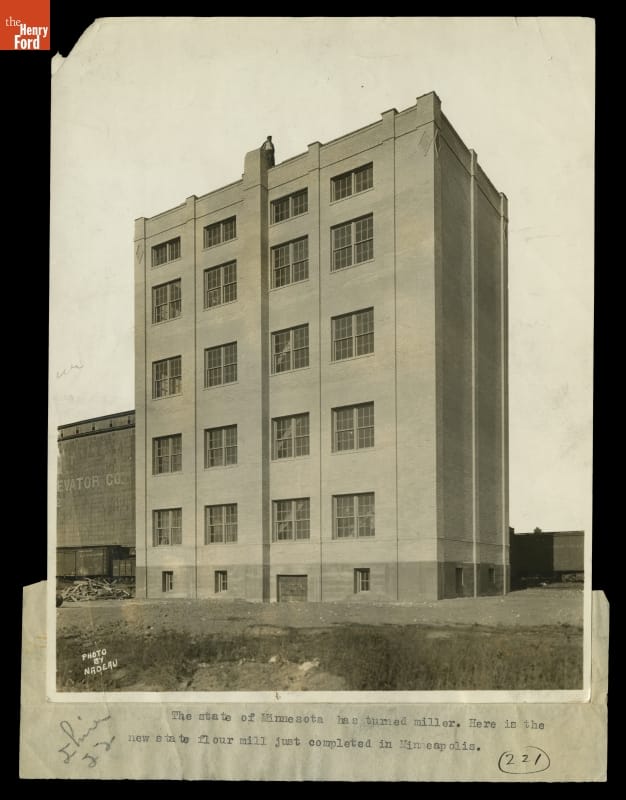
- Newly Completed State Flour Mill, Minneapolis, Minnesota, 1921-1922 -
- 1921-1922
- Collections - Artifact
Newly Completed State Flour Mill, Minneapolis, Minnesota, 1921-1922
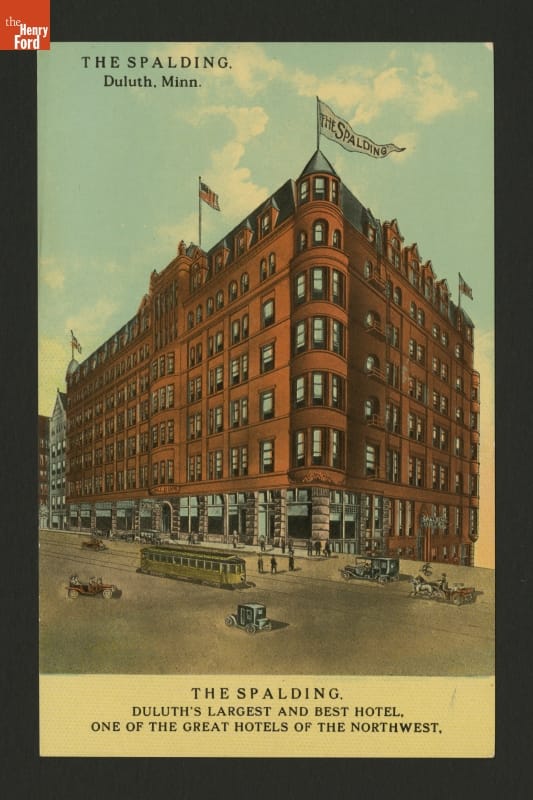
- Postcard, The Spalding Hotel, Duluth, Minnesota, 1914 - Automobiles, an electric streetcar, a horse-drawn buggy, and pedestrians are seen traveling down the street in front of the Spalding Hotel in Duluth, Minnesota, in this circa 1910 postcard. Proprietors opened the hotel in 1899 to cater mainly to railroad passengers. But by the time this postcard was made, more and more motorists were stopping to use the accommodations.
- 1914
- Collections - Artifact
Postcard, The Spalding Hotel, Duluth, Minnesota, 1914
Automobiles, an electric streetcar, a horse-drawn buggy, and pedestrians are seen traveling down the street in front of the Spalding Hotel in Duluth, Minnesota, in this circa 1910 postcard. Proprietors opened the hotel in 1899 to cater mainly to railroad passengers. But by the time this postcard was made, more and more motorists were stopping to use the accommodations.
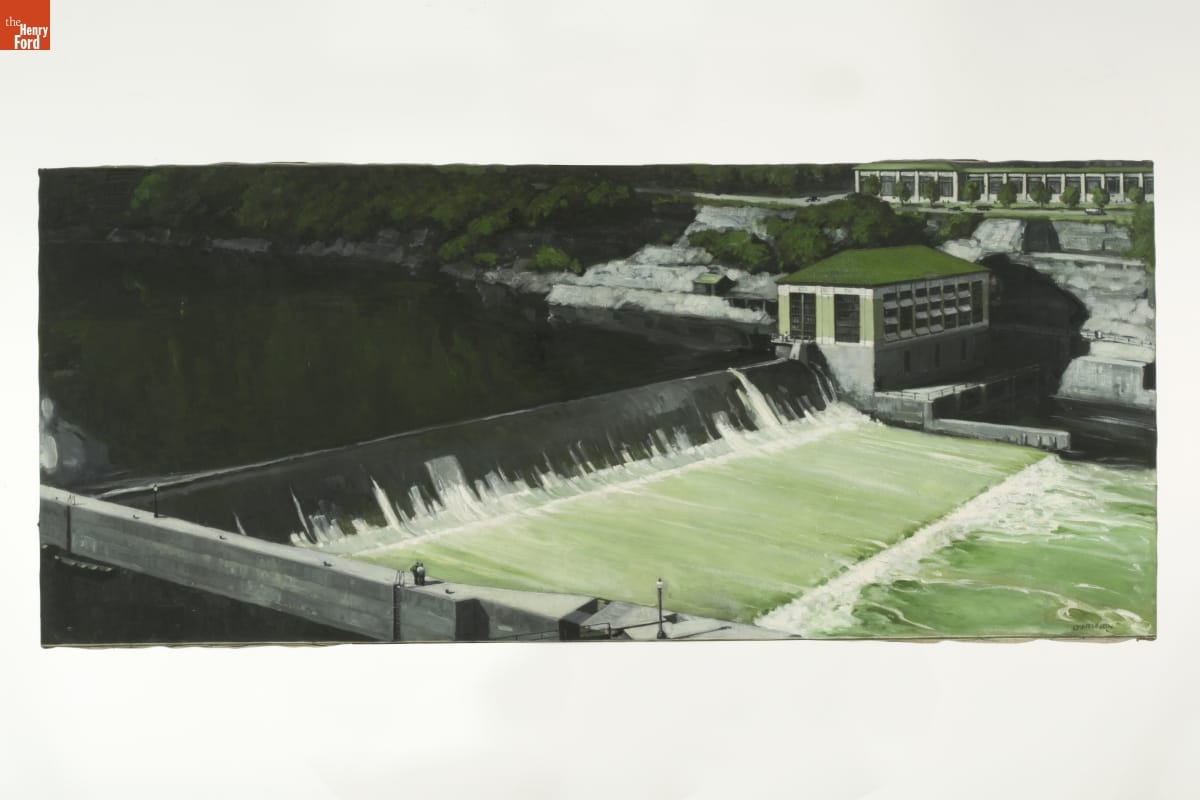
- Powerhouse, River, and Dam, 1924 - In 1924-25 the Ford Motor Company ran a series of sixteen dramatic advertisements in the <EM>Saturday Evening Post</EM> and <EM>Country Gentleman</EM> magazines. The effectiveness of the ads was due in large part to the specially commissioned artwork that accompanied the descriptive text. The restricted palette employed in the original art was imposed by the "duotone" process used for color reproduction.
- 1924
- Collections - Artifact
Powerhouse, River, and Dam, 1924
In 1924-25 the Ford Motor Company ran a series of sixteen dramatic advertisements in the Saturday Evening Post and Country Gentleman magazines. The effectiveness of the ads was due in large part to the specially commissioned artwork that accompanied the descriptive text. The restricted palette employed in the original art was imposed by the "duotone" process used for color reproduction.
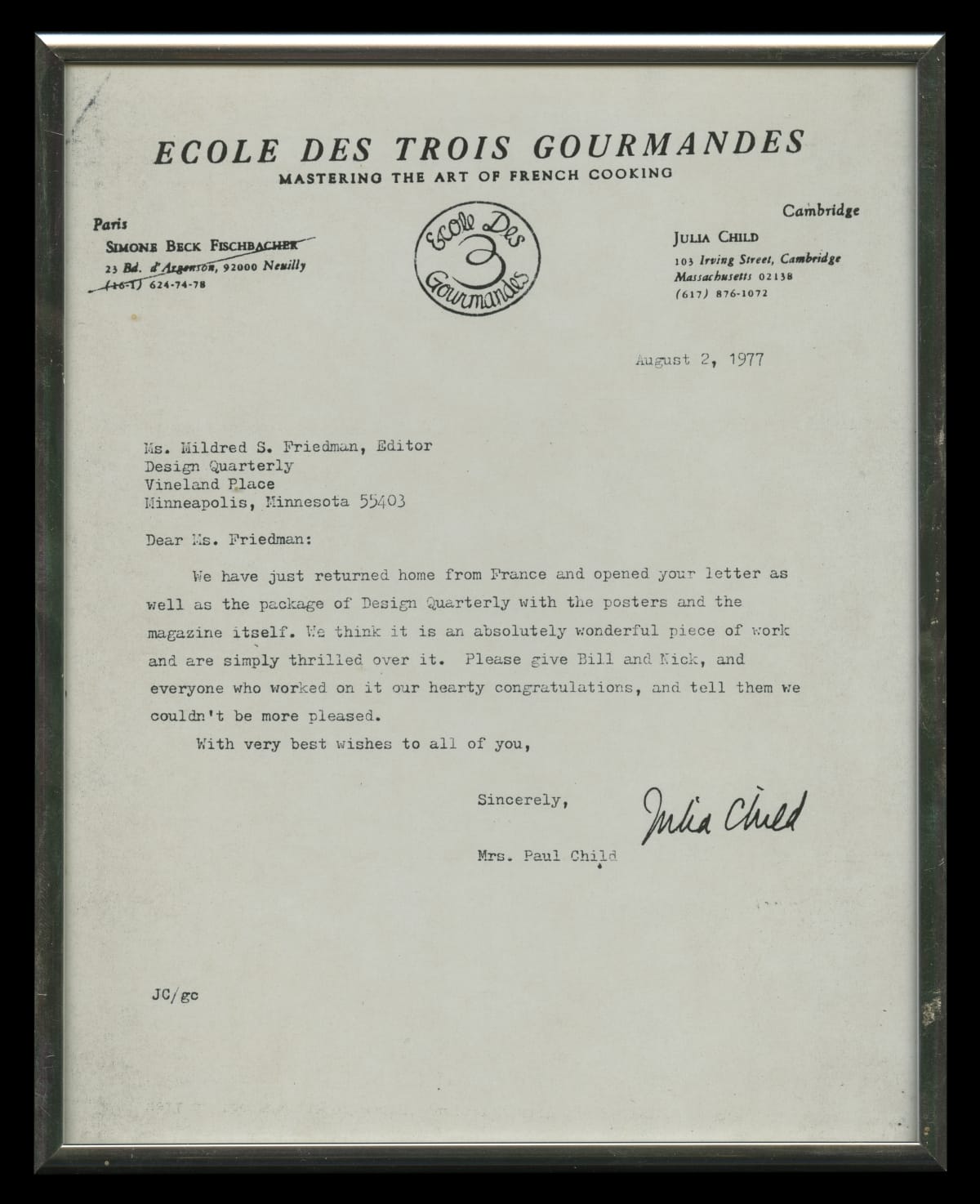
- Letter from Julia Child to Mildred S. Friedman, August 2, 1977 - In 1977, "Julia's Kitchen: A Design Anatomy" was published as the first in a series of "design anatomies" by <em>Design Quarterly</em>. In this issue, designer Bill Stumpf and his team examined how Julia Child -- a chef well-versed in the functions of a kitchen -- designed her own kitchen. Numerous sketches and photographs, as well as hours of interviews with Paul and Julia Child, informed the issue.
- August 02, 1977
- Collections - Artifact
Letter from Julia Child to Mildred S. Friedman, August 2, 1977
In 1977, "Julia's Kitchen: A Design Anatomy" was published as the first in a series of "design anatomies" by Design Quarterly. In this issue, designer Bill Stumpf and his team examined how Julia Child -- a chef well-versed in the functions of a kitchen -- designed her own kitchen. Numerous sketches and photographs, as well as hours of interviews with Paul and Julia Child, informed the issue.
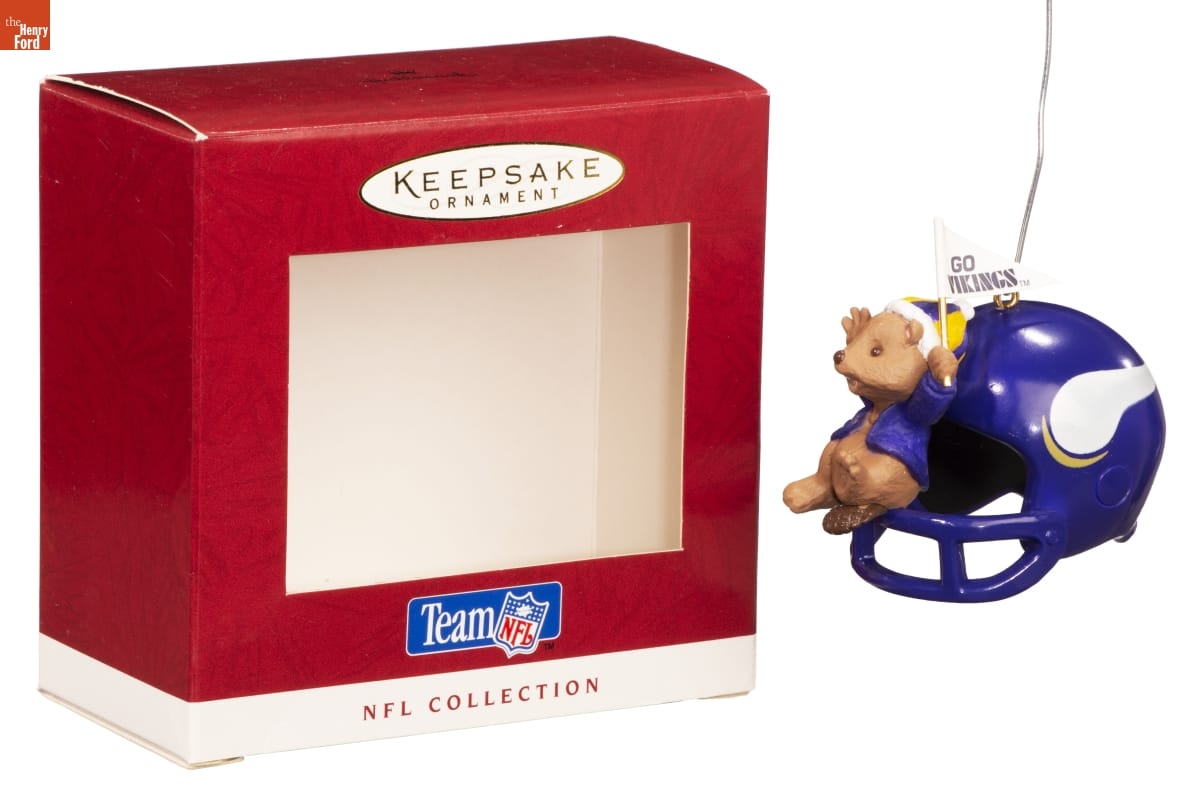
- Hallmark "NFL Collection: Minnesota Vikings" Christmas Ornament, 1995 - Already known for greeting cards, Hallmark introduced a line of Christmas ornaments in 1973. The company's annual release of an increasing array of ornaments revolutionized Christmas decorating, appealing to customers' interest in marking memories and milestones as well as expressing one's personality and unique tastes.
- 1995
- Collections - Artifact
Hallmark "NFL Collection: Minnesota Vikings" Christmas Ornament, 1995
Already known for greeting cards, Hallmark introduced a line of Christmas ornaments in 1973. The company's annual release of an increasing array of ornaments revolutionized Christmas decorating, appealing to customers' interest in marking memories and milestones as well as expressing one's personality and unique tastes.
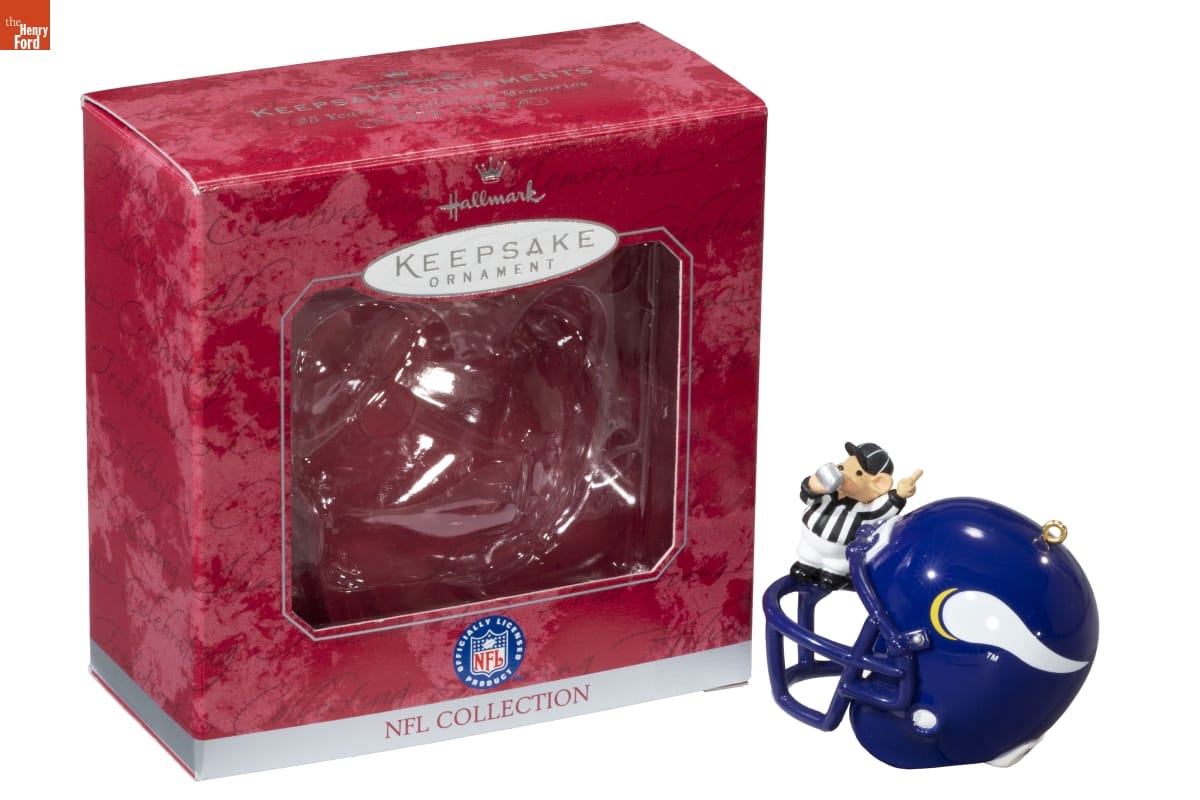
- Hallmark "NFL Collection: Minnesota Vikings" Christmas Ornament, 1998 - Already known for greeting cards, Hallmark introduced a line of Christmas ornaments in 1973. The company's annual release of an increasing array of ornaments revolutionized Christmas decorating, appealing to customers' interest in marking memories and milestones as well as expressing one's personality and unique tastes.
- 1998
- Collections - Artifact
Hallmark "NFL Collection: Minnesota Vikings" Christmas Ornament, 1998
Already known for greeting cards, Hallmark introduced a line of Christmas ornaments in 1973. The company's annual release of an increasing array of ornaments revolutionized Christmas decorating, appealing to customers' interest in marking memories and milestones as well as expressing one's personality and unique tastes.
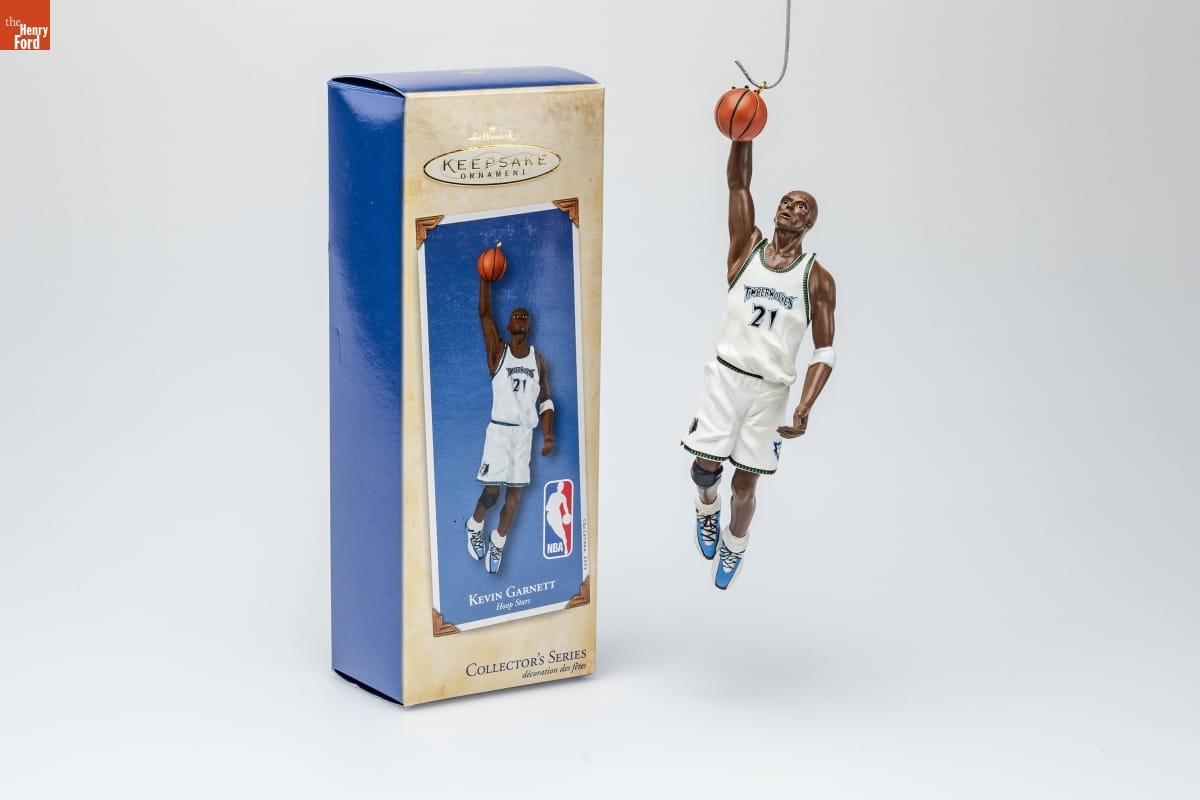
- Hallmark "Hoop Stars Series: Kevin Garnett" Christmas Ornament, 2002 - Already known for greeting cards, Hallmark introduced a line of Christmas ornaments in 1973. The company's annual release of an increasing array of ornaments revolutionized Christmas decorating, appealing to customers' interest in marking memories and milestones as well as expressing one's personality and unique tastes.
- 2002
- Collections - Artifact
Hallmark "Hoop Stars Series: Kevin Garnett" Christmas Ornament, 2002
Already known for greeting cards, Hallmark introduced a line of Christmas ornaments in 1973. The company's annual release of an increasing array of ornaments revolutionized Christmas decorating, appealing to customers' interest in marking memories and milestones as well as expressing one's personality and unique tastes.
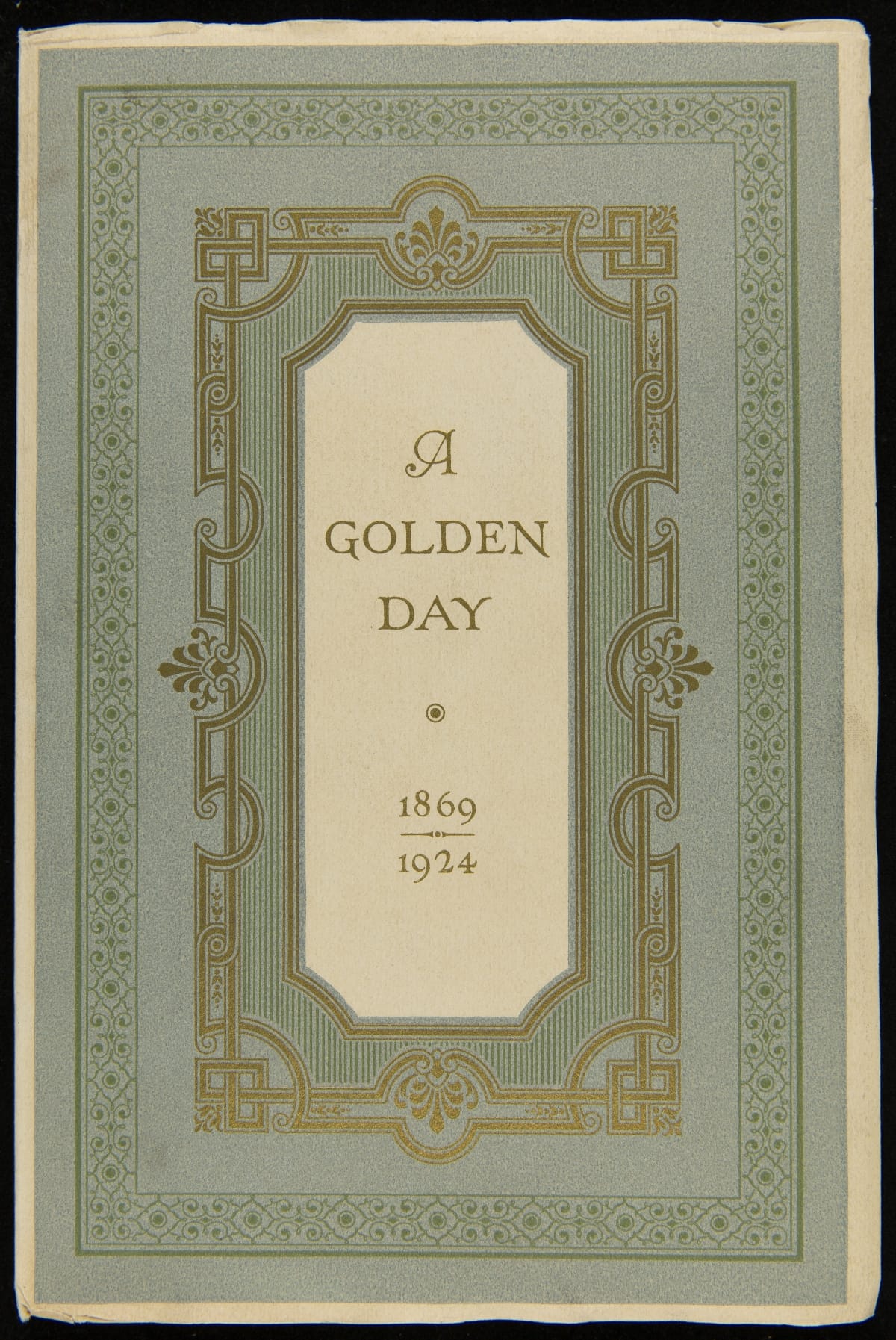
- H. J. Heinz Memorial Statue Dedication, "A Golden Day," at Heinz Main Plant, Pittsburgh, Pennsylvania, October 11, 1924 - H.J. Heinz valued a strong relationship between his company and its employees. This resulted in a world-class employee welfare program which included amenities, programs, and policies with consideration for employees' well-being. In 1924, to commemorate the company's 55th anniversary, employees erected a memorial statue as a token of their gratitude for their employer. This is a program from the celebration, called "A Golden Day."
- 1925
- Collections - Artifact
H. J. Heinz Memorial Statue Dedication, "A Golden Day," at Heinz Main Plant, Pittsburgh, Pennsylvania, October 11, 1924
H.J. Heinz valued a strong relationship between his company and its employees. This resulted in a world-class employee welfare program which included amenities, programs, and policies with consideration for employees' well-being. In 1924, to commemorate the company's 55th anniversary, employees erected a memorial statue as a token of their gratitude for their employer. This is a program from the celebration, called "A Golden Day."
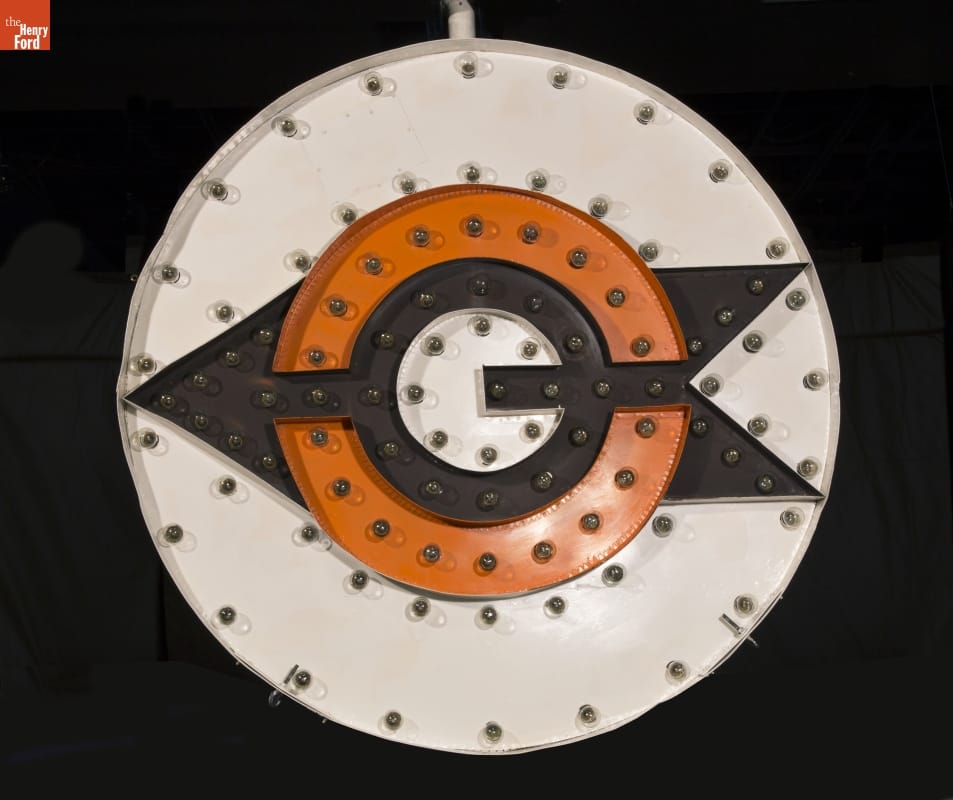
- A&W Drive-In Highway Sign, circa 1955 - Roy W. Allen ran a small walk-up root beer stand in California, then partnered with his employee Frank Wright. Together, "A" and "W" opened three subsequent root beer stands, then began selling franchises. By the 1930s, A & W's had taken the form of drive-ins -- among the country's earliest restaurants of that type. This sign beckoned customers from the highway.
- circa 1955
- Collections - Artifact
A&W Drive-In Highway Sign, circa 1955
Roy W. Allen ran a small walk-up root beer stand in California, then partnered with his employee Frank Wright. Together, "A" and "W" opened three subsequent root beer stands, then began selling franchises. By the 1930s, A & W's had taken the form of drive-ins -- among the country's earliest restaurants of that type. This sign beckoned customers from the highway.