
Search
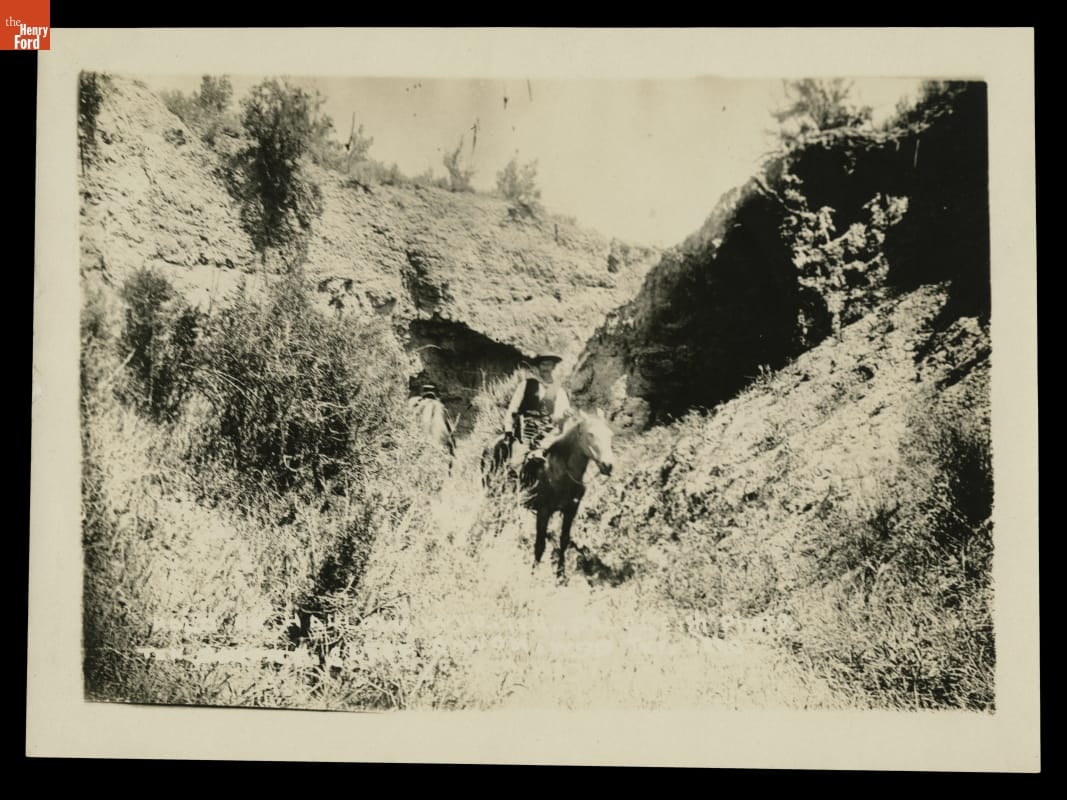
- Horseman in a Canyon, Wyoming Territory, 1880-1889 - George and Thomas Dalgleish owned a photography studio in the Wyoming Territory in the 1880s. The brothers traveled the territory documenting the region's people, towns and activities. The notation on the back of the photograph refers to this man as "Billy the Kid," a hunter and trapper. A friend of the photographer, he was not the infamous outlaw who died in a shootout in 1881.
- 1880-1889
- Collections - Artifact
Horseman in a Canyon, Wyoming Territory, 1880-1889
George and Thomas Dalgleish owned a photography studio in the Wyoming Territory in the 1880s. The brothers traveled the territory documenting the region's people, towns and activities. The notation on the back of the photograph refers to this man as "Billy the Kid," a hunter and trapper. A friend of the photographer, he was not the infamous outlaw who died in a shootout in 1881.
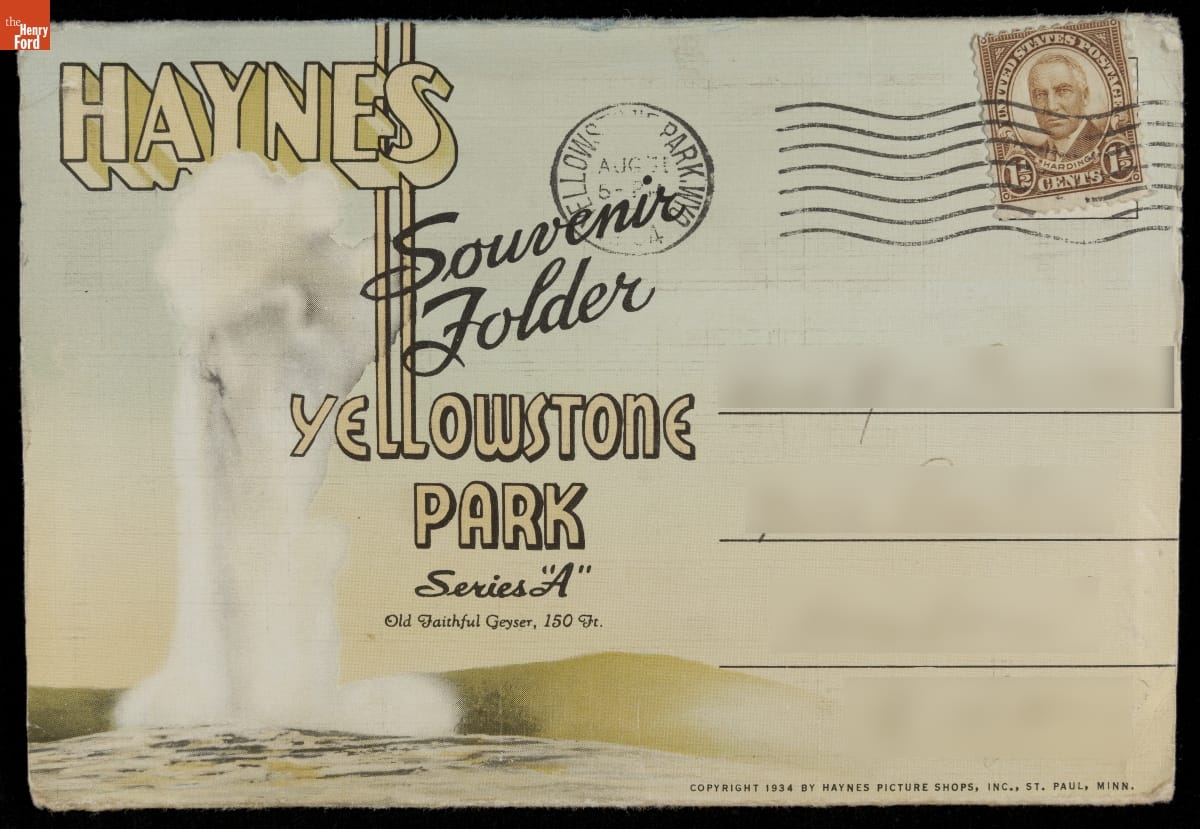
- "Haynes Souvenir Folder of Yellowstone Park," 1934 - Yellowstone National Park, established 1872, was America's first national park. After automobiles were allowed in the national parks (Yellowstone in 1915), attendance increased dramatically. The growing popularity of Yellowstone, like other parks, led to improvements in roads, campgrounds, parking lots, supply stations, and restrooms--along with an increase in souvenirs like this postcard viewbook.
- 1934
- Collections - Artifact
"Haynes Souvenir Folder of Yellowstone Park," 1934
Yellowstone National Park, established 1872, was America's first national park. After automobiles were allowed in the national parks (Yellowstone in 1915), attendance increased dramatically. The growing popularity of Yellowstone, like other parks, led to improvements in roads, campgrounds, parking lots, supply stations, and restrooms--along with an increase in souvenirs like this postcard viewbook.
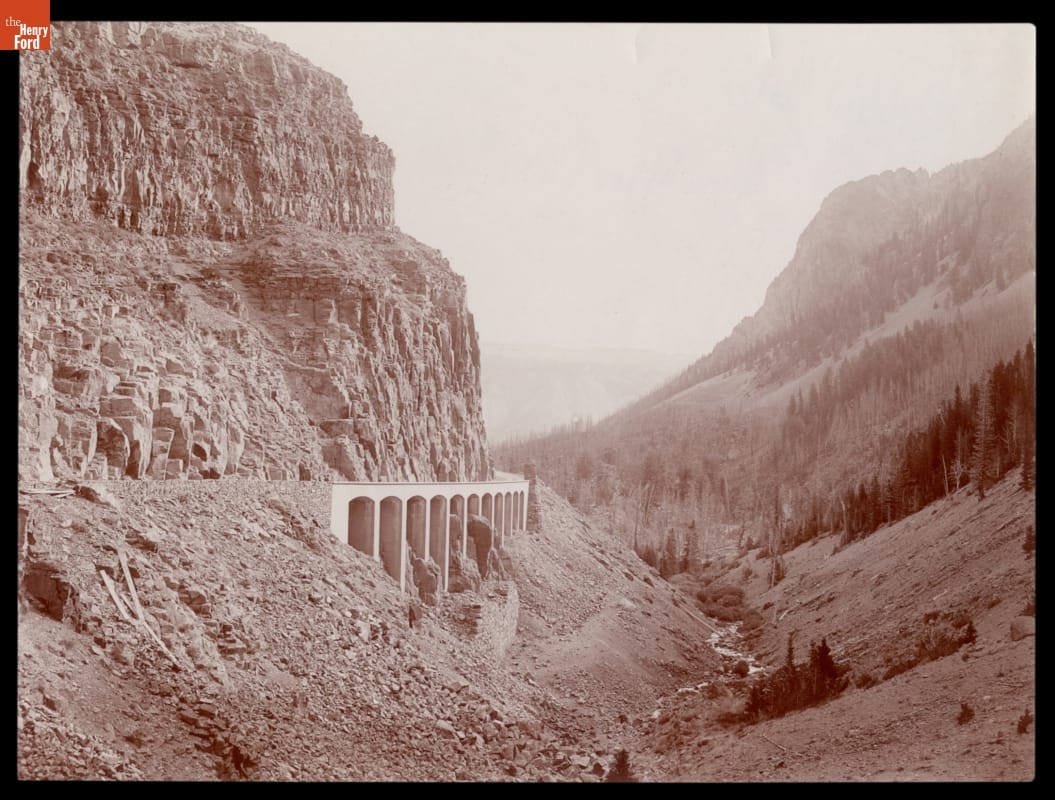
- Golden Gate from the Upper End, Yellowstone National Park, 1901-1902 - Yellowstone National Park, established 1872, was America's first national park. Near the north entrance on the Grand Loop Road, the so-called "Golden Gate" is a pass that marks the north edge of Yellowstone Plateau. The highway bridge is pinned to cliffs made of crumbly volcanic yellow tuff--hence the name.
- 1901-1902
- Collections - Artifact
Golden Gate from the Upper End, Yellowstone National Park, 1901-1902
Yellowstone National Park, established 1872, was America's first national park. Near the north entrance on the Grand Loop Road, the so-called "Golden Gate" is a pass that marks the north edge of Yellowstone Plateau. The highway bridge is pinned to cliffs made of crumbly volcanic yellow tuff--hence the name.
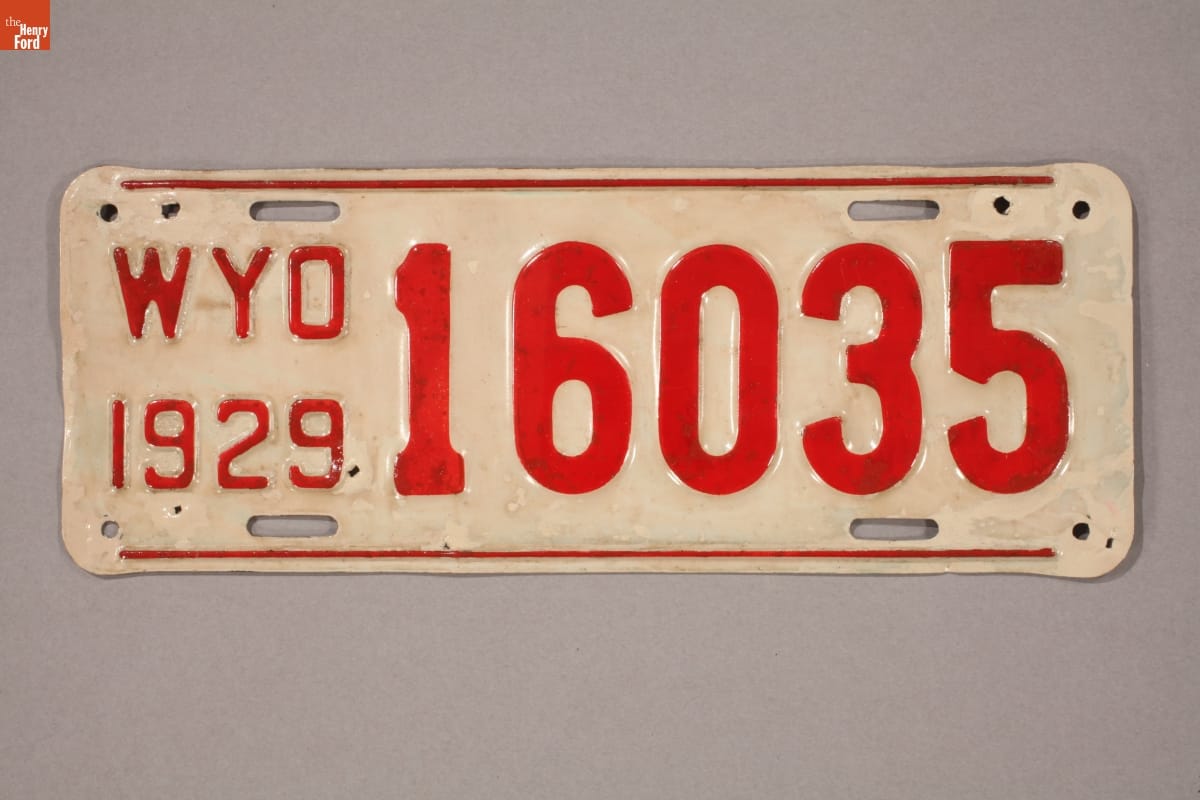
- Wyoming License Plate, 1929 - Early state-issued license plates were made of porcelain-coated iron. Later, states stamped tin, steel, or even copper to make plates. During the Second World War several states used fiberboard. Plate colors varied and some states added symbols, mottoes, or other design elements. Today, states use reflective sheeting to coat a standard-sized aluminum blank which is then stamped and decorated.
- 1929
- Collections - Artifact
Wyoming License Plate, 1929
Early state-issued license plates were made of porcelain-coated iron. Later, states stamped tin, steel, or even copper to make plates. During the Second World War several states used fiberboard. Plate colors varied and some states added symbols, mottoes, or other design elements. Today, states use reflective sheeting to coat a standard-sized aluminum blank which is then stamped and decorated.
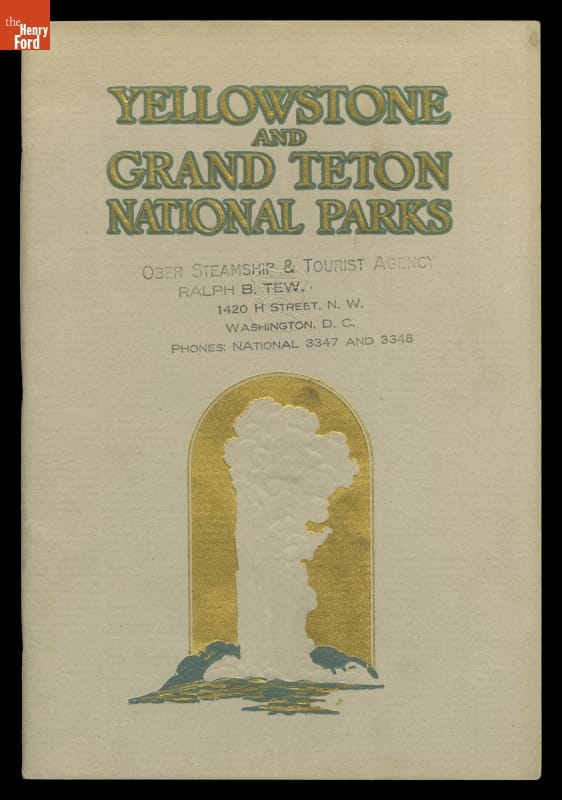
- Travel Guidebook, "Yellowstone and Grand Teton National Parks," 1933 - Yellowstone National Park, established 1872, was America's first national park. Early tourists reached Yellowstone by railroads like the Union Pacific, producer of this guidebook. The increasing popularity of automobiles spelled the decline of Yellowstone-bound trains. The more than 4/5 of travelers that had gone by rail in 1915 had been reduced to about 1/8 by 1930.
- 1933
- Collections - Artifact
Travel Guidebook, "Yellowstone and Grand Teton National Parks," 1933
Yellowstone National Park, established 1872, was America's first national park. Early tourists reached Yellowstone by railroads like the Union Pacific, producer of this guidebook. The increasing popularity of automobiles spelled the decline of Yellowstone-bound trains. The more than 4/5 of travelers that had gone by rail in 1915 had been reduced to about 1/8 by 1930.
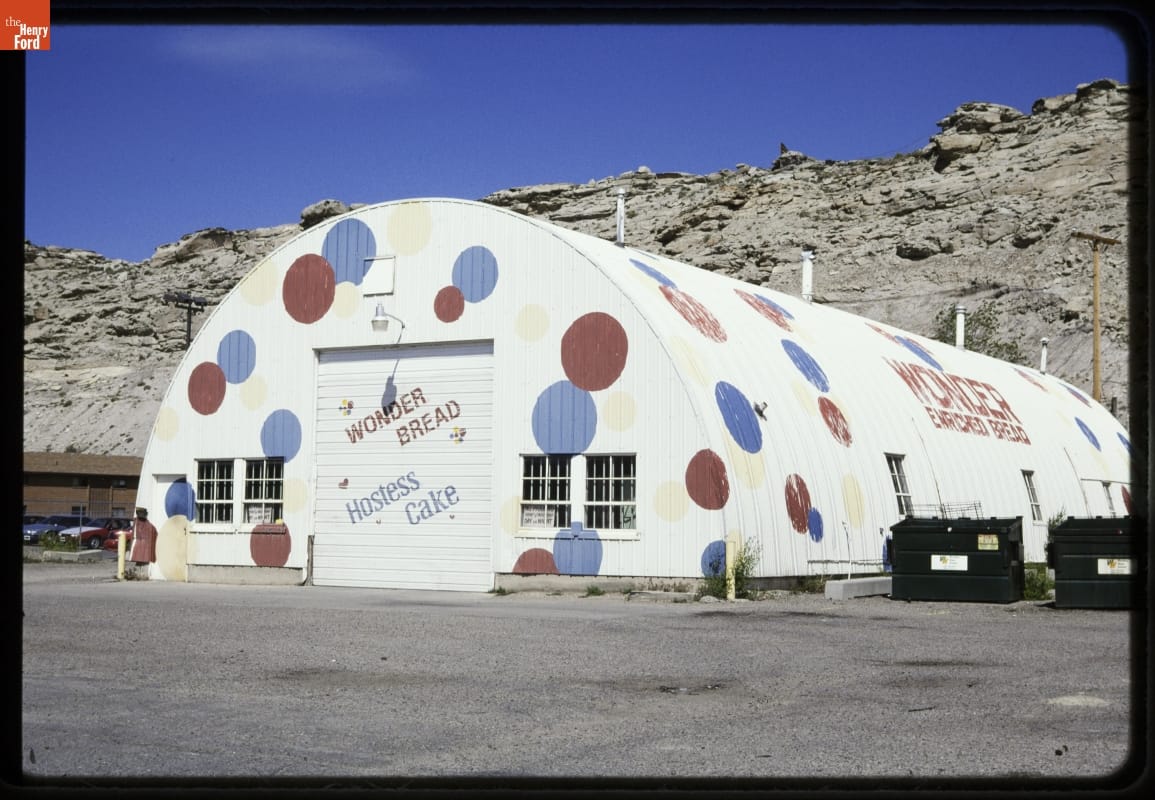
- Wonder Bread Building, Rock Springs, Wyoming, 2004 - In the mid-1970s, John Margolies began to assemble a visual record of America's built roadside landscape. Over the following three decades, he traveled thousands of miles to photograph the overlooked and often quickly vanishing structures that had grown out of American automobile culture and main street commerce. His photographs of hotels, motels, diners, service stations, drive-ins and attractions celebrate and capture a unique chapter of American history.
- 2004
- Collections - Artifact
Wonder Bread Building, Rock Springs, Wyoming, 2004
In the mid-1970s, John Margolies began to assemble a visual record of America's built roadside landscape. Over the following three decades, he traveled thousands of miles to photograph the overlooked and often quickly vanishing structures that had grown out of American automobile culture and main street commerce. His photographs of hotels, motels, diners, service stations, drive-ins and attractions celebrate and capture a unique chapter of American history.
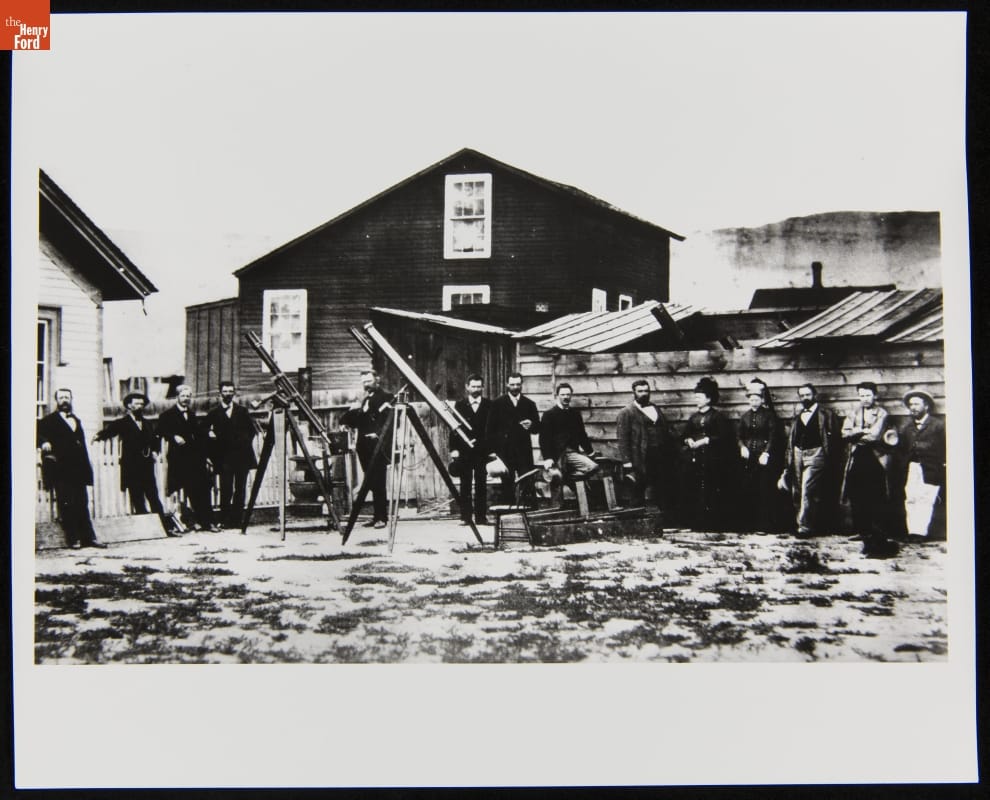
- Thomas Edison with Henry Draper's Expedition to View the July 1878 Solar Eclipse, Rawlins, Wyoming Territory -
- July 01, 1878
- Collections - Artifact
Thomas Edison with Henry Draper's Expedition to View the July 1878 Solar Eclipse, Rawlins, Wyoming Territory
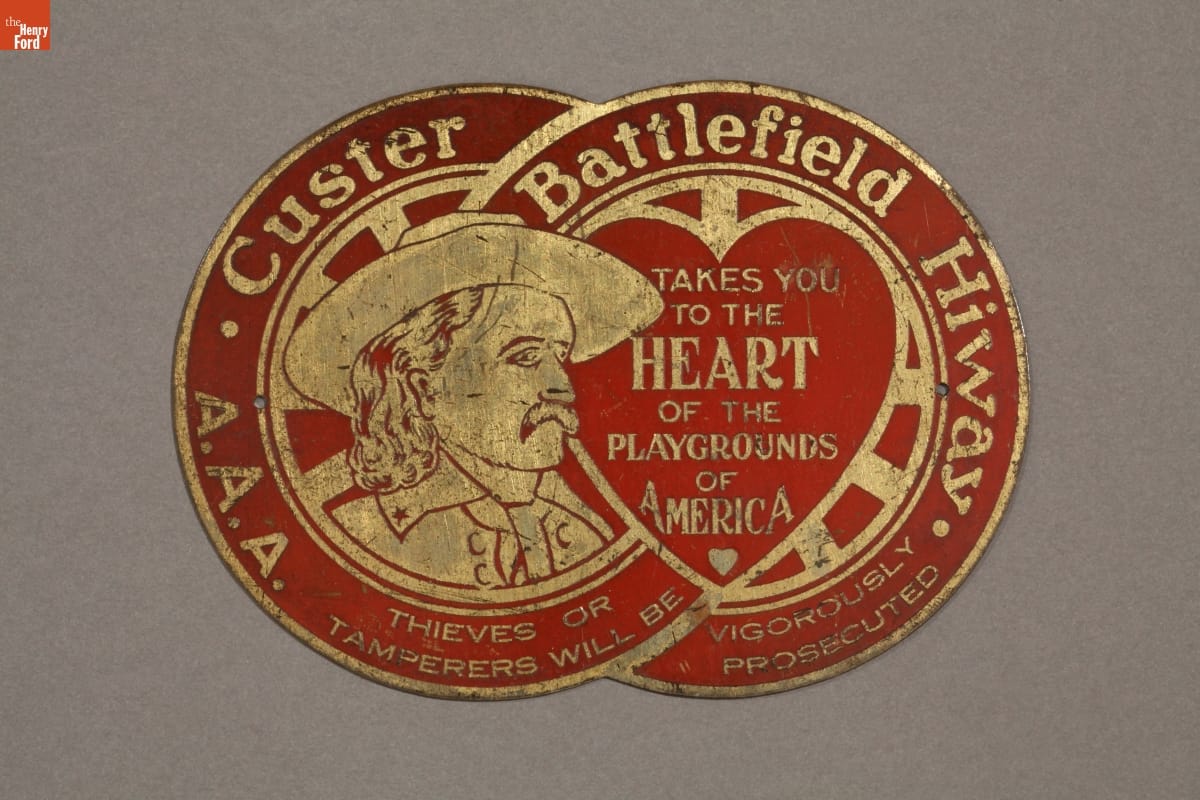
- Custer Battlefield Highway Badge, 1920-1930 - Founded in 1902, the American Automobile Association (AAA) lobbied for motorist-friendly legislation, promoted road and highway improvements, and encouraged automobile travel and tourism. This AAA badge promoted the Custer Battlefield Highway, which connected Des Moines with Glacier National Park. The 1,500-mile highway passed through Iowa, South Dakota, Wyoming, and Montana.
- 1920-1930
- Collections - Artifact
Custer Battlefield Highway Badge, 1920-1930
Founded in 1902, the American Automobile Association (AAA) lobbied for motorist-friendly legislation, promoted road and highway improvements, and encouraged automobile travel and tourism. This AAA badge promoted the Custer Battlefield Highway, which connected Des Moines with Glacier National Park. The 1,500-mile highway passed through Iowa, South Dakota, Wyoming, and Montana.
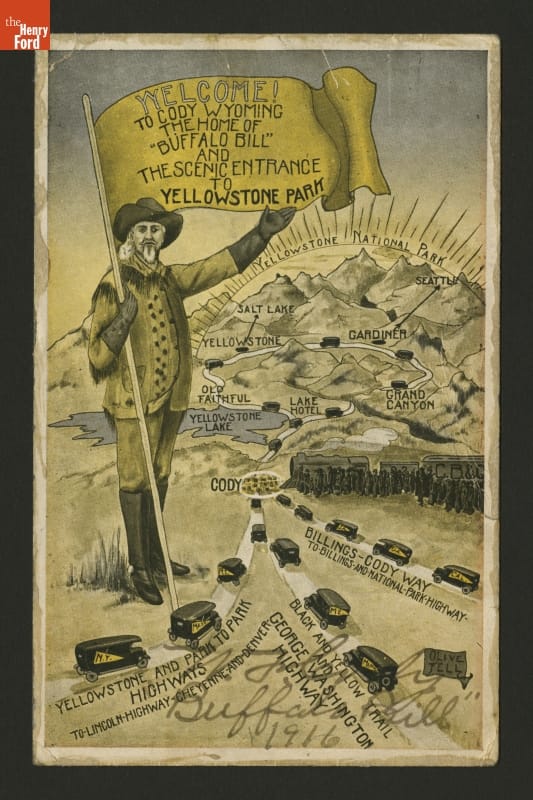
- Souvenir Postcard, "Welcome to Cody Wyoming," 1916 - This postcard, sent from Buffalo Bill Cody to Henry Ford in 1916, shows recently created trails bringing motorists to Yellowstone National Park.
- October 21, 1916
- Collections - Artifact
Souvenir Postcard, "Welcome to Cody Wyoming," 1916
This postcard, sent from Buffalo Bill Cody to Henry Ford in 1916, shows recently created trails bringing motorists to Yellowstone National Park.
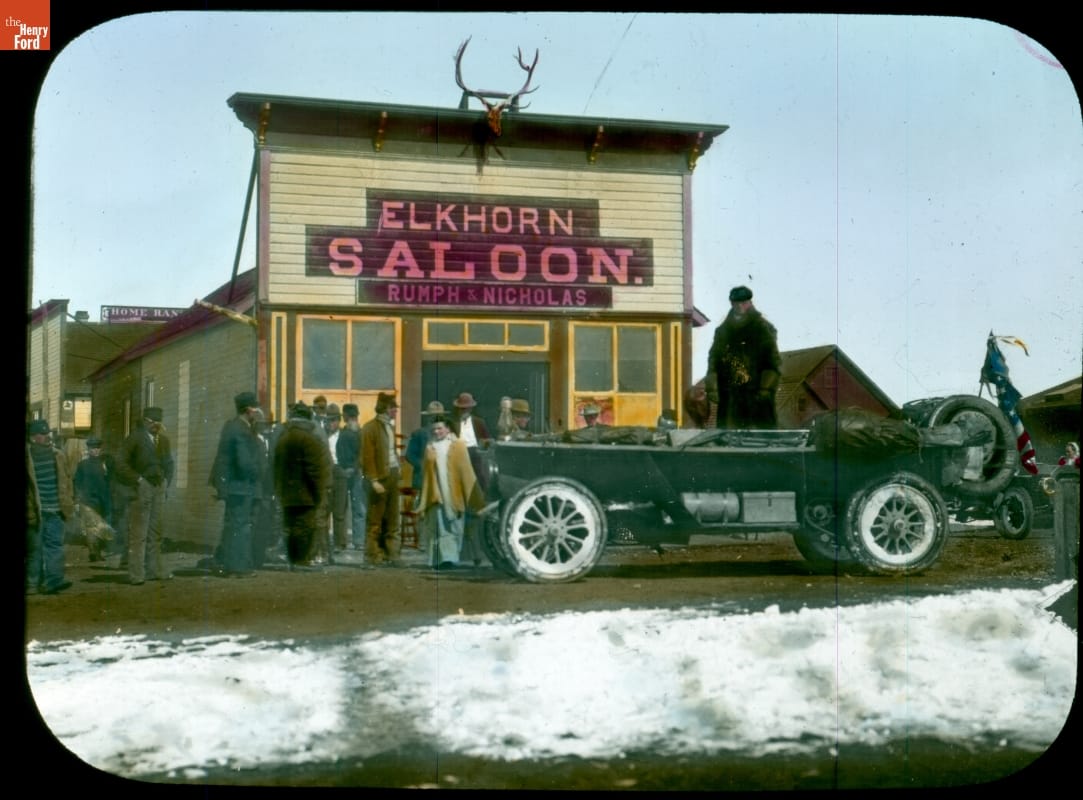
- Thomas Flyer Parked in Front of the Elkhorn Saloon in Wyoming, New York to Paris Race, 1908 - In 1908, six automobiles raced around the globe from New York City to Paris, France. The contest took 169 days, covered 22,000 miles and spanned three continents. In late February, a few weeks after the start, only five cars remained. After leaving Chicago, Illinois, the American team in a Thomas Flyer would lead the way to the west coast.
- 1908
- Collections - Artifact
Thomas Flyer Parked in Front of the Elkhorn Saloon in Wyoming, New York to Paris Race, 1908
In 1908, six automobiles raced around the globe from New York City to Paris, France. The contest took 169 days, covered 22,000 miles and spanned three continents. In late February, a few weeks after the start, only five cars remained. After leaving Chicago, Illinois, the American team in a Thomas Flyer would lead the way to the west coast.