
Search
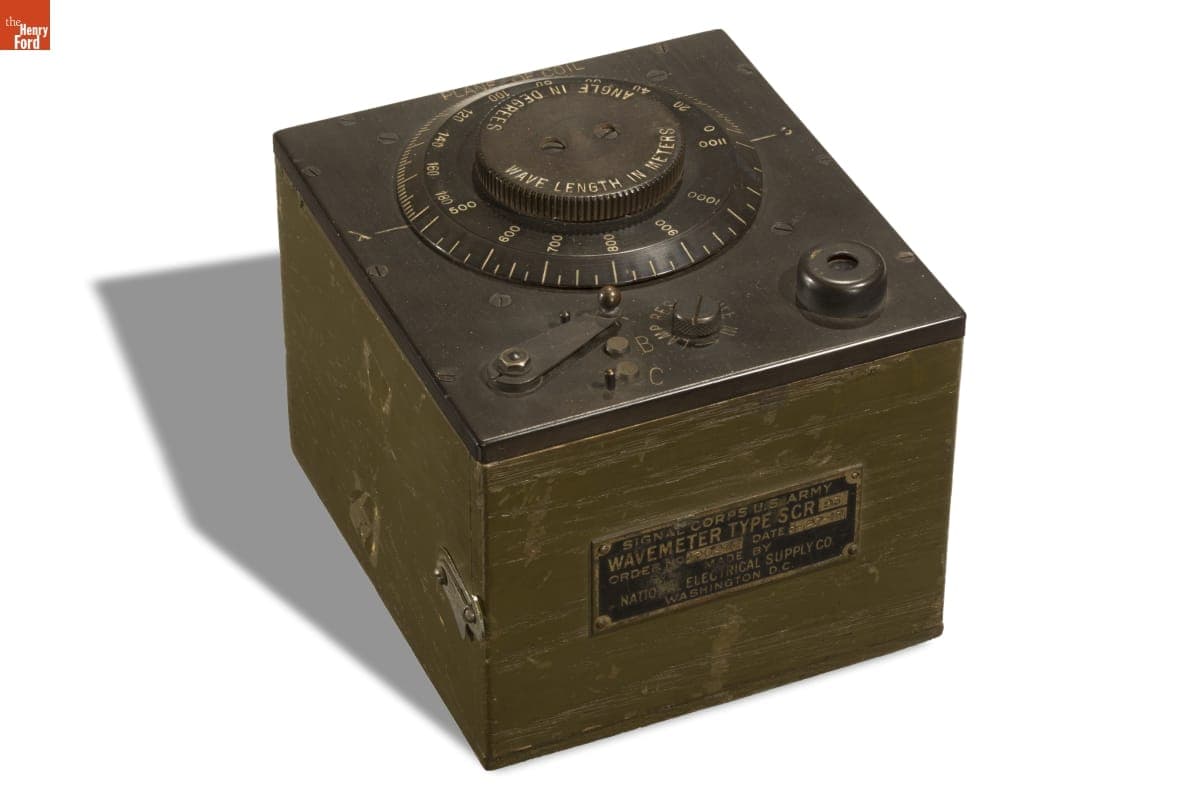
- Radio Wavemeter, Type SCR-95, 1918 - This wavemeter was likely developed by the US Army Signal Corp for military use. Its purpose is twofold: to detect the frequency of an incoming signal, and to check the frequency and harmonics of an outgoing signal. Early radio operators, working with multiple and specialized technical components, used wavemeters to determine the clarity and strength of their transmitters.
- August 27, 1918
- Collections - Artifact
Radio Wavemeter, Type SCR-95, 1918
This wavemeter was likely developed by the US Army Signal Corp for military use. Its purpose is twofold: to detect the frequency of an incoming signal, and to check the frequency and harmonics of an outgoing signal. Early radio operators, working with multiple and specialized technical components, used wavemeters to determine the clarity and strength of their transmitters.
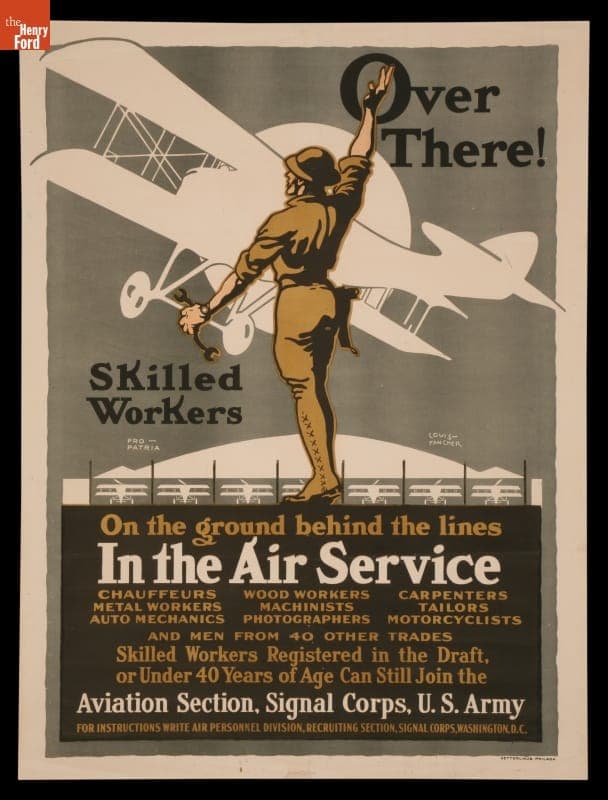
- World War I Poster, "Over There! Skilled Workers on the Ground Behind the Lines in the Air Service," circa 1918 - During the First World War, governments of all the warring nations used poster campaigns to encourage civilian and military support of the war effort. Artists widely used an innovative advertising technique for these posters that moved away from a factual depiction of a product's material or event's subject to an emphasis on appealing to the viewer's emotions.
- circa 1918
- Collections - Artifact
World War I Poster, "Over There! Skilled Workers on the Ground Behind the Lines in the Air Service," circa 1918
During the First World War, governments of all the warring nations used poster campaigns to encourage civilian and military support of the war effort. Artists widely used an innovative advertising technique for these posters that moved away from a factual depiction of a product's material or event's subject to an emphasis on appealing to the viewer's emotions.
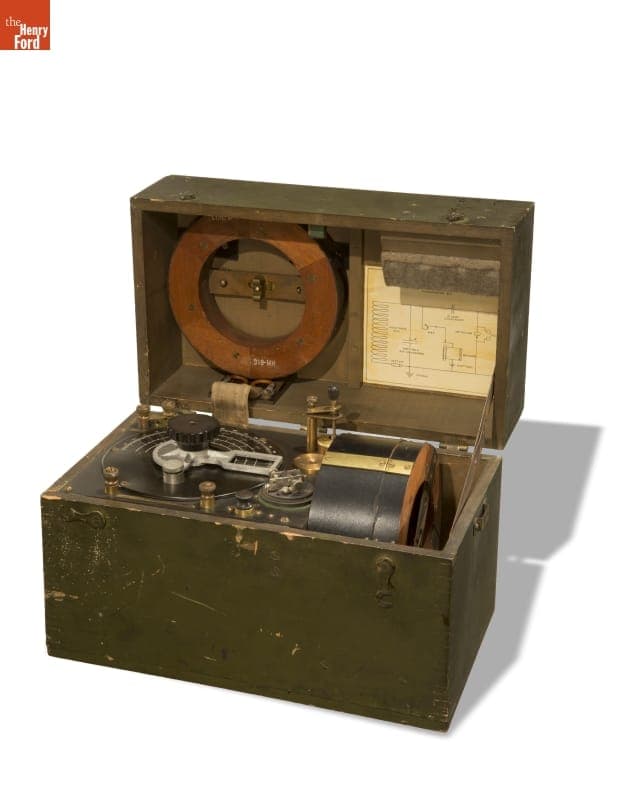
- Radio Wavemeter, Type SCR-61, 1918 - This wavemeter was likely developed by the US Army Signal Corp for military use. Its purpose is twofold: to detect the frequency of an incoming signal, and to check the frequency and harmonics of an outgoing signal. Early radio operators, working with multiple and specialized technical components, used wavemeters to determine the clarity and strength of their transmitters.
- August 27, 1918
- Collections - Artifact
Radio Wavemeter, Type SCR-61, 1918
This wavemeter was likely developed by the US Army Signal Corp for military use. Its purpose is twofold: to detect the frequency of an incoming signal, and to check the frequency and harmonics of an outgoing signal. Early radio operators, working with multiple and specialized technical components, used wavemeters to determine the clarity and strength of their transmitters.
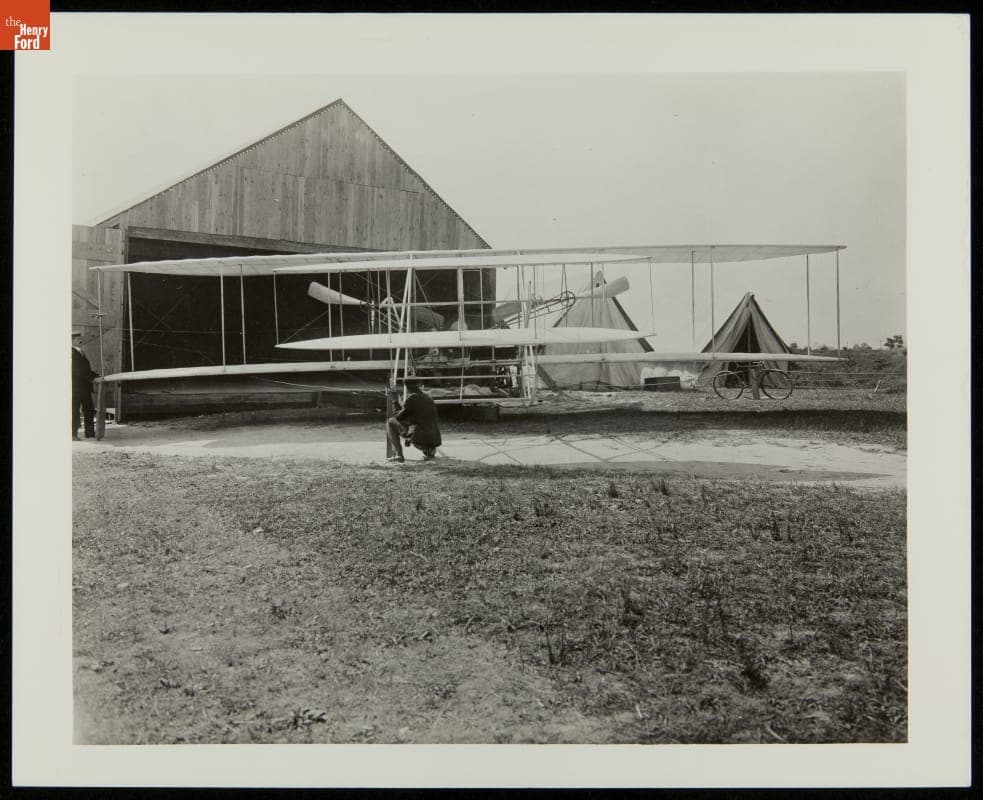
- Wright Airplane outside Hangar at Fort Myer, Virginia, September 1908 - While his brother was demonstrating their airplane in France, Orville Wright made demonstration flights of his own for the United States Army Signal Corps at Fort Myer, Virginia. All went well until September 17, 1908, when a cracked propeller caused the plane to crash. Orville survived with serious injuries, but passenger Lt. Thomas Selfridge was killed -- the first airplane fatality.
- September 01, 1908
- Collections - Artifact
Wright Airplane outside Hangar at Fort Myer, Virginia, September 1908
While his brother was demonstrating their airplane in France, Orville Wright made demonstration flights of his own for the United States Army Signal Corps at Fort Myer, Virginia. All went well until September 17, 1908, when a cracked propeller caused the plane to crash. Orville survived with serious injuries, but passenger Lt. Thomas Selfridge was killed -- the first airplane fatality.
- Radio Wavemeter, Type SCR-61, 1918 - This wavemeter was likely developed by the US Army Signal Corp for military use. Its purpose is twofold: to detect the frequency of an incoming signal, and to check the frequency and harmonics of an outgoing signal. Early radio operators, working with multiple and specialized technical components, used wavemeters to determine the clarity and strength of their transmitters.
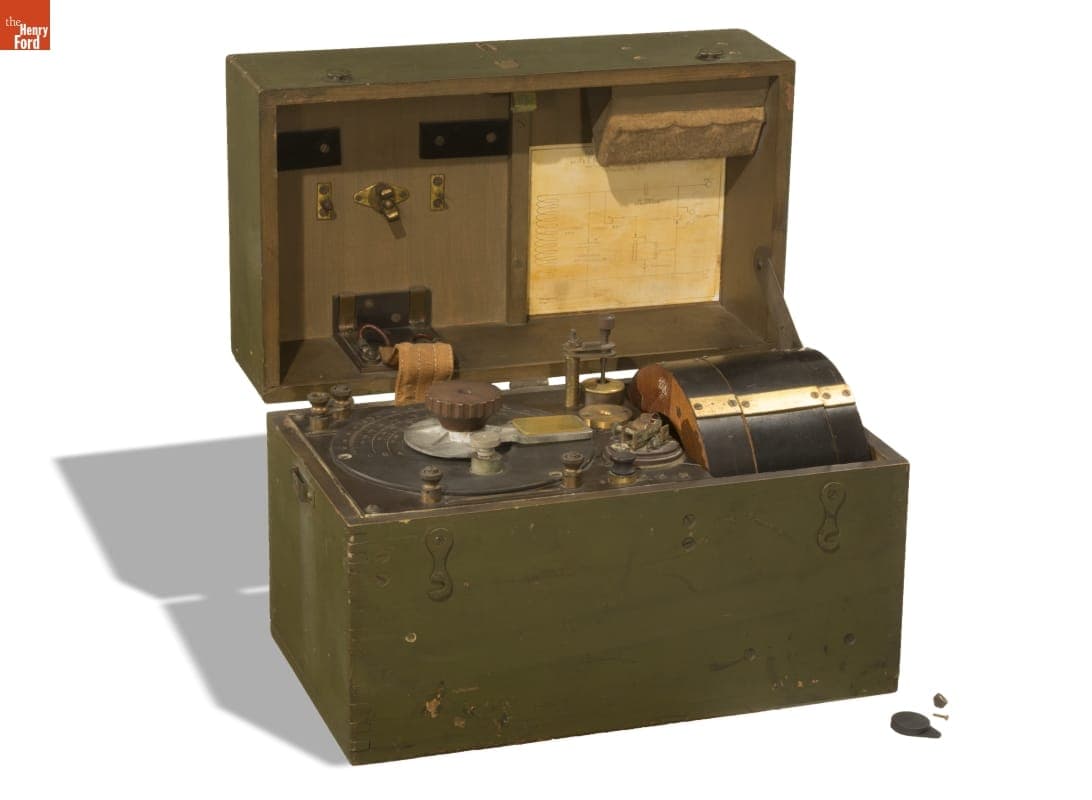
- circa 1918
- Collections - Artifact
Radio Wavemeter, Type SCR-61, 1918
This wavemeter was likely developed by the US Army Signal Corp for military use. Its purpose is twofold: to detect the frequency of an incoming signal, and to check the frequency and harmonics of an outgoing signal. Early radio operators, working with multiple and specialized technical components, used wavemeters to determine the clarity and strength of their transmitters.
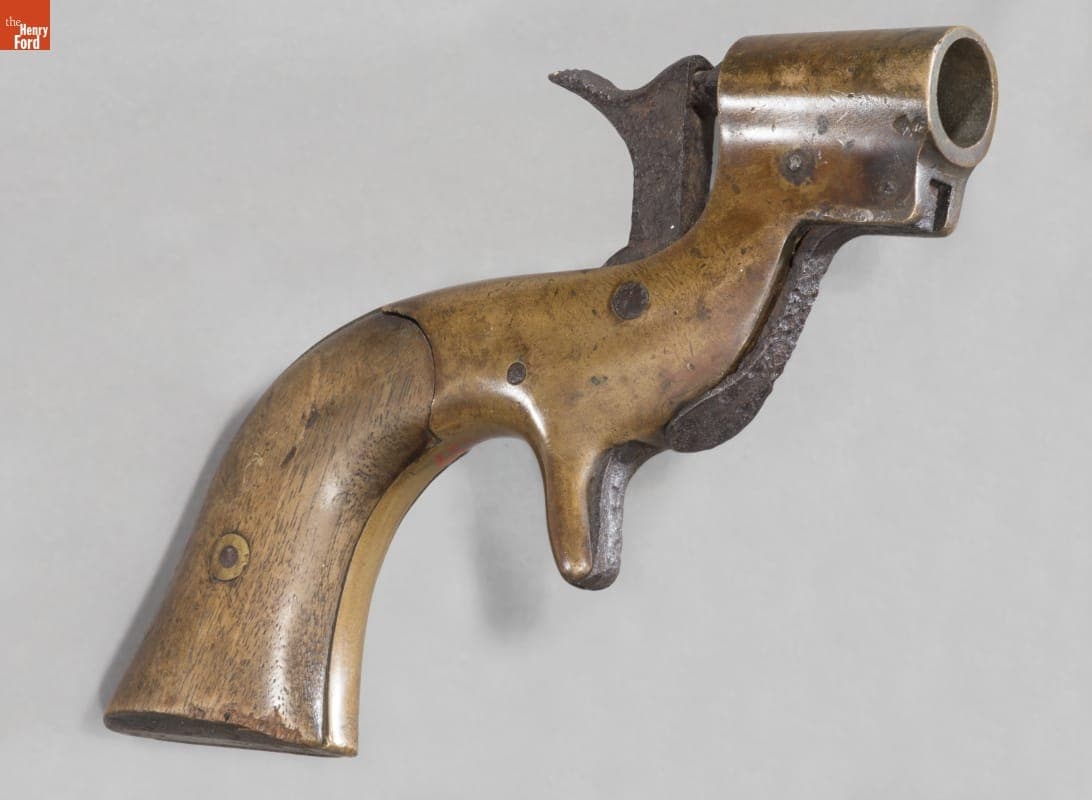
- U.S. Army Model 1862 Percussion Signal Pistol, circa 1862 - In 1859, inventor and entrepreneur Martha Coston was granted a patent for her pyrotechnic night signal and code system. During the Civil War, Coston's flares allowed ships in the Union Navy to effectively communicate with each other at night, strengthening military coordination. New York gun manufacturer William Marston produced this signal pistol to exclusively fire Coston's multiple colored signal flare.
- circa 1862
- Collections - Artifact
U.S. Army Model 1862 Percussion Signal Pistol, circa 1862
In 1859, inventor and entrepreneur Martha Coston was granted a patent for her pyrotechnic night signal and code system. During the Civil War, Coston's flares allowed ships in the Union Navy to effectively communicate with each other at night, strengthening military coordination. New York gun manufacturer William Marston produced this signal pistol to exclusively fire Coston's multiple colored signal flare.
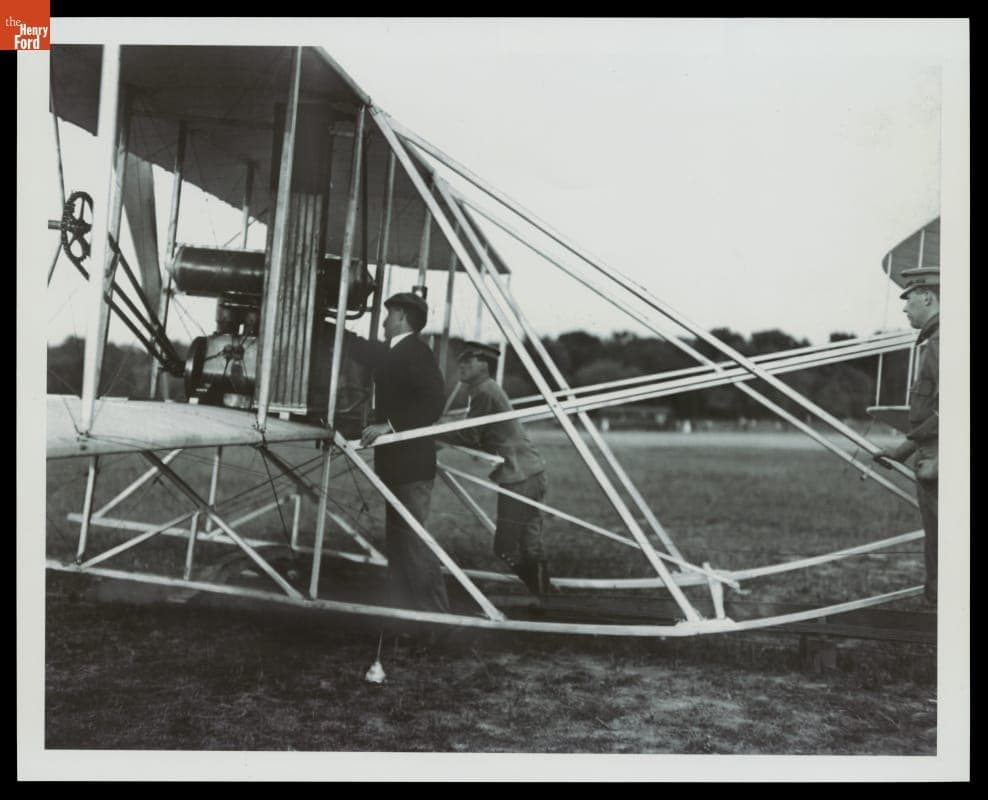
- Orville Wright with Lieutenant Benjamin Foulois during Test Flights at Fort Myer, Virginia, 1909 - Nine months after suffering serious injuries there in an airplane crash, Orville Wright returned to Fort Myer, Virginia, in June and July of 1909. With brother Wilbur along for support, Orville completed his demonstration flights for the U.S. Army Signal Corps. This time, the flights were successful, and the Army agreed to buy the airplane from the Wrights for $30,000.
- 1909
- Collections - Artifact
Orville Wright with Lieutenant Benjamin Foulois during Test Flights at Fort Myer, Virginia, 1909
Nine months after suffering serious injuries there in an airplane crash, Orville Wright returned to Fort Myer, Virginia, in June and July of 1909. With brother Wilbur along for support, Orville completed his demonstration flights for the U.S. Army Signal Corps. This time, the flights were successful, and the Army agreed to buy the airplane from the Wrights for $30,000.
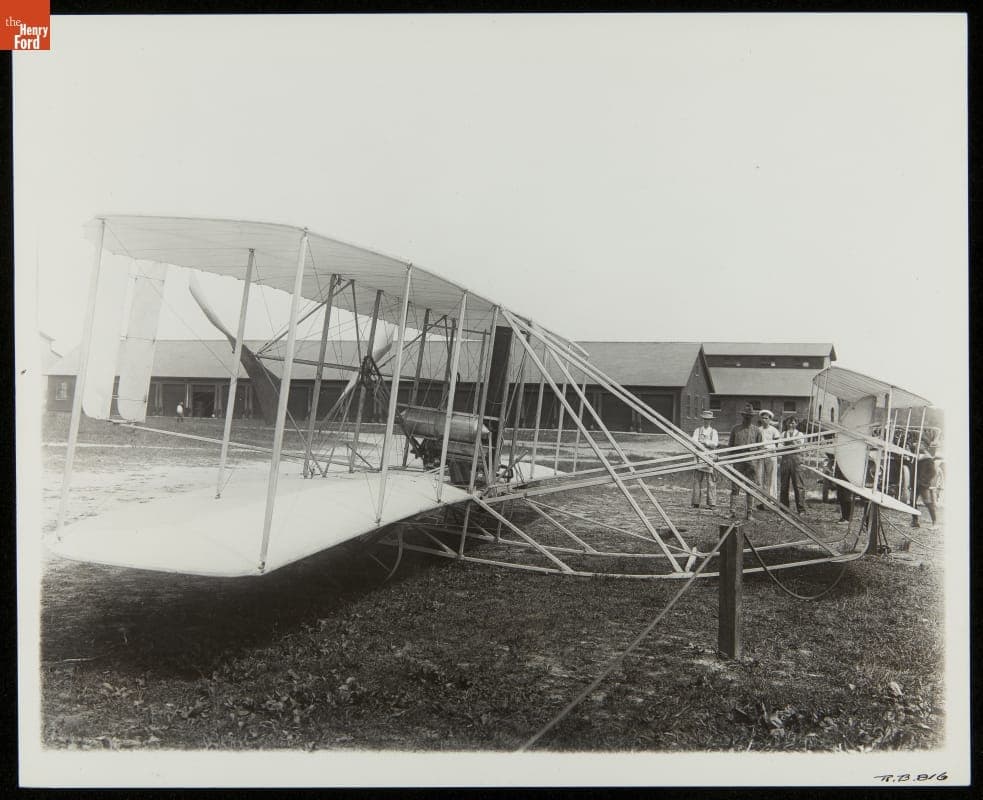
- Wright Airplane at Fort Myer, Virginia, September 1908 - While his brother was demonstrating their airplane in France, Orville Wright made demonstration flights of his own for the United States Army Signal Corps at Fort Myer, Virginia. All went well until September 17, 1908, when a cracked propeller caused the plane to crash. Orville survived with serious injuries, but passenger Lt. Thomas Selfridge was killed -- the first airplane fatality.
- September 01, 1908
- Collections - Artifact
Wright Airplane at Fort Myer, Virginia, September 1908
While his brother was demonstrating their airplane in France, Orville Wright made demonstration flights of his own for the United States Army Signal Corps at Fort Myer, Virginia. All went well until September 17, 1908, when a cracked propeller caused the plane to crash. Orville survived with serious injuries, but passenger Lt. Thomas Selfridge was killed -- the first airplane fatality.
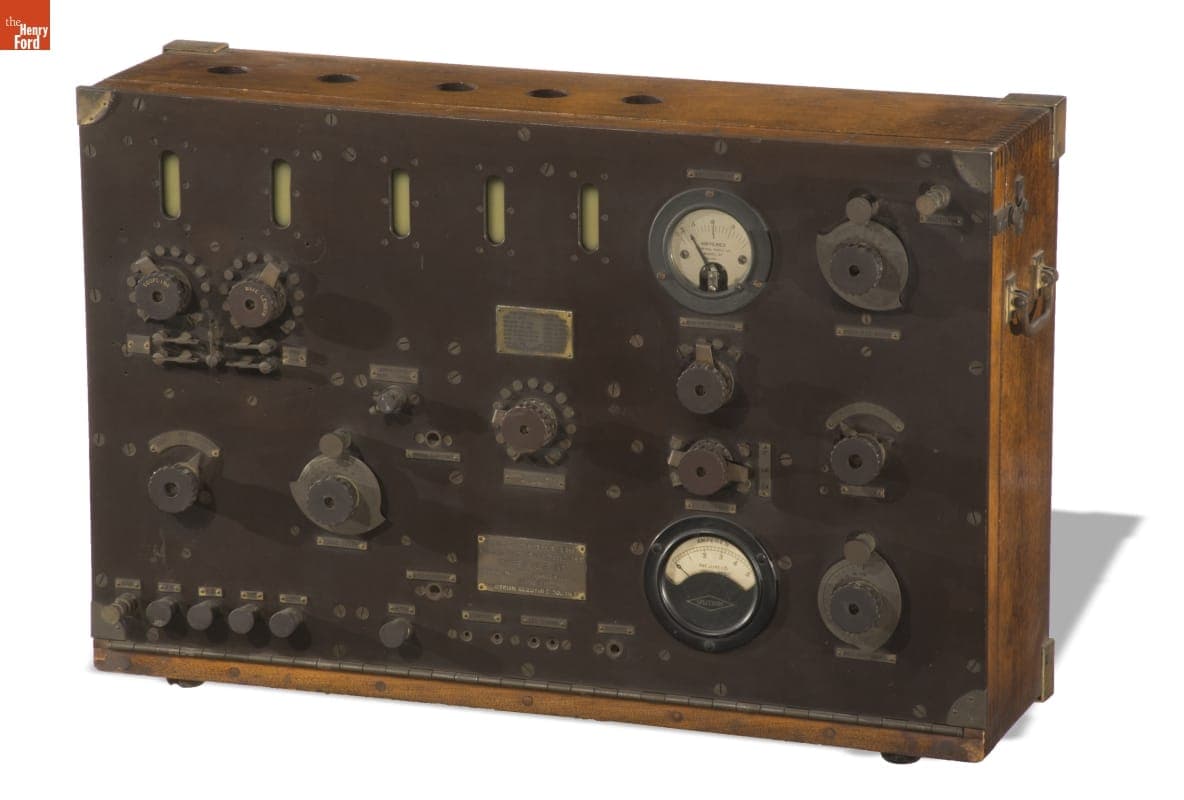
- Western Electric Radiophone Transmitter and Receiver, Model SCR-67, circa 1918 - Towards the end of WWI, the SCR-67 and SCR-68 were introduced as systems for communication between aircraft and ground radio operators. These radiotelephones could direct formation flying of aircraft, and guide airborne gunfire. George Owen Squier, Chief Signal Officer of the Army's Signal Corps, worked alongside Western Electric engineers to develop this system. In 1922, Squier developed "Wired Radio"--also known as "Muzak."
- circa 1918
- Collections - Artifact
Western Electric Radiophone Transmitter and Receiver, Model SCR-67, circa 1918
Towards the end of WWI, the SCR-67 and SCR-68 were introduced as systems for communication between aircraft and ground radio operators. These radiotelephones could direct formation flying of aircraft, and guide airborne gunfire. George Owen Squier, Chief Signal Officer of the Army's Signal Corps, worked alongside Western Electric engineers to develop this system. In 1922, Squier developed "Wired Radio"--also known as "Muzak."
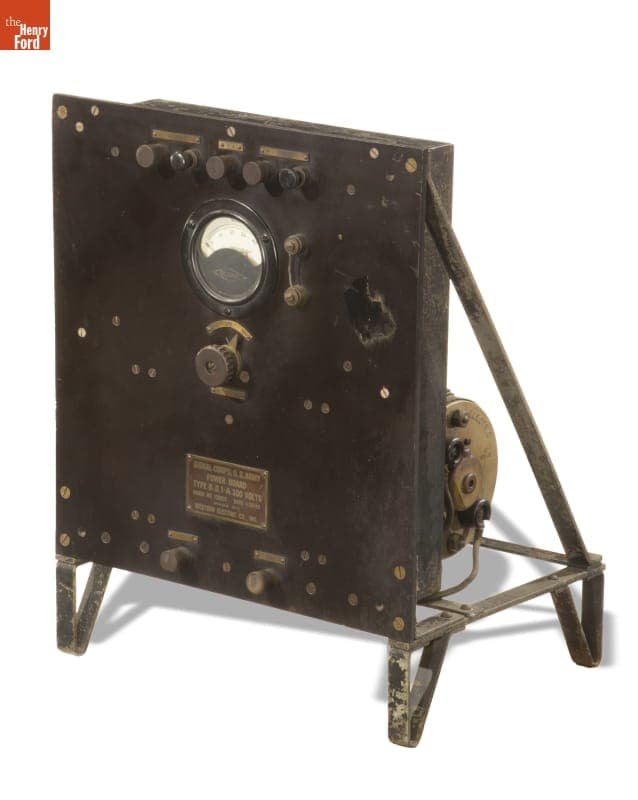
- Western Electric Power Board, Type BD-1-A, 1920 -
- 1920
- Collections - Artifact
Western Electric Power Board, Type BD-1-A, 1920