
Search
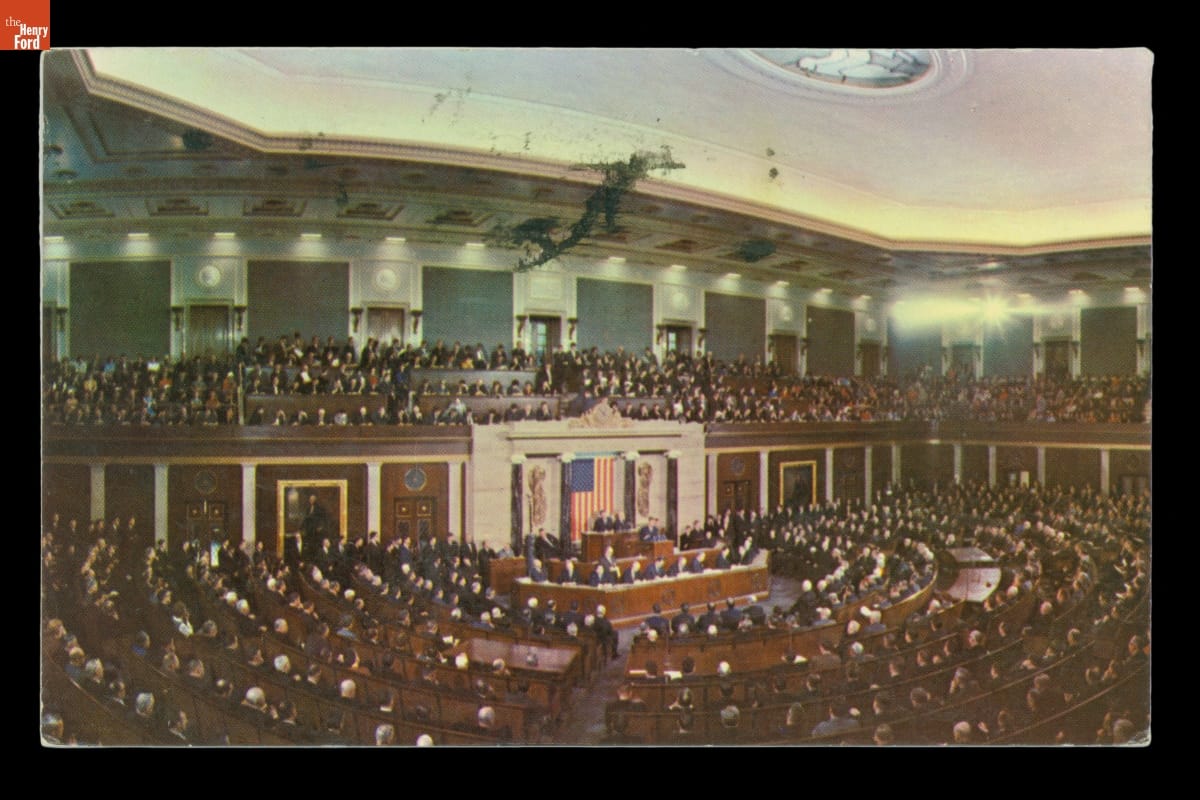
- President Kennedy Addressing a Joint Session of Congress, 1962 or 1963 - This picture postcard -- published by the United States Capitol Historical Society -- depicts President John F. Kennedy delivering a State of the Union message in a Joint Session of Congress during January of 1962 or 1963. It was mailed by Mr. and Mrs. Don Andrews on August 3, 1968, during a two-week vacation to Pennsylvania, Maryland, and Washington, D.C.
- 1962-1963
- Collections - Artifact
President Kennedy Addressing a Joint Session of Congress, 1962 or 1963
This picture postcard -- published by the United States Capitol Historical Society -- depicts President John F. Kennedy delivering a State of the Union message in a Joint Session of Congress during January of 1962 or 1963. It was mailed by Mr. and Mrs. Don Andrews on August 3, 1968, during a two-week vacation to Pennsylvania, Maryland, and Washington, D.C.
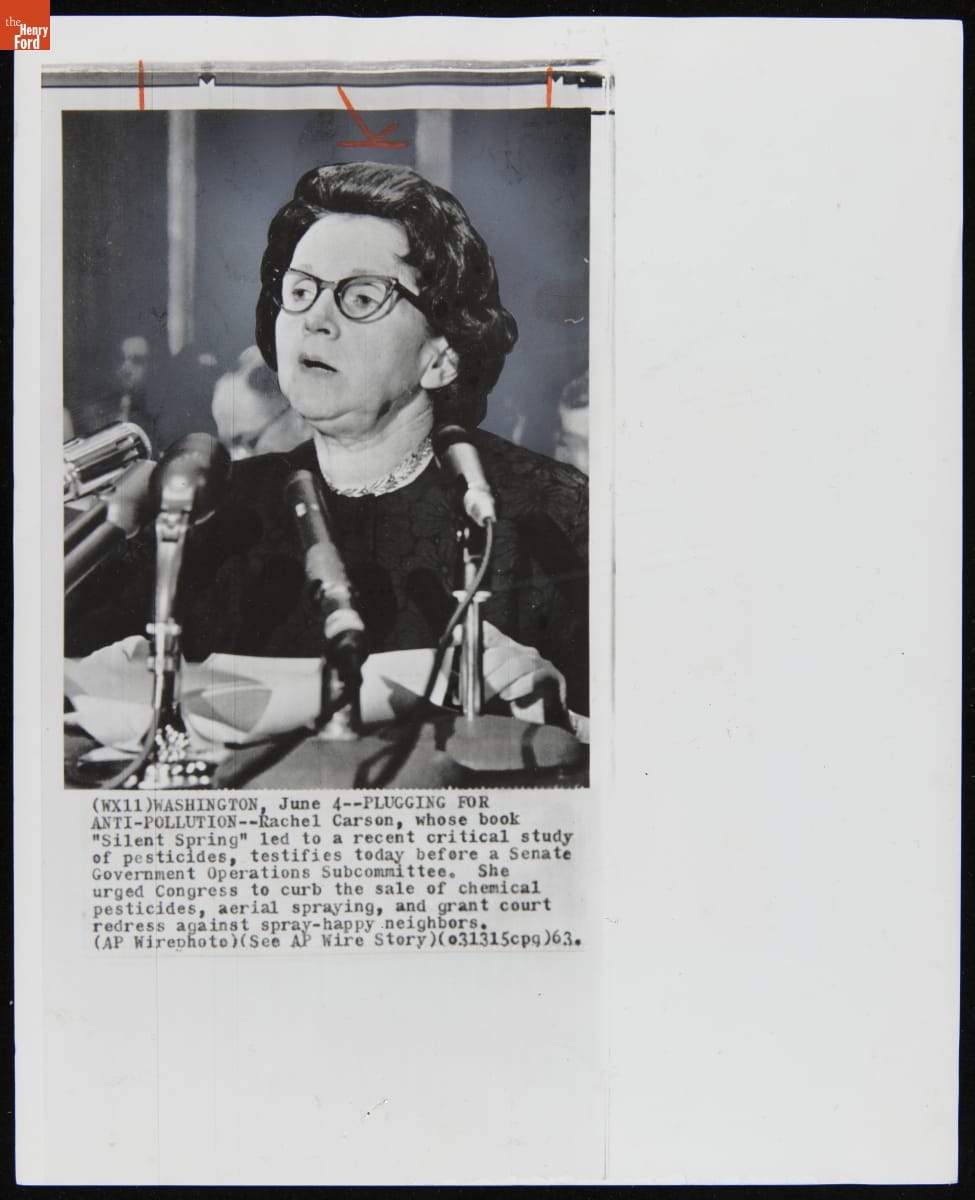
- Rachel Carson Testifying before a Senate Government Operations Subcommittee, June 1963 - Marine biologist Rachel Carson's book, <em>Silent Spring</em>, helped spark the 1960s environmental movement. Carson stressed the detrimental effects of pesticide use, including DDT, on natural ecosystems and human health. Her testimony before the U.S. Congress and other evidence led to national legislation to mitigate environmental damage including the creation of the U.S. Environmental Protection Agency (1970) and banning DDT (1972).
- June 04, 1963
- Collections - Artifact
Rachel Carson Testifying before a Senate Government Operations Subcommittee, June 1963
Marine biologist Rachel Carson's book, Silent Spring, helped spark the 1960s environmental movement. Carson stressed the detrimental effects of pesticide use, including DDT, on natural ecosystems and human health. Her testimony before the U.S. Congress and other evidence led to national legislation to mitigate environmental damage including the creation of the U.S. Environmental Protection Agency (1970) and banning DDT (1972).
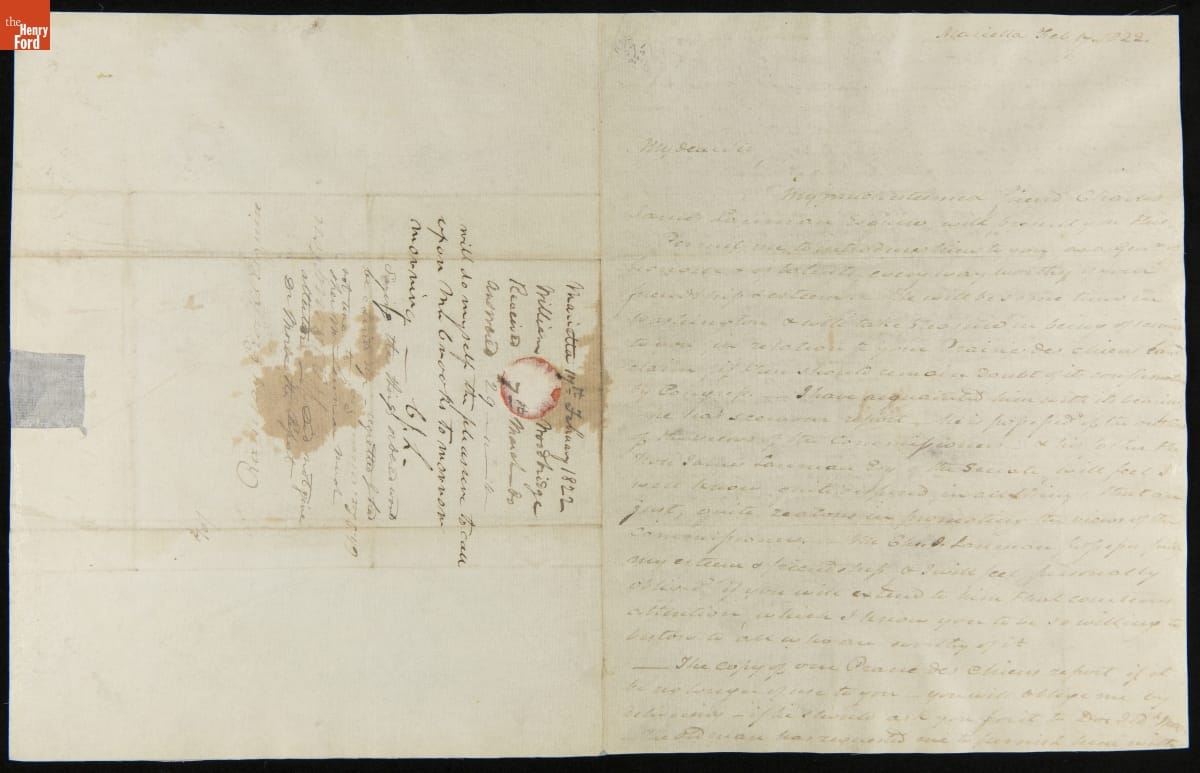
- Letter from William Woodbridge to Ramsay Crooks, February 17, 1822 -
- February 17, 1822
- Collections - Artifact
Letter from William Woodbridge to Ramsay Crooks, February 17, 1822
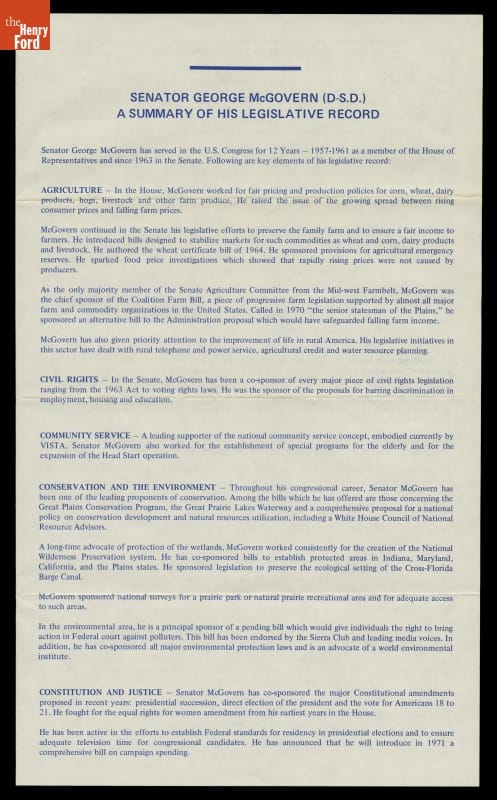
- Brochure, "Senator George McGovern, A Summary of His Legislative Record, 1972 - Democrats nominated South Dakota Senator George McGovern for president in 1972. McGovern relied on grassroots support and won key primaries on his way to the Democratic nomination, campaigning for the immediate end of the war in Vietnam and liberal social and economic programs. His presidential run, however, was plagued with setbacks, and he lost in a landslide to incumbent Republican president Richard Nixon.
- 1972
- Collections - Artifact
Brochure, "Senator George McGovern, A Summary of His Legislative Record, 1972
Democrats nominated South Dakota Senator George McGovern for president in 1972. McGovern relied on grassroots support and won key primaries on his way to the Democratic nomination, campaigning for the immediate end of the war in Vietnam and liberal social and economic programs. His presidential run, however, was plagued with setbacks, and he lost in a landslide to incumbent Republican president Richard Nixon.
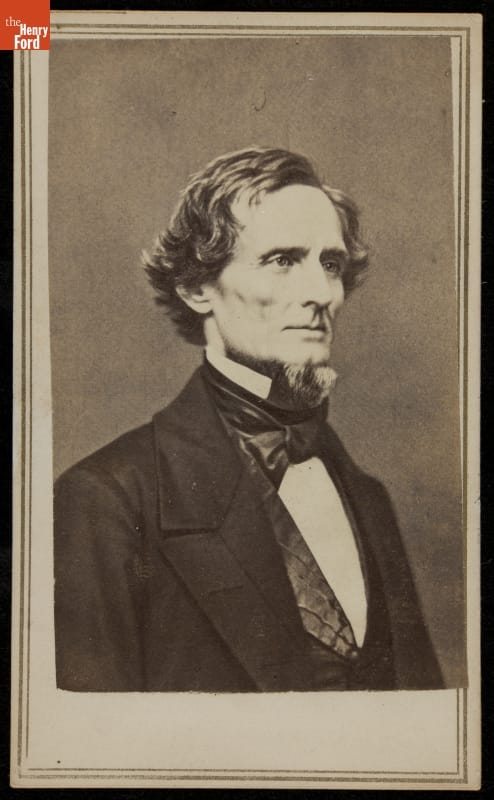
- U.S. Senator Jefferson Davis, 1858-1860 - U.S. Congressman Jefferson Davis of Mississippi posed for this portrait at Mathew Brady's Washington, D.C., studio. In early 1861, Davis resigned from the Senate, becoming president of the newly formed Confederate States of America. During the Civil War, a New York firm sold Brady photographs of military figures, battlefields, and politicians -- as well as this image of Jefferson Davis.
- 1858-1860
- Collections - Artifact
U.S. Senator Jefferson Davis, 1858-1860
U.S. Congressman Jefferson Davis of Mississippi posed for this portrait at Mathew Brady's Washington, D.C., studio. In early 1861, Davis resigned from the Senate, becoming president of the newly formed Confederate States of America. During the Civil War, a New York firm sold Brady photographs of military figures, battlefields, and politicians -- as well as this image of Jefferson Davis.
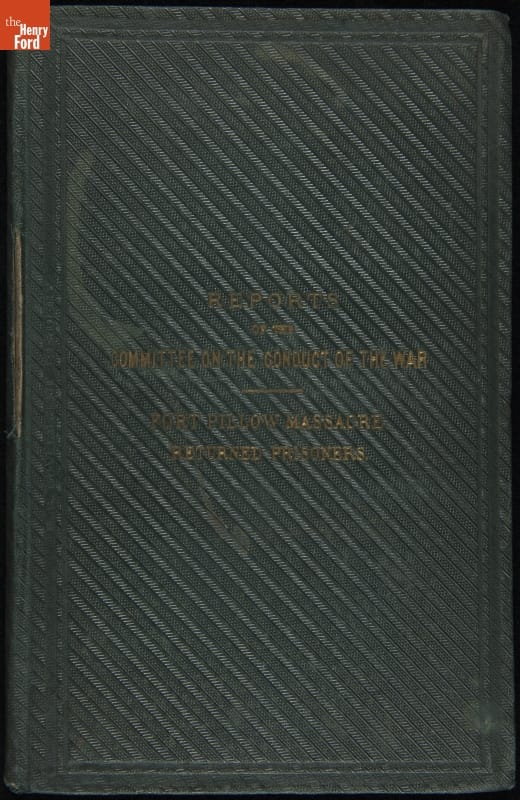
- Book, "Reports of the Committee on the Conduct of the War: Fort Pillow Massacre. Returned Prisoners," 1864 -
- 1864
- Collections - Artifact
Book, "Reports of the Committee on the Conduct of the War: Fort Pillow Massacre. Returned Prisoners," 1864
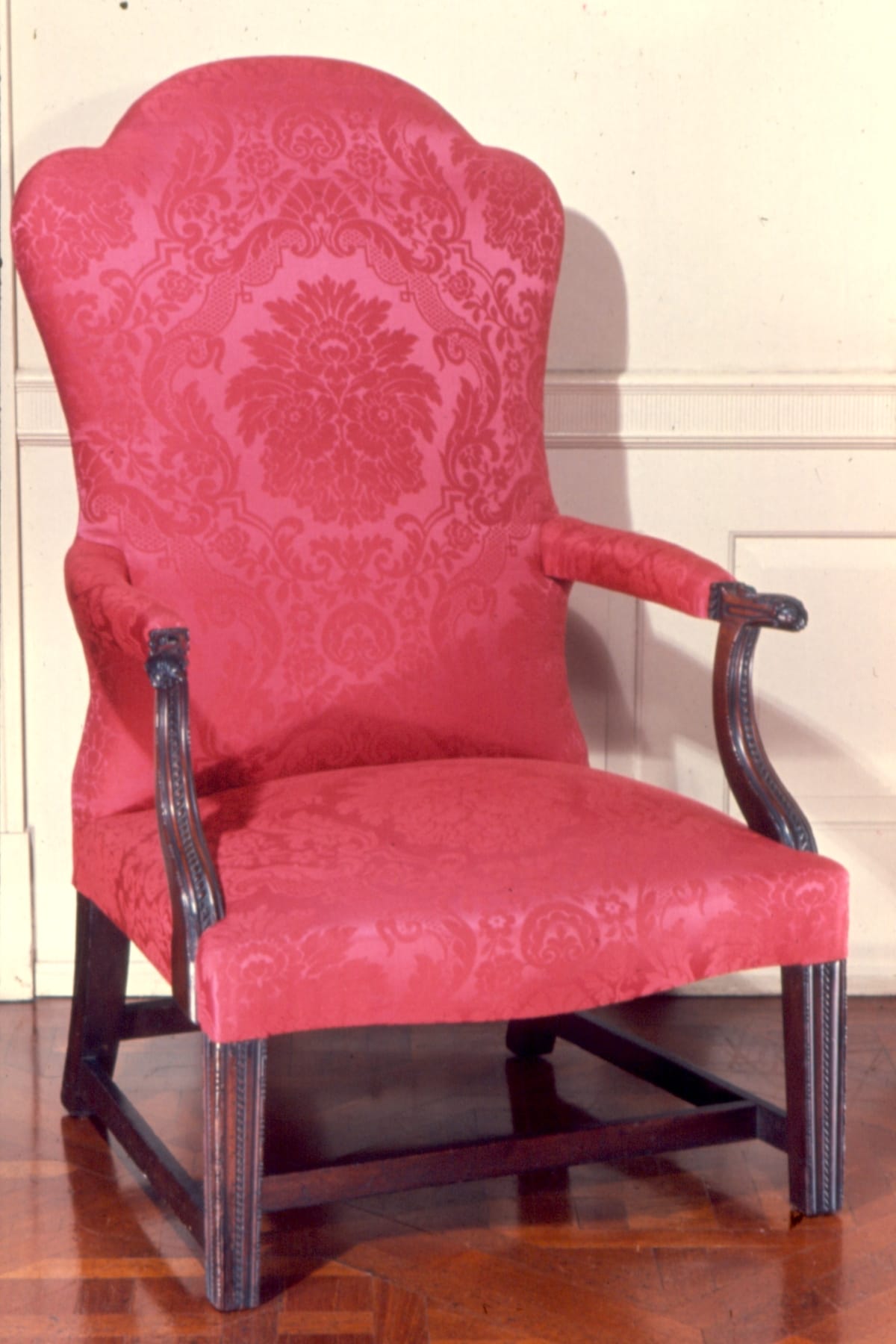
- Speaker's Chair Used in the United States House of Representatives in Philadelphia, 1790-1795 - This chair was made in the early 1790s for either the Speaker of the U.S. House of Representatives or the President of the U.S. Senate, both bodies then located in Philadelphia. We believe that it was later used by the U.S. Supreme Court, along with three similar chairs, now at the Independence National Historical Park, Philadelphia.
- 1790-1795
- Collections - Artifact
Speaker's Chair Used in the United States House of Representatives in Philadelphia, 1790-1795
This chair was made in the early 1790s for either the Speaker of the U.S. House of Representatives or the President of the U.S. Senate, both bodies then located in Philadelphia. We believe that it was later used by the U.S. Supreme Court, along with three similar chairs, now at the Independence National Historical Park, Philadelphia.
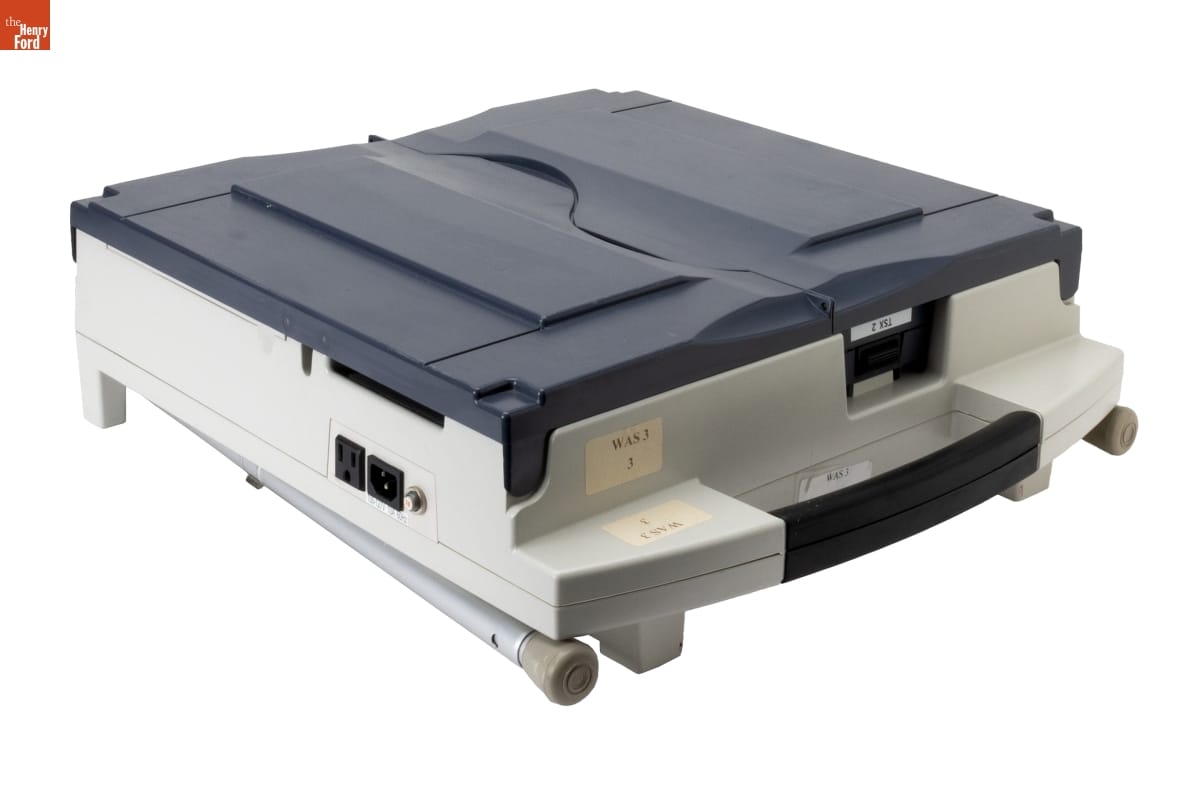
- Diebold Accuvote TSX Voting Machine, Used by J. Alex Halderman to Demonstrate Voting Cybersecurity Issues, circa 2007 -
- circa 2007
- Collections - Artifact
Diebold Accuvote TSX Voting Machine, Used by J. Alex Halderman to Demonstrate Voting Cybersecurity Issues, circa 2007
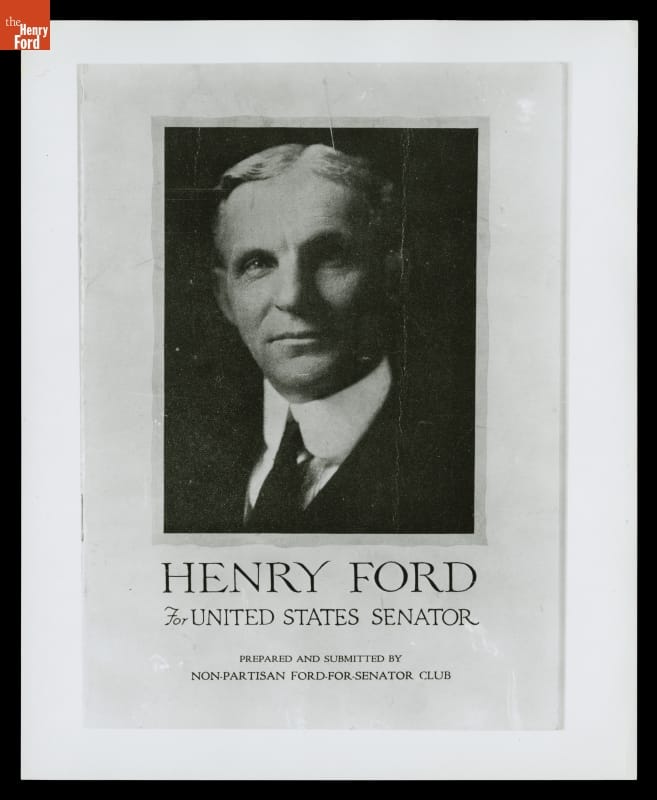
- Campaign, "Henry Ford for United States Senator, Prepared and Submitted by Non-Partisan Ford-for-Senator Club," 1918 - In 1918, at the request of President Woodrow Wilson, Henry Ford reluctantly agreed to run for the Senate, stipulating he would not actively campaign. His opponent, Truman Newberry, former Secretary of the Navy, lavished thousands in advertising and public appearances. Surprisingly, Newberry only defeated Ford by the relatively narrow margin of 2,200 votes. Henry never ran for public office again.
- 1918
- Collections - Artifact
Campaign, "Henry Ford for United States Senator, Prepared and Submitted by Non-Partisan Ford-for-Senator Club," 1918
In 1918, at the request of President Woodrow Wilson, Henry Ford reluctantly agreed to run for the Senate, stipulating he would not actively campaign. His opponent, Truman Newberry, former Secretary of the Navy, lavished thousands in advertising and public appearances. Surprisingly, Newberry only defeated Ford by the relatively narrow margin of 2,200 votes. Henry never ran for public office again.
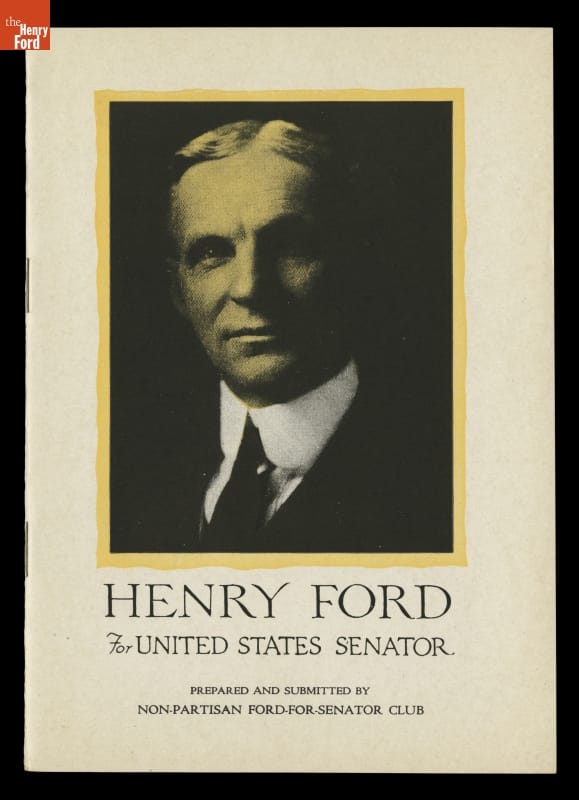
- Campaign Brochure, "Henry Ford for United States Senator," 1918 - In 1918, at the request of President Woodrow Wilson, Henry Ford reluctantly agreed to run for the Senate, stipulating he would not actively campaign. His opponent, Truman Newberry, former Secretary of the Navy, lavished thousands in advertising and public appearances. Surprisingly, Newberry only defeated Ford by the relatively narrow margin of 2,200 votes. Henry never ran for public office again.
- 1918
- Collections - Artifact
Campaign Brochure, "Henry Ford for United States Senator," 1918
In 1918, at the request of President Woodrow Wilson, Henry Ford reluctantly agreed to run for the Senate, stipulating he would not actively campaign. His opponent, Truman Newberry, former Secretary of the Navy, lavished thousands in advertising and public appearances. Surprisingly, Newberry only defeated Ford by the relatively narrow margin of 2,200 votes. Henry never ran for public office again.