
Search
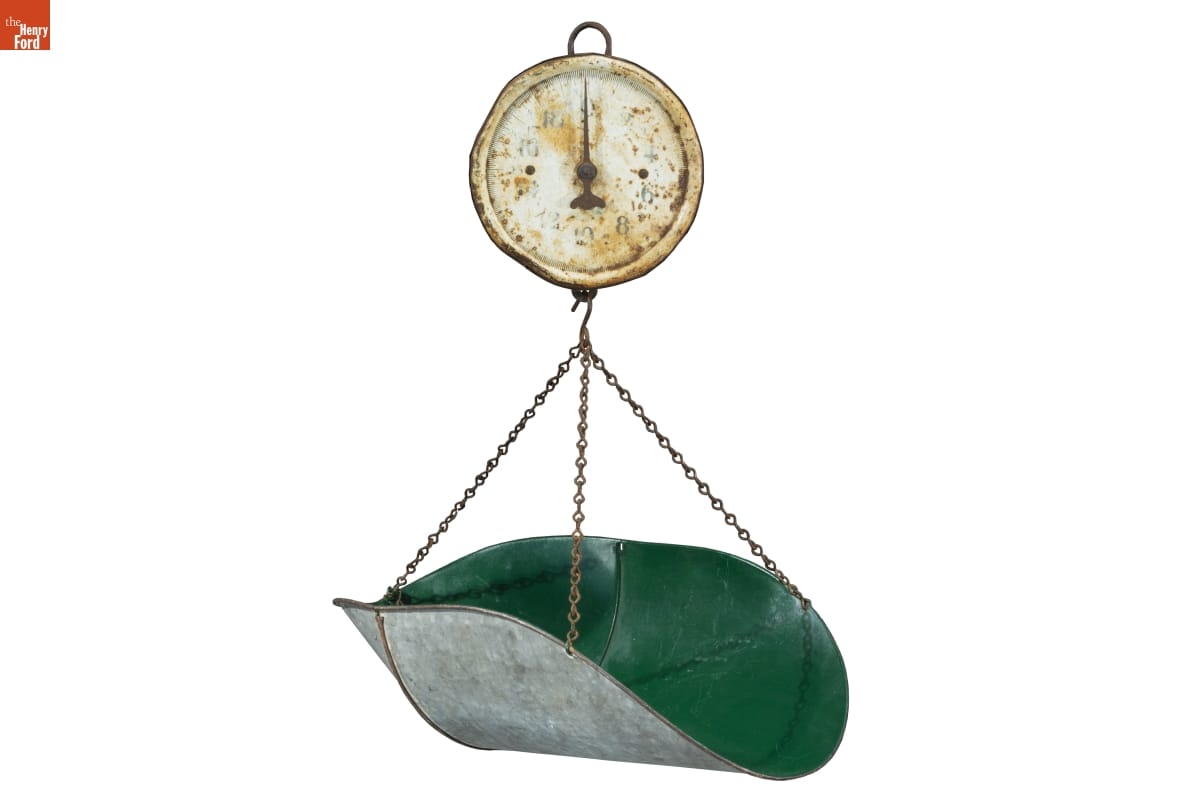
- Fruit and Vegetable Scale, Used by the Krasnoff Family at Eastern Market, Detroit, Michigan, 1923-1940 -
- 1923-1940
- Collections - Artifact
Fruit and Vegetable Scale, Used by the Krasnoff Family at Eastern Market, Detroit, Michigan, 1923-1940
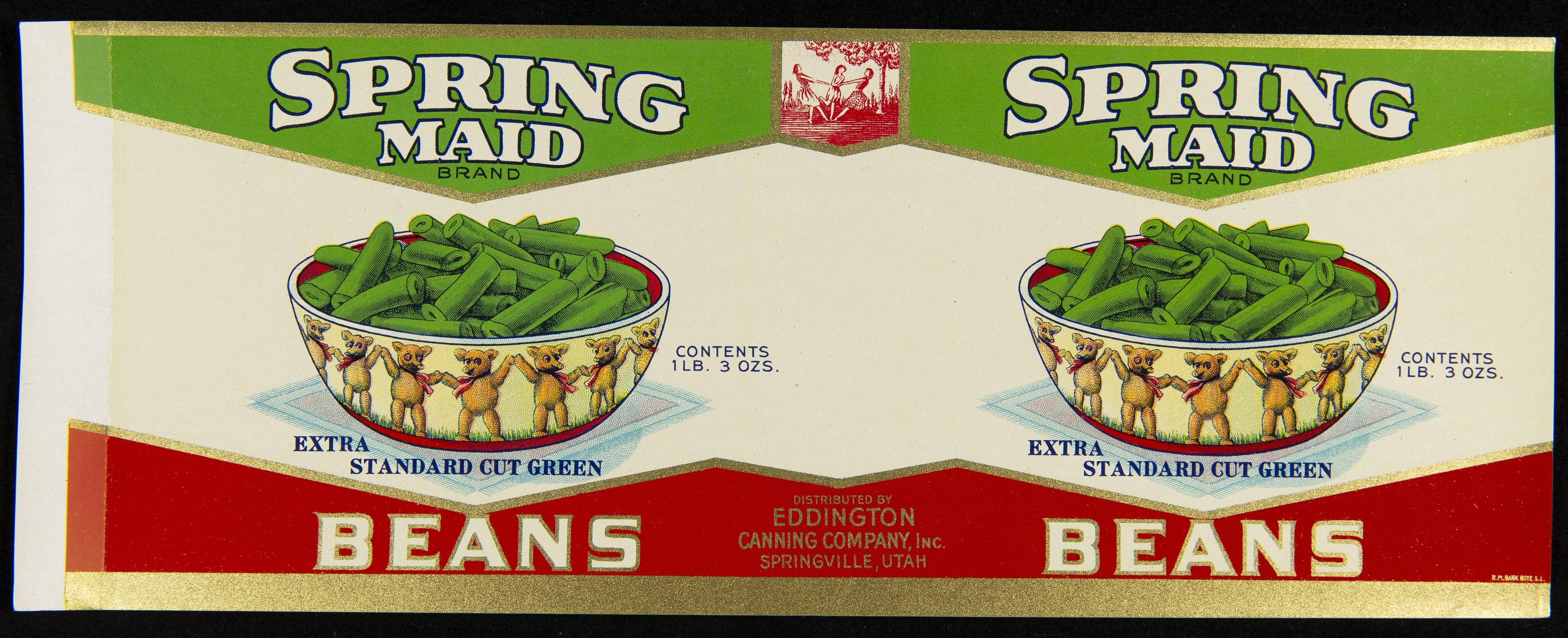
- Can Label, "Spring Maid Brand Cut Green Beans," 1904-1958 - Manufacturers of similar products sought ways to make their company's goods stand out on store shelves. Attractive labels, like this design for Spring Maid Brand Cut Green Beans, helped catch the attention of potential customers - hopefully encouraging them to purchase the company's product rather than that of a competitor.
- 1904-1958
- Collections - Artifact
Can Label, "Spring Maid Brand Cut Green Beans," 1904-1958
Manufacturers of similar products sought ways to make their company's goods stand out on store shelves. Attractive labels, like this design for Spring Maid Brand Cut Green Beans, helped catch the attention of potential customers - hopefully encouraging them to purchase the company's product rather than that of a competitor.
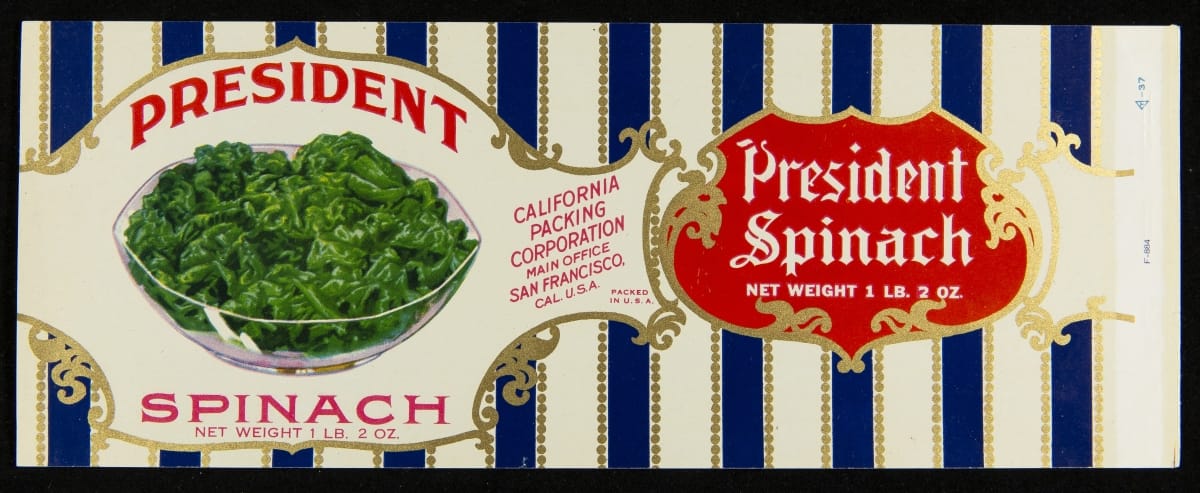
- Can Label, "President Brand Spinach," 1920-1940 - Manufacturers of similar products sought ways to make their company's goods stand out on store shelves. Attractive labels, like this design for President Brand Spinach, helped catch the attention of potential customers -- hopefully encouraging them to purchase the company's product rather than that of a competitor.
- 1920-1940
- Collections - Artifact
Can Label, "President Brand Spinach," 1920-1940
Manufacturers of similar products sought ways to make their company's goods stand out on store shelves. Attractive labels, like this design for President Brand Spinach, helped catch the attention of potential customers -- hopefully encouraging them to purchase the company's product rather than that of a competitor.
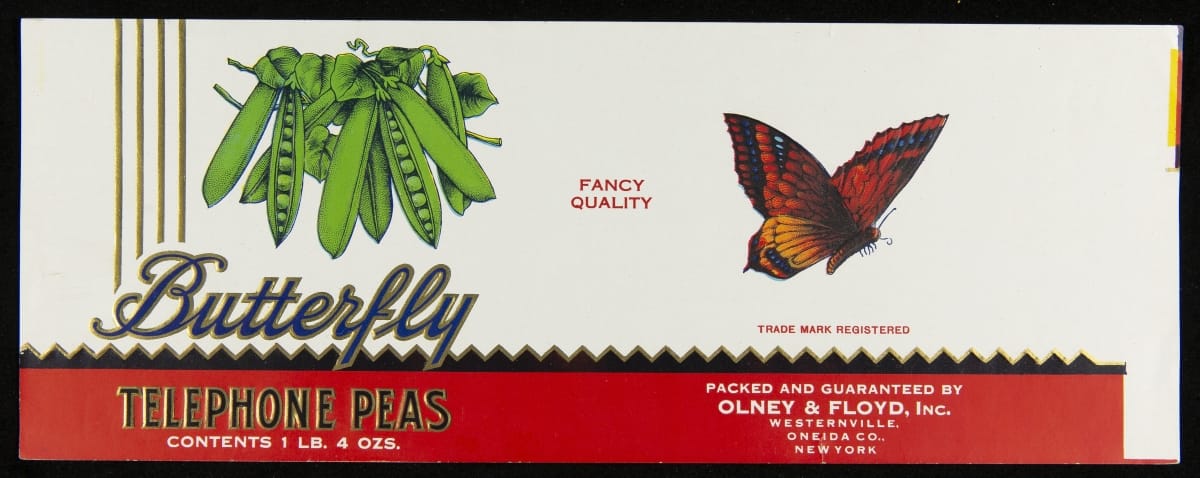
- Can Label, "Butterfly Brand Telephone Peas," circa 1950 - Throughout the late-19th to early-20th centuries, lithographers created labels to help sell products. Manufacturers of foodstuffs utilized the same design for several different products -- a strategy which helped customers distinguish one brand over another. Olney and Floyd's Butterfly Brand products were easy to identify with their colorful, eye-catching labels and signature butterfly.
- circa 1950
- Collections - Artifact
Can Label, "Butterfly Brand Telephone Peas," circa 1950
Throughout the late-19th to early-20th centuries, lithographers created labels to help sell products. Manufacturers of foodstuffs utilized the same design for several different products -- a strategy which helped customers distinguish one brand over another. Olney and Floyd's Butterfly Brand products were easy to identify with their colorful, eye-catching labels and signature butterfly.
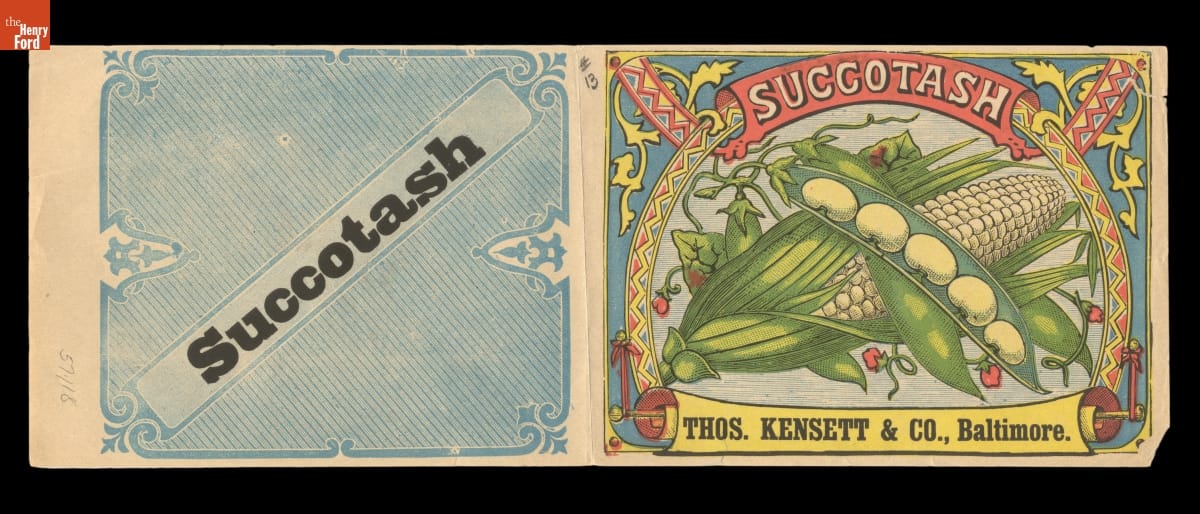
- Product Label, "Succotash," 1875-1895 - Manufacturers of similar products sought ways to make their company's goods stand out on store shelves. Attractive labels, like this eye-catching design for a can of succotash, helped catch the attention of potential customers and encourage them to purchase the company's product rather than that of a competitor.
- 1875-1895
- Collections - Artifact
Product Label, "Succotash," 1875-1895
Manufacturers of similar products sought ways to make their company's goods stand out on store shelves. Attractive labels, like this eye-catching design for a can of succotash, helped catch the attention of potential customers and encourage them to purchase the company's product rather than that of a competitor.
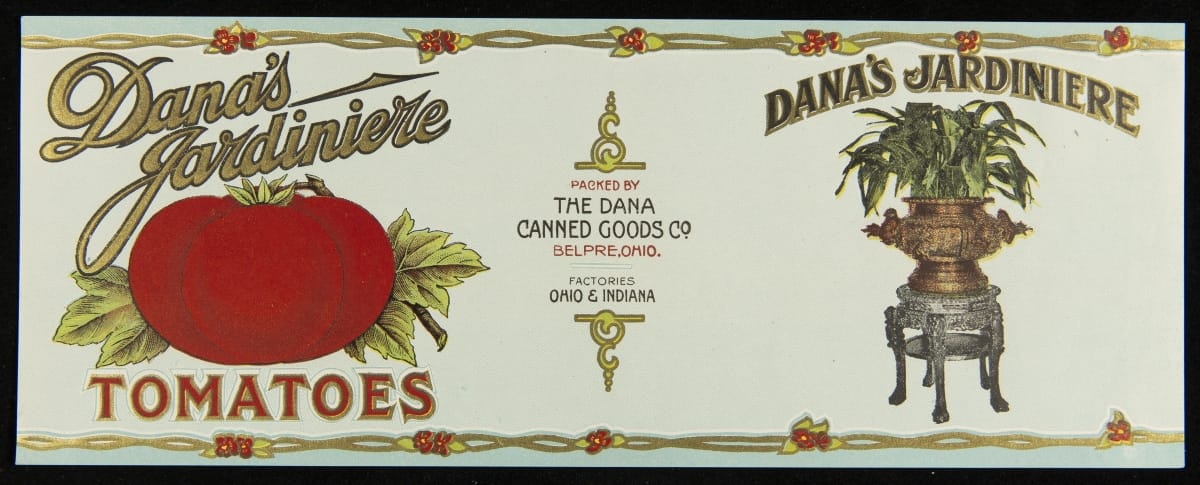
- Can Label, "Dana's Jardiniere Brand Tomatoes," 1912-1920 - Manufacturers of similar products sought ways to make their company's goods stand out on store shelves. Attractive labels, like this design for Dana's Jardiniere Brand Tomatoes, helped catch the attention of potential customers -- hopefully encouraging them to purchase the company's product rather than that of a competitor.
- 1912-1920
- Collections - Artifact
Can Label, "Dana's Jardiniere Brand Tomatoes," 1912-1920
Manufacturers of similar products sought ways to make their company's goods stand out on store shelves. Attractive labels, like this design for Dana's Jardiniere Brand Tomatoes, helped catch the attention of potential customers -- hopefully encouraging them to purchase the company's product rather than that of a competitor.
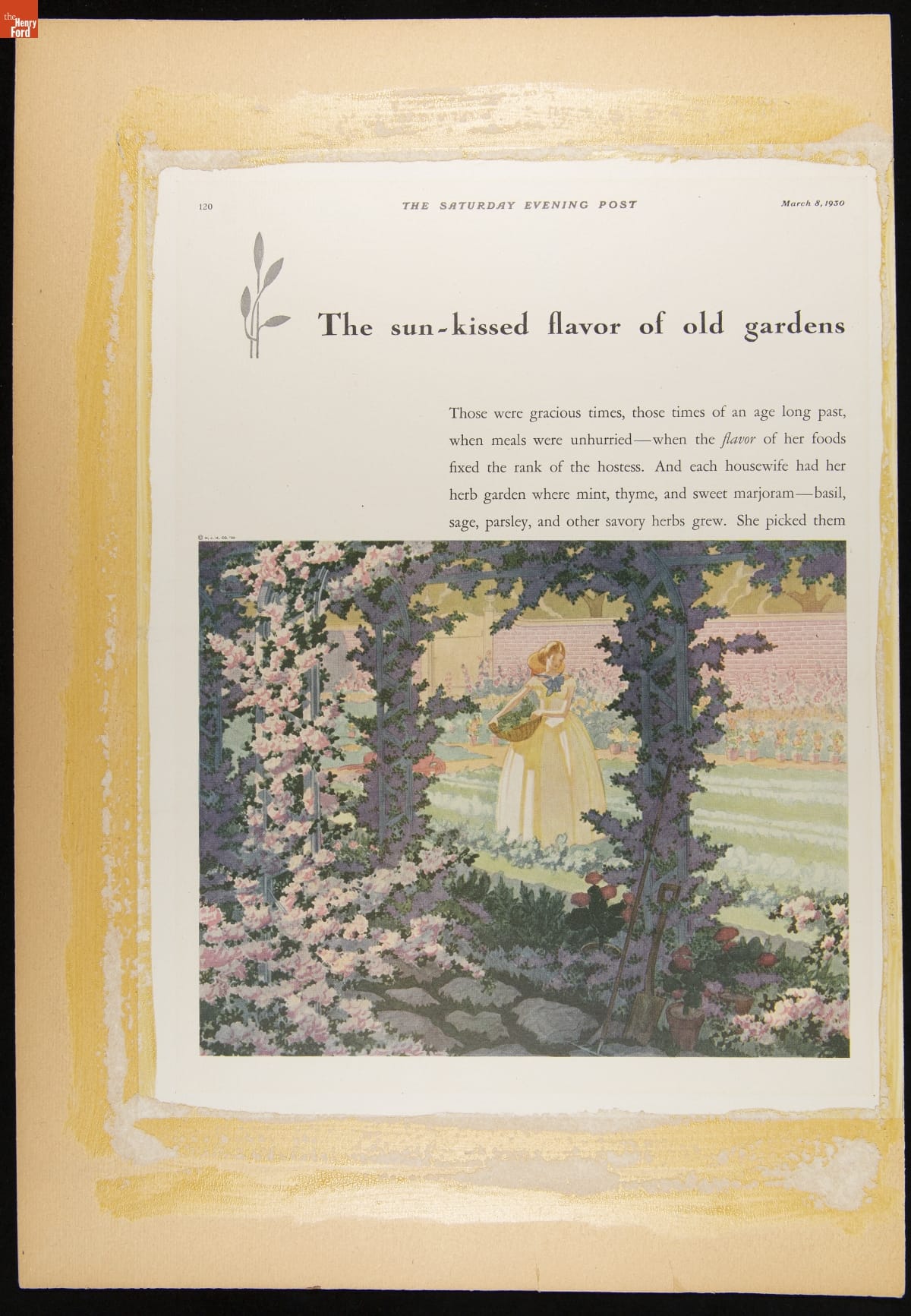
- "The Sun-Kissed Flavor of Old Gardens," Heinz Company Advertisement, March 8, 1930 - This two-page tear sheet advertising layout was created to be published in the Saturday Evening Post on March 8, 1930. The advertisement describes how old ways of cooking were painstaking and time consuming, whereas Heinz products exhibit the same great taste of old recipes without all the hassle.
- March 08, 1930
- Collections - Artifact
"The Sun-Kissed Flavor of Old Gardens," Heinz Company Advertisement, March 8, 1930
This two-page tear sheet advertising layout was created to be published in the Saturday Evening Post on March 8, 1930. The advertisement describes how old ways of cooking were painstaking and time consuming, whereas Heinz products exhibit the same great taste of old recipes without all the hassle.
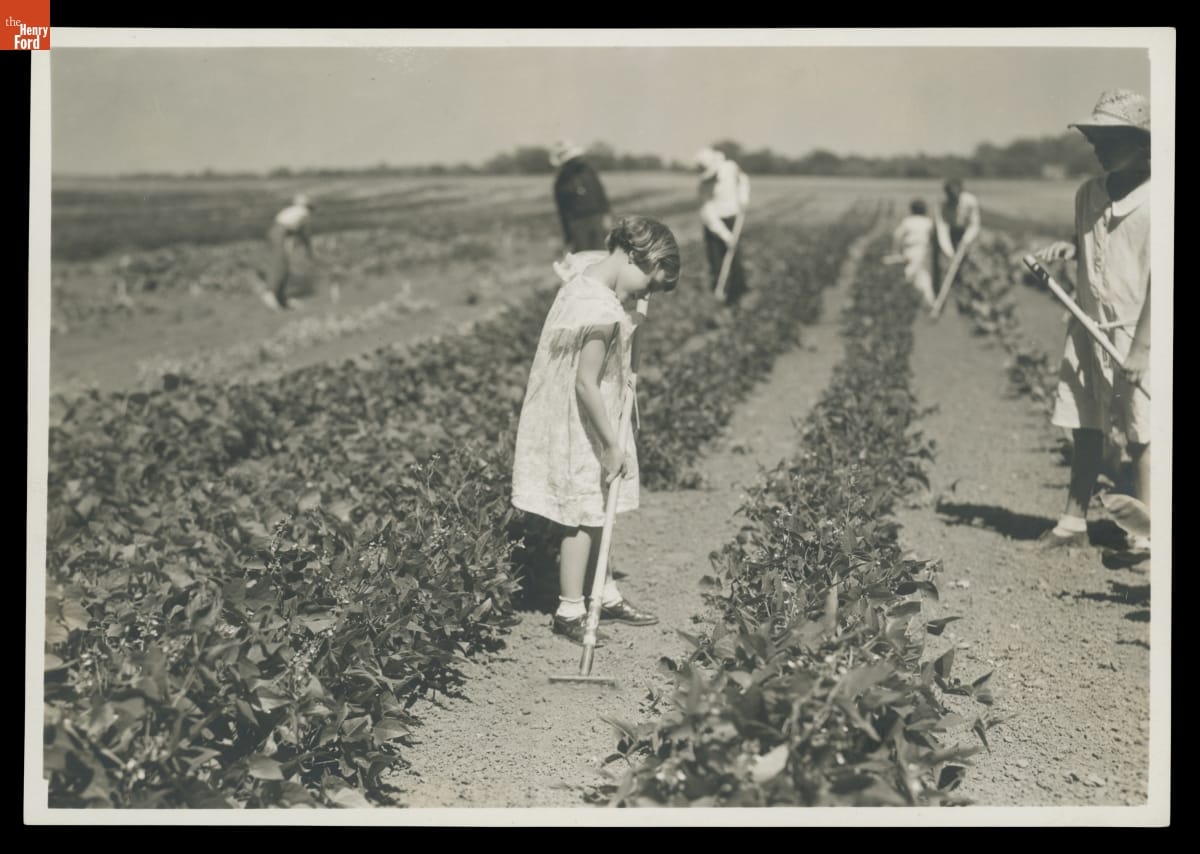
- School Children Working in a Garden, Macon, Michigan -
- 1930-1947
- Collections - Artifact
School Children Working in a Garden, Macon, Michigan
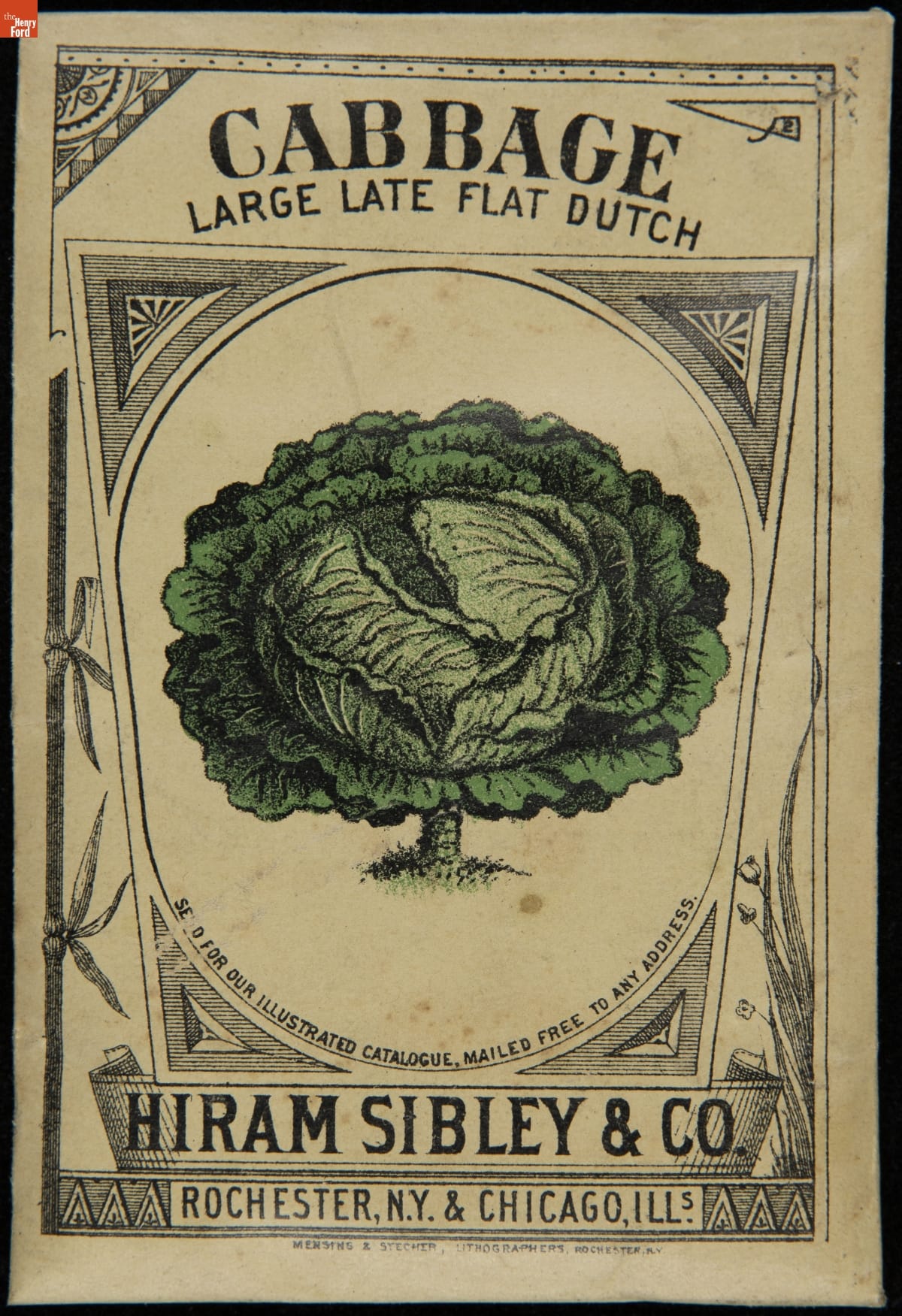
- Hiram Sibley & Co. "Cabbage Large Late Flat Dutch" Seed Packet, Used in the C.W. Barnes Store, 1882-1888 - Distributing seeds required sealing them into little packets or "papers" constructed like envelopes. Seed companies advertised their businesses on these packets, illustrated the vegetable with hand-colored images, and specified growing directions, sometimes in multiple languages. Hiram Sibley and Co. packaged collections of vegetable seeds in specially designed boxes and shipped them to general stores for sale to home gardeners.
- 1882-1888
- Collections - Artifact
Hiram Sibley & Co. "Cabbage Large Late Flat Dutch" Seed Packet, Used in the C.W. Barnes Store, 1882-1888
Distributing seeds required sealing them into little packets or "papers" constructed like envelopes. Seed companies advertised their businesses on these packets, illustrated the vegetable with hand-colored images, and specified growing directions, sometimes in multiple languages. Hiram Sibley and Co. packaged collections of vegetable seeds in specially designed boxes and shipped them to general stores for sale to home gardeners.
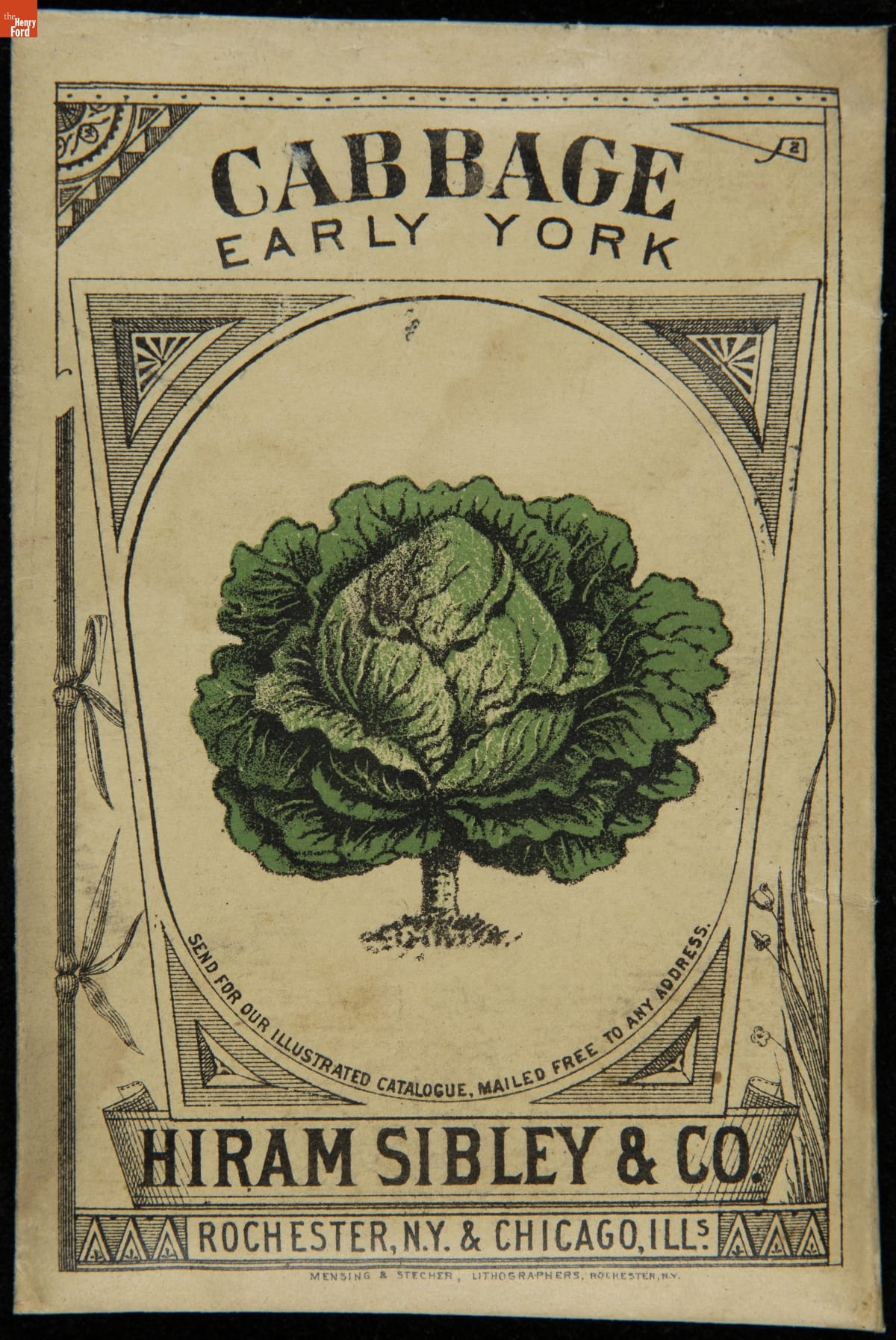
- Hiram Sibley & Co. "Cabbage Early York" Seed Packet, Used in the C.W. Barnes Store, 1882-1888 - Distributing seeds required sealing them into little packets or "papers" constructed like envelopes. Seed companies advertised their businesses on these packets, illustrated the vegetable with hand-colored images, and specified growing directions, sometimes in multiple languages. Hiram Sibley and Co. packaged collections of vegetable seeds in specially designed boxes and shipped them to general stores for sale to home gardeners.
- 1882-1888
- Collections - Artifact
Hiram Sibley & Co. "Cabbage Early York" Seed Packet, Used in the C.W. Barnes Store, 1882-1888
Distributing seeds required sealing them into little packets or "papers" constructed like envelopes. Seed companies advertised their businesses on these packets, illustrated the vegetable with hand-colored images, and specified growing directions, sometimes in multiple languages. Hiram Sibley and Co. packaged collections of vegetable seeds in specially designed boxes and shipped them to general stores for sale to home gardeners.