
Search
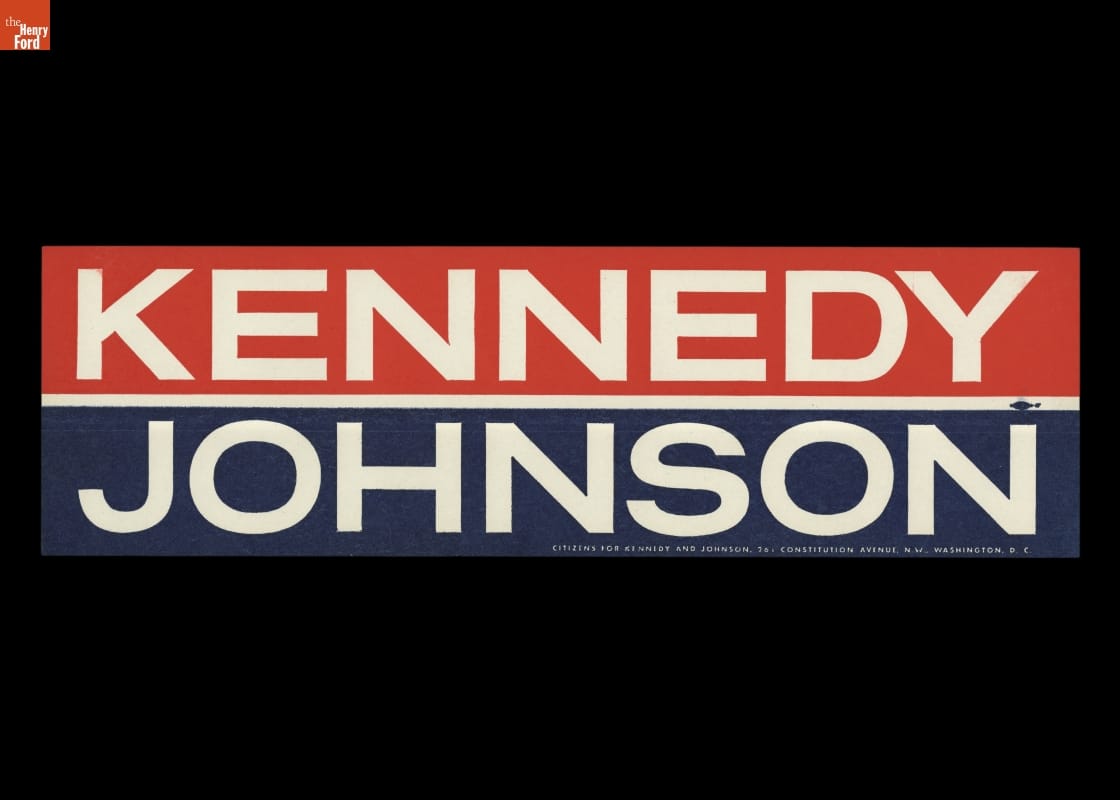
- Political Campaign Bumper Sticker, "Kennedy / Johnson," 1960 - This bumper sticker was produced for the 1960 Kennedy-Johnson presidential campaign. After John F. Kennedy defeated Texas Senator Lyndon B. Johnson in the 1960 Democratic primary, Kennedy named Johnson as his running mate. Johnson's addition brought on board an experienced old-school politician, and also provided a better chance of victory in the key swing states.
- 1960
- Collections - Artifact
Political Campaign Bumper Sticker, "Kennedy / Johnson," 1960
This bumper sticker was produced for the 1960 Kennedy-Johnson presidential campaign. After John F. Kennedy defeated Texas Senator Lyndon B. Johnson in the 1960 Democratic primary, Kennedy named Johnson as his running mate. Johnson's addition brought on board an experienced old-school politician, and also provided a better chance of victory in the key swing states.
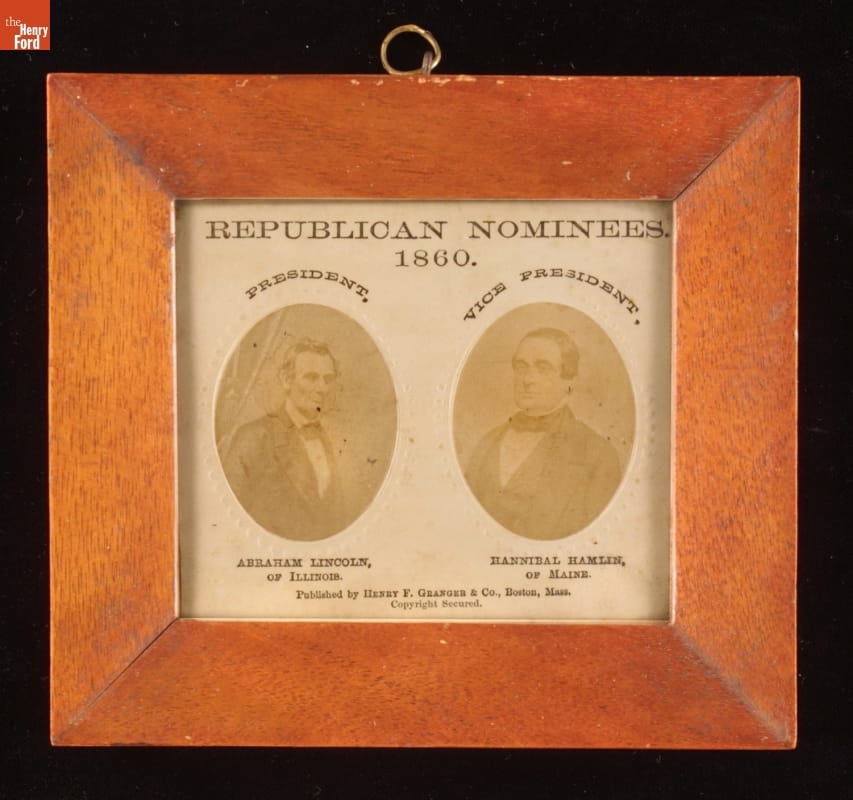
- Framed Photographs of Republican Presidential Nominees for President and Vice-President, 1860 - The emerging Republican Party favored a moderate, geographically balanced ticket for the 1860 presidential election. Party leaders nominated Abraham Lincoln of Illinois and Hannibal Hamlin of Maine for president and vice president. The two men had never met, but both were strong orators who opposed extending slavery into western territories. Lincoln-Hamlin would carry the election, despite receiving almost no Southern support.
- 1860
- Collections - Artifact
Framed Photographs of Republican Presidential Nominees for President and Vice-President, 1860
The emerging Republican Party favored a moderate, geographically balanced ticket for the 1860 presidential election. Party leaders nominated Abraham Lincoln of Illinois and Hannibal Hamlin of Maine for president and vice president. The two men had never met, but both were strong orators who opposed extending slavery into western territories. Lincoln-Hamlin would carry the election, despite receiving almost no Southern support.
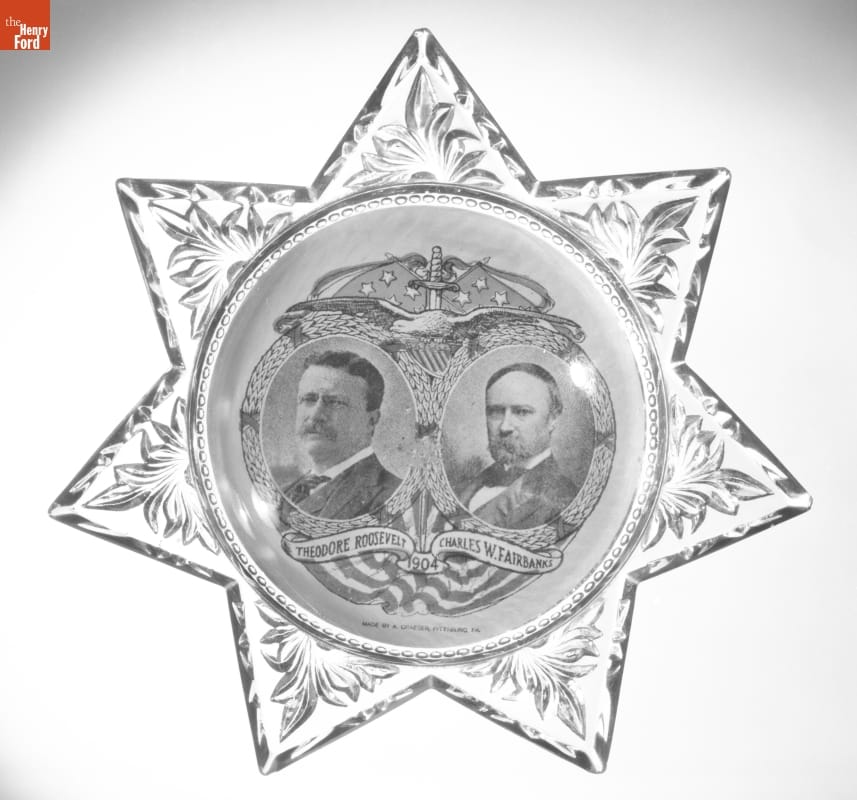
- Roosevelt-Fairbanks Campaign Paperweight, 1904 - Having assumed the presidency when McKinley was assassinated in 1901, Theodore Roosevelt was already immensely popular when he ran for president in 1904. His colorful and exuberant personality, range of interests and achievements, and skillful use of media gained him a wide following. Picking conservative Senator Charles W. Fairbanks as his running mate, Roosevelt was reelected in a landslide.
- 1904
- Collections - Artifact
Roosevelt-Fairbanks Campaign Paperweight, 1904
Having assumed the presidency when McKinley was assassinated in 1901, Theodore Roosevelt was already immensely popular when he ran for president in 1904. His colorful and exuberant personality, range of interests and achievements, and skillful use of media gained him a wide following. Picking conservative Senator Charles W. Fairbanks as his running mate, Roosevelt was reelected in a landslide.
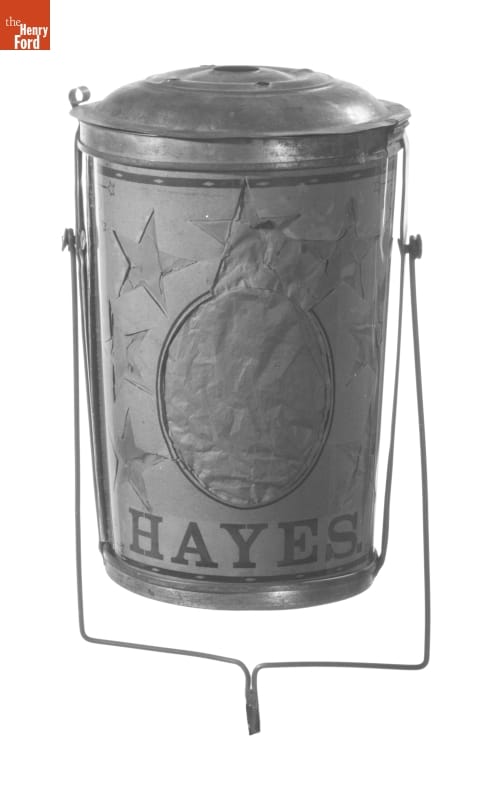
- Hayes-Wheeler Campaign Lantern, 1876 - Late-nineteenth-century political parties rallied their supporters by holding torchlight parades. In the evening, marchers lit up the street carrying torches, lamps and lanterns. Many of these political lanterns glowed with the names of the candidates, slogans and patriotic symbols. Supporters of Rutherford B. Hayes and William Wheeler--the winning Republican ticket in 1876--would have carried a lantern like this lantern during nighttime festivities.
- 1876
- Collections - Artifact
Hayes-Wheeler Campaign Lantern, 1876
Late-nineteenth-century political parties rallied their supporters by holding torchlight parades. In the evening, marchers lit up the street carrying torches, lamps and lanterns. Many of these political lanterns glowed with the names of the candidates, slogans and patriotic symbols. Supporters of Rutherford B. Hayes and William Wheeler--the winning Republican ticket in 1876--would have carried a lantern like this lantern during nighttime festivities.
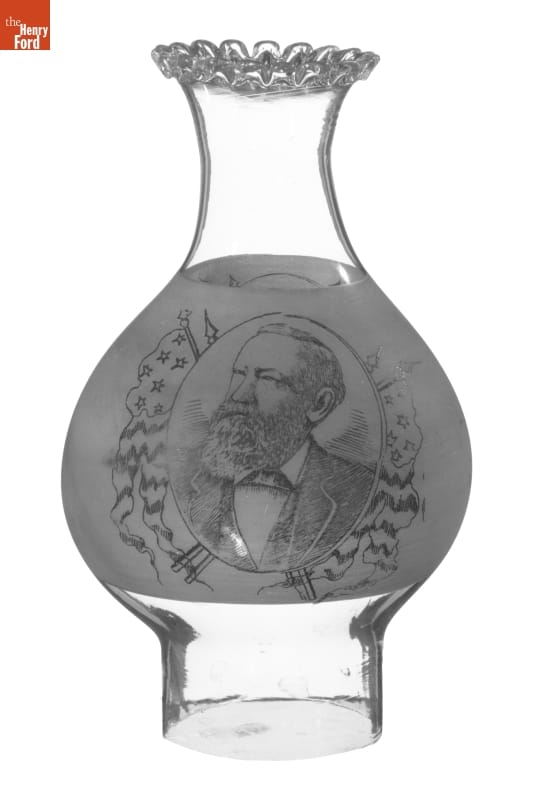
- Harrison-Morton Lamp Chimney, 1888 - The Republican Party selected Benjamin Harrison to run for president in 1888 and 1892. Harrison was a proponent of strong protective tariffs, sound money and pensions for Civil War veterans. He was also the grandson of a William Henry Harrison, the ninth President of the United States. Touting "protection" and his family's political lineage, Benjamin won in 1888, but lost in 1892.
- 1888
- Collections - Artifact
Harrison-Morton Lamp Chimney, 1888
The Republican Party selected Benjamin Harrison to run for president in 1888 and 1892. Harrison was a proponent of strong protective tariffs, sound money and pensions for Civil War veterans. He was also the grandson of a William Henry Harrison, the ninth President of the United States. Touting "protection" and his family's political lineage, Benjamin won in 1888, but lost in 1892.
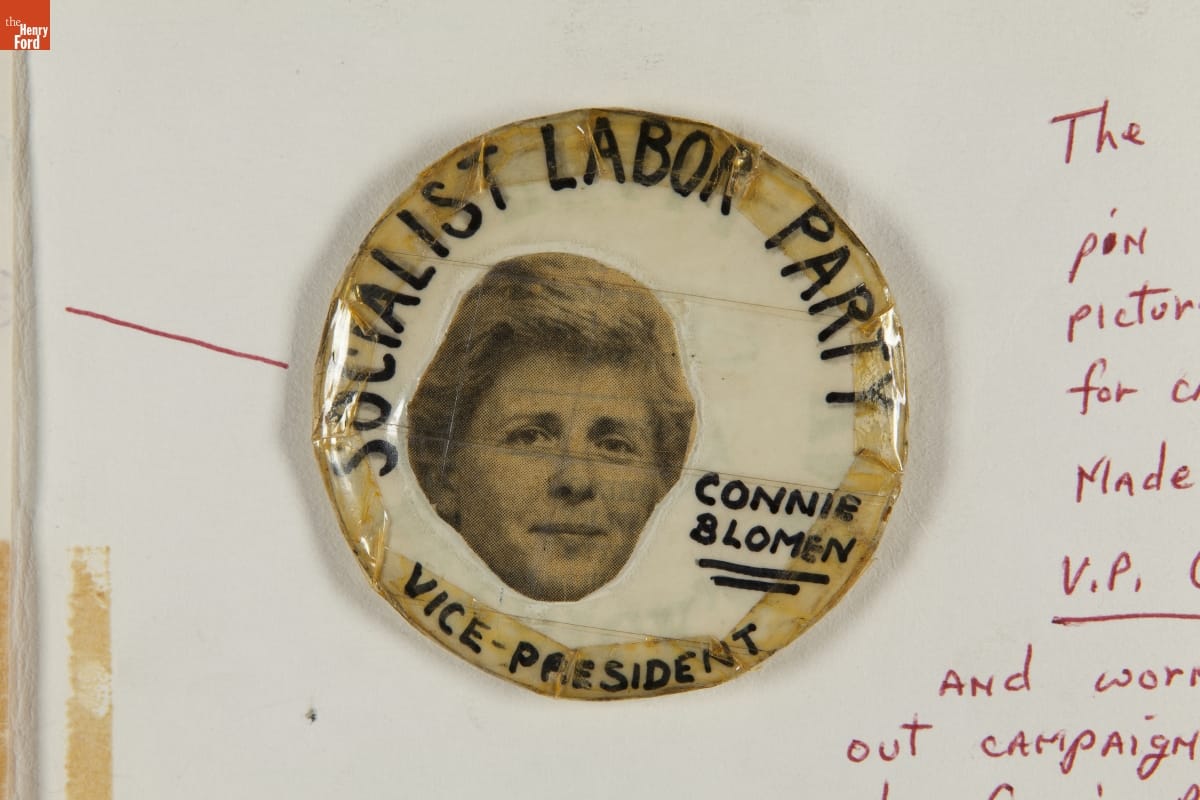
- Connie Blomen Campaign Button with Note, 1976-1977 - Connie Blomen ran for Vice President of the United States in 1976 on the Socialist Labor Party ticket. It was her first run for public office. The ticket, headed by 30-year party veteran Jules Levin, received less than 10,000 votes. Blomen sent this hand-made political button to Bernie Scates, who had requested a "picture pin" she may have created for the campaign.
- 1976-1977
- Collections - Artifact
Connie Blomen Campaign Button with Note, 1976-1977
Connie Blomen ran for Vice President of the United States in 1976 on the Socialist Labor Party ticket. It was her first run for public office. The ticket, headed by 30-year party veteran Jules Levin, received less than 10,000 votes. Blomen sent this hand-made political button to Bernie Scates, who had requested a "picture pin" she may have created for the campaign.
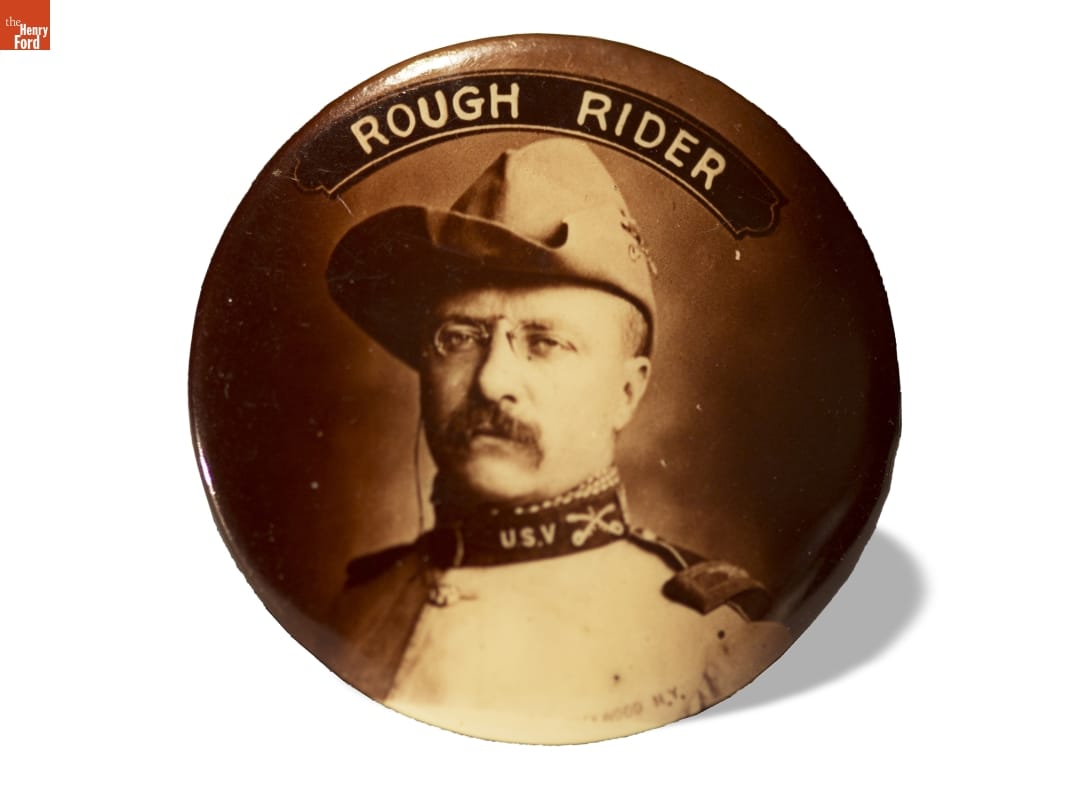
- Theodore Roosevelt Campaign Button, 1900 - Theodore Roosevelt's leadership of the Rough Riders during the Spanish-American War became a major campaigning tactic for the 1900 McKinley-Roosevelt presidential campaign. The decision to add Roosevelt as a running mate helped the two candidates score a decisive victory over Democratic challenger William Jennings Bryan. On September 14, 1901, McKinley died from an assassin's bullet, thrusting Roosevelt into the presidency.
- 1900
- Collections - Artifact
Theodore Roosevelt Campaign Button, 1900
Theodore Roosevelt's leadership of the Rough Riders during the Spanish-American War became a major campaigning tactic for the 1900 McKinley-Roosevelt presidential campaign. The decision to add Roosevelt as a running mate helped the two candidates score a decisive victory over Democratic challenger William Jennings Bryan. On September 14, 1901, McKinley died from an assassin's bullet, thrusting Roosevelt into the presidency.
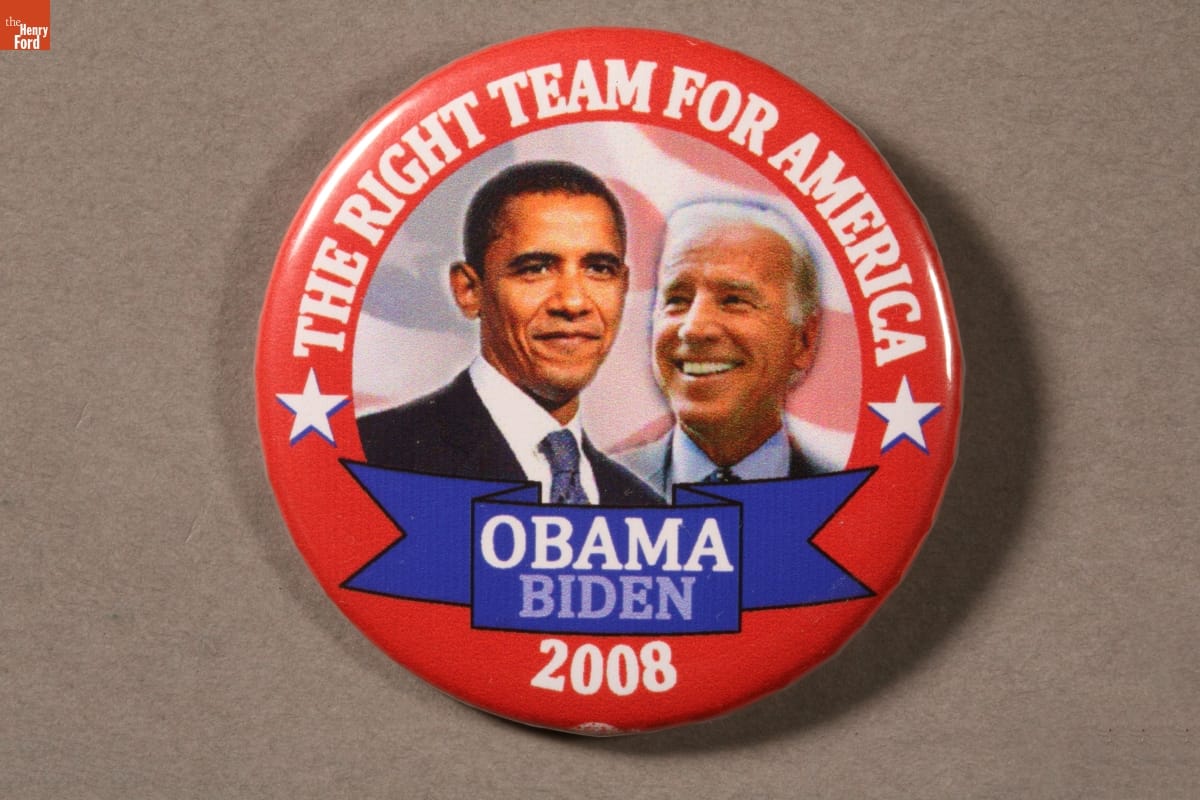
- Obama-Biden Campaign Button, 2008 - In 2008, Democratic Senator Barack Obama ran for the presidency of the United States. Obama, who had served less than one term in Congress, chose Senator Joseph Biden as his running mate. Biden had served in the Senate since 1973. Obama's vision of "Hope" and "Change" coupled with Biden's foreign policy and national security experience propelled the pair to victory.
- 2008
- Collections - Artifact
Obama-Biden Campaign Button, 2008
In 2008, Democratic Senator Barack Obama ran for the presidency of the United States. Obama, who had served less than one term in Congress, chose Senator Joseph Biden as his running mate. Biden had served in the Senate since 1973. Obama's vision of "Hope" and "Change" coupled with Biden's foreign policy and national security experience propelled the pair to victory.
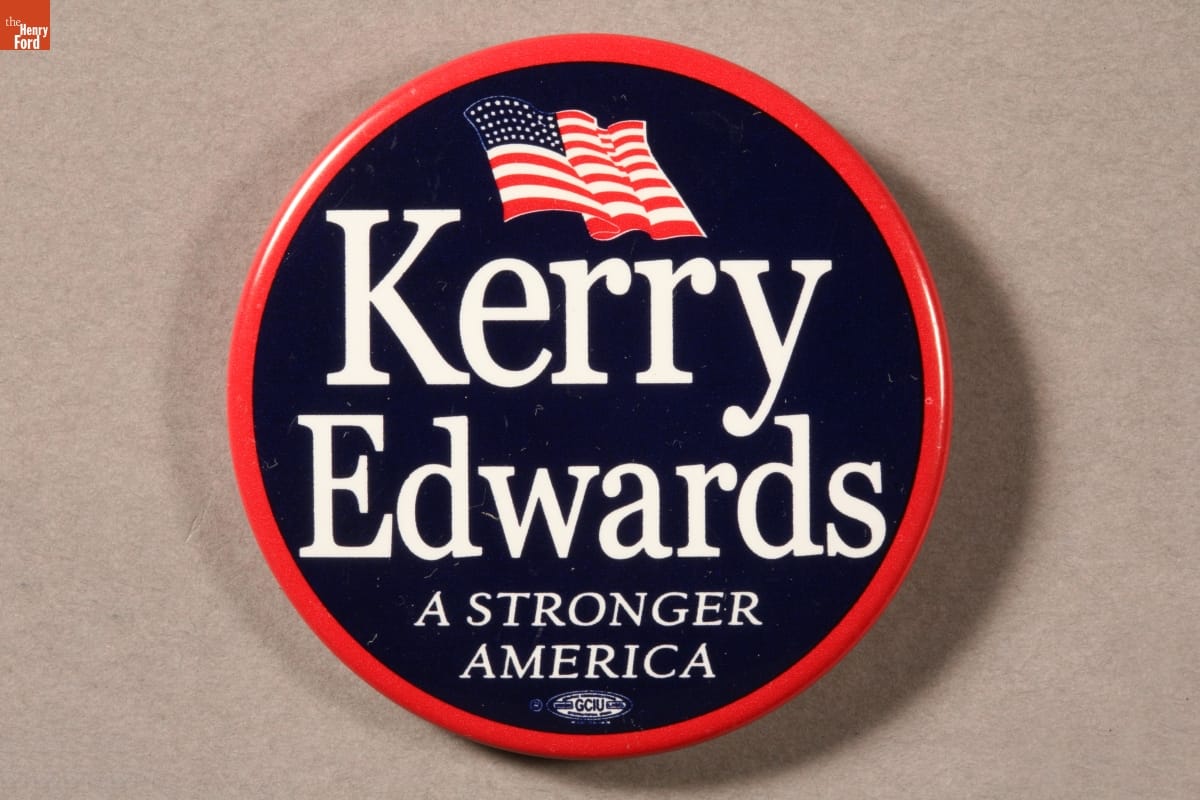
- Kerry-Edwards Campaign Button, 2004 - In 2000, the Democratic presidential candidate had won the popular vote, but narrowly lost the Electoral College vote. Democrats hoped Massachusetts Senator John Kerry could retake the White House in 2004. Kerry battled incumbent George W. Bush who touted his leadership after the September 11, 2001 attacks. Bush won again, but this time also winning the popular vote by a small majority.
- 2004
- Collections - Artifact
Kerry-Edwards Campaign Button, 2004
In 2000, the Democratic presidential candidate had won the popular vote, but narrowly lost the Electoral College vote. Democrats hoped Massachusetts Senator John Kerry could retake the White House in 2004. Kerry battled incumbent George W. Bush who touted his leadership after the September 11, 2001 attacks. Bush won again, but this time also winning the popular vote by a small majority.
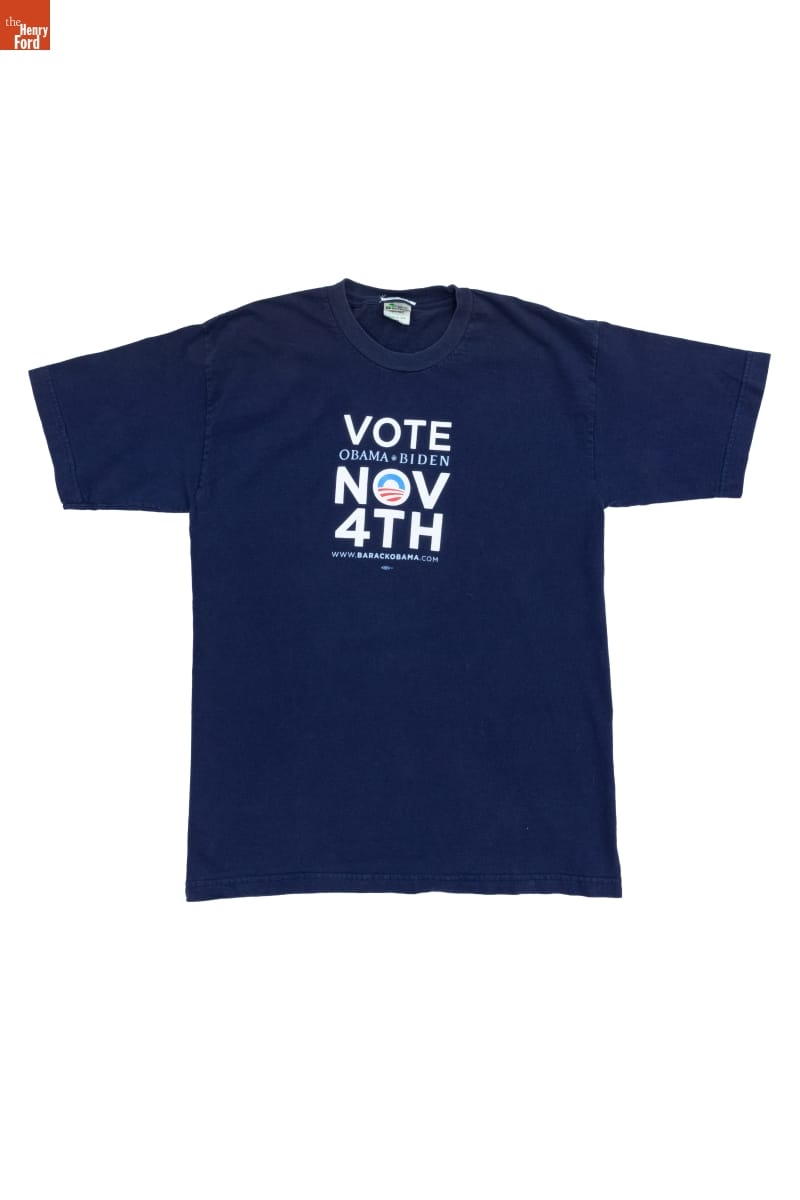
- Obama Presidential Campaign T-Shirt, 2008 - Every election cycle, The Henry Ford collects objects that represent the candidates, the central issues debated, and any major events. Traditionally, this has meant collecting things like lawn signs, buttons, and bumper stickers. In recent years it has also included t-shirts, flags, and objects that incorporate online culture. This collecting encompasses a wide range of viewpoints.
- November 04, 2008
- Collections - Artifact
Obama Presidential Campaign T-Shirt, 2008
Every election cycle, The Henry Ford collects objects that represent the candidates, the central issues debated, and any major events. Traditionally, this has meant collecting things like lawn signs, buttons, and bumper stickers. In recent years it has also included t-shirts, flags, and objects that incorporate online culture. This collecting encompasses a wide range of viewpoints.