
Search
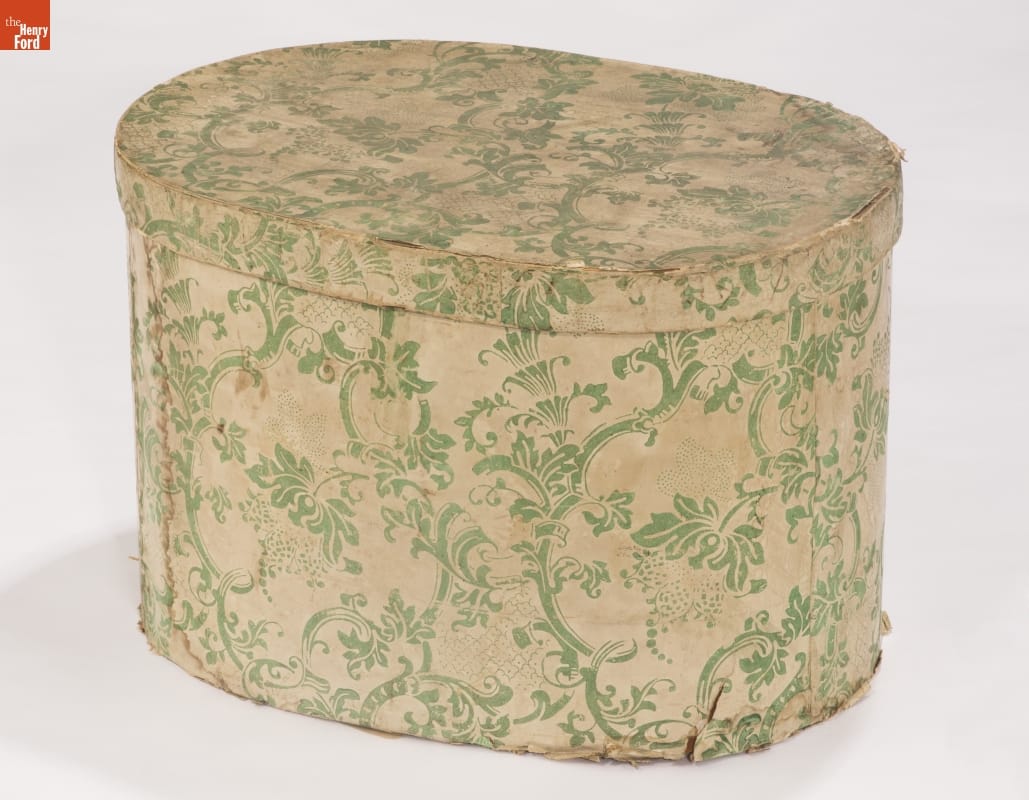
- Bandbox, 1830 - In the early 1800s, Americans used bandboxes to store clothing, accessories, and other small items. Bandboxes were handy containers in the home, or when traveling by stage, boat, or rail. Manufacturers covered these inexpensive pasteboard or wooden boxes with colorful papers. Some bandboxes were covered with papers depicting animals, places or specific scenes. Others, such as this one, were covered with decorative wallpaper of the day.
- 1830
- Collections - Artifact
Bandbox, 1830
In the early 1800s, Americans used bandboxes to store clothing, accessories, and other small items. Bandboxes were handy containers in the home, or when traveling by stage, boat, or rail. Manufacturers covered these inexpensive pasteboard or wooden boxes with colorful papers. Some bandboxes were covered with papers depicting animals, places or specific scenes. Others, such as this one, were covered with decorative wallpaper of the day.
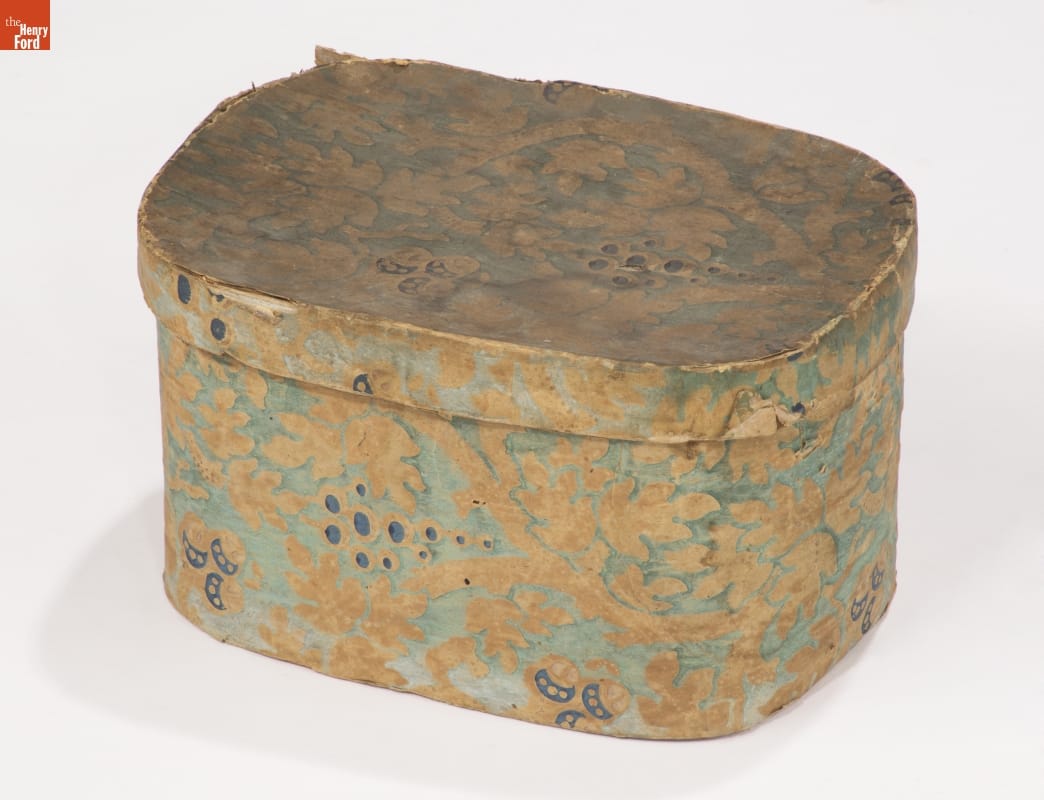
- Bandbox, 1859 - In the early 1800s, Americans used bandboxes to store clothing, accessories, and other small items. Bandboxes were handy containers in the home, or when traveling by stage, boat, or rail. Manufacturers covered these inexpensive pasteboard or wooden boxes with colorful papers. Some bandboxes were covered with papers depicting animals, places or specific scenes. Others, such as this one, were covered with decorative wallpaper of the day.
- 1859
- Collections - Artifact
Bandbox, 1859
In the early 1800s, Americans used bandboxes to store clothing, accessories, and other small items. Bandboxes were handy containers in the home, or when traveling by stage, boat, or rail. Manufacturers covered these inexpensive pasteboard or wooden boxes with colorful papers. Some bandboxes were covered with papers depicting animals, places or specific scenes. Others, such as this one, were covered with decorative wallpaper of the day.
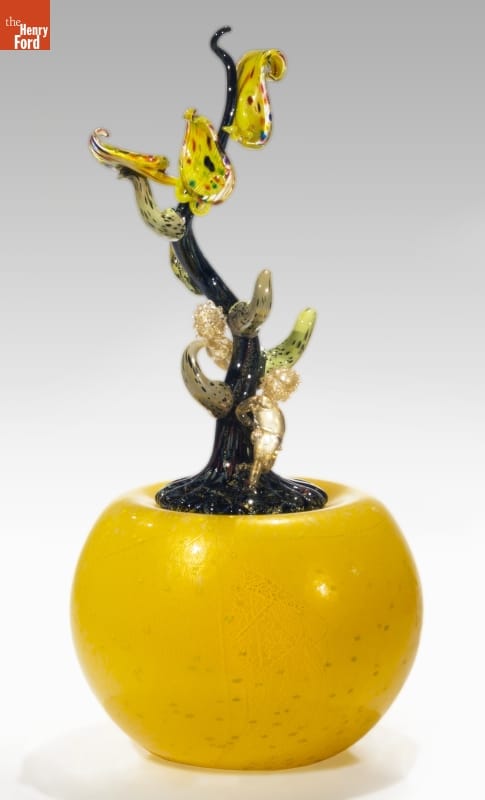
- "Yellow Chiffon Venetian Ikebana with Putti and Prunts" by Dale Chihuly, 2002 -
- 2002
- Collections - Artifact
"Yellow Chiffon Venetian Ikebana with Putti and Prunts" by Dale Chihuly, 2002
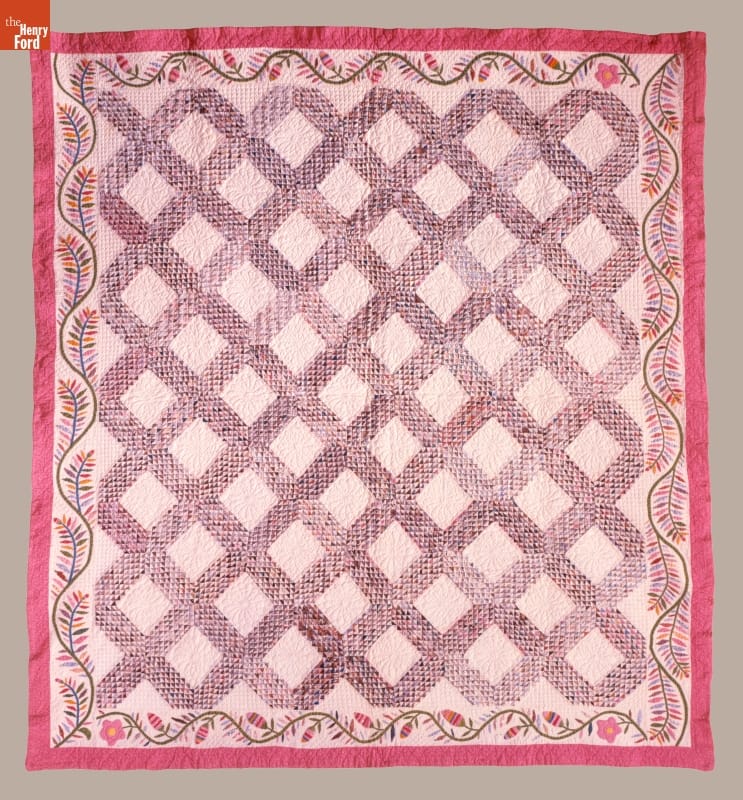
- Ocean Waves Quilt by Susan McCord, circa 1880 - Susan McCord was an ordinary Indiana farmwife with an extraordinary genius for quilt making. This Ocean Waves quilt pattern was well-known in the late 19th century. But in McCord's hands the design is breathtakingly executed, formed of hundreds of tiny half-inch triangles cut from printed cotton fabrics. McCord finished the borders of this quilt with her unique meandering vines with colorful pieced leaves.
- circa 1880
- Collections - Artifact
Ocean Waves Quilt by Susan McCord, circa 1880
Susan McCord was an ordinary Indiana farmwife with an extraordinary genius for quilt making. This Ocean Waves quilt pattern was well-known in the late 19th century. But in McCord's hands the design is breathtakingly executed, formed of hundreds of tiny half-inch triangles cut from printed cotton fabrics. McCord finished the borders of this quilt with her unique meandering vines with colorful pieced leaves.
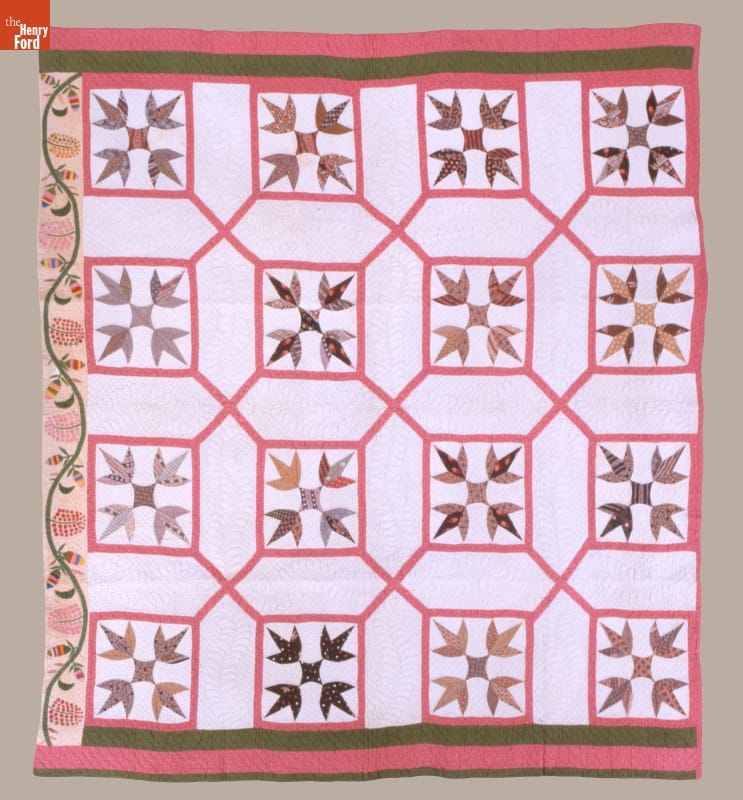
- Turkey Tracks Quilt by Susan McCord, circa 1880 - Susan McCord's unique vine design meanders along the border on one side of this Turkey Tracks pattern quilt. This quilt was probably made with a specific bed in mind -- a bed with one long side against a wall. The border's background fabric doesn't quite match the rest of the quilt. Did McCord "recycle" a previously made, and now worn, quilt's border?
- circa 1880
- Collections - Artifact
Turkey Tracks Quilt by Susan McCord, circa 1880
Susan McCord's unique vine design meanders along the border on one side of this Turkey Tracks pattern quilt. This quilt was probably made with a specific bed in mind -- a bed with one long side against a wall. The border's background fabric doesn't quite match the rest of the quilt. Did McCord "recycle" a previously made, and now worn, quilt's border?
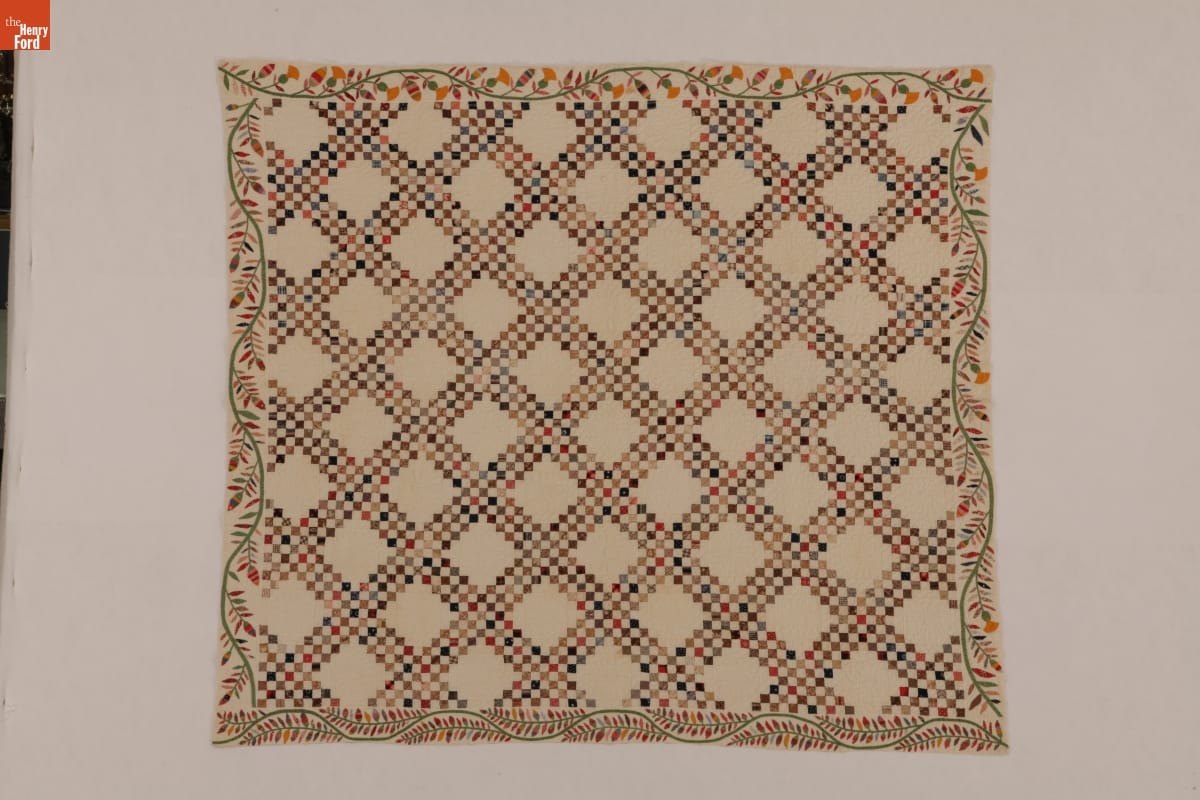
- Triple Irish Chain with Vine Border Quilt by Susan McCord, circa 1900 - Susan McCord's Triple Irish Chain demonstrates her considerable skill at manipulating fabric, color and design to turn a traditional quilt pattern into something extraordinary. Choosing carefully from her bag of scraps, McCord sewed thousands of very small fabric squares of varying colors together, resulting in a remarkably balanced, pleasing whole. Then she surrounded it with her unique vine border.
- circa 1900
- Collections - Artifact
Triple Irish Chain with Vine Border Quilt by Susan McCord, circa 1900
Susan McCord's Triple Irish Chain demonstrates her considerable skill at manipulating fabric, color and design to turn a traditional quilt pattern into something extraordinary. Choosing carefully from her bag of scraps, McCord sewed thousands of very small fabric squares of varying colors together, resulting in a remarkably balanced, pleasing whole. Then she surrounded it with her unique vine border.
- Teapot, 1750-1760 -
- 1750-1760
- Collections - Artifact
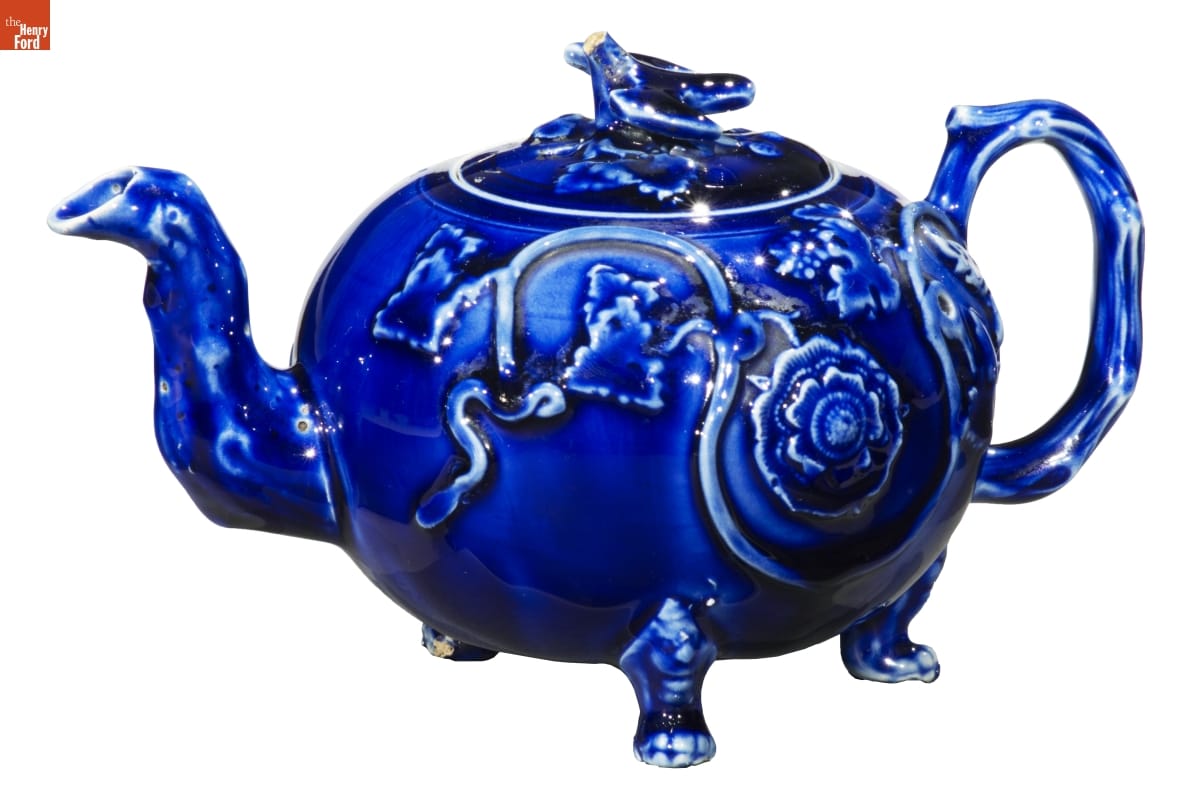
Teapot, 1750-1760
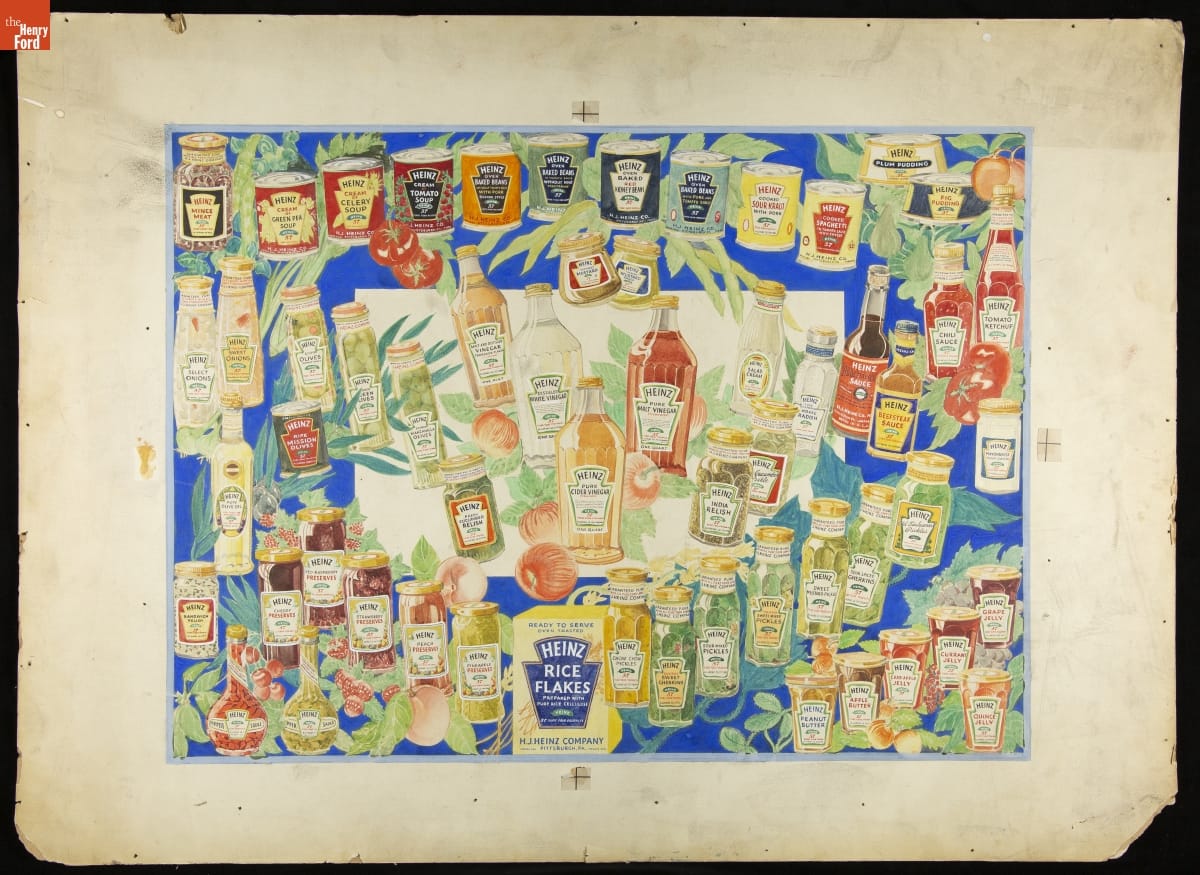
- Advertising Illustration Showing Various Heinz Products, 1910-1925 - The H.J. Heinz Company employed ambitious and comprehensive advertising strategies to meet consumers at home, in stores, and everywhere in between. Drawings, illustrations and modified photographs of Heinz products were often used for advertising and in publications. This advertising layout represents a step in the marketing process where the size and arrangement are taken into consideration before the final advertisement is created.
- 1910-1925
- Collections - Artifact
Advertising Illustration Showing Various Heinz Products, 1910-1925
The H.J. Heinz Company employed ambitious and comprehensive advertising strategies to meet consumers at home, in stores, and everywhere in between. Drawings, illustrations and modified photographs of Heinz products were often used for advertising and in publications. This advertising layout represents a step in the marketing process where the size and arrangement are taken into consideration before the final advertisement is created.
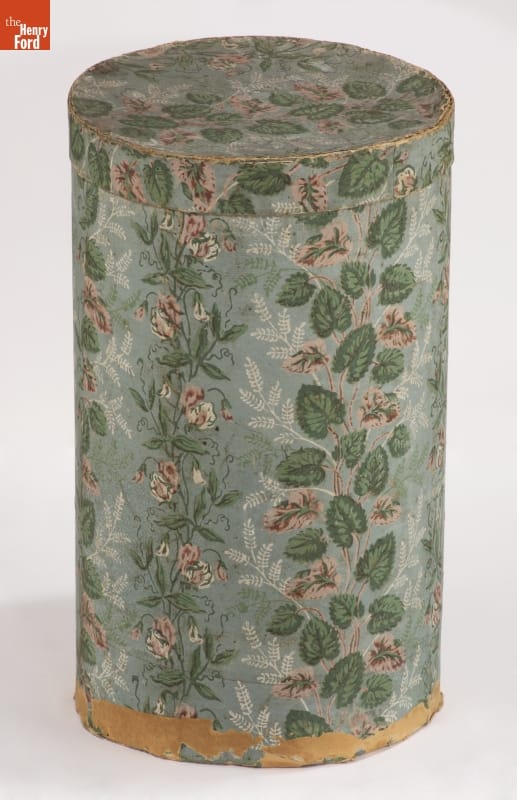
- Bandbox, 1809 - In the early 1800s, Americans used bandboxes to store clothing, accessories, and other small items. Bandboxes were handy containers in the home, or when traveling by stage, boat, or rail. Manufacturers covered these inexpensive pasteboard or wooden boxes with colorful papers. Some bandboxes were covered with papers depicting animals, places or specific scenes. Others, such as this one, were covered with decorative wallpaper of the day.
- 1809
- Collections - Artifact
Bandbox, 1809
In the early 1800s, Americans used bandboxes to store clothing, accessories, and other small items. Bandboxes were handy containers in the home, or when traveling by stage, boat, or rail. Manufacturers covered these inexpensive pasteboard or wooden boxes with colorful papers. Some bandboxes were covered with papers depicting animals, places or specific scenes. Others, such as this one, were covered with decorative wallpaper of the day.
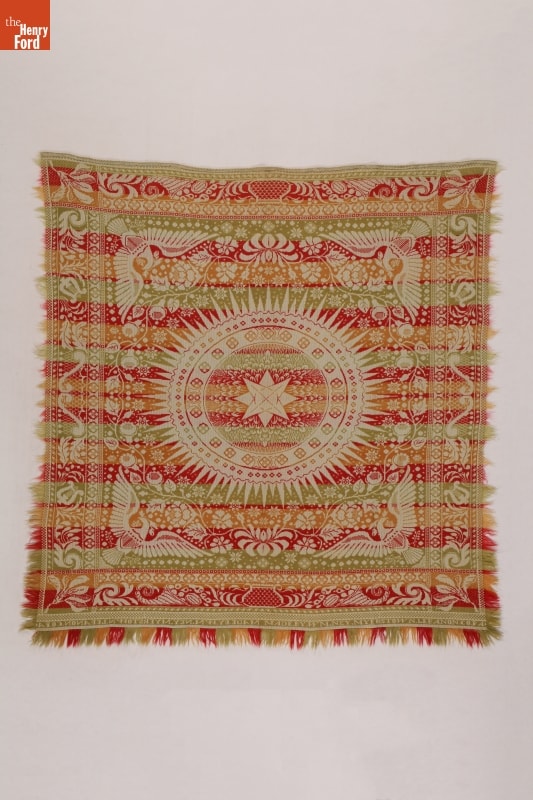
- Coverlet Woven by William Ney, 1860-1880 -
- 1860-1880
- Collections - Artifact
Coverlet Woven by William Ney, 1860-1880