
Search
- Souvenir Card, "A Sleighride Dance at the Wayside Inn," 1927 -
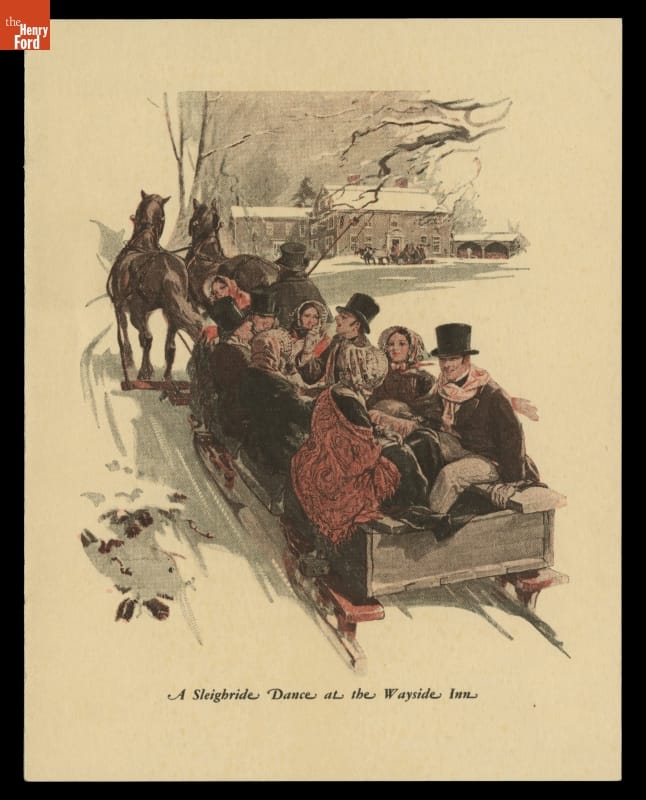
- January 18, 1927
- Collections - Artifact
Souvenir Card, "A Sleighride Dance at the Wayside Inn," 1927
- Gristmill near the Wayside Inn, Sudbury, Massachusetts, circa 1928 - Henry Ford purchased the Wayside Inn, the setting for the poems in Henry Wadsworth Longfellow's <EM>Tales of a Wayside Inn</EM>, in 1923. Over six years, Ford spent more than $2 million restoring the inn and several adjacent buildings, including this gristmill. In retrospect, the project was something of a dry run for Ford's Greenfield Village complex a few years later.
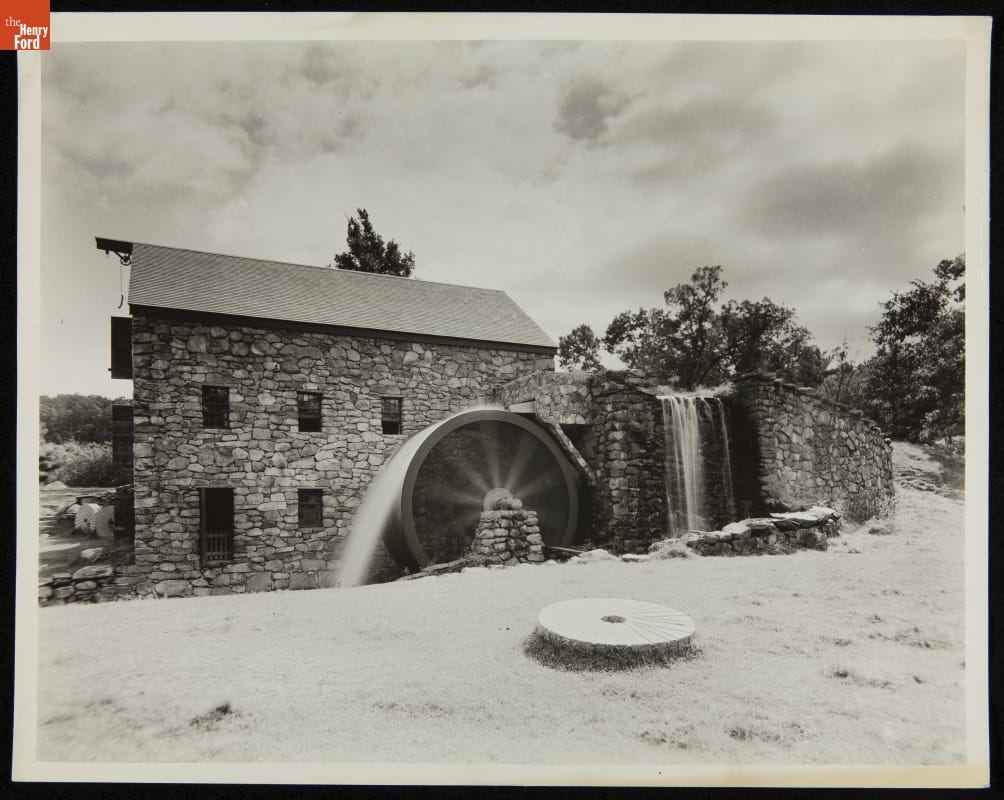
- circa 1928
- Collections - Artifact
Gristmill near the Wayside Inn, Sudbury, Massachusetts, circa 1928
Henry Ford purchased the Wayside Inn, the setting for the poems in Henry Wadsworth Longfellow's Tales of a Wayside Inn, in 1923. Over six years, Ford spent more than $2 million restoring the inn and several adjacent buildings, including this gristmill. In retrospect, the project was something of a dry run for Ford's Greenfield Village complex a few years later.
- Gristmill near the Wayside Inn, Sudbury, Massachusetts, circa 1928 - Henry Ford purchased the Wayside Inn, the setting for the poems in Henry Wadsworth Longfellow's <EM>Tales of a Wayside Inn</EM>, in 1923. Over six years, Ford spent more than $2 million restoring the inn and several adjacent buildings, including this gristmill. In retrospect, the project was something of a dry run for Ford's Greenfield Village complex a few years later.
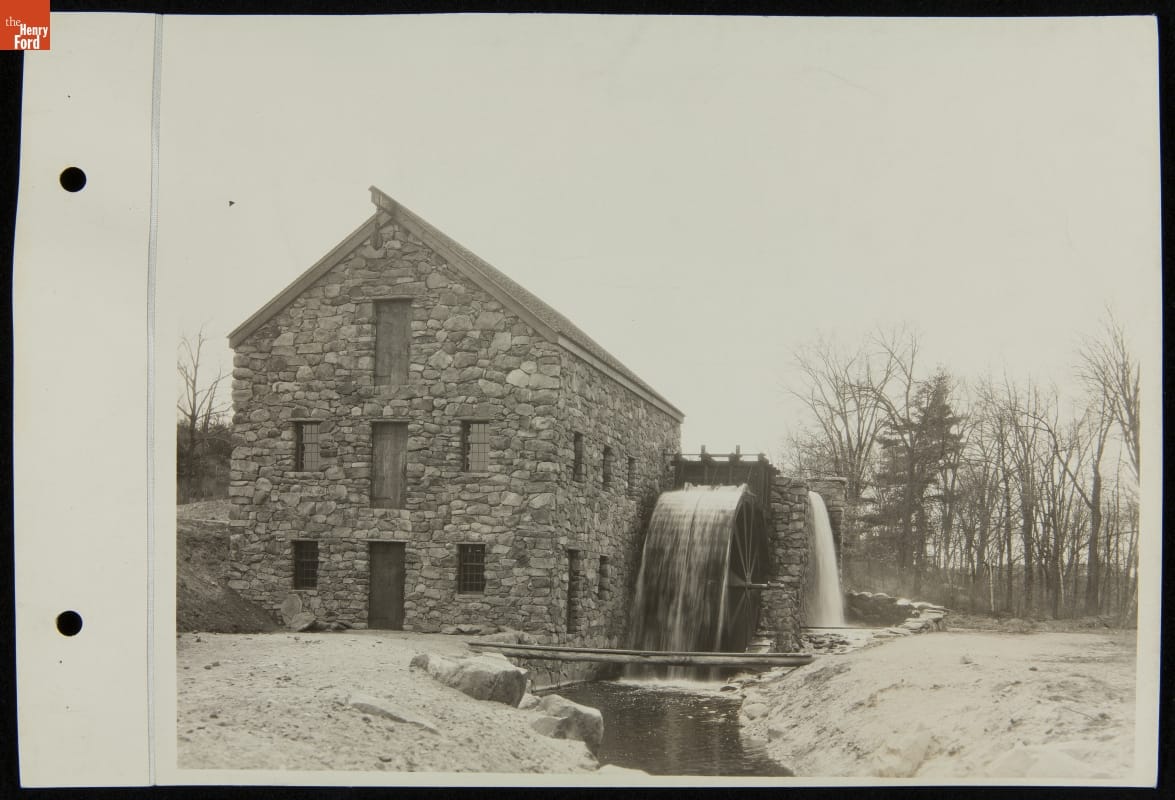
- circa 1928
- Collections - Artifact
Gristmill near the Wayside Inn, Sudbury, Massachusetts, circa 1928
Henry Ford purchased the Wayside Inn, the setting for the poems in Henry Wadsworth Longfellow's Tales of a Wayside Inn, in 1923. Over six years, Ford spent more than $2 million restoring the inn and several adjacent buildings, including this gristmill. In retrospect, the project was something of a dry run for Ford's Greenfield Village complex a few years later.
- Wayside Inn Boys School Diary, January - June 1931 -
- January 1931 - June 1931
- Collections - Artifact
Wayside Inn Boys School Diary, January - June 1931
- Wayside Inn Boys School Diary, September 1929 - July 1930 -
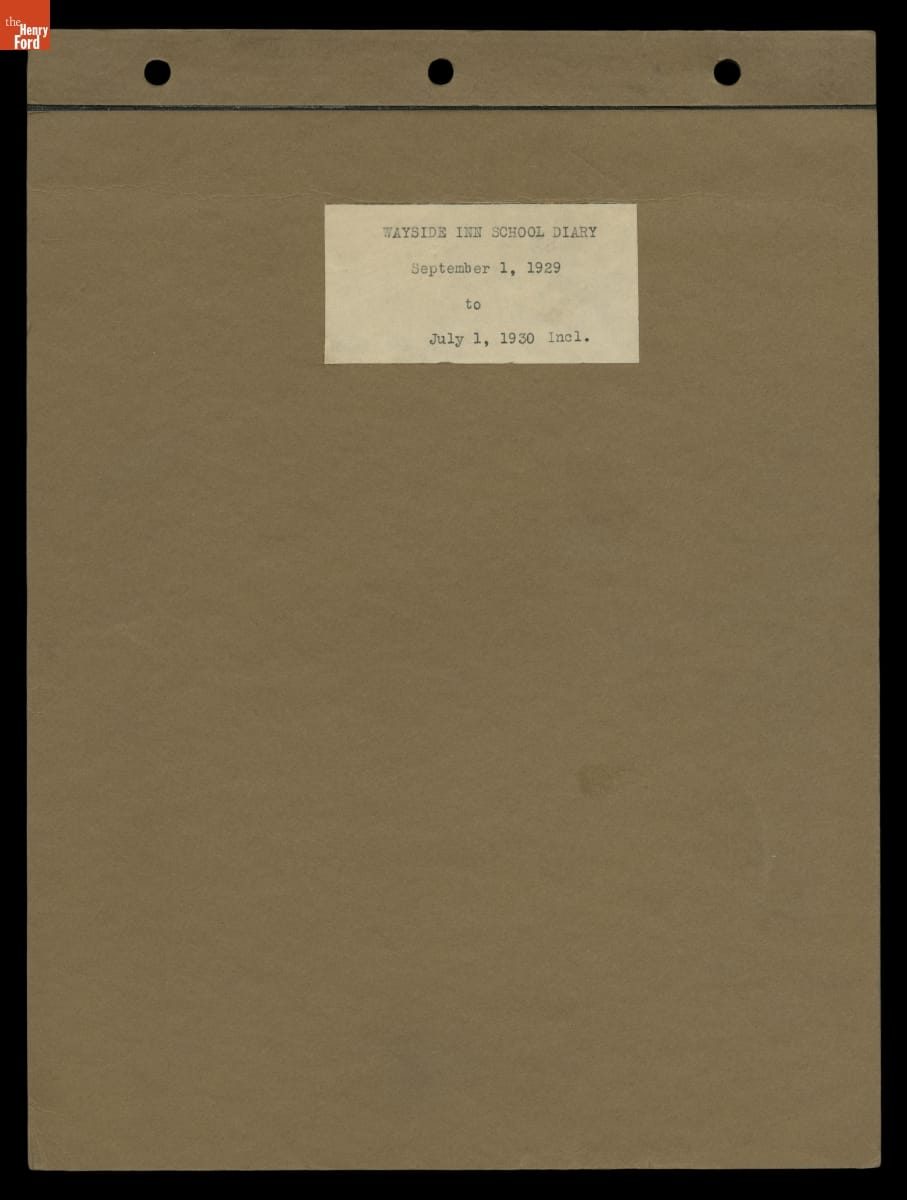
- 01 September 1929 - 01 July 1930
- Collections - Artifact
Wayside Inn Boys School Diary, September 1929 - July 1930
- Spinning Wheel, Used by the Howe Family, Sudbury, Massachusetts, 1800-1830 -
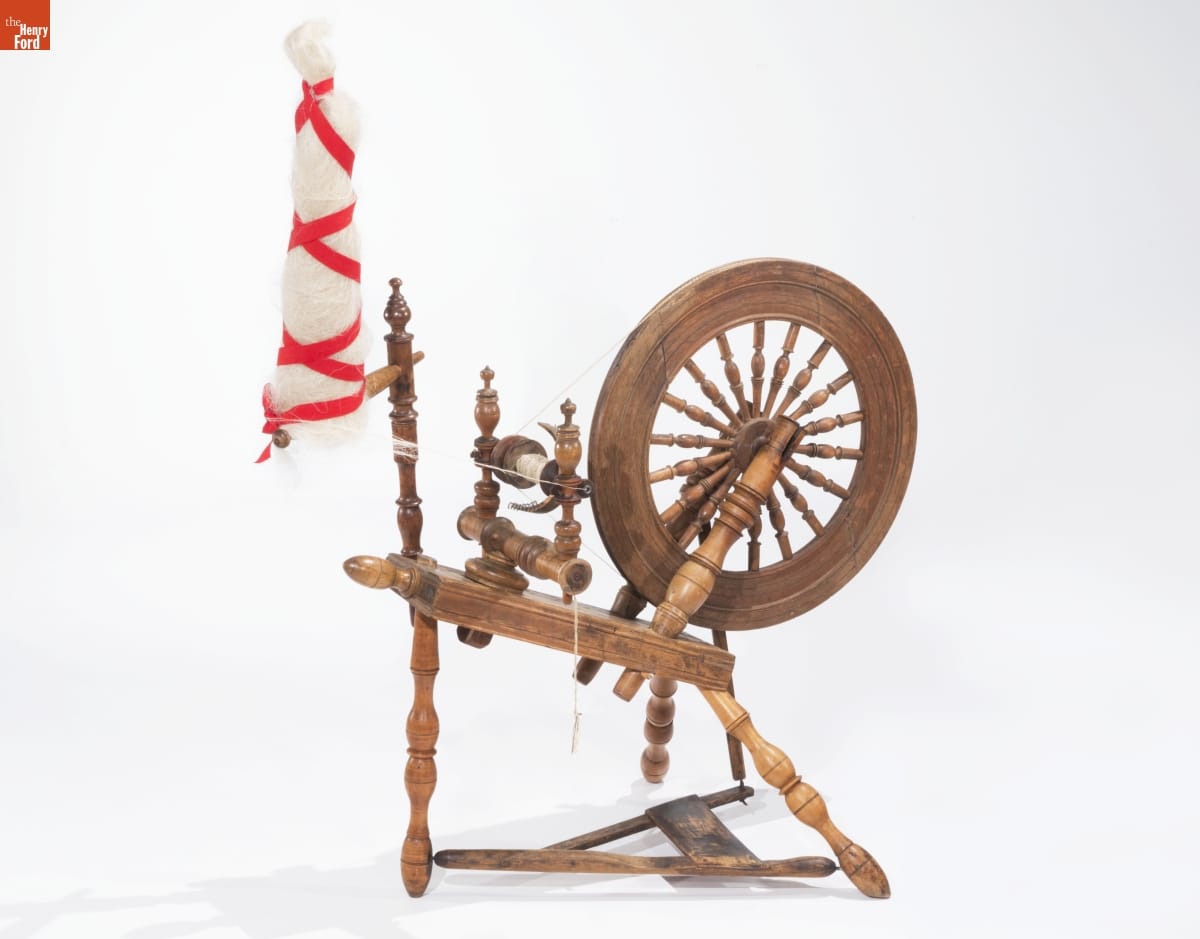
- 1800-1830
- Collections - Artifact
Spinning Wheel, Used by the Howe Family, Sudbury, Massachusetts, 1800-1830
- Correspondence between Edith Guerrier, R.J. Sennott, and Frank Campsall regarding the Paul Revere Pottery, 1936-1937 - The Paul Revere Pottery evolved from a settlement house founded in 1899 to help women in Boston's North End immigrant community. Founders Edith Guerrier, a librarian, and Edith Brown, an artist, convinced patron Helen Osborne Storrow to fund the pottery in 1906. The venture proved successful, producing remarkable Arts and Crafts wares through the 1930s.
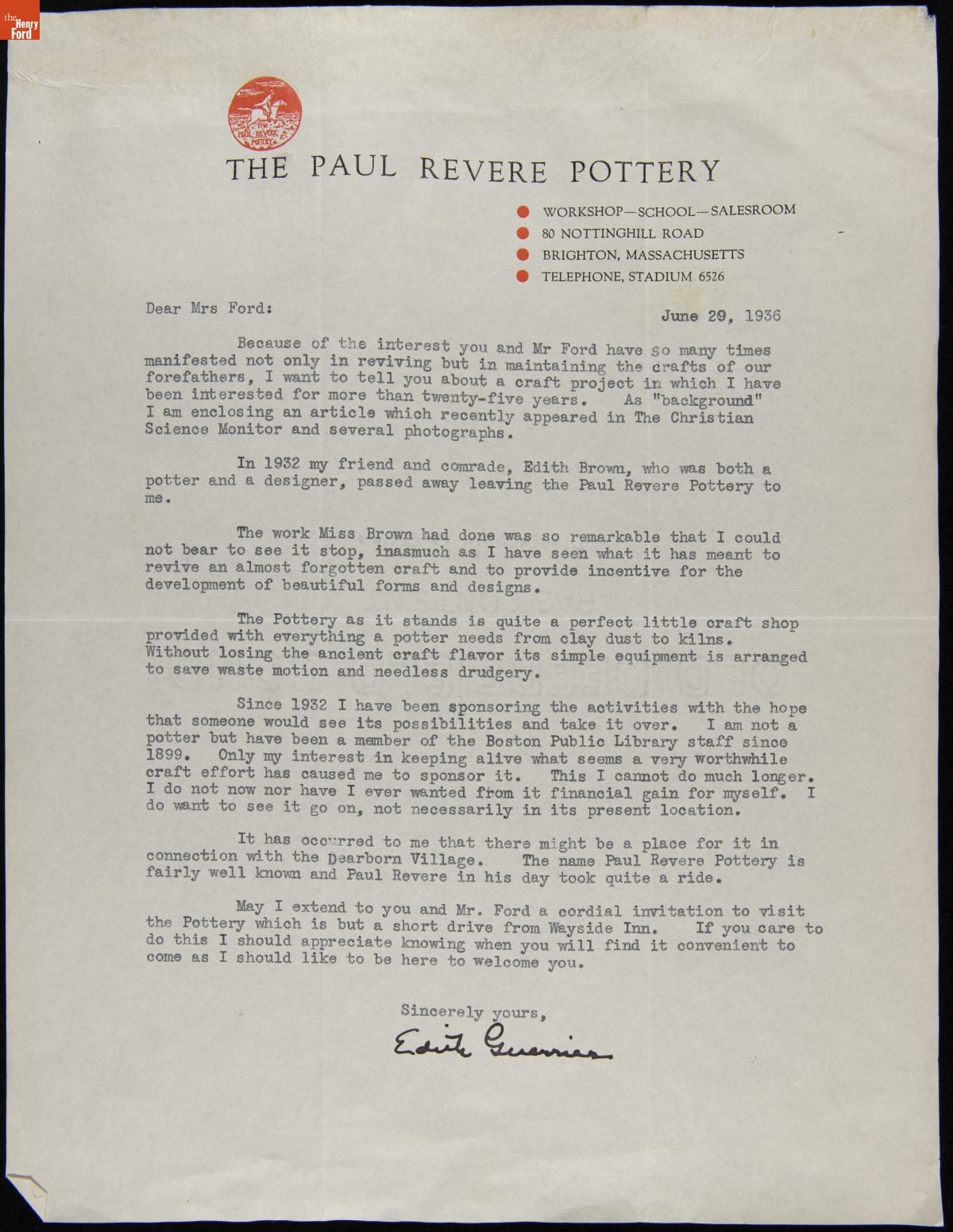
- 1936-1937
- Collections - Artifact
Correspondence between Edith Guerrier, R.J. Sennott, and Frank Campsall regarding the Paul Revere Pottery, 1936-1937
The Paul Revere Pottery evolved from a settlement house founded in 1899 to help women in Boston's North End immigrant community. Founders Edith Guerrier, a librarian, and Edith Brown, an artist, convinced patron Helen Osborne Storrow to fund the pottery in 1906. The venture proved successful, producing remarkable Arts and Crafts wares through the 1930s.
- Correspondence between Edith Guerrier, Frank Campsall, R.J. Sennott, and Rosamond Coolidge regarding the Paul Revere Pottery, 1937-1942 - The Paul Revere Pottery evolved from a settlement house founded in 1899 to help women in Boston's North End immigrant community. Founders Edith Guerrier, a librarian, and Edith Brown, an artist, convinced patron Helen Osborne Storrow to fund the pottery in 1906. The venture proved successful, producing remarkable Arts and Crafts wares through the 1930s.
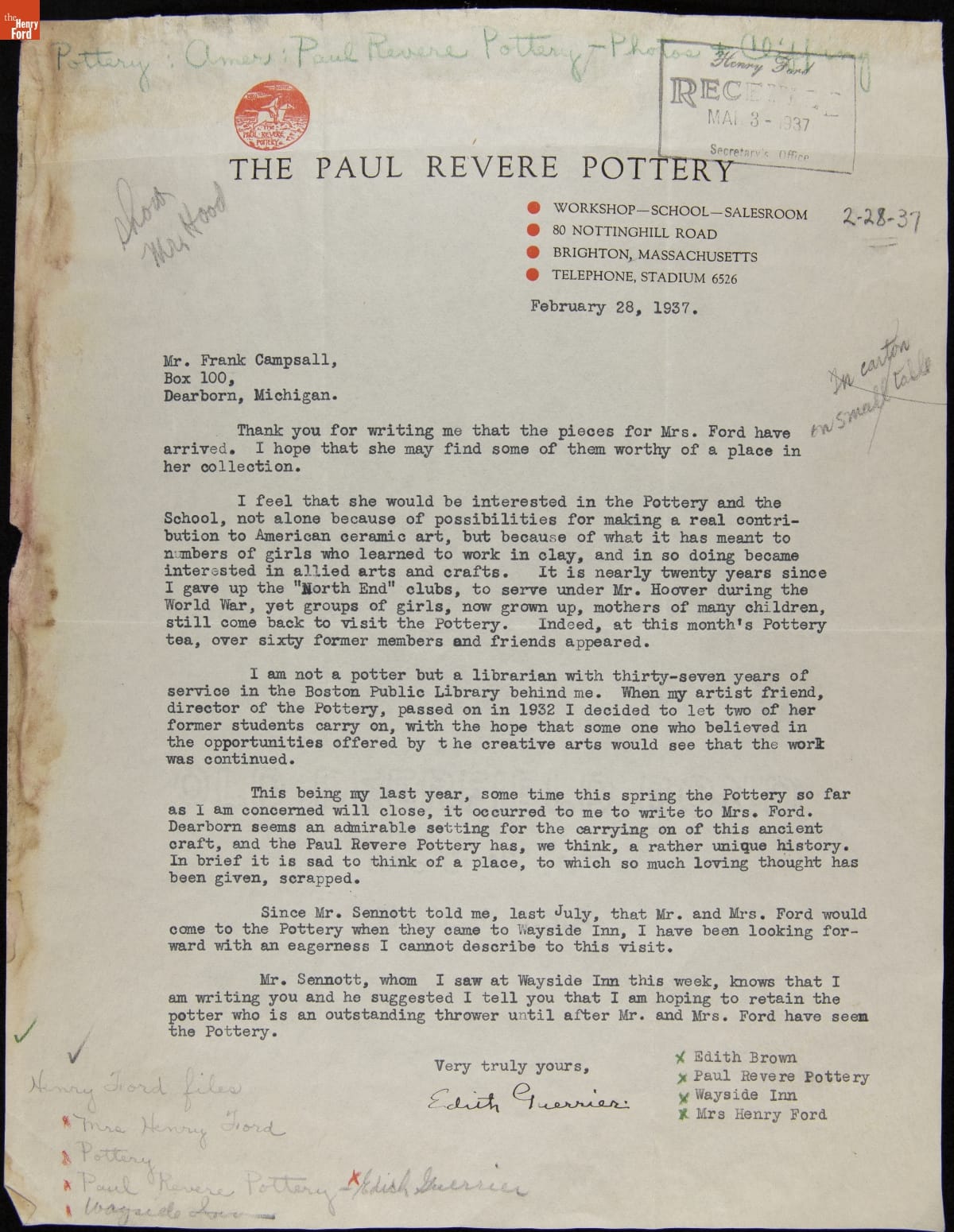
- 1937-1942
- Collections - Artifact
Correspondence between Edith Guerrier, Frank Campsall, R.J. Sennott, and Rosamond Coolidge regarding the Paul Revere Pottery, 1937-1942
The Paul Revere Pottery evolved from a settlement house founded in 1899 to help women in Boston's North End immigrant community. Founders Edith Guerrier, a librarian, and Edith Brown, an artist, convinced patron Helen Osborne Storrow to fund the pottery in 1906. The venture proved successful, producing remarkable Arts and Crafts wares through the 1930s.
- Harvey Firestone, Thomas Edison, and Henry Ford at the Wayside Inn, circa 1924 -
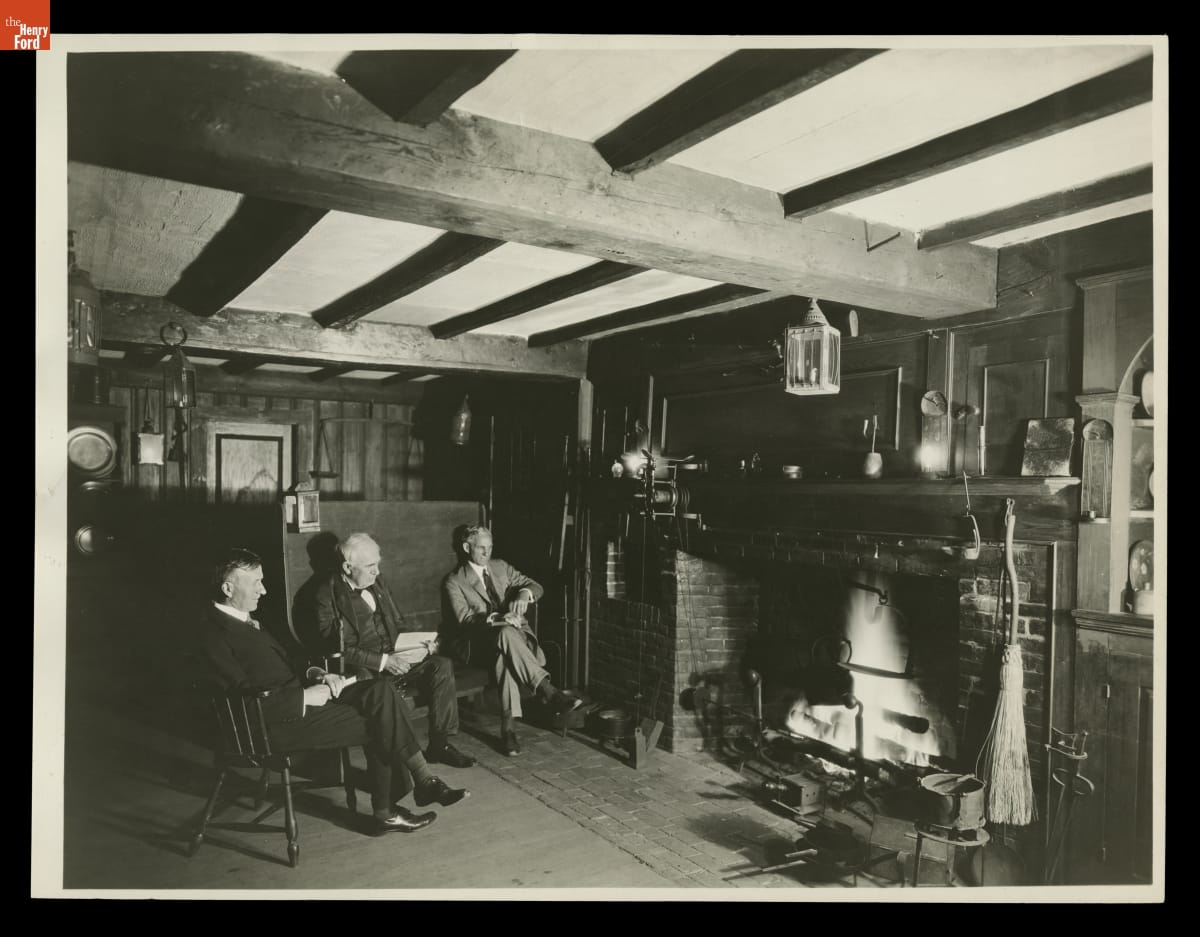
- circa 1924
- Collections - Artifact
Harvey Firestone, Thomas Edison, and Henry Ford at the Wayside Inn, circa 1924
- Electric Automobiles at the Wayside Inn, Sudbury, Massachusetts, circa 1902 - An 1862 stay at the old Howe Tavern inspired Henry Wadsworth Longfellow's popular poem <EM>Tales of a Wayside Inn</EM>. For decades, the former stagecoach stop attracted literary fans who nicknamed it Longfellow's Wayside Inn. In 1896, Edward Rivers Lemon purchased the property. He opened the officially renamed Howe Tavern Longfellow's Wayside Inn as a summer retreat for actors, artists, students, and professionals.
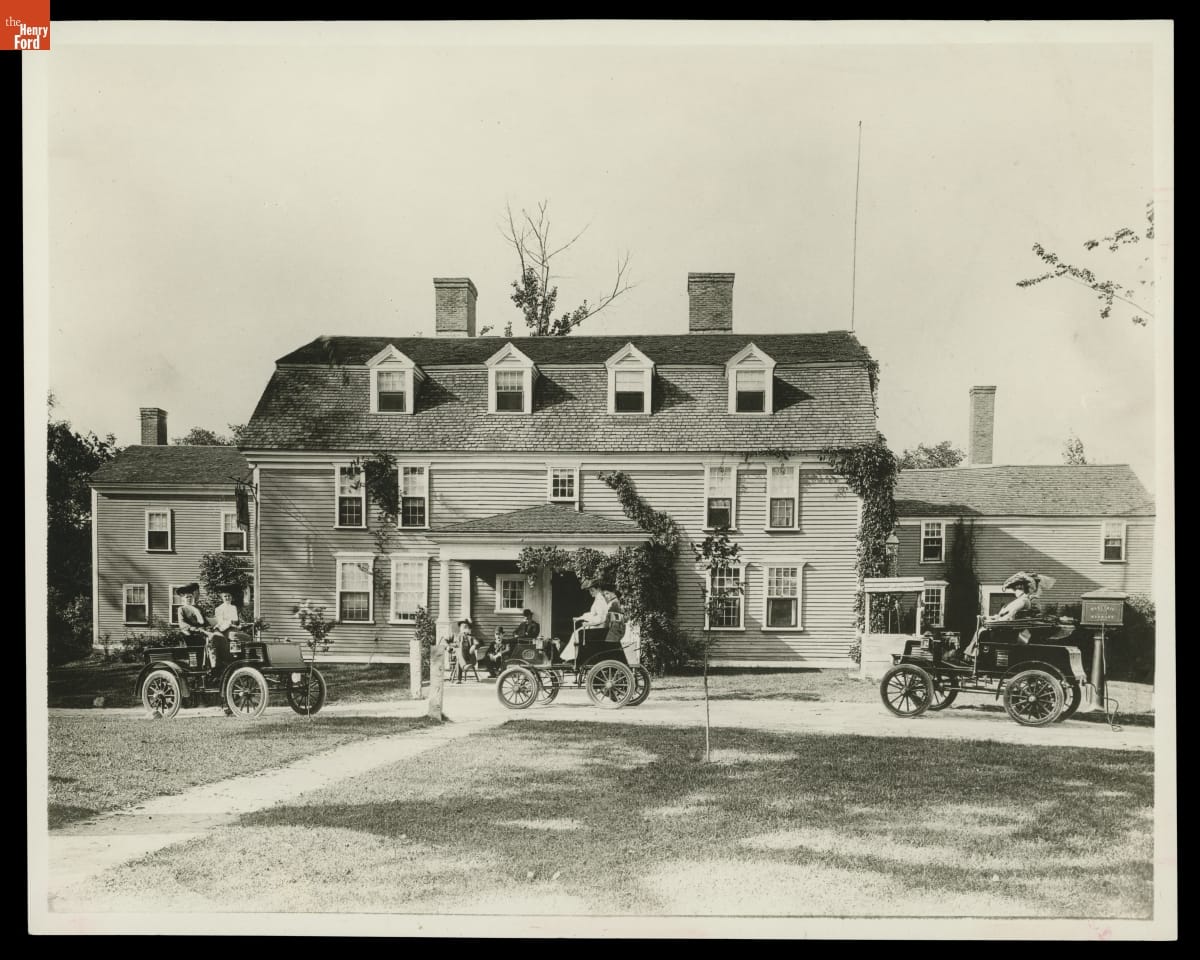
- circa 1902
- Collections - Artifact
Electric Automobiles at the Wayside Inn, Sudbury, Massachusetts, circa 1902
An 1862 stay at the old Howe Tavern inspired Henry Wadsworth Longfellow's popular poem Tales of a Wayside Inn. For decades, the former stagecoach stop attracted literary fans who nicknamed it Longfellow's Wayside Inn. In 1896, Edward Rivers Lemon purchased the property. He opened the officially renamed Howe Tavern Longfellow's Wayside Inn as a summer retreat for actors, artists, students, and professionals.