
Search
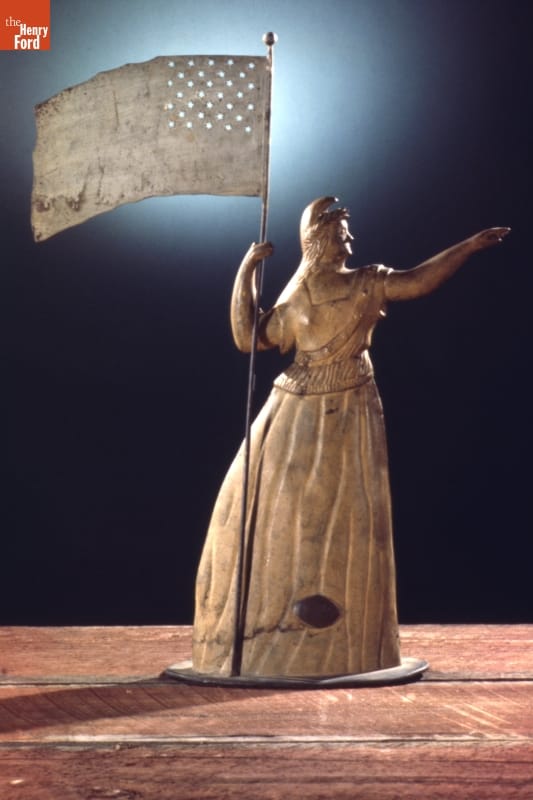
- "Goddess of Liberty" Weathervane, 1867-1872 - Weathervanes point into the direction of the wind. This helped viewers anticipate weather changes before local forecasts became common after 1920. Functional weathervanes required a basic pointing device and directional arms, but manufacturers added decorative elements, or ornaments, to appeal to consumer interests. Patriotic symbols became common around the time of the Civil War. This figure carried the 32-star flag adopted in 1858.
- 1867-1872
- Collections - Artifact
"Goddess of Liberty" Weathervane, 1867-1872
Weathervanes point into the direction of the wind. This helped viewers anticipate weather changes before local forecasts became common after 1920. Functional weathervanes required a basic pointing device and directional arms, but manufacturers added decorative elements, or ornaments, to appeal to consumer interests. Patriotic symbols became common around the time of the Civil War. This figure carried the 32-star flag adopted in 1858.
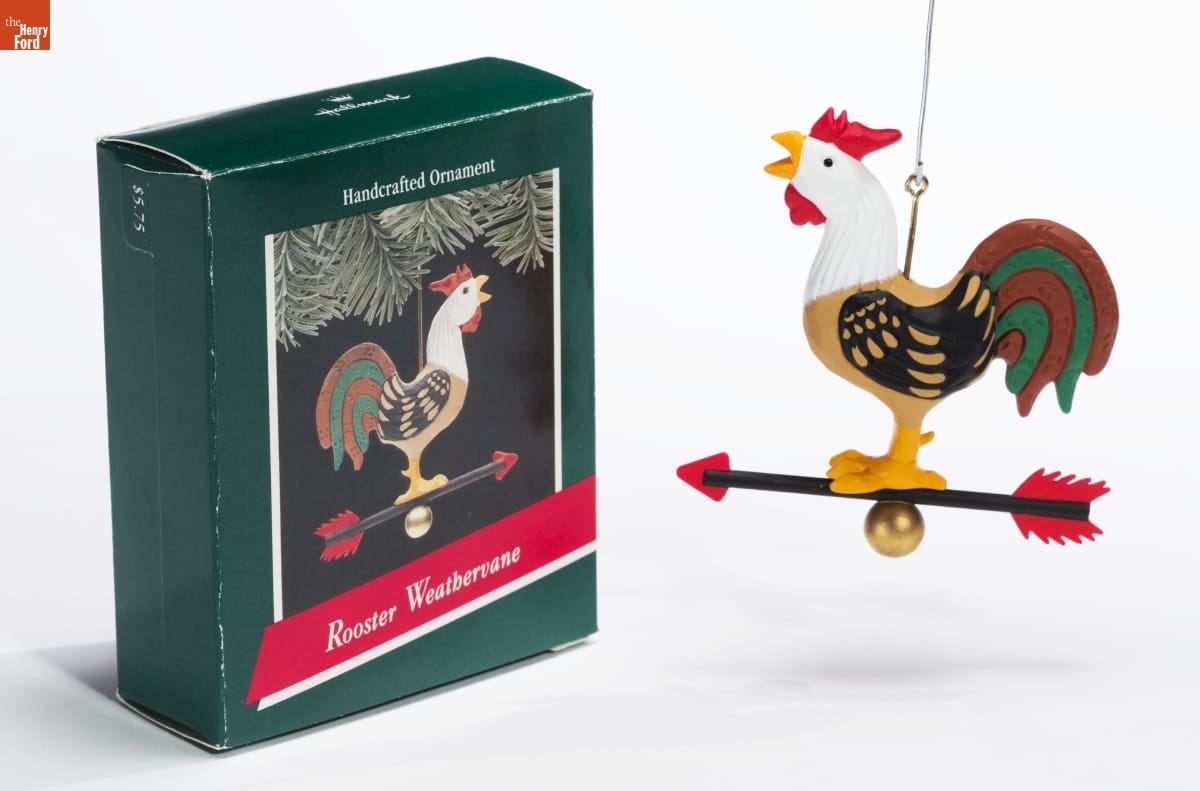
- Hallmark "Rooster Weathervane" Christmas Ornament, 1989 - Already known for greeting cards, Hallmark introduced a line of Christmas ornaments in 1973. The company's annual release of an increasing array of ornaments revolutionized Christmas decorating, appealing to customers' interest in marking memories and milestones as well as expressing one's personality and unique tastes.
- 1989
- Collections - Artifact
Hallmark "Rooster Weathervane" Christmas Ornament, 1989
Already known for greeting cards, Hallmark introduced a line of Christmas ornaments in 1973. The company's annual release of an increasing array of ornaments revolutionized Christmas decorating, appealing to customers' interest in marking memories and milestones as well as expressing one's personality and unique tastes.
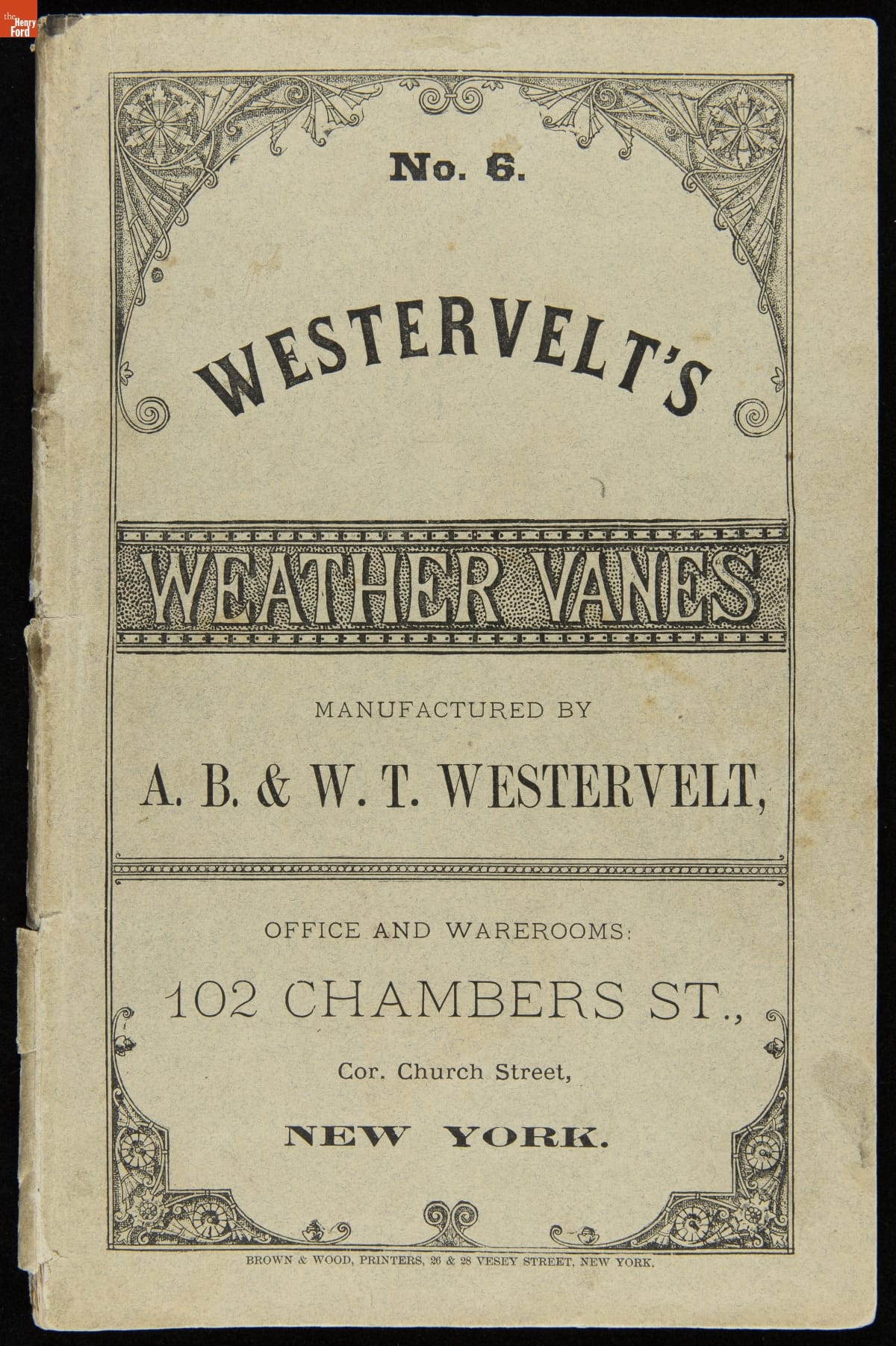
- A.B. & W.T. Westervelt Catalog, "Illustrated Catalogue and Price List of Copper Weather Vanes, Bannerets, and Finials," 1883 - A.B. & W.T. Westervelt manufactured weathervanes in a wide variety of shapes in the last decades of the 1800s. Customers could choose from an assortment of farm animals--horses, cows, pigs, and chickens--and other animals such as dogs, deer, fish, and even lions. The company also produced weathervanes depicting patriotic symbols and others suited for commercial businesses or governmental buildings.
- 1883
- Collections - Artifact
A.B. & W.T. Westervelt Catalog, "Illustrated Catalogue and Price List of Copper Weather Vanes, Bannerets, and Finials," 1883
A.B. & W.T. Westervelt manufactured weathervanes in a wide variety of shapes in the last decades of the 1800s. Customers could choose from an assortment of farm animals--horses, cows, pigs, and chickens--and other animals such as dogs, deer, fish, and even lions. The company also produced weathervanes depicting patriotic symbols and others suited for commercial businesses or governmental buildings.
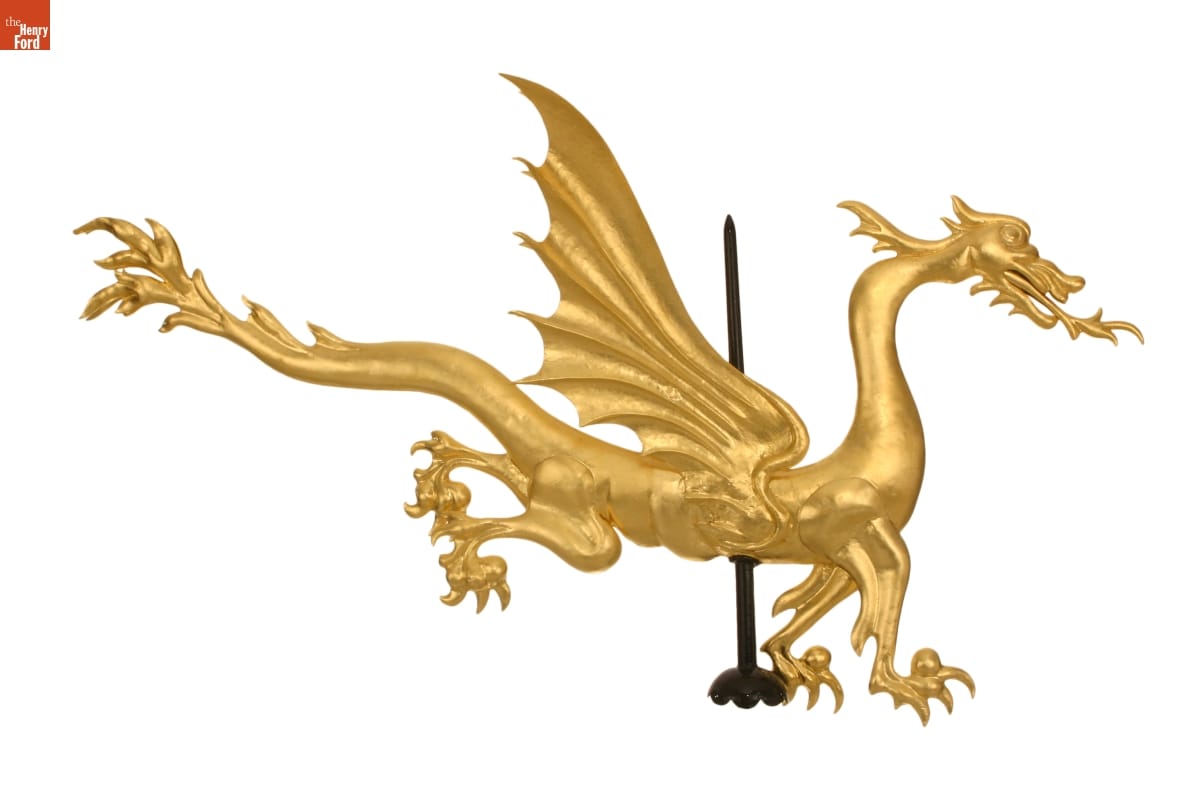
- Dragon Weathervane from the Sir John Bennett Shop, 1850-1900 - This dragon weathervane is one of the most vivid elements of Sir John Bennett's shop in Greenfield Village. Made of hammered copper in striking detail, it is a quiet masterpiece of design, craftsmanship, and balance. During restoration work in 2005, The Henry Ford staff made structural repairs and returned the dragon to its original splendor with a coat of gold leaf.
- 1850-1900
- Collections - Artifact
Dragon Weathervane from the Sir John Bennett Shop, 1850-1900
This dragon weathervane is one of the most vivid elements of Sir John Bennett's shop in Greenfield Village. Made of hammered copper in striking detail, it is a quiet masterpiece of design, craftsmanship, and balance. During restoration work in 2005, The Henry Ford staff made structural repairs and returned the dragon to its original splendor with a coat of gold leaf.
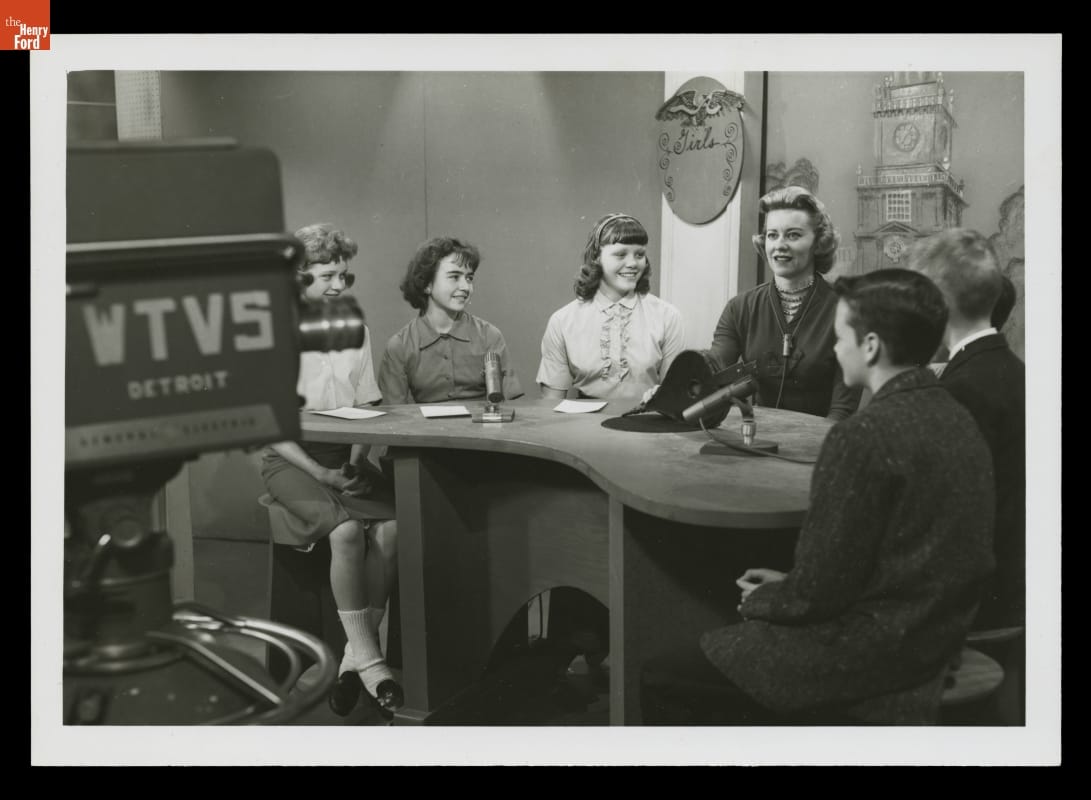
- Host Marion Corwell and Sixth-Graders on Educational TV Show, "You Name It," WTVS-Detroit, March 1960 - Beginning in the 1950s, Henry Ford Museum and Greenfield Village partnered with WTVS, Detroit's local educational television station, to bring American history into the classroom. Marion Corwell, the museum's Manager of Educational Television, produced and hosted <EM>You Name It</EM> -- a half-hour quiz show. Students from grades 5 to 8 tried to identify and give the historical significance of objects from the museum's collection.
- March 01, 1960
- Collections - Artifact
Host Marion Corwell and Sixth-Graders on Educational TV Show, "You Name It," WTVS-Detroit, March 1960
Beginning in the 1950s, Henry Ford Museum and Greenfield Village partnered with WTVS, Detroit's local educational television station, to bring American history into the classroom. Marion Corwell, the museum's Manager of Educational Television, produced and hosted You Name It -- a half-hour quiz show. Students from grades 5 to 8 tried to identify and give the historical significance of objects from the museum's collection.
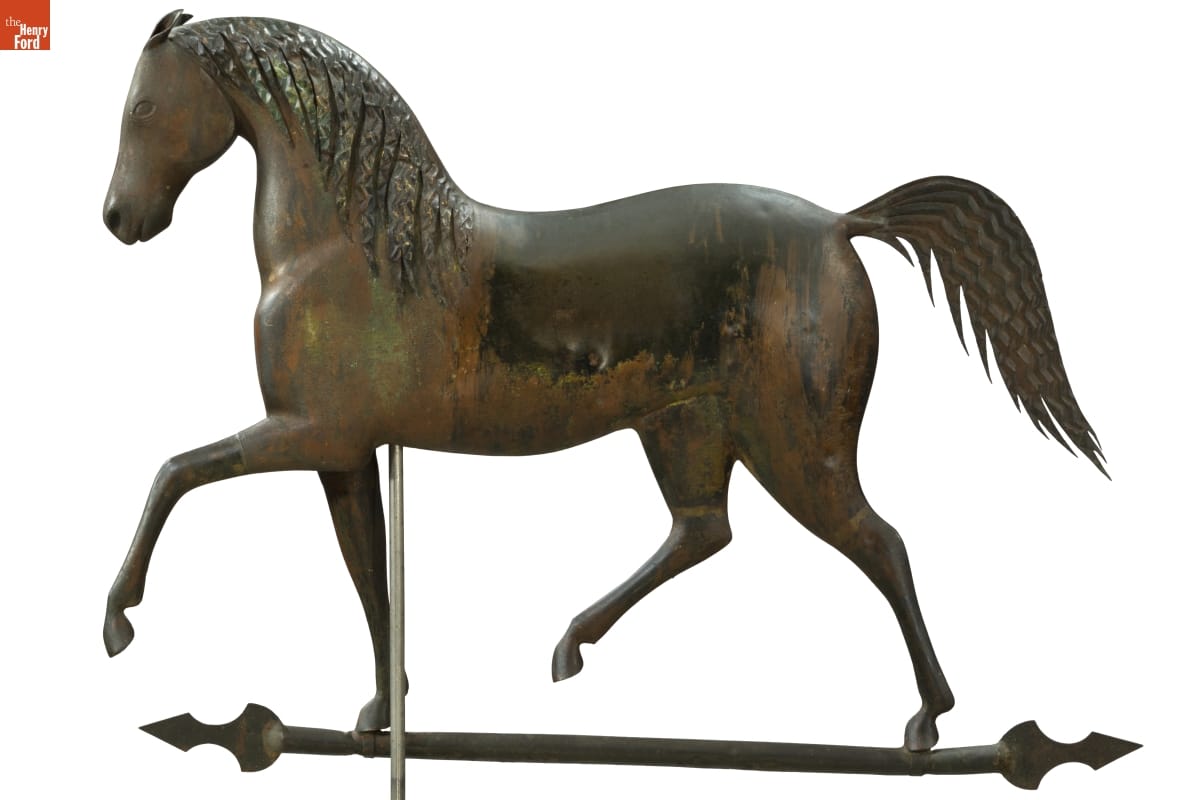
- Horse "Lady Suffolk" Weathervane, 1840-1860 - Weathervanes point into the direction of the wind. This helped viewers anticipate weather changes before local forecasts became common after 1920. Functional weathervanes required a basic pointing device and directional arms, but manufacturers added decorative elements, or ornaments, to appeal to consumer interests. They most often featured horses. This example with a crimped copper mane and tail depicts Lady Suffolk, a famous racehorse.
- 1840-1860
- Collections - Artifact
Horse "Lady Suffolk" Weathervane, 1840-1860
Weathervanes point into the direction of the wind. This helped viewers anticipate weather changes before local forecasts became common after 1920. Functional weathervanes required a basic pointing device and directional arms, but manufacturers added decorative elements, or ornaments, to appeal to consumer interests. They most often featured horses. This example with a crimped copper mane and tail depicts Lady Suffolk, a famous racehorse.
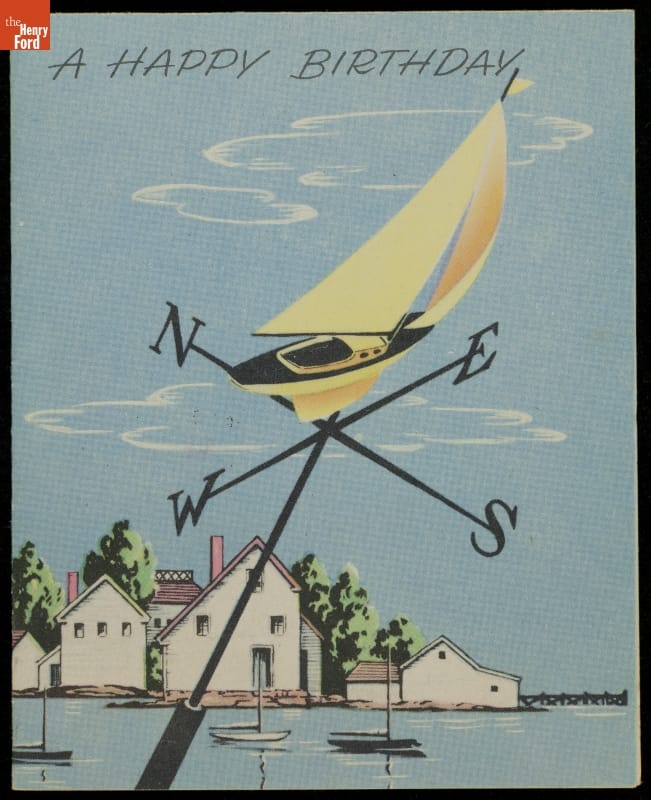
- Birthday Card, circa 1955 - This would have been a typical birthday card given to a boy in the 1950s.
- circa 1955
- Collections - Artifact
Birthday Card, circa 1955
This would have been a typical birthday card given to a boy in the 1950s.
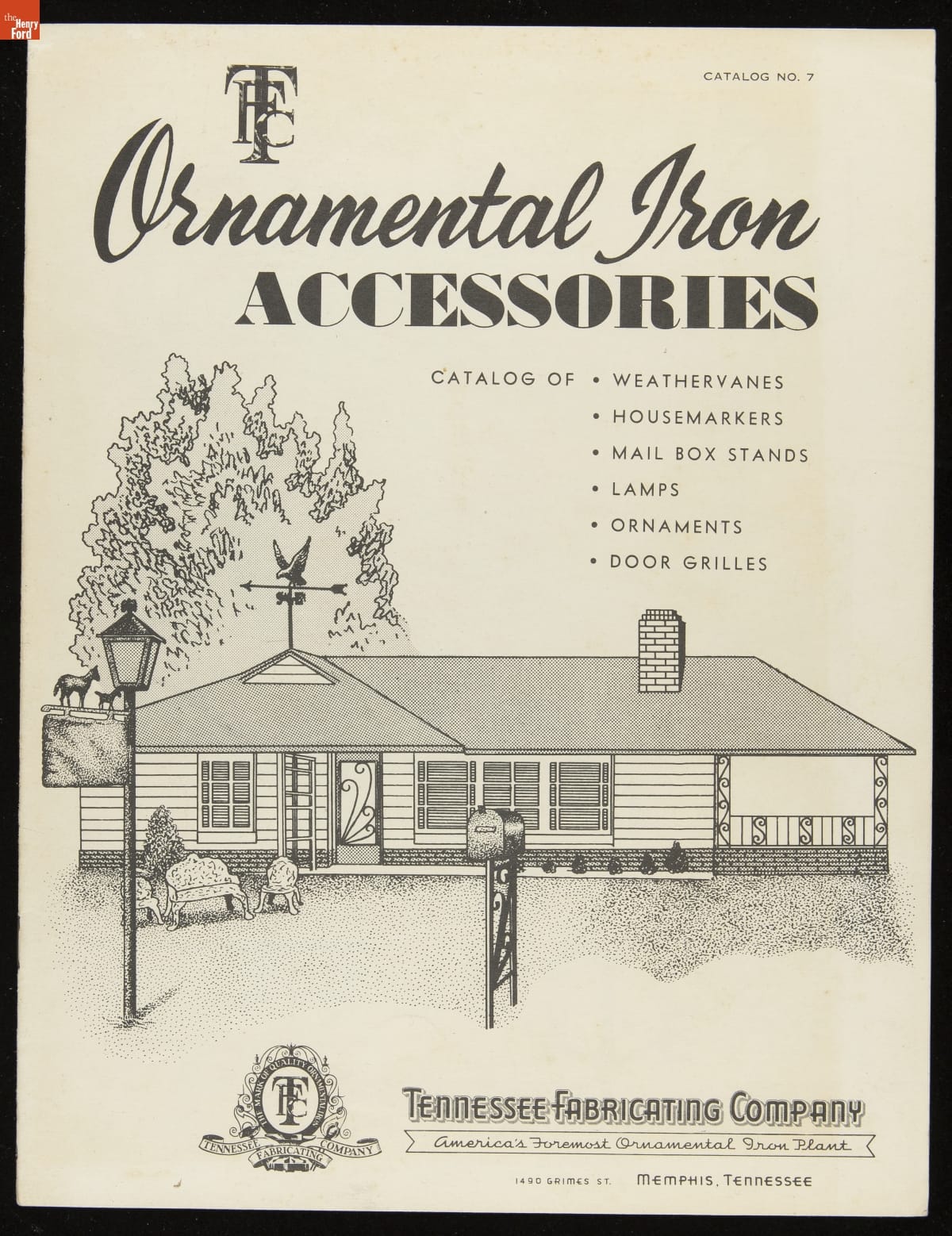
- Tennessee Fabricating Company Catalog, "Ornamental Iron Accessories," 1959 - The Tennessee Fabricating Company created a variety of ornamental ironwork for the American home. The company offered a wide range of products, including house markers, mailbox stands, porch columns and railings, door grillwork, and even weathervanes. This 1959 catalog gives a sample of the decorative metalwork available from the Memphis-based company.
- 1959
- Collections - Artifact
Tennessee Fabricating Company Catalog, "Ornamental Iron Accessories," 1959
The Tennessee Fabricating Company created a variety of ornamental ironwork for the American home. The company offered a wide range of products, including house markers, mailbox stands, porch columns and railings, door grillwork, and even weathervanes. This 1959 catalog gives a sample of the decorative metalwork available from the Memphis-based company.
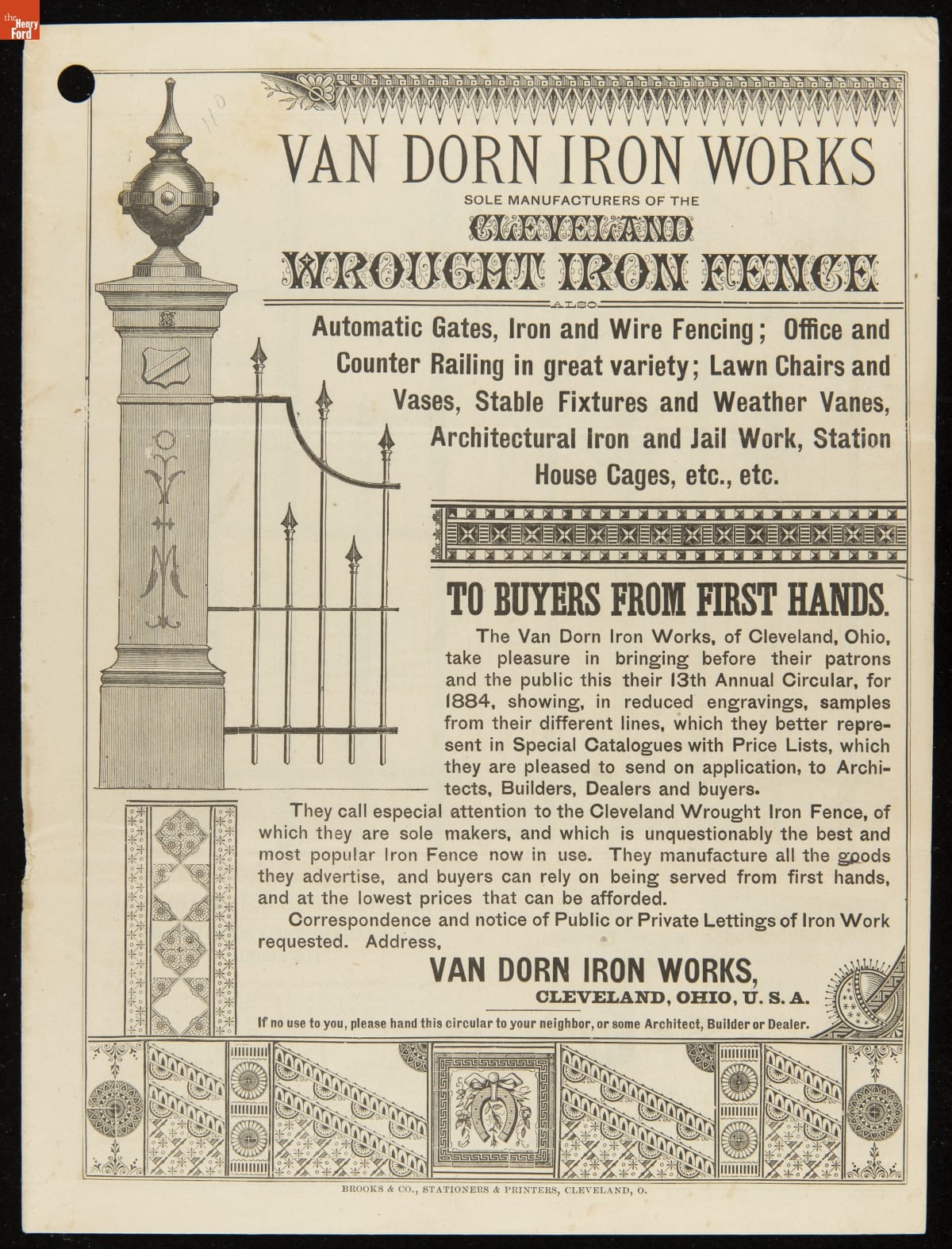
- Van Dorn Iron Works Catalog, "Sole Manufacturers Cleveland Wrought Iron Fence," 1884 - J.H. Van Dorn started a wrought iron fencing company in Akron, Ohio, in 1872. His business expanded and by 1878, he had moved to Cleveland. In addition to iron fencing, Van Dorn's company produced metal lawn and stable fixtures, jail cells, office and counter railings, and weathervanes. This catalog shows the variety of products the company offered in the mid-1880s.
- 1884
- Collections - Artifact
Van Dorn Iron Works Catalog, "Sole Manufacturers Cleveland Wrought Iron Fence," 1884
J.H. Van Dorn started a wrought iron fencing company in Akron, Ohio, in 1872. His business expanded and by 1878, he had moved to Cleveland. In addition to iron fencing, Van Dorn's company produced metal lawn and stable fixtures, jail cells, office and counter railings, and weathervanes. This catalog shows the variety of products the company offered in the mid-1880s.
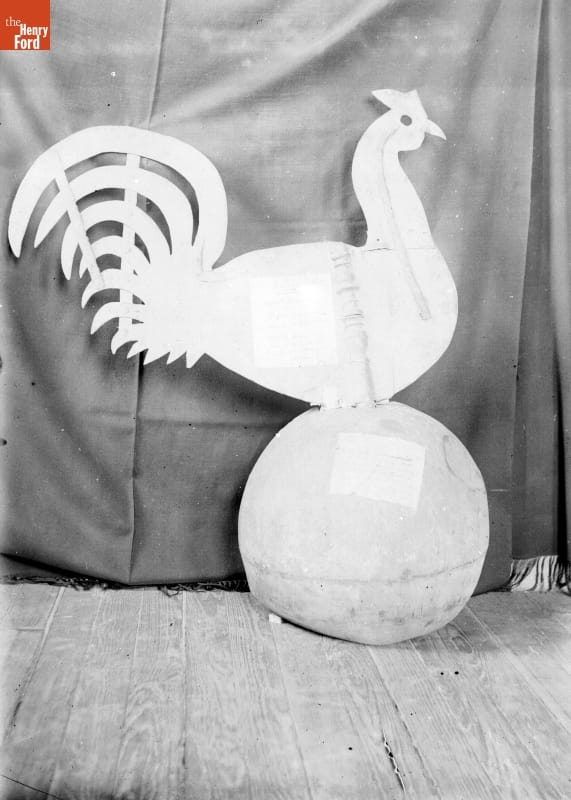
- Long Island Historical Museum, Weather Vane, 1890-1915 - In 1890, Jenny Young Chandler, 25 years old and recently widowed, began working for the <EM>New York Herald</EM>. As a photojournalist and feature writer, Chandler captured life in Brooklyn, New York, and vicinity. She also documented collections of private individuals and museums -- some of which were featured in magazine articles for collectors. By 1922, the time of her death, she had produced over 800 glass plate negatives.
- 1890-1915
- Collections - Artifact
Long Island Historical Museum, Weather Vane, 1890-1915
In 1890, Jenny Young Chandler, 25 years old and recently widowed, began working for the New York Herald. As a photojournalist and feature writer, Chandler captured life in Brooklyn, New York, and vicinity. She also documented collections of private individuals and museums -- some of which were featured in magazine articles for collectors. By 1922, the time of her death, she had produced over 800 glass plate negatives.