
Copy of Oil Portrait of Noah Webster, 1823-1835
THF107986 / Copy of Oil Portrait of Noah Webster, 1823-1835
01
Artifact Overview
Noah Webster was an influential American educator and patriot. He is most famous for his American Dictionary of the English Language. But shortly after the American Revolution, and before the dictionary, Webster created an American spelling textbook to replace British and European books. Known as the "Blue-Backed Speller," the book was popular in American schools for more than a century.
Artifact Details
Artifact
Painting (Visual work)
Date Made
1823-1835
Subject Date
1823
Place of Creation
Creator Notes
Unknown artist, based on an original painting by Samuel F.B. Morse
Location
at Greenfield Village in Noah Webster House
Object ID
62.159.1
Credit
From the Collections of The Henry Ford.
Material
Oil paint (Paint)
Canvas
Color
Multicolored
Dimensions
Height: 33.25 in
Width: 28.25 in
Depth: 2 in
Keywords |
|---|
02
Related Content
 Set
SetOne-Room Schools
- 42 Artifacts
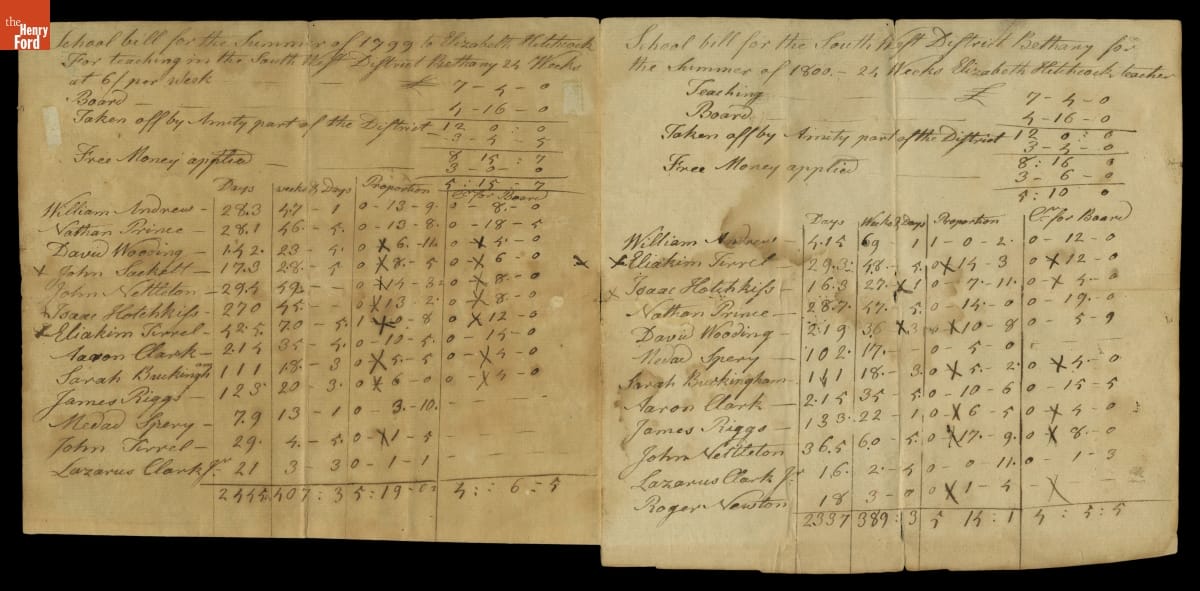
In the early United States, schools were organized if the local community desired them, and generally parents had to pay for their children to attend. This is a hand-written bill from a teacher in Bethany, Connecticut. Parents were billed for their children's education as well as the teacher's board (food and shelter).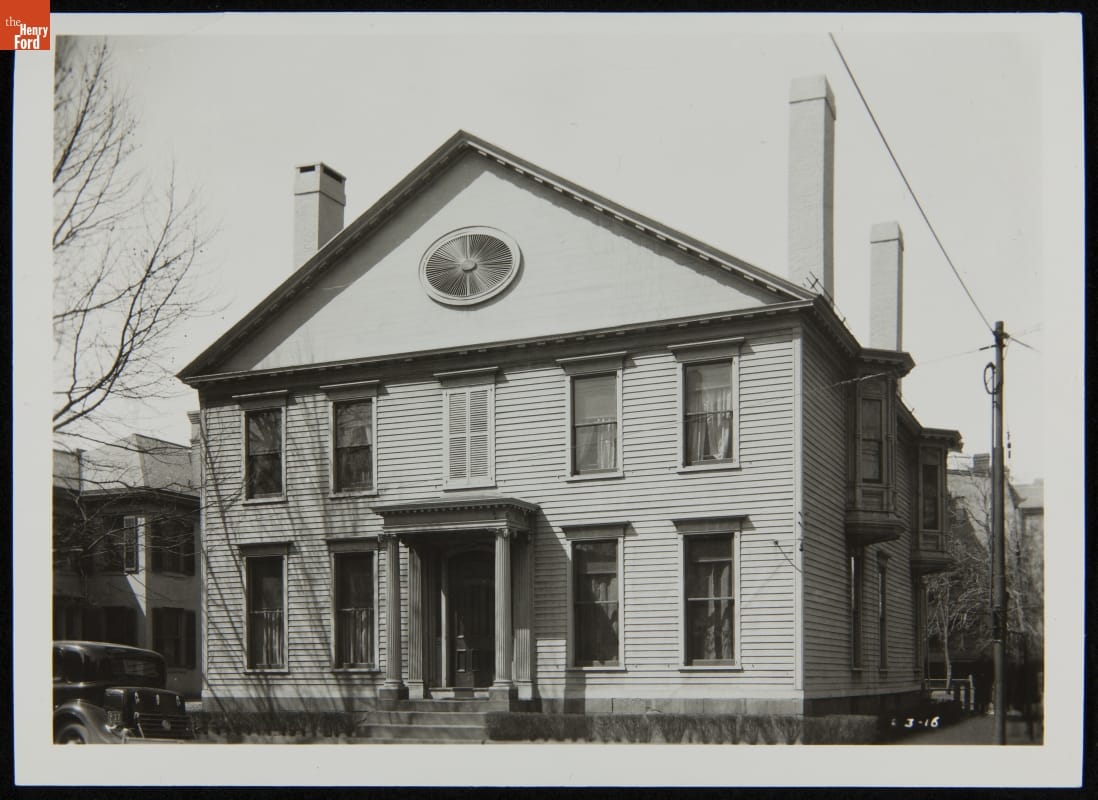 Set
SetNoah Webster and his New Haven, Connecticut Home
- 11 Artifacts
This is textbook pioneer and spelling reformer Noah Webster's home on its original site in New Haven, Connecticut. Henry Ford admired Webster and recognized his house as an important piece of American history. Ford had the building moved to Greenfield Village - his historical outdoor museum in Dearborn, Michigan. This view documents architectural details, including second floor bay windows not moved with the house.