
Wright Cycle Shop
THF189112 / Wright Cycle Shop
01
Artifact Overview
Wilbur and Orville Wright operated their bicycle business in this building from 1897 to 1908 in Dayton, Ohio. The brothers sold and repaired bikes, and they even produced models under their own brands. It was also in this shop that the Wright brothers built their earliest flying machines, including the 1903 Flyer that became the first successful heavier-than-air, powered, controlled aircraft.
Artifact Details
Artifact
Store
Date Made
circa 1875
Subject Date
circa 1903
Creators
Place of Creation
Creator Notes
The building was originally constructed as a residence and later substantially modified in 1896 to a commercal building by Charles Webbert.
Location
at Greenfield Village in Main Street District
Object ID
38.819.1
Credit
From the Collections of The Henry Ford.
Material
Wood (Plant material)
Brick (Clay material)
Roofing slate
Glass (Material)
Metal
Inscriptions
Sign above storefront on left: Wright Cycle Co
Keywords |
|---|
02
Related Content
Set
Growing Up Wright
- 25 Artifacts
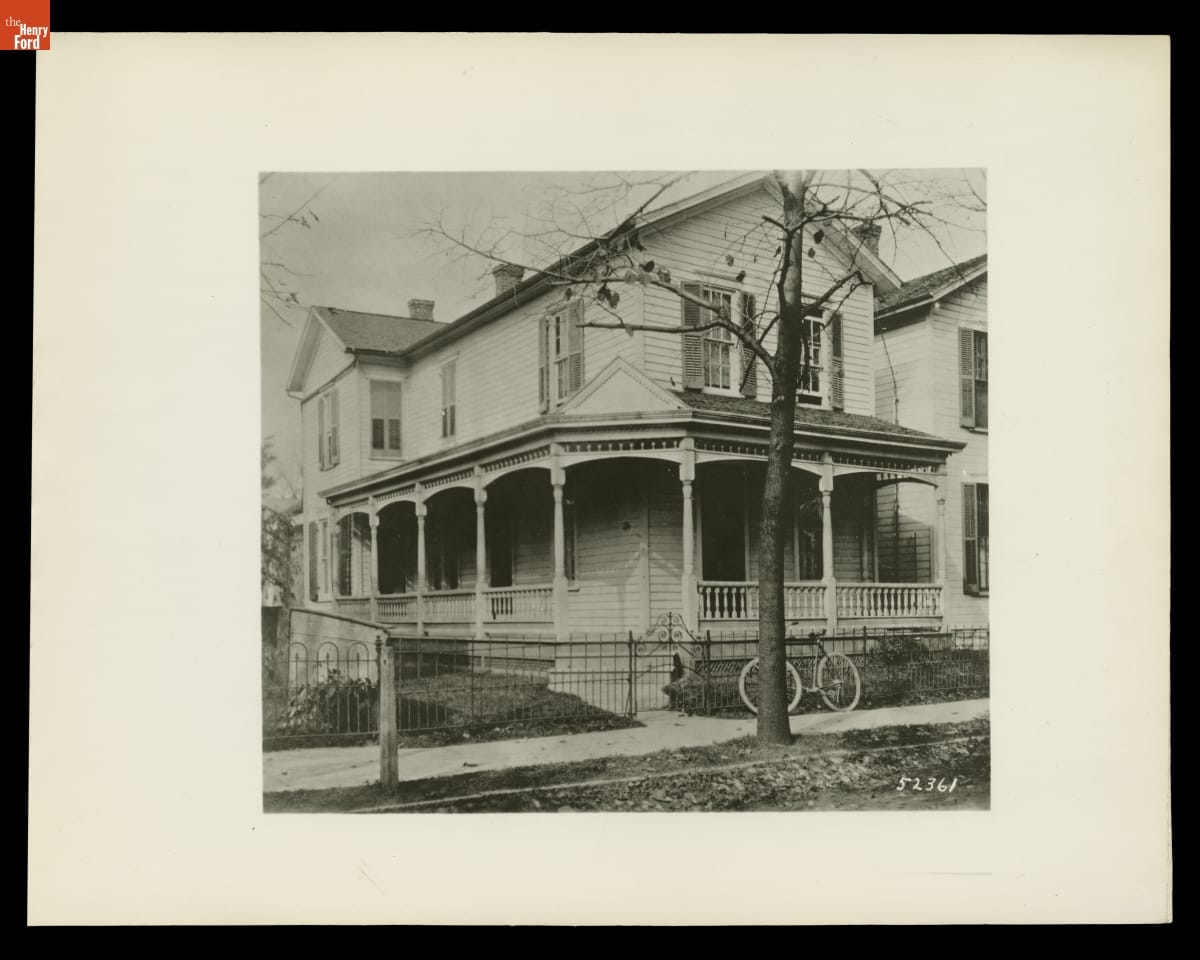
Before moving the Wright Home from Dayton, Ohio, to Greenfield Village in November 1936, Henry Ford's agents found and took detailed photographs of the building's exterior. These photos helped the team reassemble the structure in Dearborn, Michigan. Orville Wright also assisted to ensure the reconstruction's accuracy.
Set
Greenfield Village Buildings
- 84 Artifacts
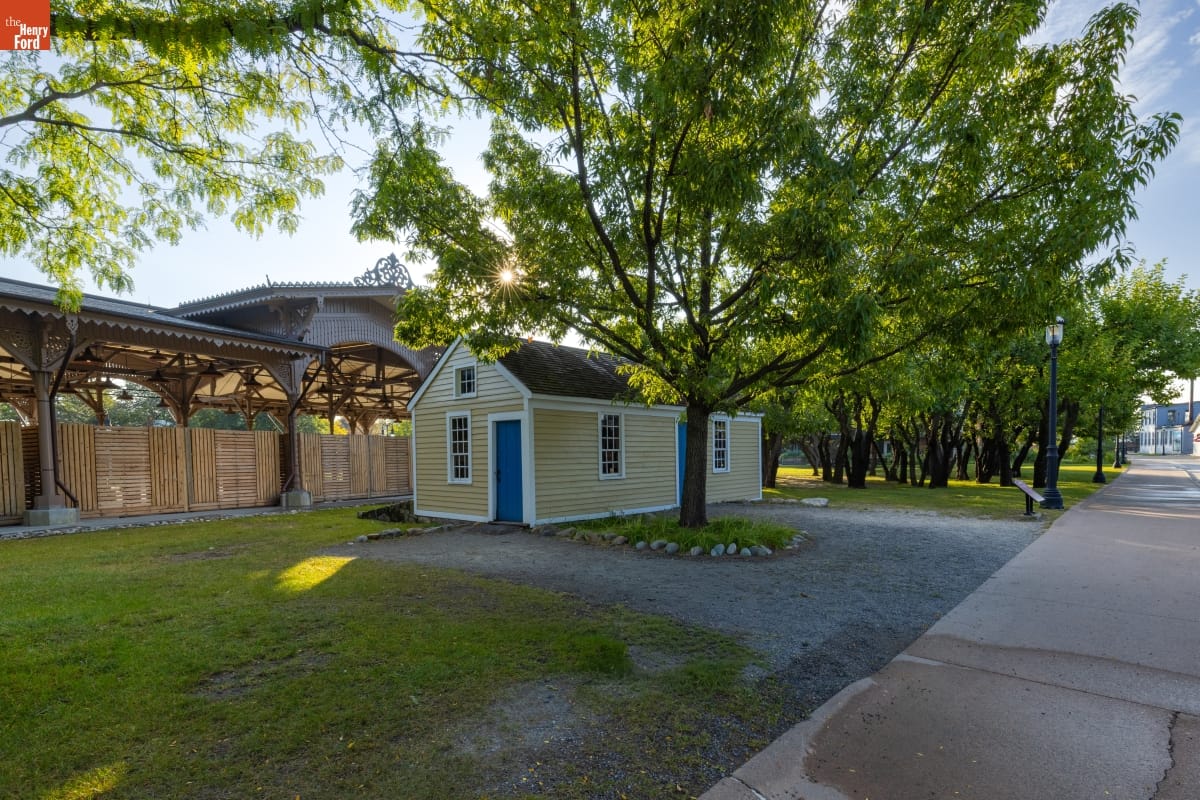
As America was taking its first steps towards industrialization, the Hanks family of Mansfield, Connecticut, made early attempts to mechanize the production of silk thread. Rodney Hanks and his nephew Horatio Hanks built this mill in 1810. It was the first silk mill in America, producing some of the first silk with machines that were powered by a waterwheel.
Set
Featured on The Henry Ford's Innovation Nation: Season 4
- 26 Artifacts
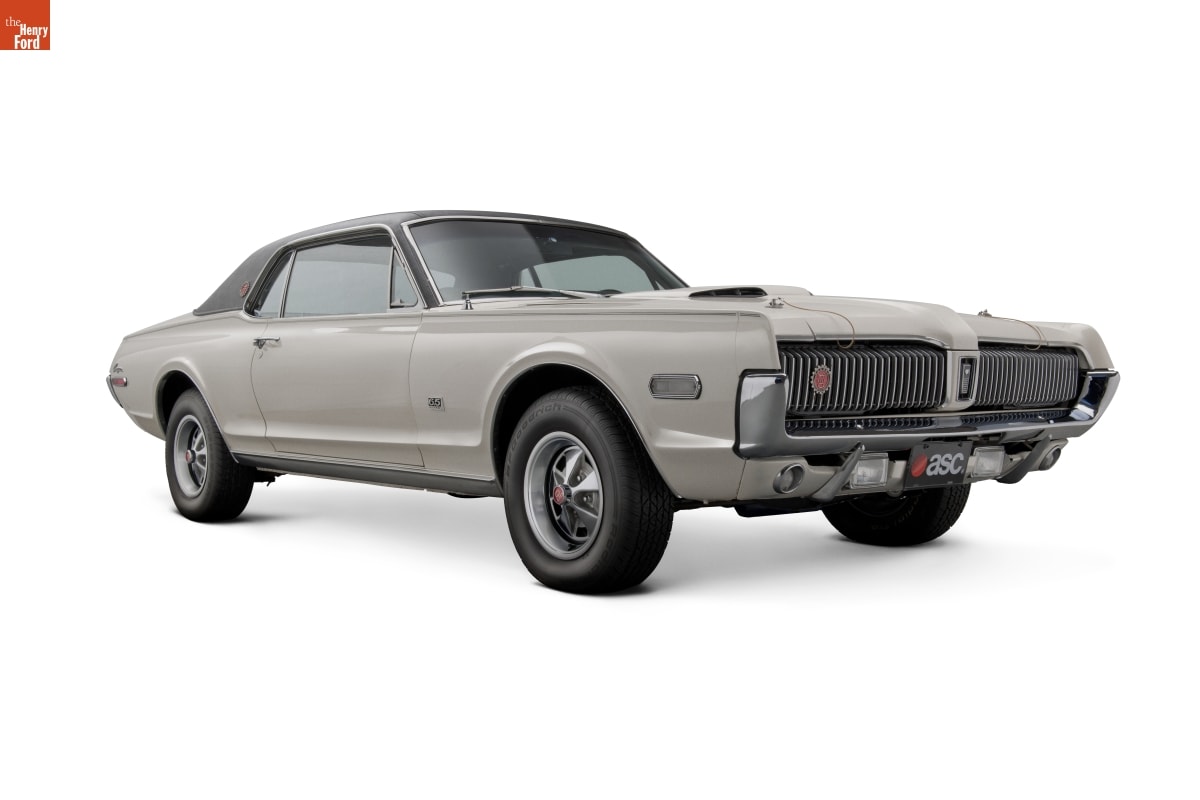
Ford Motor Company's Mustang, introduced in 1964, was such a success that other car makers soon copied it, including Ford itself. Mercury's Cougar was based on the Mustang, but with more upscale styling and interior appointments that made it something of a "poor man's Jaguar." This Cougar has the rare XR7-G package with a hood scoop, sun roof, and other special trim features.
Set
Featured on The Henry Ford's Innovation Nation: Season 1
- 25 Artifacts
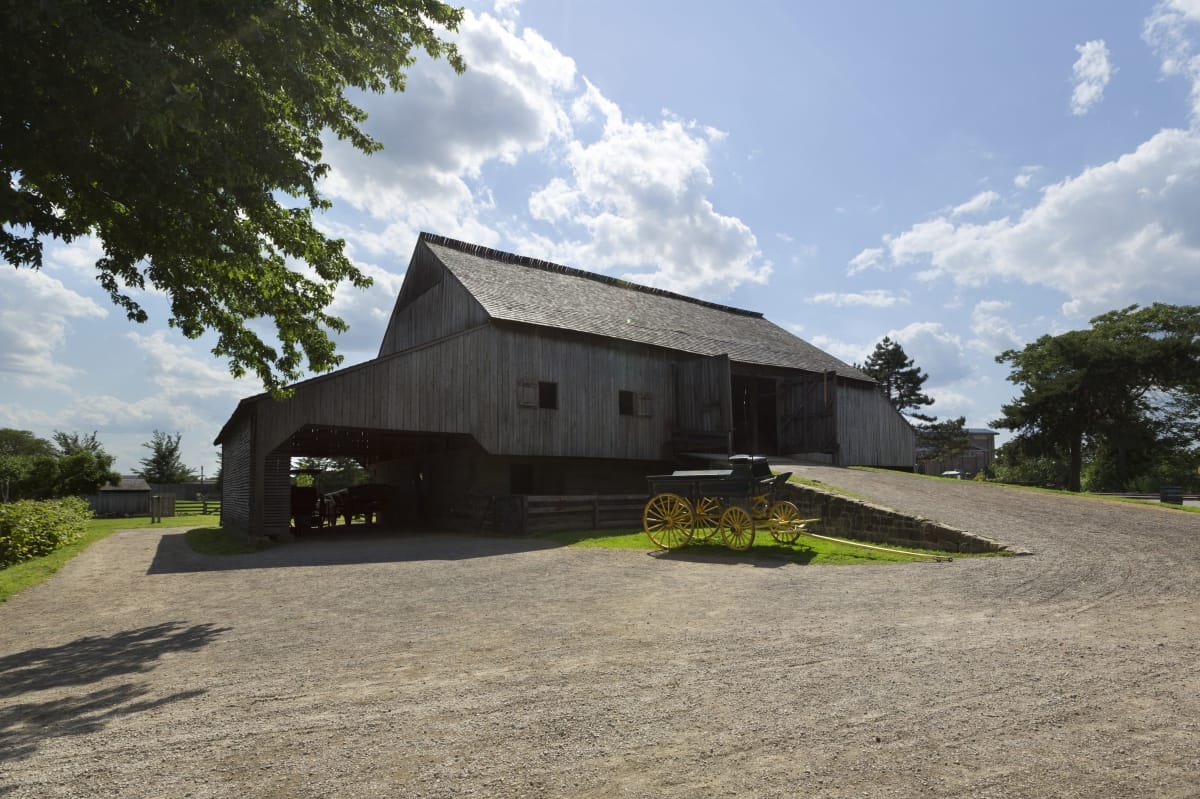
The Firestone barn is a Pennsylvania-German bank barn, an American barn type with Swiss origins. They are called bank barns because the barn is built into a bank, allowing wagons to be driven into the upper floor. Bank barns combined multiple farm functions under a single roof. Livestock were kept in the lower floor, crops on the upper floor.
Set
Mobility
- 49 Artifacts
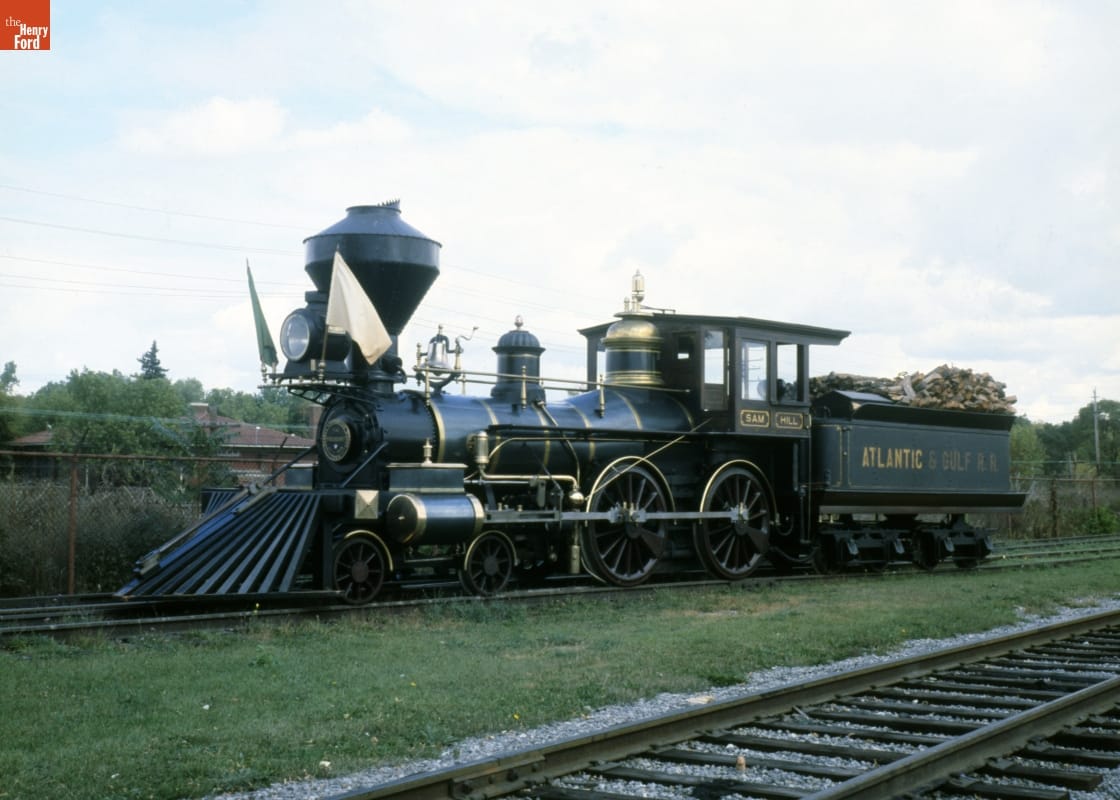
This 1858 Rogers steam locomotive is typical of those used in the United States in the second half of the 19th century. Its flexible wheel arrangement, high power output, and light weight were well suited to the tight curves, steep grades, and hastily constructed track that characterized American railroads. This locomotive struck an agreeable balance between practicality, safety, and economy.
Set
Featured on The Henry Ford's Innovation Nation: Season 7
- 26 Artifacts
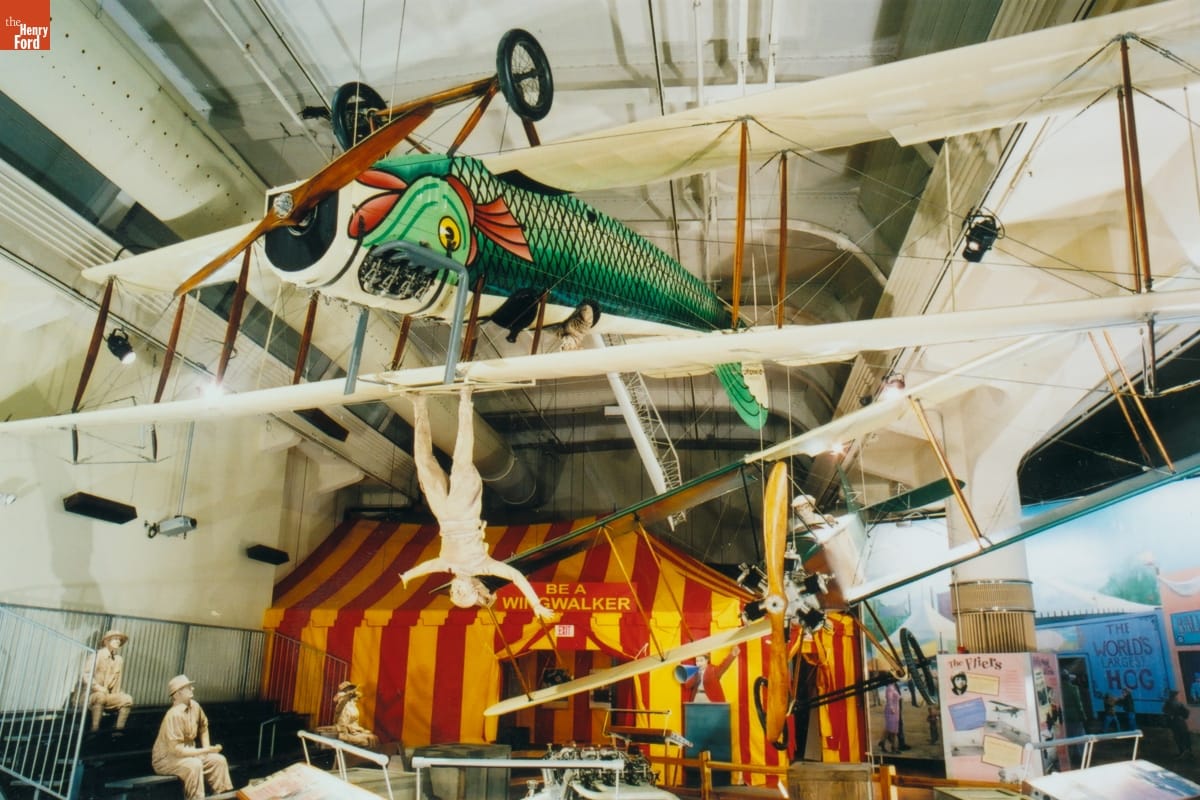
The Curtiss JN-4 "Jenny" was the U.S. Army's primary training aircraft in the World War I era. After the war, surplus Jennys formed the core of America's barnstorming fleet. The JN-4D variation employed a control stick rather than the wheel used in the standard version. The JN-4D originally was built for the Canadian market, explaining its "Canuck" nickname.
Set
The Most Popular Digital Collections Artifacts of 2021
- 49 Artifacts
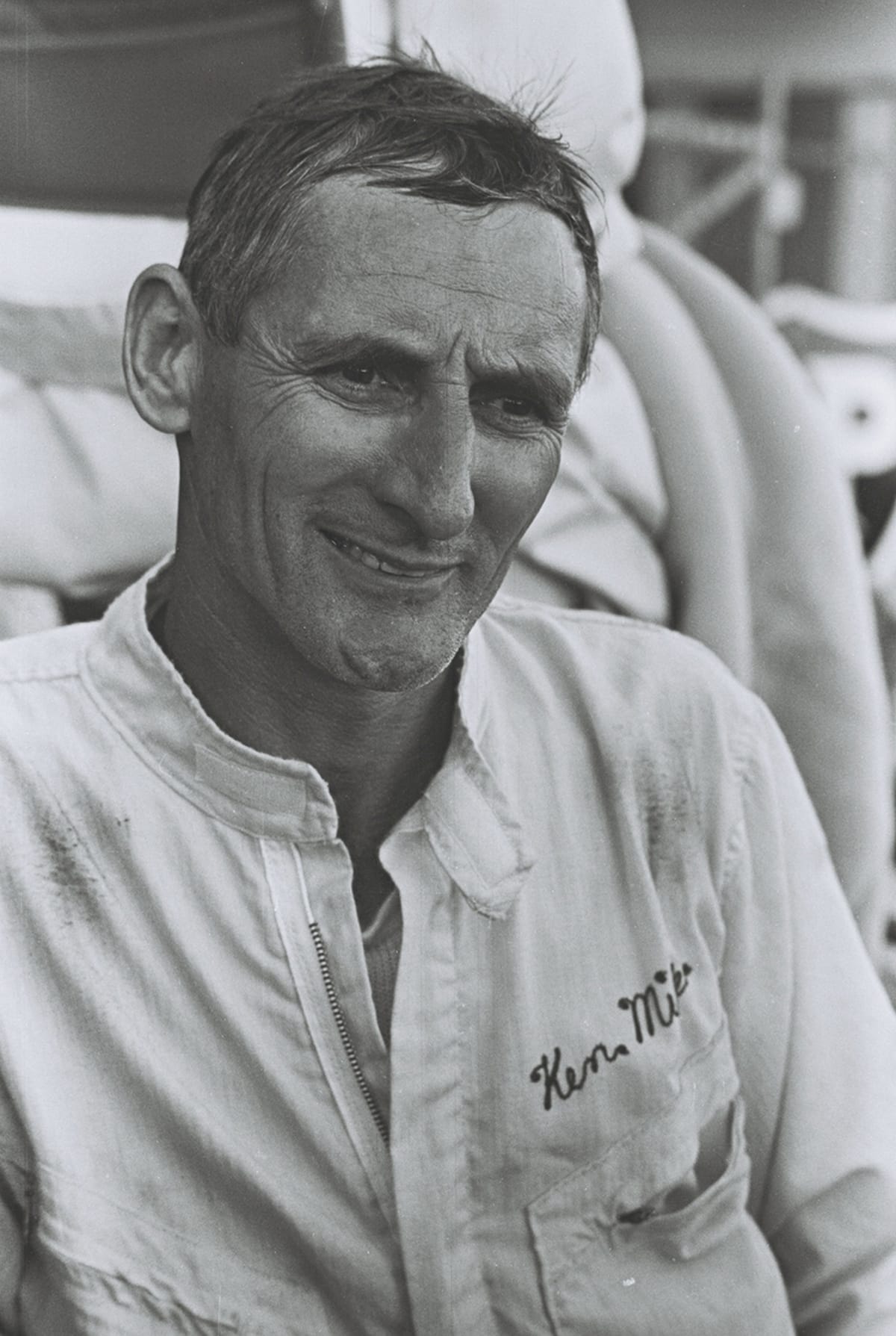
British-born Ken Miles was a gifted race car engineer and driver. Through his work for Carroll Shelby, Miles got involved in Ford's GT racing program. Miles won the 24 Hours of Daytona and the 12 Hours of Sebring in 1966, and he placed second at Le Mans. Miles died in a crash while testing Ford's J-Car later that year.

Set
Wright Cycle Company
- 35 Artifacts
When Wilbur and Orville Wright established Wright Cycle Company in 1892, they joined a booming business. Americans loved bicycles. By 1895, over 300 manufacturers produced a combined 1.2 million bikes each year. The Wrights sold and repaired cycles and accessories. For a time, they even built bikes under their own brands. Bicycles gave the brothers the skills and resources to pursue loftier goals, and they closed Wright Cycle Company in 1908.

Set
Celebrating 90 — Collecting through the Decades: 1930s
- 11 Artifacts
The Henry Ford marks its 90th anniversary in 2019. In celebration, The Henry Ford's curators have taken a decade-by-decade look at how our collections have grown — through significant additions and evolving philosophies. This set looks at some of the objects and archives collected during the 1930s.

Set
America's Industrial Revolution
- 61 Artifacts
The Model T's distinction as a landmark car design can be traced in large part to machines like this -- a high capacity precision machine tool that performed just two production steps on the car engine's cylinder block. The Model T as a design achievement is inseparable from many hundreds of engineering, materials, and production innovations.

article
Celebrating Ninety: Collecting in the 1930s
We're celebrating our 90th birthday by looking, decade by decade, at significant additions to our collection. During the 1930s, we acquired the Wright Cycle Shop, a sweetmeat dish used by Alexander Hamilton, and a jacquard loom.

article