
Pair of Hand Cards, circa 1800
THF188584 / Pair of Hand Cards, circa 1800
01
Artifact Overview
Before wool is spun into yarn, the fibers are untangled and aligned, making it easier to produce a smooth, consistent yarn. In this process, called carding, clean wool fleece is passed between small, bent wire teeth to align the fibers. Hand cards, like this pair, were used in 18th and 19th century American homes to card wool prior to spinning. Younger children were often given this necessary, but monotonous, task.
Artifact Details
Artifact
Hand card
Date Made
circa 1800
Place of Creation
Location
at Henry Ford Museum in Home Arts
Object ID
36.343.2
Credit
From the Collections of The Henry Ford.
Material
Wood (Plant material)
Metal
Leather
Color
Brown
Dimensions
Height: 10 in
Width: 9 in
Keywords |
|---|
02
Related Content
 Set
SetSpinning Highlights from the Collections of The Henry Ford
- 16 Artifacts
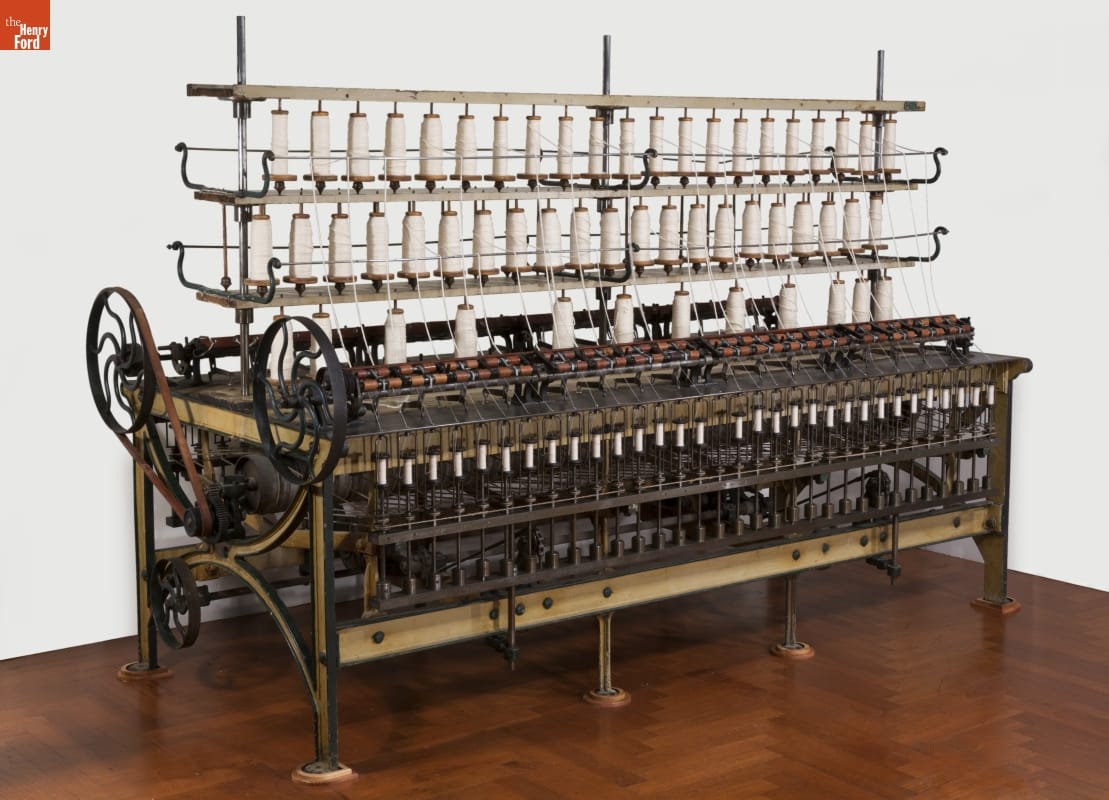
Spinning frames spin cotton fiber into yarn and then wind it onto a bobbin. This throstle spinning frame could simultaneously spin 64 strands of yarn. (Throstle -- an old name for a song thrush -- refers to the bird-like sounds the machine made.) Machines like this helped produce the large quantities of yarn that growing industrial weaving operations needed in the early and mid-1800s.-600x600%2F615-thf91531.png%3Fsfvrsn%3D55da3add_1&w=3840&q=75) article
articleThe Rise of the American Carding Mill
Carding mills transformed raw wool from sheep into straightened rolls of wool, called rovings—the first step to finished cloth. Find out how carding mills provided this service for farm families and home spinners. article
The Wool Carding Machine
Learn how wool carding machines transformed wool processing. Explore their impact on yarn preparation. Read more from The Henry Ford!