
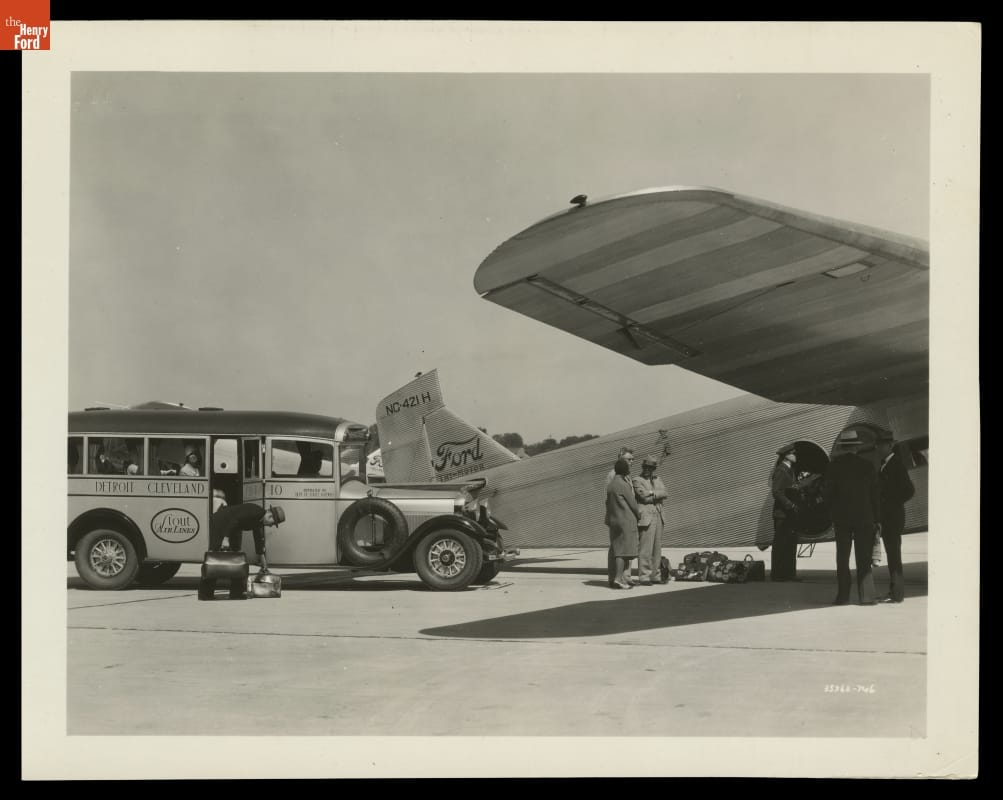
Passengers Entering Ford Tri-Motor 4-AT Airplane, 1927
THF285021 / Passengers Entering Ford Tri-Motor 4-AT Airplane, 1927
01
Artifact Overview
Passenger air travel was a completely new -- and perhaps fearsome -- concept for most Americans in the 1920s. Images like this, used in national advertisements for the Ford Tri-Motor, helped convince a skeptical public of the safety of flying in a Ford plane. These educational advertisements offered an exciting and reassuring description of the flying experience, emphasizing "well-designed, well-constructed machines handled by competent pilots."
Artifact Details
Artifact
Photographic print
Subject Date
08 September 1927
Collection Title
Location
By Request in the Benson Ford Research Center
Object ID
84.1.1660.P.189.4701
Credit
From the Collections of The Henry Ford. Gift of Ford Motor Company.
Material
Paper (Fiber product)
Linen (Material)
Technique
Gelatin silver process
Color
Black-and-white (Colors)
Keywords |
|---|
02
Related Content
 Set
SetFord Tri-Motor: Passenger Travel
- 16 Artifacts
Stout Air Lines advertised direct airplane service between Detroit and Cleveland, but this wasn't strictly true. Stout's "Detroit" terminal was, in fact, Ford Airport in Dearborn, ten miles west of the city. Passengers gathered at a station in Detroit and were shuttled by bus to the Dearborn airport where they boarded the actual plane.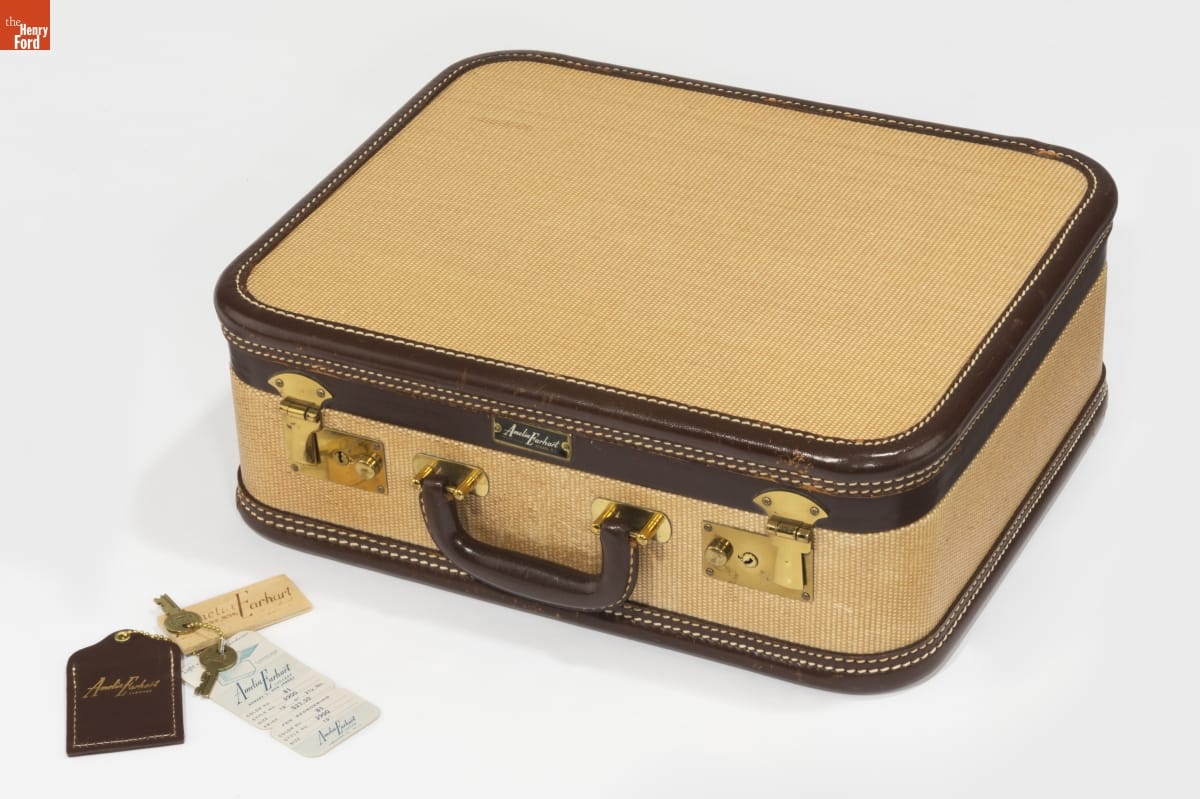 Set
SetThe Evolution of Luggage: From Trunks to Roller Bags
- 12 Artifacts
Leisure travel has changed a lot over the past 150 years, from something exclusively for the wealthy to something for everyone. Here are some highlights in the relationship between luggage and methods of transportation, from stagecoaches to airplanes.