
Port Huron Steam Traction Engine, "Longfellow," 1916
THF20656 / Port Huron Steam Traction Engine, "Longfellow," 1916 / in use
01
Artifact Overview
The late 19th to early 20th centuries saw huge steam engines like this used for threshing grain. They could move over the roads under their own power. Individual farmers generally did not own such machines. Rather, men made a business of moving from farm to farm, threshing grain during harvest time. Joseph Freund of Westphalia, Michigan, bought this machine in 1917 and used it to power a Port Huron "Rusher" thresher-separator in Clinton and Ionia Counties, Michigan.
Artifact Details
Artifact
Steam traction engine
Date Made
22 December 1916
Place of Creation
Location
at Greenfield Village in Soybean Lab Agricultural Gallery
Object ID
94.0.8.1
Credit
From the Collections of The Henry Ford.
Color
Red
Dimensions
Height: 120 in
Width: 96 in
Length: 228 in
Weight: 17200 lb
Horsepower: 19 hp (48.47 kW - Draw Bar Horsepower)
Horsepower: 65 hp (164.05 kW - Belt Horsepower)
Speed: 240 rpm (0.11 Hz)
Diameter: 6.5 in (Bore)
Diameter: 9.75 in (Bore)
Length: 16.5 in (Stroke)
Inscriptions
Location not specified: No7920
Location not specified: PORT HURON E & T Co
Keywords |
|---|
02
Related Content
 Set
SetHenry Ford’s Steam Engines
- 9 Artifacts
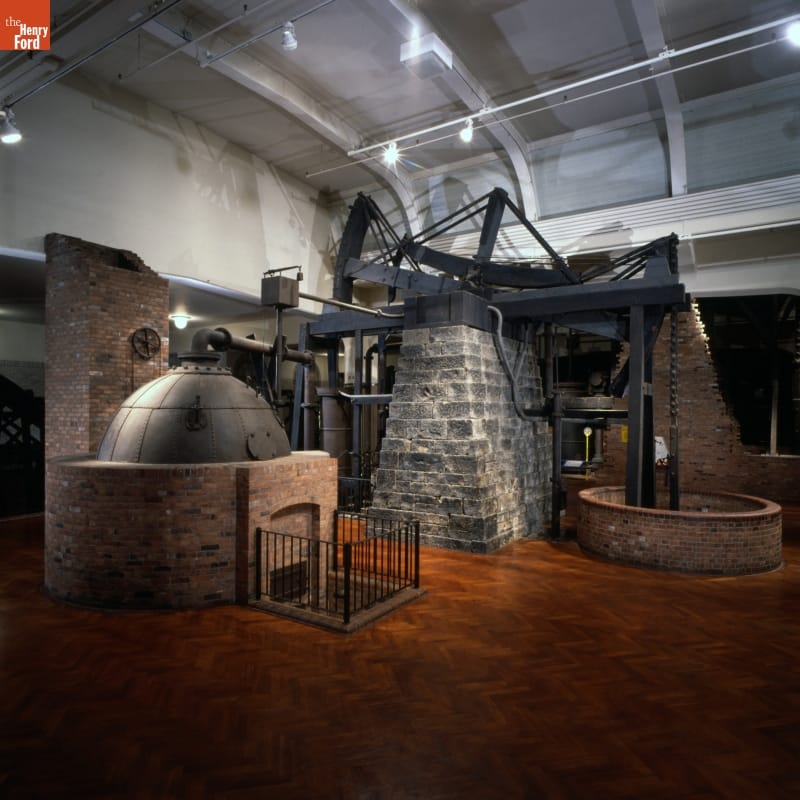
This is the oldest known surviving steam engine in the world. Named for its inventor Thomas Newcomen, the engine converted chemical energy in the fuel into useful mechanical work. Its early history is not known, but it was used to pump water out of the Cannel mine in the Lancashire coalfields of England in about 1765. The engine was presented to Henry Ford in 1929. article
Steam-Powered Agriculture
Steam-powered traction engines transformed American agriculture from intense hand labor to almost total mechanization. Learn more in this blog post.