
Hallowe'en in Greenfield Village: Postcards
Share
share
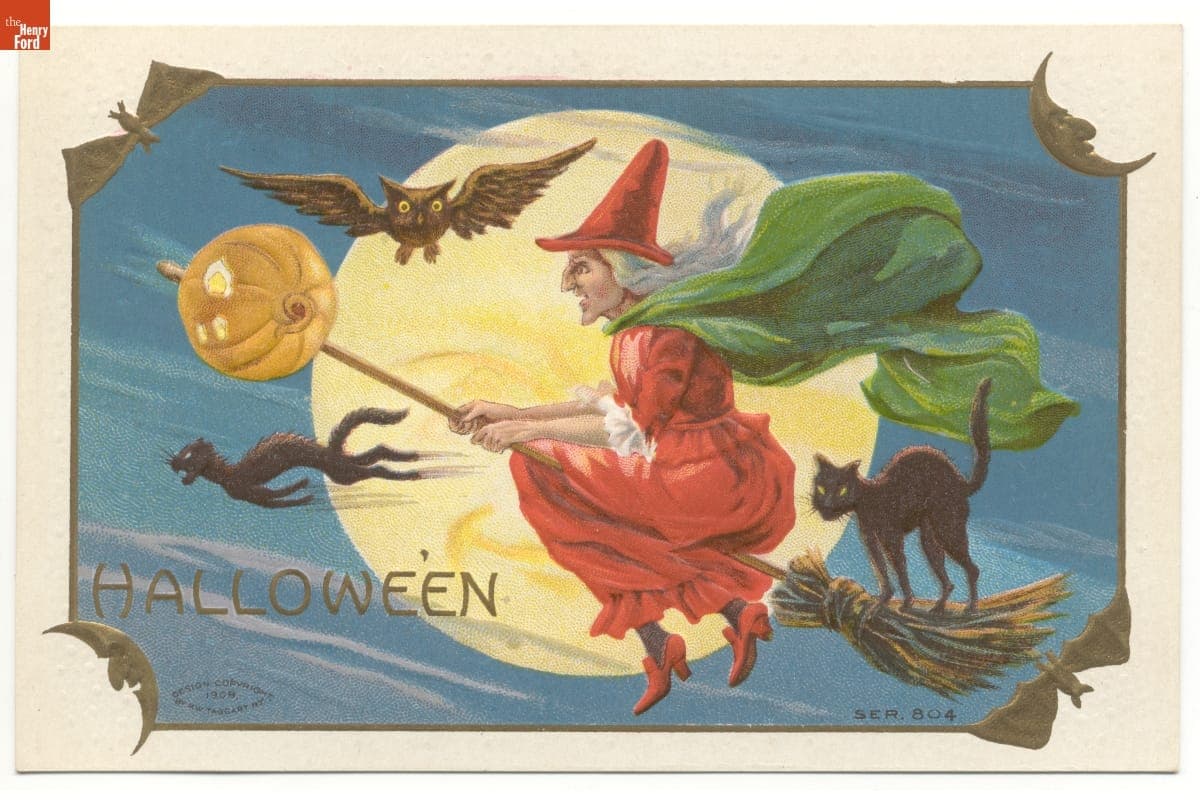
One tradition fans of Hallowe'en in Greenfield Village look forward to annually is the postcard that's handed out -- a reproduction of a historic Hallowe'en card from our collection. Here, we've gathered some of the selections that have been featured over the years. You can download a digital copy of any you've missed by clicking through to the Digital Collections record.
"Hallo e'en. Sh! Ghosts!" 1909
A distinctly American blend of Halloween traditions emerged by the late 1800s. Into the 20th century, the holiday was mostly an innocent celebration of mystery and fun, but friends and neighbors often exchanged seasonal greeting cards that evoked Halloween's superstitious origins. This colorful example alludes to olden customs and beliefs about the spiritual world.
View Artifact"You Auto Have A Happy Hallowe'en,"
Halloween's superstitious origins gave way to a national celebration of mystery and innocent fun in 20th-century America. Seasonal greeting cards commonly exchanged by friends and neighbors during Halloween reflect a distinctly American blend of olden customs and modern life. A traditional jack-o-lantern drives a contemporary automobile on this clever card from 1908.
View Artifact"Hallowe'en Tis Hallowe'en and I'm here again...," 1910-1914
Halloween's superstitious origins gave way to a national celebration of mystery and innocent fun in 20th-century America. Seasonal greeting cards commonly exchanged by friends and neighbors during Halloween reflected a distinctly American blend of olden customs and modern life. Witchcraft, fortune-telling, and contemporary advances in flight come together on this clever card from the early 1910s.
View Artifact"Hallowe'en," 1908
A distinctly American blend of Halloween traditions emerged by the late 1800s. Into the 20th century, the holiday was mostly an innocent celebration of mystery and fun, but friends and neighbors often exchanged seasonal greeting cards that evoked Halloween's superstitious origins. This colorful example alludes to olden customs and beliefs involving witchcraft, owls, and black cats.
View ArtifactHalloween Postcard, "The Halloween Lantern," 1914
Halloween's superstitious origins gave way to a national celebration of mystery and innocent fun in 20th-century America. Seasonal greeting postcards commonly exchanged by friends and neighbors during Halloween reflected a distinctly American blend of olden customs and modern life. This colorful example from 1914 combines traditional superstitious symbols with a contemporary automobile.
View ArtifactHalloween Postcard, "A Starry Hallowe'en," circa 1915
Halloween's superstitious origins gave way to a national celebration of mystery and innocent fun in 20th-century America. Seasonal greeting postcards commonly exchanged by friends and neighbors during Halloween reflected a distinctly American blend of olden customs and modern life. This colorful example from about 1915 features traditional superstitious symbols and a whimsical "airplane."
View ArtifactHalloween Postcard, circa 1913
The first American Halloween gatherings were designed as matchmaking parties for young people, with games to "predict" matrimonial futures and ample opportunity for innocent flirtation. Friends and neighbors often exchanged seasonal greeting postcards - such as this colorful example from about 1912 - that depicted these holiday amusements.
View ArtifactHalloween Postcard, 1913
By the late 1800s, a distinct blend of Halloween customs had emerged in the United States. The holiday was mostly an innocent celebration of mystery and fun into the 20th century, though traditions often reflected Halloween's supernatural origins. This colorful, spooky greeting postcard from 1913 alludes to olden customs and beliefs about the spiritual world.
View ArtifactHalloween Postcard, "A row of Pumpkins," 1909
A distinctly American blend of Halloween traditions emerged by the late 1800s. Into the 20th century, the holiday was mostly an innocent celebration of mystery and fun, but friends and neighbors often exchanged seasonal greeting postcards that evoked Halloween's superstitious origins. This colorful example includes a witch and a jack-o-lantern -- two symbols of Halloween's superstitious origins.
View Artifact"Hallowe'en Greeting," 1917
During the 1800s, Irish immigrants had a great influence on the celebration of Halloween in the United States. They substituted traditional lanterns carved from hollowed-out turnips with pumpkins, a squash native to America. This colorful postcard features these jack-o-lanterns, which had become the symbol of the American Halloween by the turn of the 20th century.
View Artifact"Halloween Greeting," 1915-1925
Halloween's superstitious origins gave way to a national celebration of mystery and innocent fun in 20th-century America. Seasonal greeting postcards commonly exchanged by friends and neighbors during Halloween reflected a distinctly American blend of olden customs and modern life. This colorful example from about 1920 features a traditional Halloween jack-o-lantern as the cockpit of a whimsical "airplane."
View Artifact"Hallowe'en Don'ts, Don't be scared of Goblins or Ghosts ...," 1911
By the late 1800s, a distinct blend of Halloween customs had emerged in the United States. The holiday was mostly an innocent celebration of mystery and fun into the 20th century, though traditions often reflected Halloween's supernatural origins. This colorful postcard reminds the reader, "Don't be scared of Goblins and Ghosts"; witches will scare them away if you make a noise like an owl.
View Artifact"The blackest cats that ever were seen Wish you luck this Hallowe'en," circa 1910
A distinctly American blend of Halloween traditions emerged by the late 1800s. Into the 20th century, the holiday became a national celebration of mystery and innocent fun. Often, friends and neighbors exchanged seasonal greeting cards. Though many Americans consider black cats as omens of bad luck, the sentiment on this colorful postcard expresses wishes of good luck on Halloween.
View ArtifactHalloween Postcard, "Merry Halloween," 1909
A jack-o-lantern is a traditional symbol of Halloween. The tradition began in the Celtic regions of Europe, specifically Ireland, where people hollowed out root vegetables, such as turnips, and lit them with candles or burning coal or embers. As immigrants flooded into the United States in the 1800s they used the pumpkin -- native to America -- as a natural substitute.
View ArtifactHalloween Postcard Showing Pumpkin Figures Seated on a Squash and Looking at a Black Cat, Postmarked 1908
By 1900, articles in magazines and newspapers had helped spread and popularize Halloween customs and images like jack o-lanterns, black cats, witches, or bobbing for apples to a national audience. Some people marked the holiday by mailing a Halloween-themed postcard greeting to family or friends. During the first two decades of the 20th century, sending postcards was an easy--and popular--way to communicate.
View Artifact

