
Touch-Free Mathematica
| Published | 12/9/2021 |
|---|
Touch-Free Mathematica
| Published | 12/9/2021 |
|---|
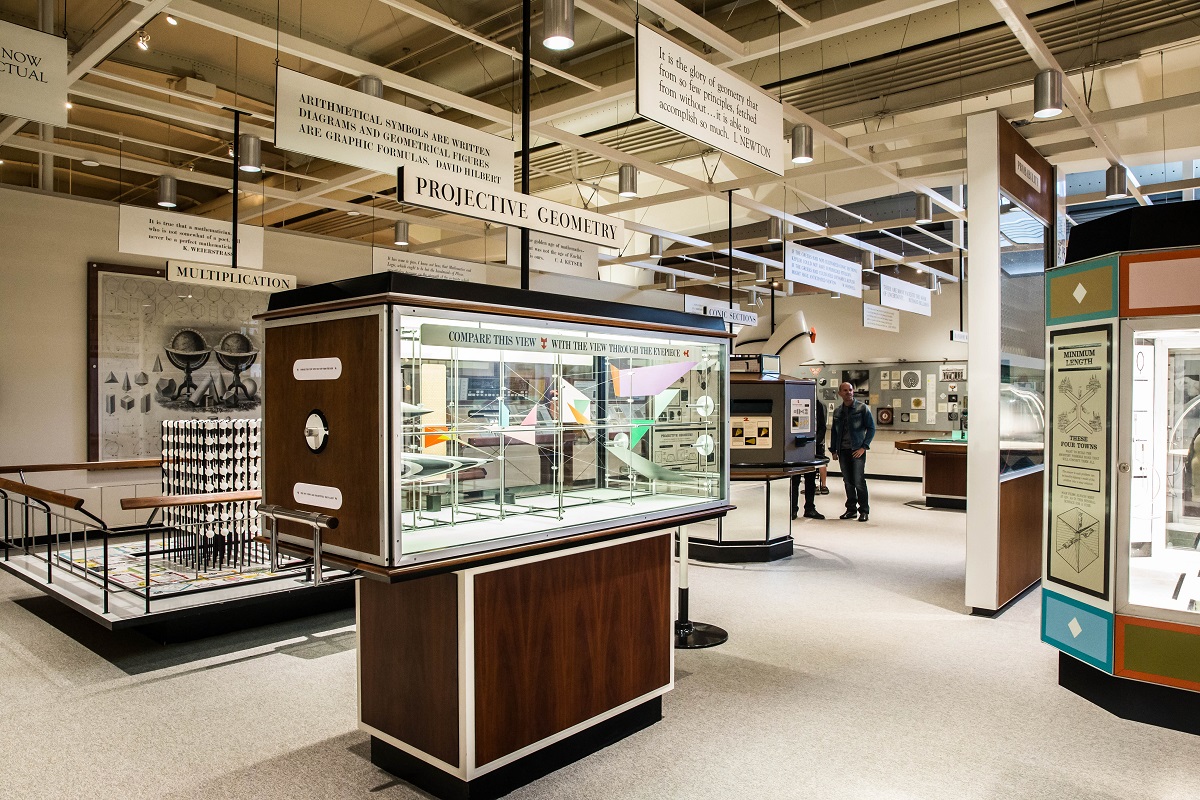
The Mathematica exhibit in Henry Ford Museum of American Innovation. / Photo by KMS Photography
When Henry Ford Museum of American Innovation reopened in July 2020 after months of shutdown because of COVID-19 restrictions, museumgoers were excited to be back on the floor. Many of them were super excited to get back to one of their favorite exhibitions, Mathematica—a favorite because it’s so hands-on.
And therein lay the problem, said Jake Hildebrandt, historic operating machinery specialist at The Henry Ford. As COVID-19 spread, the hands-on interactivity of Mathematica caused it to remain closed. Mixing a little bit of ingenuity, technology, and lots of problem-solving skills, Hildebrandt, along with master craftsman Brian McLean, ensured the exhibition could remain interactive yet hands-free and open to the public.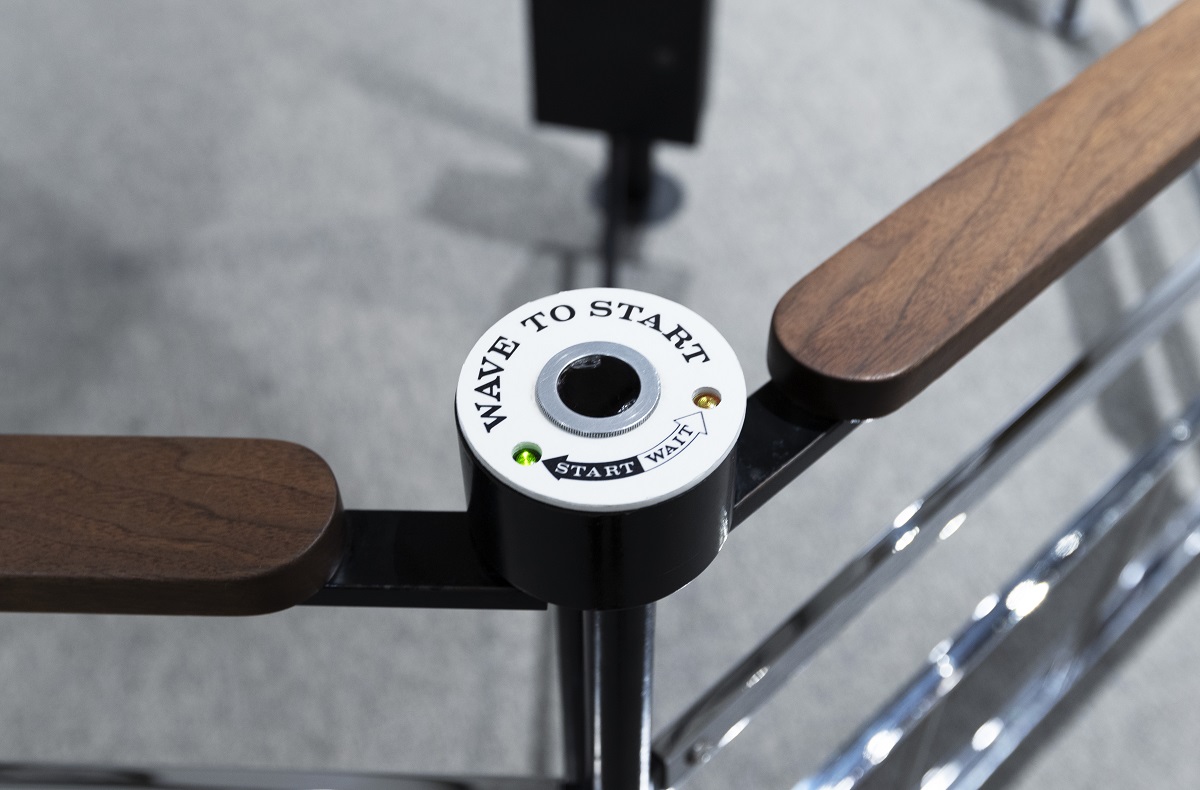
Mathematica’s Moebius Band was modified by staff from The Henry Ford to start via a hand wave. / Photo by Jillian Ferraiuolo
The push-start buttons on the Moebius Band and Celestial Mechanics installations, for example, are now initiated with a wave of the hand—no touch necessary. And the 27-button panel of the Multiplication Machine has been covered with Plexiglas for safety and new software installed so random math problems run on the cube throughout the day for visitor education and enjoyment.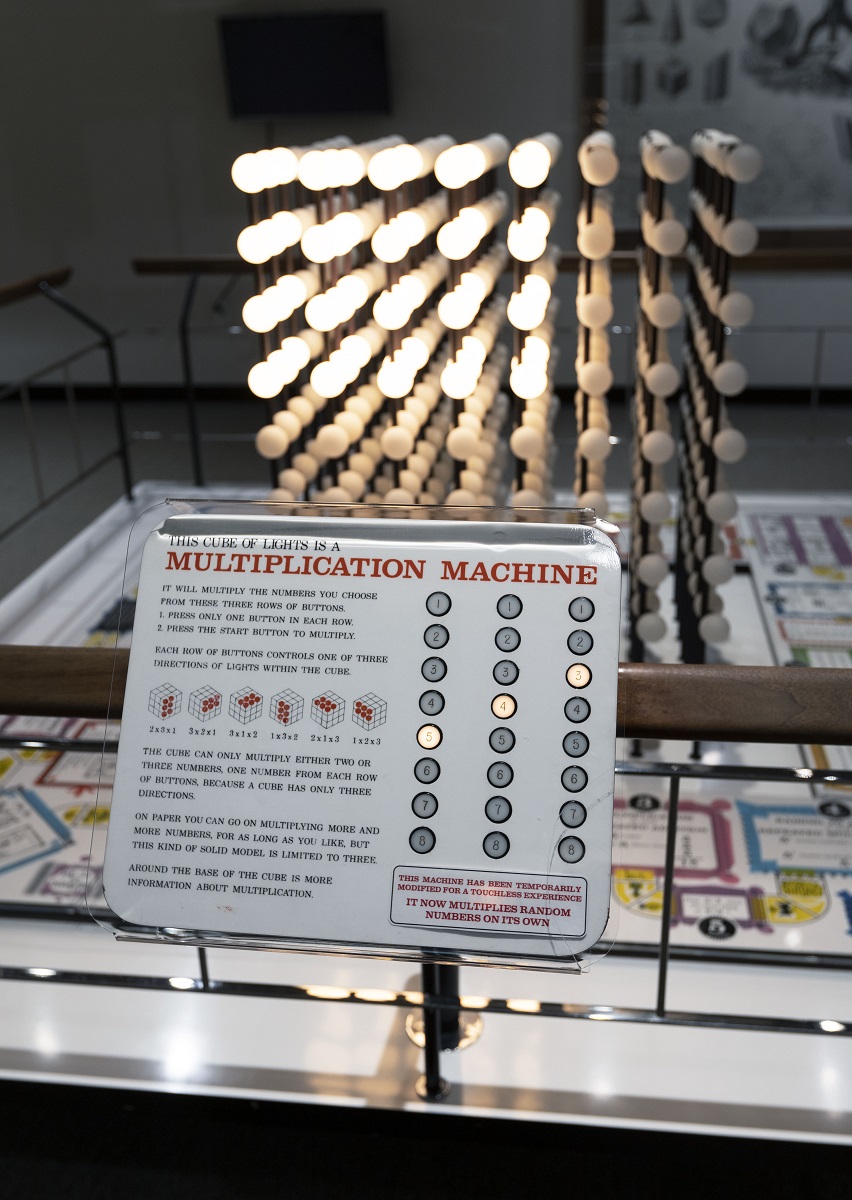
A newly-added note under the Plexiglas installed on the Multiplication Machine in Mathematica reads “This machine has been temporarily modified for a touch-free experience / It now multiplies random numbers on its own.” The styling of the note is intended to match the original design of Charles and Ray Eames. / Photo by Jillian Ferraiuolo
“Projects like these, DIY challenges that have high criteria, limited time and budget, are my favorite kinds of projects,” said Hildebrandt. All the alterations to Mathematica are easily reversible, he added, and when you head to the museum to see them, you’ll notice the respectful attention given to the exhibition’s classic Eames styling.
This post was adapted from an article first published in the January–May 2021 issue of The Henry Ford Magazine.
Keywords | |
|---|---|
Themes |