
Cornerstone of Edison Institute Signed by Thomas A. Edison, September 27, 1928
THF78204a / Cornerstone of Edison Institute Signed by Thomas A. Edison, September 27, 1928
01
Artifact Overview
The cornerstone commemorates the dedication of The Henry Ford. It suggests a union of nature (Luther Burbank's spade) and technology (Edison's signature and footprints). That unity is borne out by the block itself, made from Portland cement refined from blast furnace slag at the Ford's Rouge plant--a great example of Henry Ford approaching industry like a good farmer, denying the concept of waste.
Artifact Details
Artifact
Cornerstone
Date Made
1928
Subject Date
27 September 1928
Place of Creation
Location
at Henry Ford Museum in Museum Display
Object ID
28.376.1
Credit
From the Collections of The Henry Ford.
Material
Concrete
Keywords |
|---|
02
Related Content

popular research topic
What If a Potato Could Change the World of Agriculture?
Luther Burbank introduced over 800 plant varieties, but his blight‑resistant potato remains his most enduring legacy.

popular research topic
What If Thomas Edison Hadn’t Turned Failure into Success?
Pushed from the industry he helped build, Thomas Edison turned 1890s setbacks into a defining legacy.

Set
Henry Ford
- 49 Artifacts
The Quadricycle was Henry Ford's first attempt to build a gasoline-powered automobile. It utilized commonly available materials: angle iron for the frame, a leather belt and chain drive for the transmission, and a buggy seat. Ford had to devise his own ignition system. He sold his Quadricycle for $200, then used the money to build his second car.
Set
Henry Ford: Founding of the Edison Institute
- 20 Artifacts
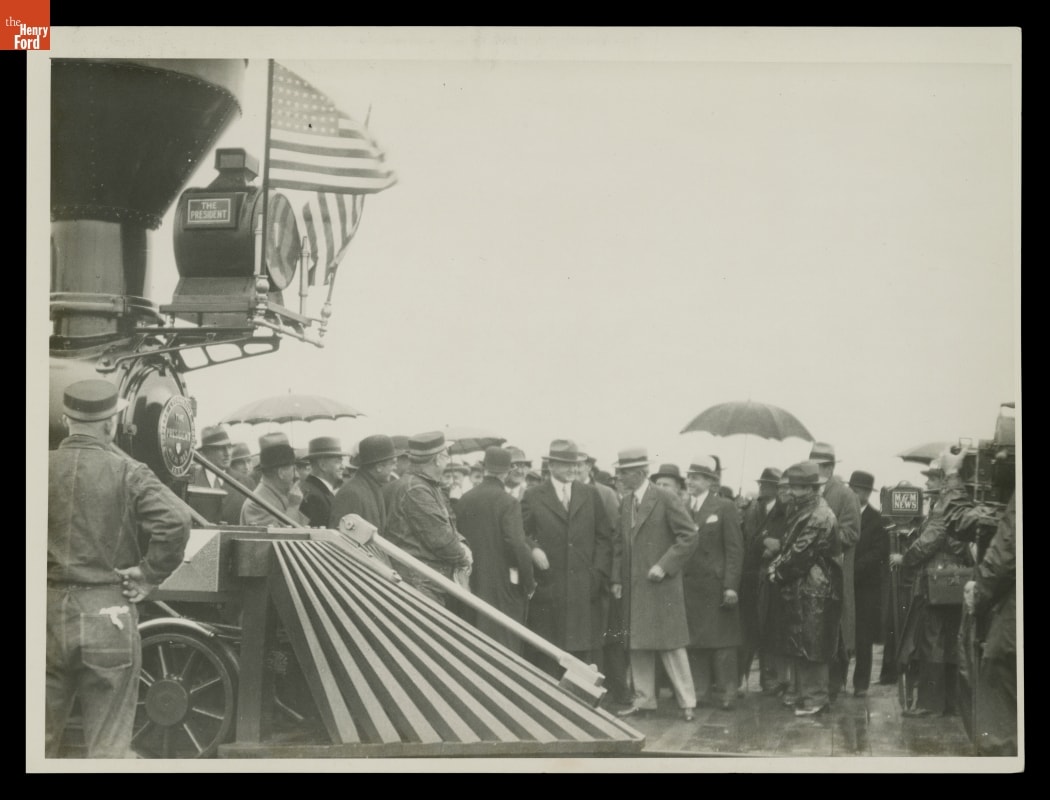
On October 21, 1929, Henry Ford hosted an elaborate celebration in Dearborn, Michigan, to honor his friend Thomas A. Edison. Known as Light's Golden Jubilee, the date marked the 50th anniversary of Edison's invention of a practical incandescent lamp. The day's festivities began with Edison's arrival -- escorted by Ford and President Hoover -- at Smiths Creek Station in Ford's Greenfield Village.
Set
Edison and Ford: A Lasting Friendship
- 19 Artifacts
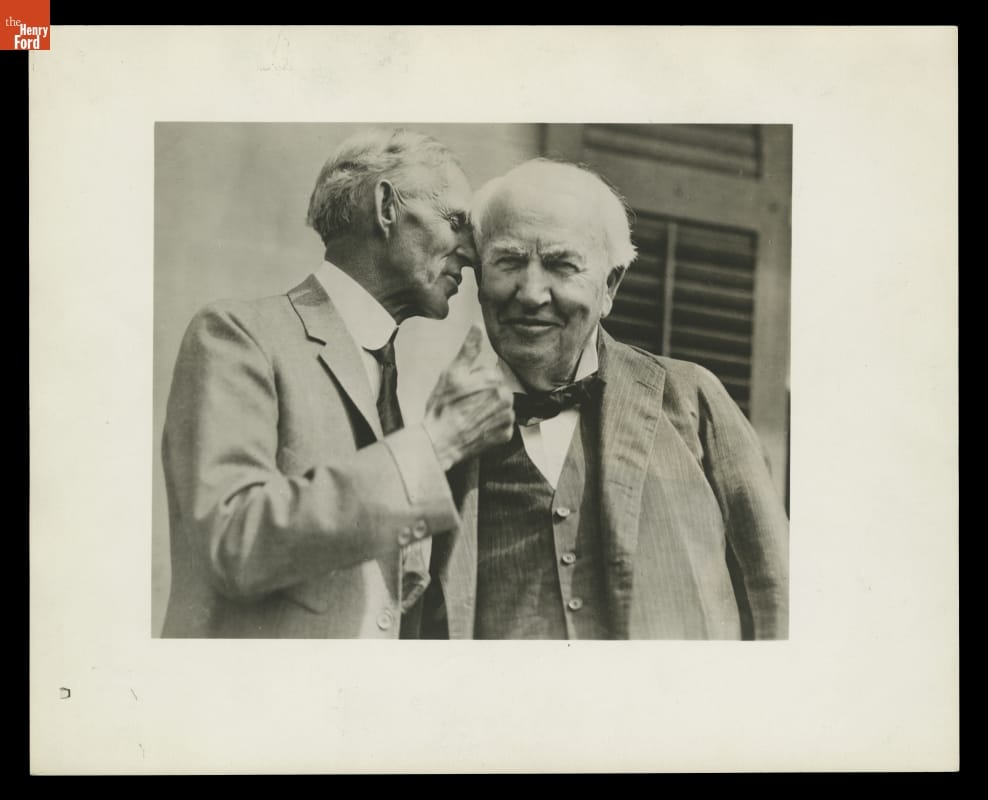
Thomas Edison was both a mentor and a friend to Henry Ford. While this photograph, taken in 1925, suggests the notion of Ford whispering something to Edison, reality was quite the opposite. From childhood, Edison experienced hearing loss that advanced with age. For Edison to hear him, Ford spoke loudly and directly into the inventor's ear.