
Telegraph Key Used by Theodore Haubner to Send One of the First "SOS" Distress Signal on August 11, 1909
THF101950 / Telegraph Key Used by Theodore Haubner to Send One of the First "SOS" Distress Signal on August 11, 1909
01
Artifact Overview
In 1909, telegraph operator Theodore Haubner sent the first American ship-to-shore wireless distress signal -- SOS -- using this telegraph key. Haubner was aboard the SS Arapahoe off Cape Hatteras, North Carolina, when it became disabled.
Artifact Details
Artifact
Telegraph key
Date Made
circa 1900
Subject Date
11 August 1909
Creators
Place of Creation
Location
at Henry Ford Museum in Driving America
Object ID
68.2.3
Credit
From the Collections of The Henry Ford. Gift of Dorothy S. Haubner.
Material
Brass (Alloy)
Dimensions
Width: 2 in
Length: 5 in
Inscriptions
Stamped on base: J.H. BUNNELL & CO. / NEW YORK, U.S.A.
Keywords |
|---|
02
Related Artifacts
 Artifact
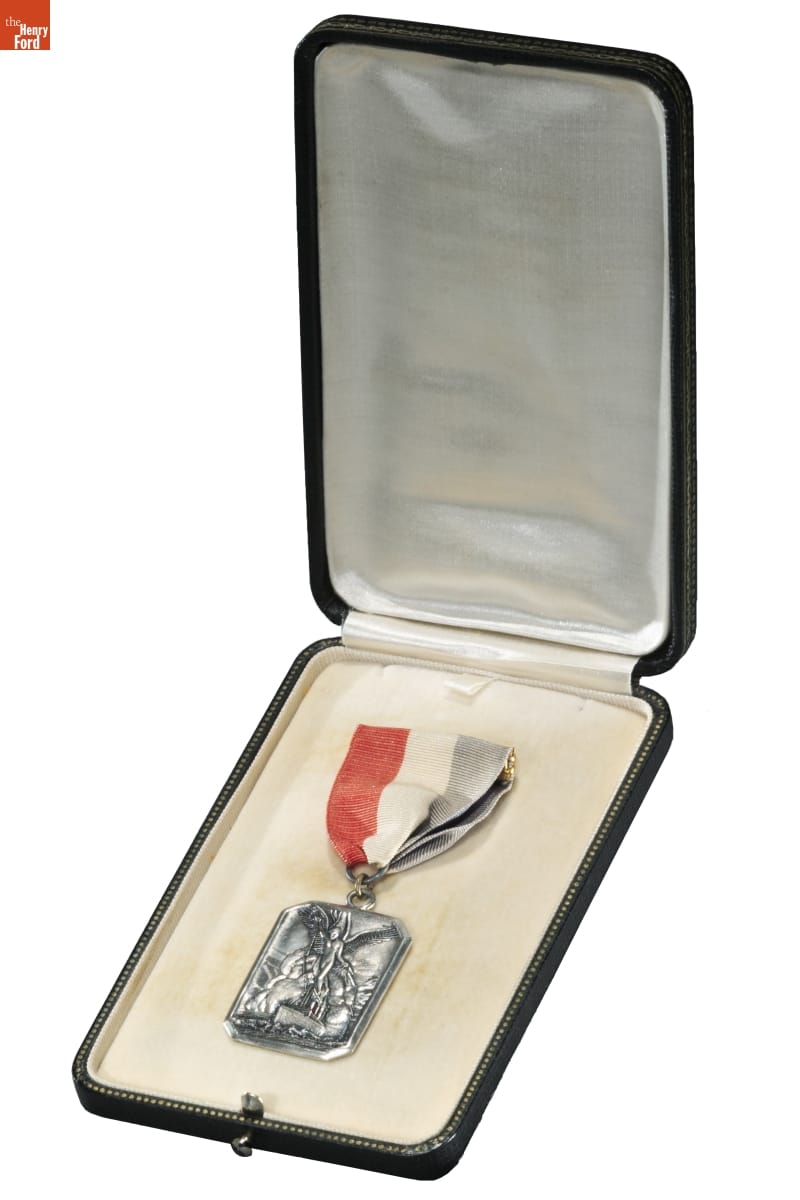
Commemorative Medal Issued to Theodore D. Haubner, 1939
In 1909, telegraph operator Theodore Haubner sent the first American ship-to-shore wireless distress signal--SOS. Haubner was aboard the SS Arapahoe off Cape Hatteras, North Carolina, when it became disabled. The Veteran Wireless Operators Association honored Haubner by awarding him this commemorative medal on the 30th anniversary of his achievement.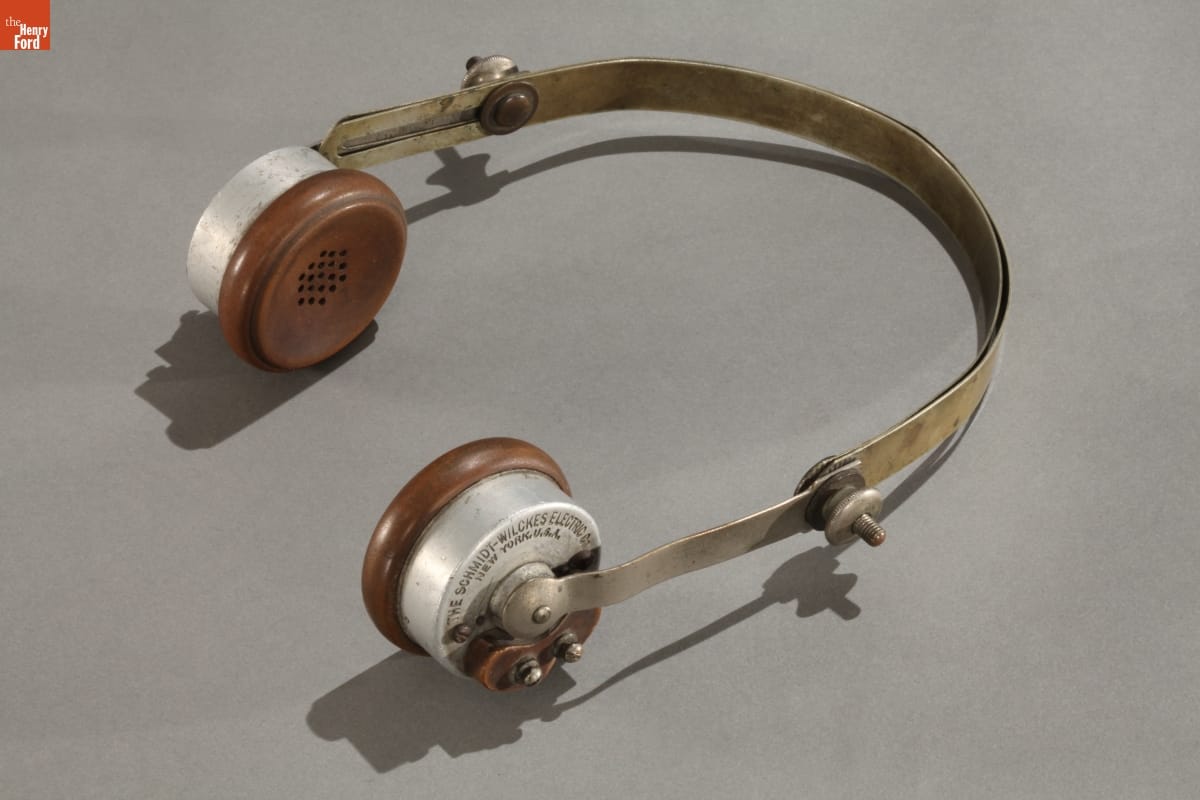 Artifact
Radio Headphones Used by Theodore Haubner While Transmitting the First "SOS" Distress Signal, August 11, 1909
In 1909, telegraph operator Theodore Haubner sent the first American ship-to-shore wireless distress signal -- SOS. These headphones were part of his wireless equipment. Haubner was aboard the SS Arapahoe off Cape Hatteras, North Carolina, when it became disabled.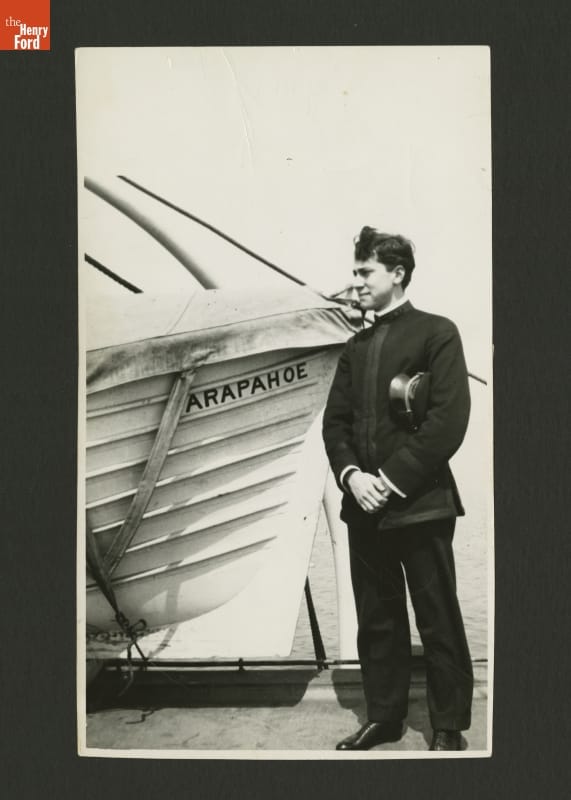 Artifact
Radio Operator Theodore D. Haubner on the Deck of the SS Arapahoe, After Sending One of the First S.O.S. Distress Signals, 1909
In 1909, telegraph operator Theodore Haubner sent the first American ship-to-shore wireless distress signal -- SOS. Haubner was aboard the SS Arapahoe off Cape Hatteras, North Carolina, when it became disabled. This photograph, taken some time after the event, shows Haubner on the deck of the Arapahoe.
03
Related Content
 Set
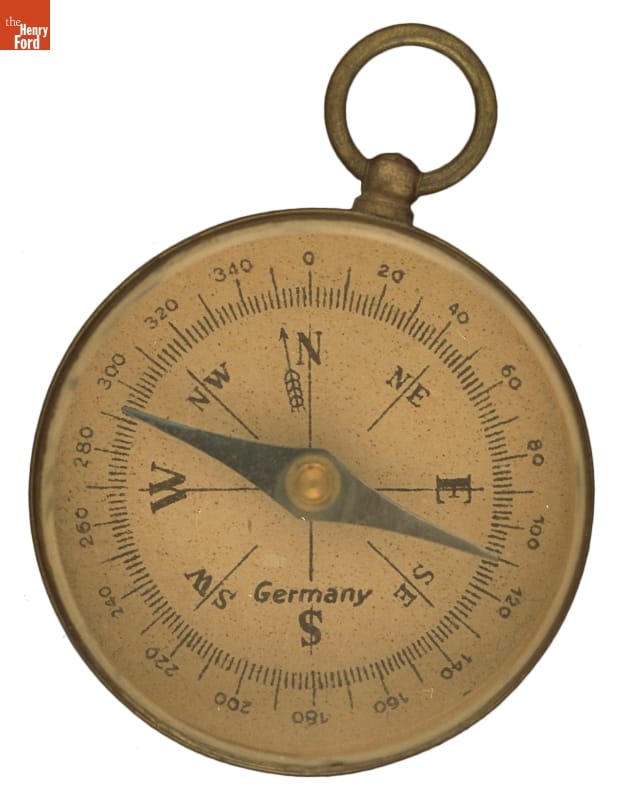
SetSignals and Signs – Ground Communication
- 14 Artifacts
This early 20th-century compass uses a magnetized steel needle that rotates to align with the Earth's magnetic field. With the needle indicating north, users can reference markings around the dial to gain precise bearings. Despite modern GPS technology, compasses remain important navigational instruments for airplanes and ships and for casual use on small boats or recreational hikes. article
Sending out an SOS
On August 11, 1909, as his ship struggled off Cape Hatteras, telegraph operator Theodore Haubner had an urgent choice to make: How should he call for help? Learn how the first SOS signal was sent.