
Bangor & Aroostook Railroad Passenger Coach Replica

THF176772 / Bangor & Aroostook Railroad Passenger Coach Replica
01
Artifact Overview
This coach replicates a typical passenger car used on American railroads circa 1860. Its varnished interior surfaces resisted dirt and stains, while its mohair-covered seats stood up to heavy use. Opening windows offered ventilation in summer, and a woodstove provided heat in winter. Other amenities included a drinking water dispenser and a small restroom.
Artifact Details
Artifact
Passenger car (Railroad car)
Date Made
1925-1928
Subject Date
1855-1865
Creators
Place of Creation
Creator Notes
Built by Ford Motor Company at the Rouge Plant in Dearborn, Michigan.
Location
at Henry Ford Museum in Transportation - Trains
Object ID
25.80.1
Credit
From the Collections of The Henry Ford.
Material
Metal
Wood (Plant material)
Color
Blue
Gold (Color)
Red
Yellow (Color)
Dimensions
Height: 160 in
Width: 114 in
Length: 593 in
Inscriptions
Across top in gold letters with red shadowing: BANGOR & AROOSTOOK.
6
Keywords |
|---|
02
Related Content
 Set
SetOnline Railroad Collection
- 8 Artifacts
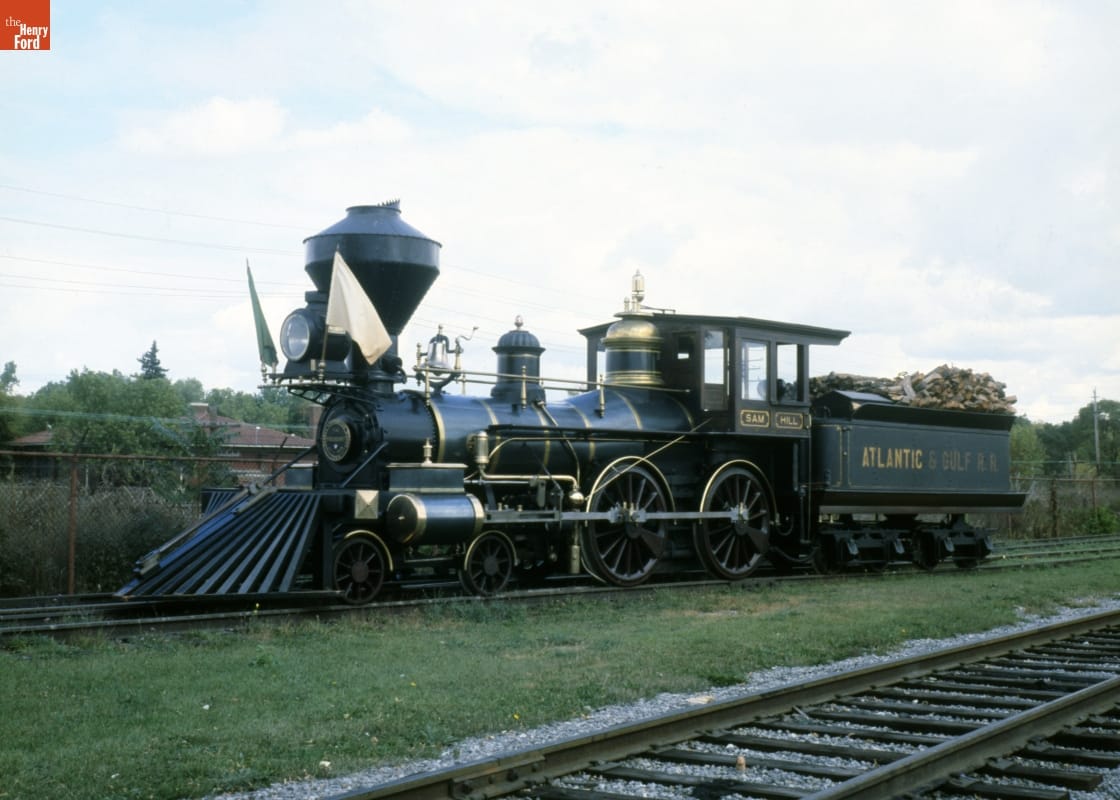
This 1858 Rogers steam locomotive is typical of those used in the United States in the second half of the 19th century. Its flexible wheel arrangement, high power output, and light weight were well suited to the tight curves, steep grades, and hastily constructed track that characterized American railroads. This locomotive struck an agreeable balance between practicality, safety, and economy. Set
SetLesson: Transportation for People and American Attitudes
- 16 Artifacts
Few American cities embraced the automobile like Los Angeles. The southern California metropolis opened the first of its many limited-access freeways in 1940. Work on the Harbor Freeway, seen here, began in the early 1950s. Now designated Interstate 110, this freeway connects the downtown area with the Port of Los Angeles to the south, and with Pasadena to the northeast. article
The Bangor and Aroostook Day Car: Radically Open
The open layout of the Bangor and Aroostook railroad passenger coach might appear to us practical, rational, and straightforward, but in many ways it was radical and socially innovative.