
Julian Stage Line Stage Wagon, circa 1900
THF75679 / Julian Stage Line Stage Wagon, circa 1900
01
Artifact Overview
If they couldn't go by railroad, Americans often traveled by stagecoach -- even into the early 20th century. Stage lines moved their vehicles in "stages" with continual relays of fresh horses. Open-sided wagons were lighter and less expensive than closed coaches. Canvas curtains protected passengers from bad weather. The Julian Stage Line operated in San Diego County, California.
Artifact Details
Artifact
Stage wagon
Date Made
circa 1900
Creators
Place of Creation
Location
Not on exhibit to the public.
Object ID
36.520.188
Credit
From the Collections of The Henry Ford.
Material
Canvas
Leather
Paint (Coating)
Wood (Plant material)
Color
Black (Color)
Green
Gold (Color)
Red
Yellow (Color)
Dimensions
Height: 113.25 in
Width: 75 in
Length: 158 in
Wheelbase: 81 in
Diameter: 44.5 in (Wheel Diameter)
Diameter: 50.5 in (Wheel Diameter)
Inscriptions
Painted in gold leaf on each side of the driver's seat: U. S. MAIL / JULIAN / STAGE / LINE
Keywords |
|---|
02
Related Content
 Set
SetStagecoach Travel
- 33 Artifacts
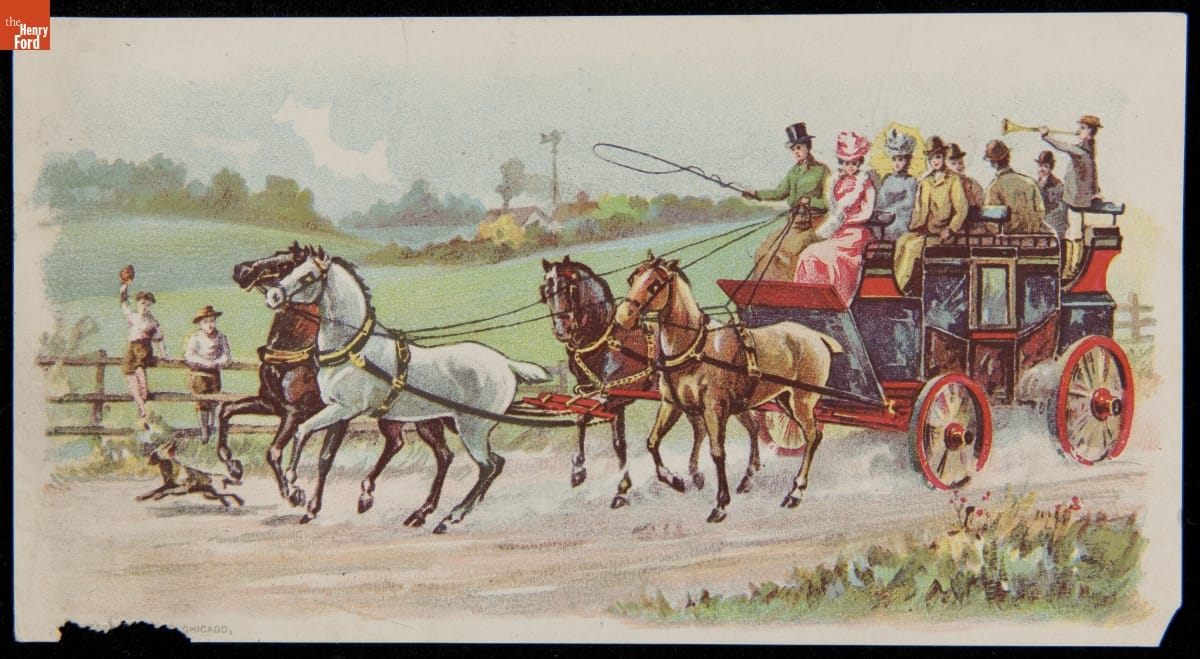
In the last third of the nineteenth century, an unprecedented variety of consumer goods and services flooded the American market. Advertisers, armed with new methods of color printing, bombarded potential customers with trade cards. Americans enjoyed and often saved the vibrant little advertisements found in product packages or distributed by local merchants. Many survive as historical records of commercialism in the United States.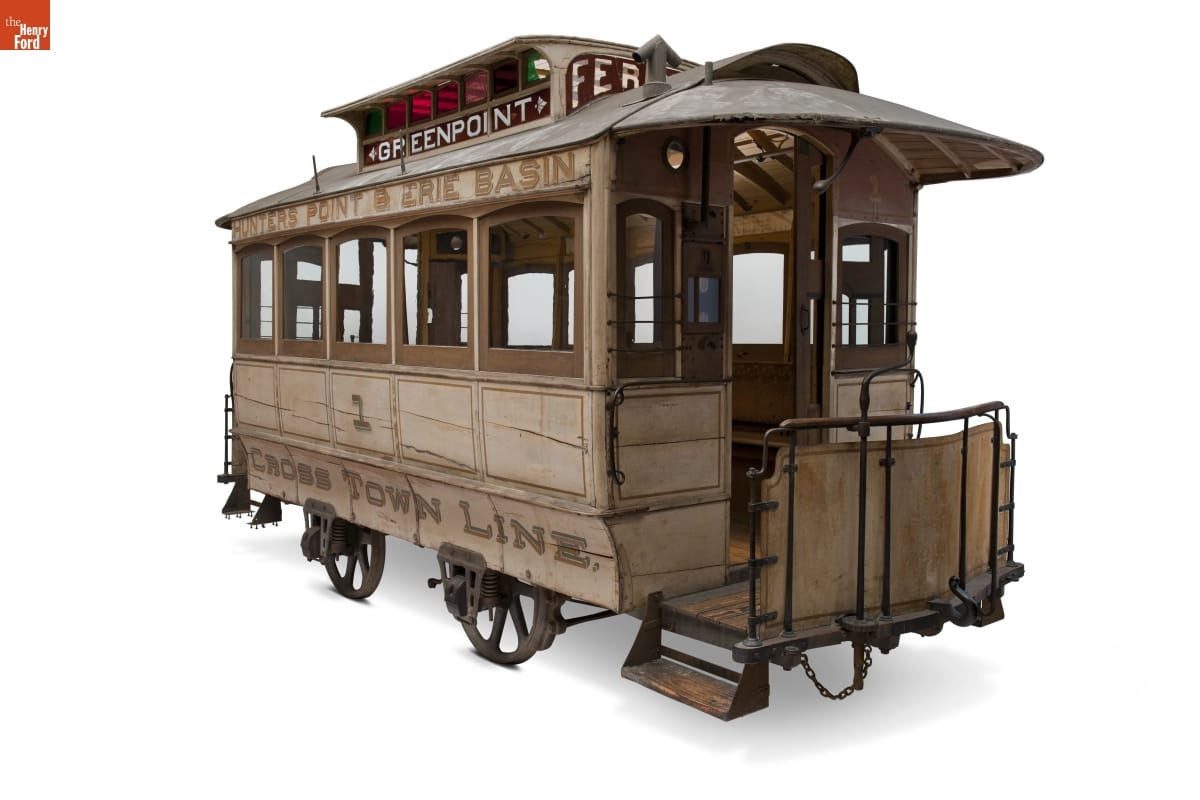 Set
SetOnline Horse-Drawn Vehicles Collection
- 29 Artifacts
The horse-drawn streetcar was an important means of public transportation in 19th-century American cities. New York's Brooklyn City Railroad ran this car on its line between Hunters Point in Long Island City, and Erie Basin in South Brooklyn. But horses were expensive to stable and feed -- and messy too. Operators embraced electric streetcars starting in the late 1880s.