
Zenith Royal Crusader Hearing Aid, circa 1965
THF172915 / Zenith Royal Crusader Hearing Aid, circa 1965
01
Artifact Overview
The invention of transistors went beyond miniaturization of radio technology. This small transistor-powered hearing aid gathered sound waves and transmitted the sound to the earpiece placed within the wearer's ear. The packaging is as interesting as the small hearing aid device; it was carefully designed by the donor, Mel Boldt, to appeal to the style-conscious consumers in the 1960s.
Artifact Details
Artifact
Hearing aid
Date Made
circa 1965
Place of Creation
Creator Notes
Designed by Mel Boldt and Associates and made by Zenith Radio Corporation.
Location
Not on exhibit to the public.
Object ID
90.438.128
Credit
From the Collections of The Henry Ford. Gift of Mel Boldt and Associates.
Material
Metal
Paper (Fiber product)
Cardboard
Wire
Plastic
Color
Gold (Color)
White (Color)
Beige (Color)
Blue
Multicolored
Dimensions
Height: 1.75 in
Width: 5 in
Length: 3.75 in
Inscriptions
front of hearing aid:
ZENITH
back of hearing aid:
Zenith / Extended Range / the royalty of hearing
top of box:
Zenith
front of box:
Zenith / THE ROYALTY OF HEARING AIDS
side of box:
7402652 / ROYAL CRUSADER
side of box:
Zenith / LIVING SOUND / HEARING AIDS
Keywords |
|---|
02
Related Content
 Set
SetSocial Transformation
- 50 Artifacts
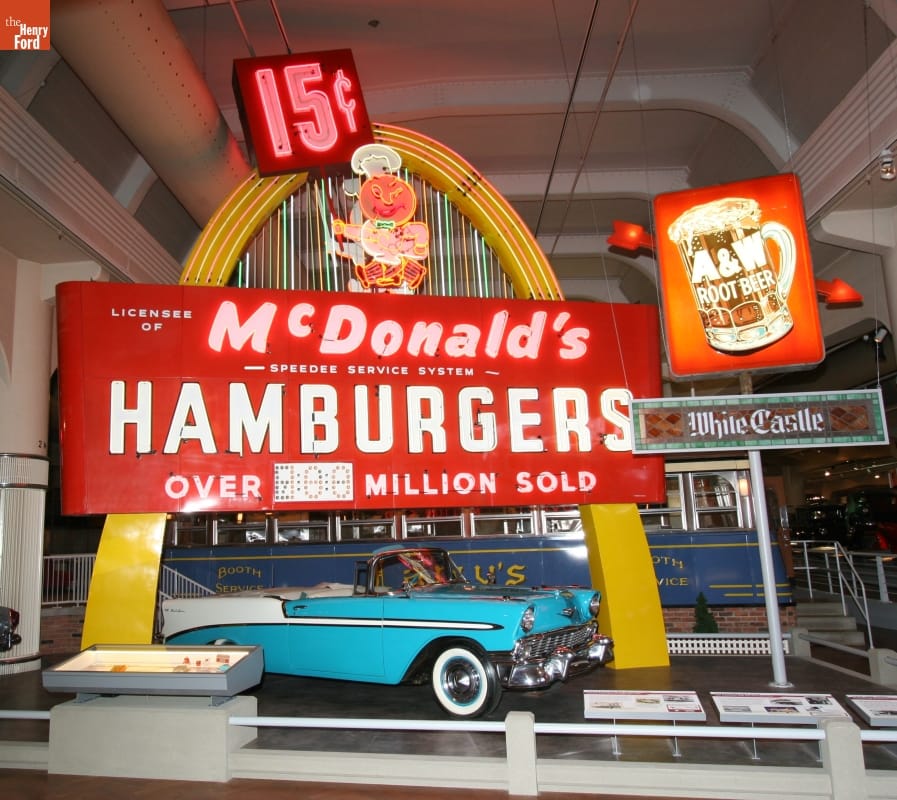
In 1948, the McDonald brothers transformed their Southern California drive-in restaurant with their radical new "Speedee Service System"--assembly-line production of a limited menu at drastically reduced prices. Richard McDonald created this sign design in 1952. In 1955, milkshake machine salesman Ray Kroc franchised the McDonald's concept--prompting numerous imitators and ultimately turning America into a "fast food nation." article
Equality and Accessibility in Music: Music Not Impossible
Music: Not Impossible has created a wearable device that creates a haptic translation of sound, allowing deaf and hearing-impaired people (as well as hearing people) to enjoy music in a new way.