
Sawing Wood Using the Ford Model T Sawmill Conversion, circa 1919
THF91688 / Sawing Wood Using the Ford Model T Sawmill Conversion, circa 1919
01
Artifact Overview
Innovative users adapted the Ford Model T to their needs. The Ford's rear axle powered many types of belt driven machinery. This photograph taken about 1919 shows men preparing to cut wood on a portable sawmill powered by a Model T.
Artifact Details
Artifact
Photographic print
Subject Date
circa 1919
Creators
Place of Creation
Creator Notes
Originally photographed by Hill Studio of Saint Paul, Minnesota.
Collection Title
Location
By Request in the Benson Ford Research Center
Object ID
83.300.1205.3
Credit
From the Collections of The Henry Ford. Gift of Ford Motor Company.
Material
Linen (Material)
Paper (Fiber product)
Technique
Gelatin silver process
Toning (Photography)
Color
Black-and-white (Colors)
Dimensions
Height: 8 in
Width: 10 in
Inscriptions
maroon ink stamp on print back:
FOR DUPLICATES HILL STUDIOS 26 E. 7th ST. PAUL, MINN.
Keywords |
|---|
02
Related Content
 Set
SetModel T Users
- 10 Artifacts
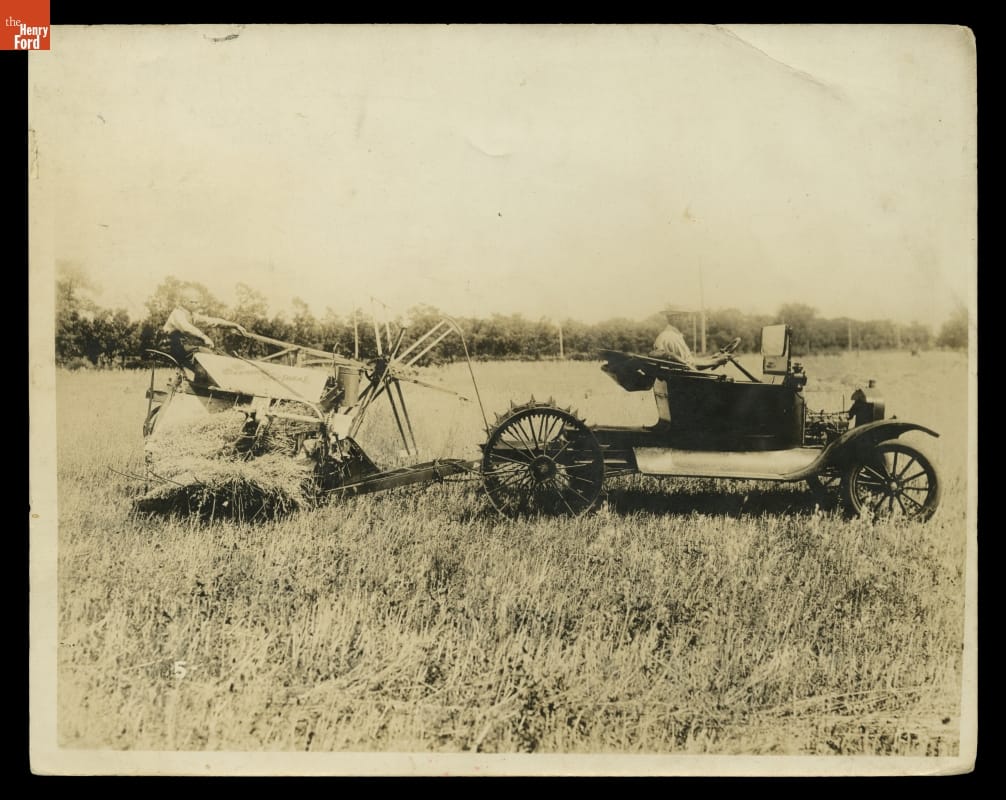
Around 1919 a farmer driving his converted Model T Runabout is pulling a McCormick-Deering reaper to harvest grain in Minnesota. Large-diameter steel-drive wheels and a rear power takeoff were all that was needed to achieve the conversion. For only $195, E.G. Staude Company of St. Paul, Minnesota, had started selling the Mak-a-Tractor conversion kit for the Model T in 1917, capitalizing on the popularity of the Ford car among farmers. Staude produced an estimated 20,000 to 30,000 of these in its lifetime.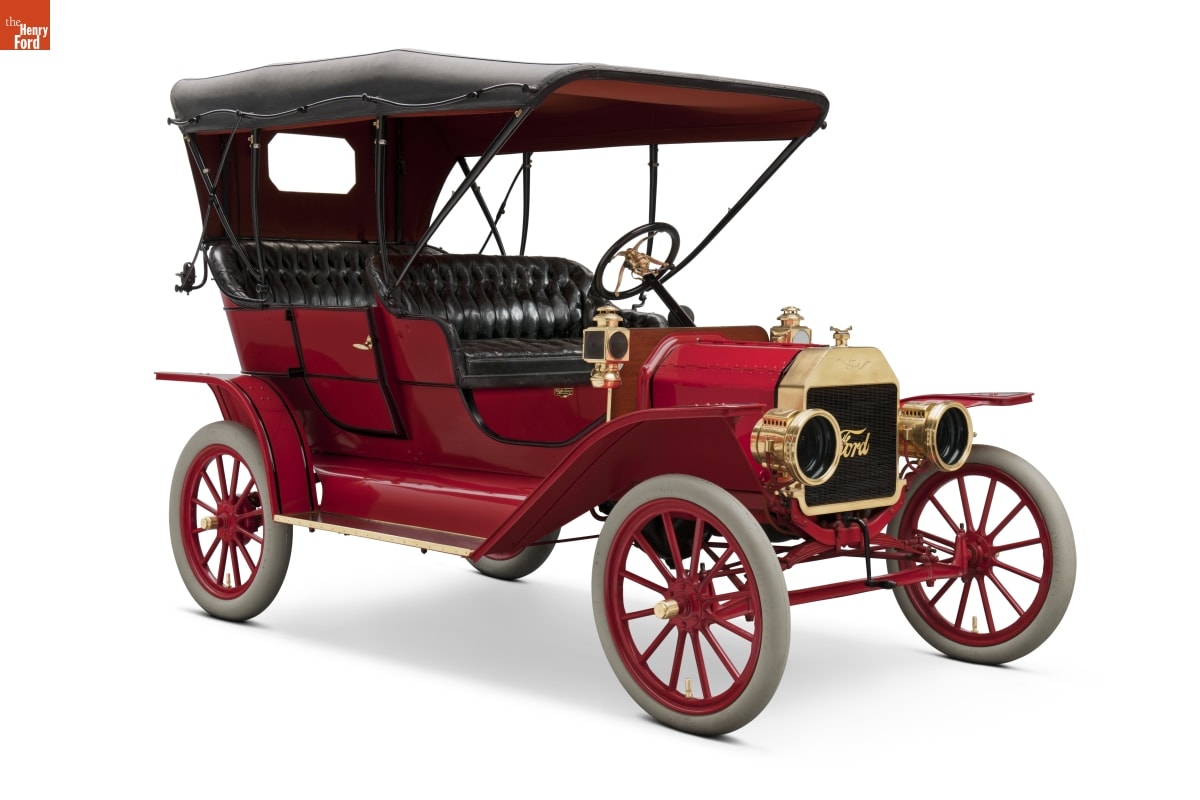 Set
SetHenry Ford: Model T
- 19 Artifacts
Henry Ford crafted his ideal car in the Model T. It was rugged, reliable and suited to quantity production. The first 2,500 Model Ts carried gear-driven water pumps rather than the thermosiphon cooling system adopted later. Rarer still, the first 1,000 or so -- like this example -- used a lever rather than a floor pedal to engage reverse.