
Horse-Powered Threshing at Ford Homestead, circa 1930
THF701533 / Horse-Powered Threshing at Ford Homestead, circa 1930
01
Artifact Overview
As farmers mechanized barn and farmyard work in the nineteenth century, they began to use stationary power sources. Some invested in "sweeps," which converted energy generated by horses walking in a circle into power to operate large machines like grain threshers or separators. Sweep operators hauled these devices on specially designed wagons from farm to farm during threshing season.
Artifact Details
Artifact
Photographic print
Subject Date
circa 1930
Collection Title
Location
By Request in the Benson Ford Research Center
Object ID
84.1.1660.973
Credit
From the Collections of The Henry Ford. Gift of Ford Motor Company.
Material
Paper (Fiber product)
Technique
Gelatin silver process
Color
Black-and-white (Colors)
Dimensions
Height: 8.25 in
Width: 10 in
Keywords |
|---|
02
Related Content
 Set
SetFarm Animals at Work
- 19 Artifacts
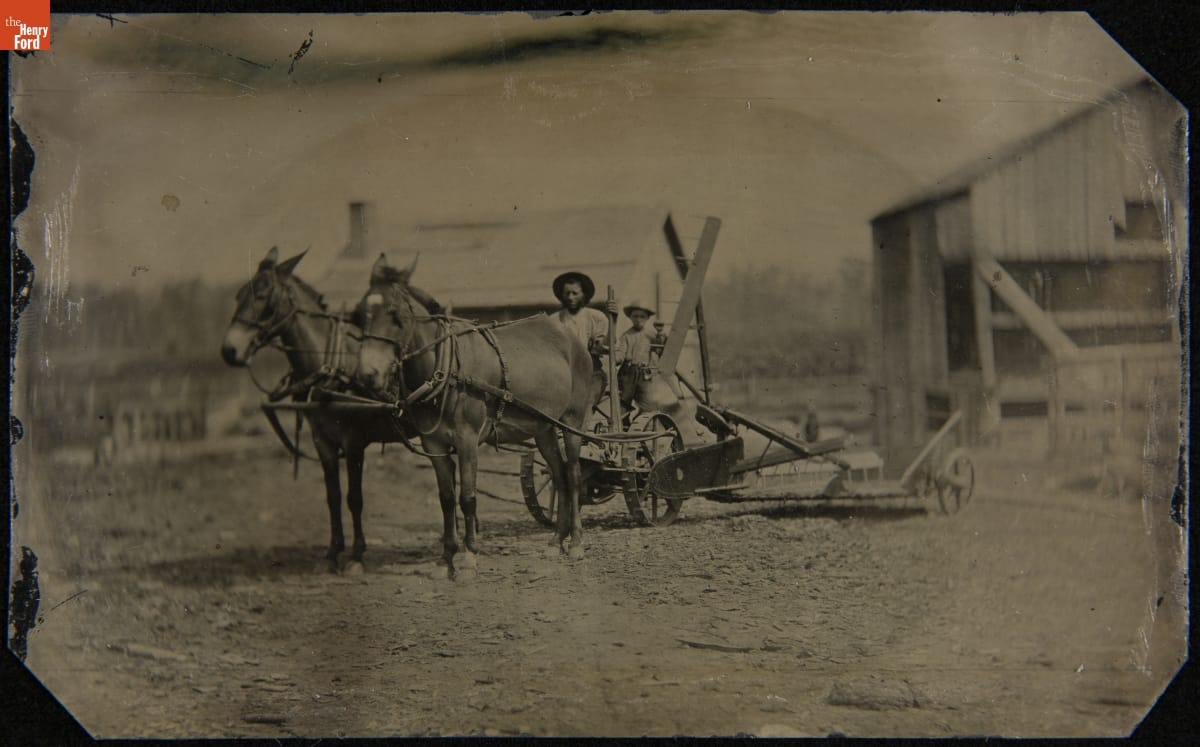
Farming is strenuous, tedious, and repetitive, and chronic labor shortages intensify the demands of farm work. Throughout history, farmers have looked for ways to get the job done with less manpower. By the nineteenth century, animals working in many capacities provided most of the power on American farms.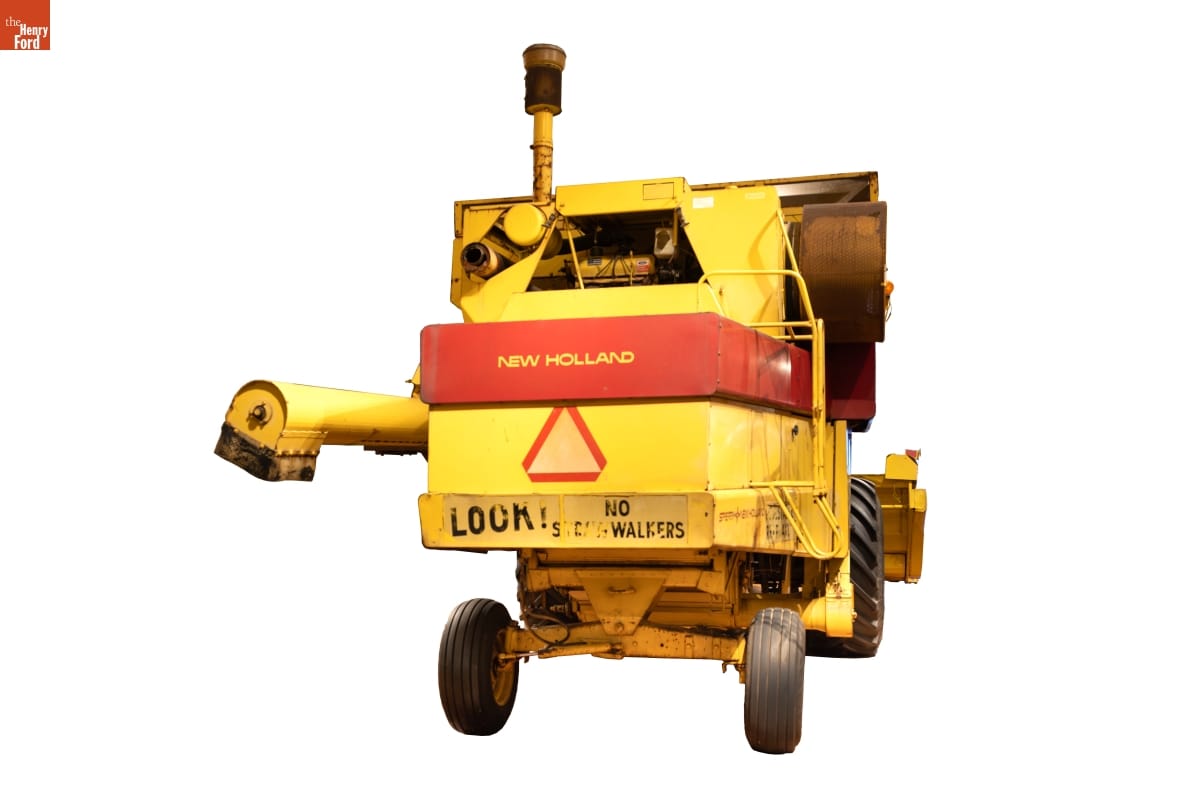 Set
SetFeatured on The Henry Ford’s Innovation Nation: Season 9
- 26 Artifacts
Engineers designed the TR70 as a compact machine suitable for hilly terrain. The twin rotors (TR) shelled corn or threshed grain and moved it through the combine's body. Setting the rotors at an angle (axial) shortened the machine. Farmers changed the front-end attachment to harvest corn, beans, or wheat. Stencils on this prototype, exhibited at trade shows, explained additional features.