
1924 Chrysler Touring Car
THF90374 / 1924 Chrysler Touring Car
01
Artifact Overview
The first car to wear the Chrysler nameplate was perfectly suited to the Roaring Twenties. It was a decade of fast profits, fast music, and fast driving. A lightweight chassis and an efficient engine meant Chrysler drivers could out-accelerate Cadillacs costing twice as much. When Chrysler drivers stopped, they used modern hydraulic brakes instead of the Caddy's old-style mechanical brakes. Small wonder that Chrysler sales increased 500 percent from 1925 to 1929.
Artifact Details
Artifact
Automobile
Date Made
1924
Creators
Place of Creation
Location
at Henry Ford Museum in Driving America
Object ID
93.96.1
Credit
From the Collections of The Henry Ford.
Material
Metal
Wood (Plant material)
Rubber (Material)
Glass (Material)
Color
Blue
Black (Color)
Dimensions
Height: 69 in
Width: 68 in
Length: 160 in
Weight: 2785 lbs
Specifications
Make & Model: 1924 Chrysler touring car
Maker: Maxwell Motor Corporation, Highland Park, Michigan
Engine: inline-6, L-head valves, 201 cubic inches
Transmission: 3-speed manual
Height: 69 inches
Wheelbase: 113 inches
Width: 68 inches
Overall length: 160 inches
Weight: 2785 pounds
Horsepower: 68 at 3000 revolutions per minute
Pounds per horsepower: 41
Price: $1,395
Average 1924 wage: $1,303 per year
Time you'd work to buy this car: about 1 year, 1 month
Keywords |
|---|
02
Related Content
 Set
SetVehicle Viewer
- 99 Artifacts
Americans didn't invent the automobile, but we embraced it and quickly made it our own. Cars cruise through our music, movies, and dreams. They drive innovation and create frustration. They are objects of beauty and sources of blight. The vehicles in the "Driving America" exhibit reveal how the car reshaped our culture and landscape. The decisions we make now, individually and collectively, will define our automotive future. Set
SetAmerican Auto Industry, 1805-2010
- 21 Artifacts
This vehicle is the oldest surviving American automobile. In the 1860s, a small steam carriage running under its own power -- without horses! -- was so startling that people paid to see it driven. It was a curiosity, not transportation. By the time its inventor, Sylvester Roper, died in 1896, new innovators were transforming horseless carriages from curiosities into practical vehicles.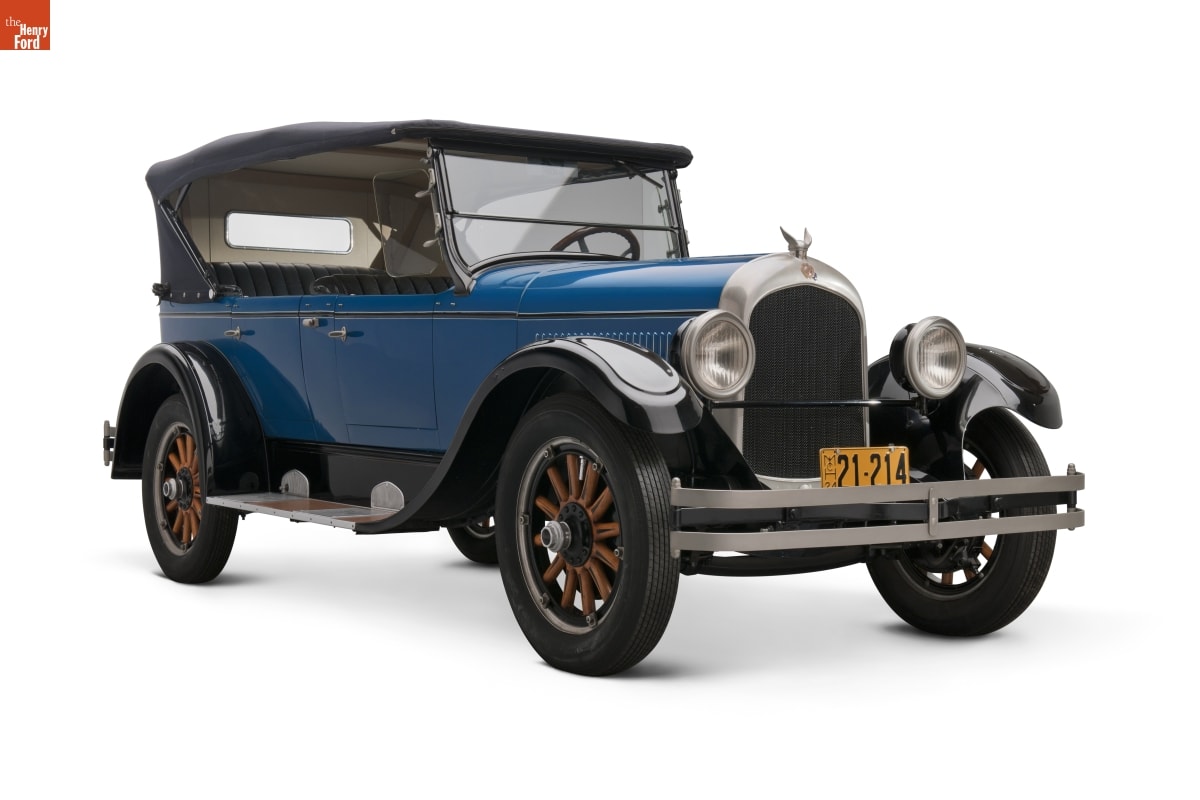 Set
SetHenry Ford: Henry Ford's Failures
- 22 Artifacts
The first car to wear the Chrysler nameplate was perfectly suited to the Roaring Twenties. It was a decade of fast profits, fast music, and fast driving. A lightweight chassis and an efficient engine meant Chrysler drivers could out-accelerate Cadillacs costing twice as much. When Chrysler drivers stopped, they used modern hydraulic brakes instead of the Caddy's old-style mechanical brakes. Small wonder that Chrysler sales increased 500 percent from 1925 to 1929.