
Heinz House
THF812089 / Heinz House
01
Artifact Overview
Enterprising Henry J. Heinz began his successful business by bottling horseradish in the basement of his parents' home in Sharpsburg, Pennsylvania. From this house, he sold a growing variety of pickles and relishes to neighbors before moving his operation to Pittsburgh. This house currently features an exhibit on the H.J. Heinz Company's innovative business practices and marketing techniques.
Artifact Details
Artifact
House
Date Made
1854
Place of Creation
Location
at Greenfield Village in Main Street District
Object ID
53.47.1
Credit
From the Collections of The Henry Ford. Gift of H.J. Heinz Company.
Material
Brick (Clay material)
Wood (Plant material)
Glass (Material)
Plaster
Inscriptions
WHERE WE BEGAN / 1869
Keywords |
|---|
02
Related Content
 Set
Set“Where We Began”: The Heinz House
- 10 Artifacts
The Heinz House, a gift from the H.J. Heinz Company, was ceremoniously accepted in 1954 by William Clay Ford, grandson of Henry Ford and recently named Chairman of the Board of Trustees of the Edison Institute (now The Henry Ford). The Heinz House was the first historic structure added to Greenfield Village since the death of Henry Ford in 1947.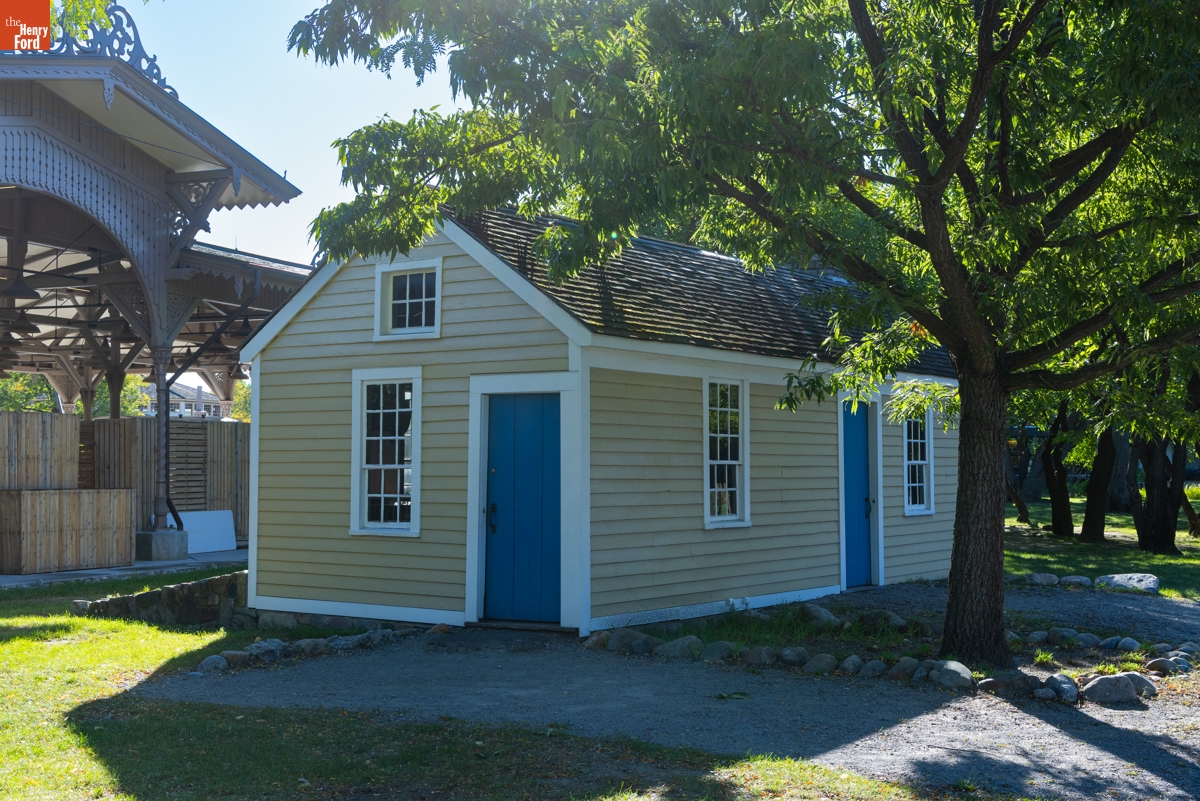 Set
SetGreenfield Village Buildings
- 84 Artifacts
As America was taking its first steps towards industrialization, the Hanks family of Mansfield, Connecticut, made early attempts to mechanize the production of silk thread. Rodney Hanks and his nephew Horatio Hanks built this mill in 1810. It was the first silk mill in America, producing some of the first silk with machines that were powered by a waterwheel.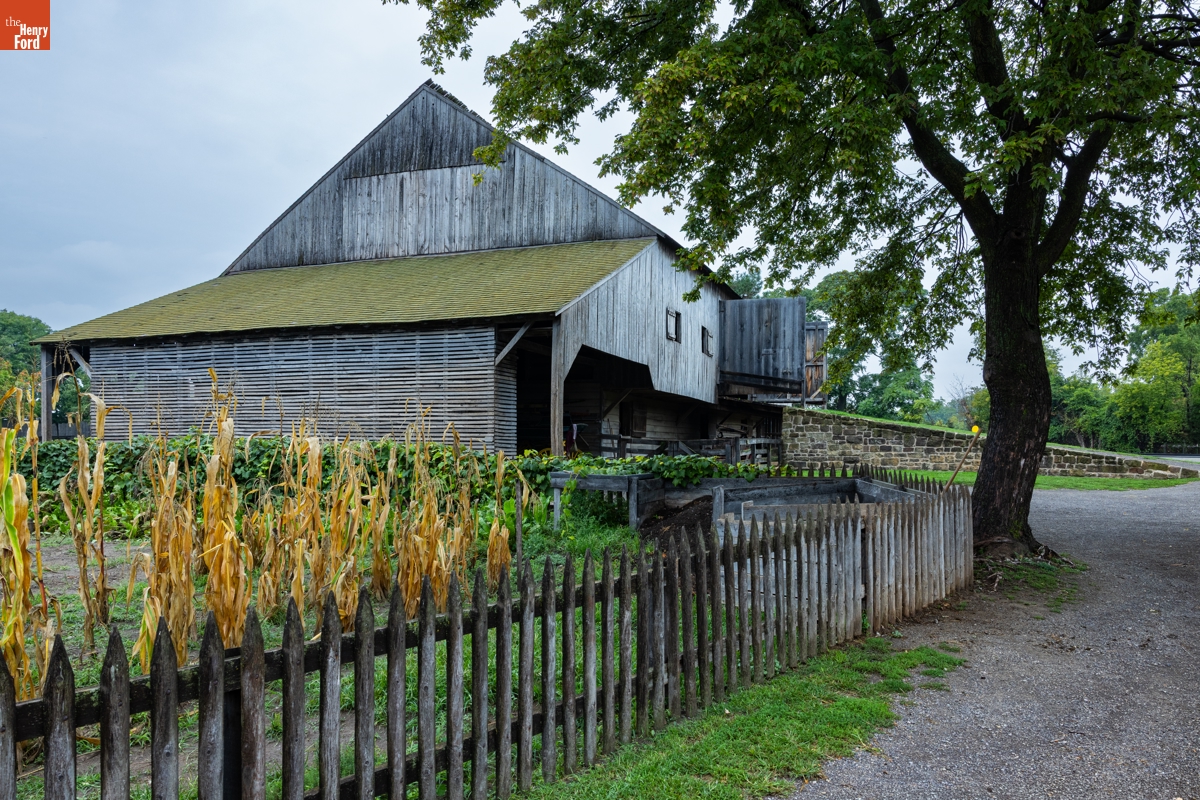 Set
SetFeatured on The Henry Ford's Innovation Nation: Season 1
- 25 Artifacts
The Firestone barn is a Pennsylvania-German bank barn, an American barn type with Swiss origins. They are called bank barns because the barn is built into a bank, allowing wagons to be driven into the upper floor. Bank barns combined multiple farm functions under a single roof. Livestock were kept in the lower floor, crops on the upper floor.