
Hildebrand & Wolfmuller Motorcycle, circa 1894
THF802224 / Hildebrand & Wolfmuller Motorcycle, circa 1894
01
Artifact Overview
The German-built Hildebrand & Wolfmuller motorcycle was the first motorized, two-wheeled vehicle sold to the public on a series-production basis. Hildebrand & Wolfmuller was also the first company to refer to the machine as a "motorcycle" (though it used the German word, motorrad). The curious engine design features two cylinders with connecting rods attached directly to the rear wheel.
Artifact Details
Artifact
Motorcycle
Date Made
circa 1894
Creators
Place of Creation
Location
Not on exhibit to the public.
Object ID
31.721.1
Credit
From the Collections of The Henry Ford.
Material
Metal
Rubber (Material)
Leather
Color
Black (Color)
Gold (Color)
Dimensions
Height: 42 in
Width: 25.75 in
Length: 78 in
Wheelbase: 51 in
Inscriptions
Rear fender: HILDEBRAND & WOLFMULLER MUNCHEN
Gas tank:
41655
Front and Rear tags:
317
Keywords |
|---|
02
Related Content
 Set
SetCurators' Choice: Transportation
- 25 Artifacts
The Quadricycle was Henry Ford's first attempt to build a gasoline-powered automobile. It utilized commonly available materials: angle iron for the frame, a leather belt and chain drive for the transmission, and a buggy seat. Ford had to devise his own ignition system. He sold his Quadricycle for $200, then used the money to build his second car.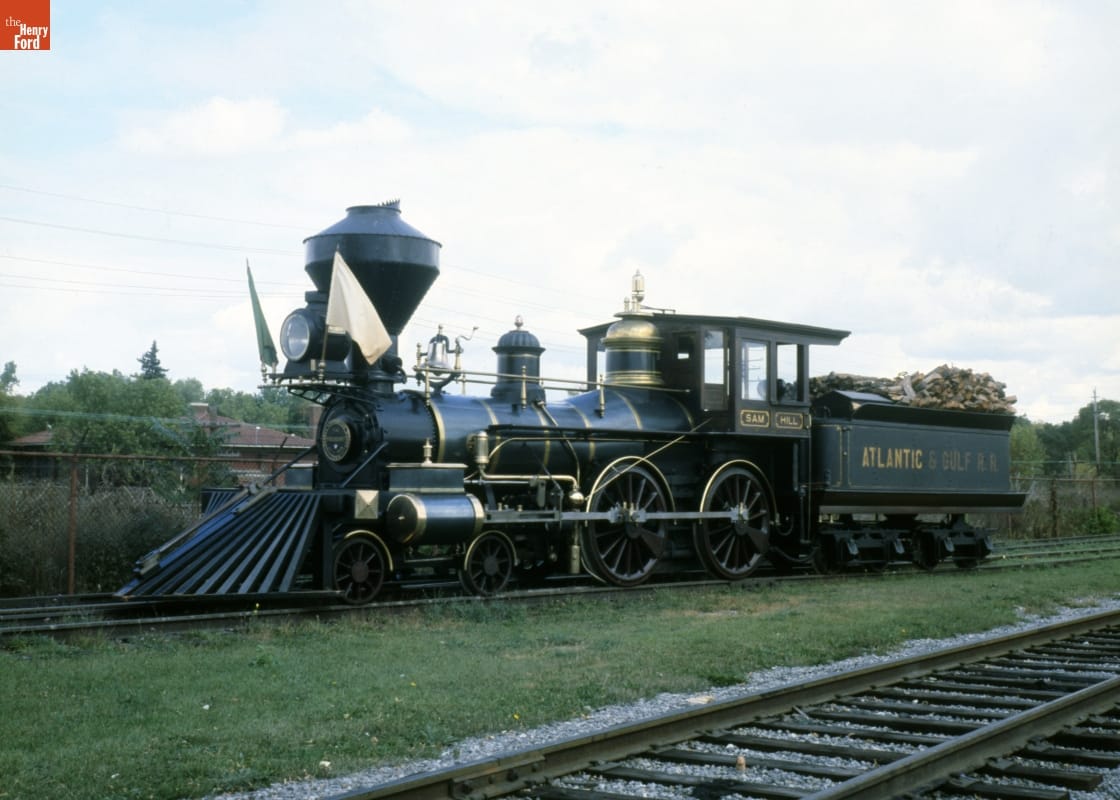 Set
SetMobility
- 49 Artifacts
This 1858 Rogers steam locomotive is typical of those used in the United States in the second half of the 19th century. Its flexible wheel arrangement, high power output, and light weight were well suited to the tight curves, steep grades, and hastily constructed track that characterized American railroads. This locomotive struck an agreeable balance between practicality, safety, and economy.