
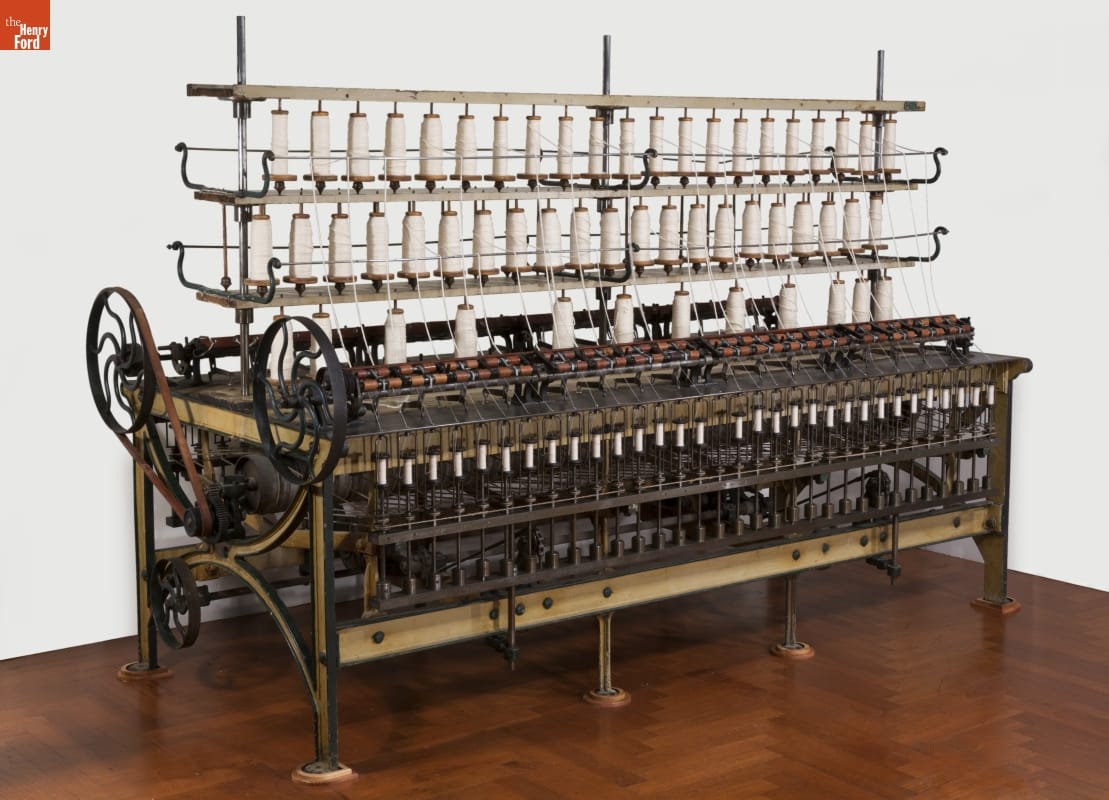
Carding Machine, 1850-1880
THF91530 / Carding Machine, 1850-1880 / Photographed by John Sobczak
01
Artifact Overview
For much of the nineteenth century, the American textile industry was at the forefront of processing and precision machine technology. Carding is a crucial step in the processing of raw cotton or wool; machines like this were used singly in tiny rural mills or in multiple in the largest textile factories.
Artifact Details
Artifact
Carding machine
Date Made
1850-1880
Place of Creation
Location
at Greenfield Village in Gunsolly Carding Mill (Plymouth)
Object ID
30.1544.1
Credit
From the Collections of The Henry Ford.
Material
Steel (Alloy)
Wood (Plant material)
Keywords |
|---|
02
Related Content
 Set
SetSpinning Highlights from the Collections of The Henry Ford
- 16 Artifacts
Spinning frames spin cotton fiber into yarn and then wind it onto a bobbin. This throstle spinning frame could simultaneously spin 64 strands of yarn. (Throstle -- an old name for a song thrush -- refers to the bird-like sounds the machine made.) Machines like this helped produce the large quantities of yarn that growing industrial weaving operations needed in the early and mid-1800s. Set
SetAmerica's Industrial Revolution
- 24 Artifacts
Steam power initially spread in the United States via its adoption and adaptation in ships and boats. This early mill engine's layout and dimensions are firmly rooted in Mississippi riverboat practice, while its applied decorative detail and vibrant color scheme speak to the increasingly elevated status of steam technology as it found a firm footing in mills and factories.-600x600%2F615-thf91531.png%3Fsfvrsn%3D55da3add_1&w=3840&q=75) article
articleThe Rise of the American Carding Mill
Carding mills transformed raw wool from sheep into straightened rolls of wool, called rovings—the first step to finished cloth. Find out how carding mills provided this service for farm families and home spinners. article
The Wool Carding Machine
Learn how wool carding machines transformed wool processing. Explore their impact on yarn preparation. Read more from The Henry Ford!