
Mechanics Working on the Ford Tri-Motor Airplane "Floyd Bennett," Flown by Richard E. Byrd in Antarctica, 1928-1930
THF701457 / Mechanics Working on the Ford Tri-Motor Airplane "Floyd Bennett," Flown by Richard E. Byrd in Antarctica, 1928-1930
01
Artifact Overview
From August 1928 to June 1930, Richard Byrd led an expedition to the Antarctic with 83 men, four ships, and three airplanes. The team operated from a base camp they called Little America. On November 28-29, 1929, Byrd and three crewmates took their Ford Tri-Motor Floyd Bennett on the first flight over the South Pole.
Artifact Details
Artifact
Photographic print
Date Made
1937
Subject Date
1928-1930
Collection Title
Location
By Request in the Benson Ford Research Center
Object ID
84.1.1660.P.188.20801
Credit
From the Collections of The Henry Ford. Gift of Ford Motor Company.
Material
Paper (Fiber product)
Technique
Gelatin silver process
Color
Black-and-white (Colors)
Dimensions
Height: 8.125 in
Width: 10 in
Keywords |
|---|
02
Related Artifacts
 Artifact
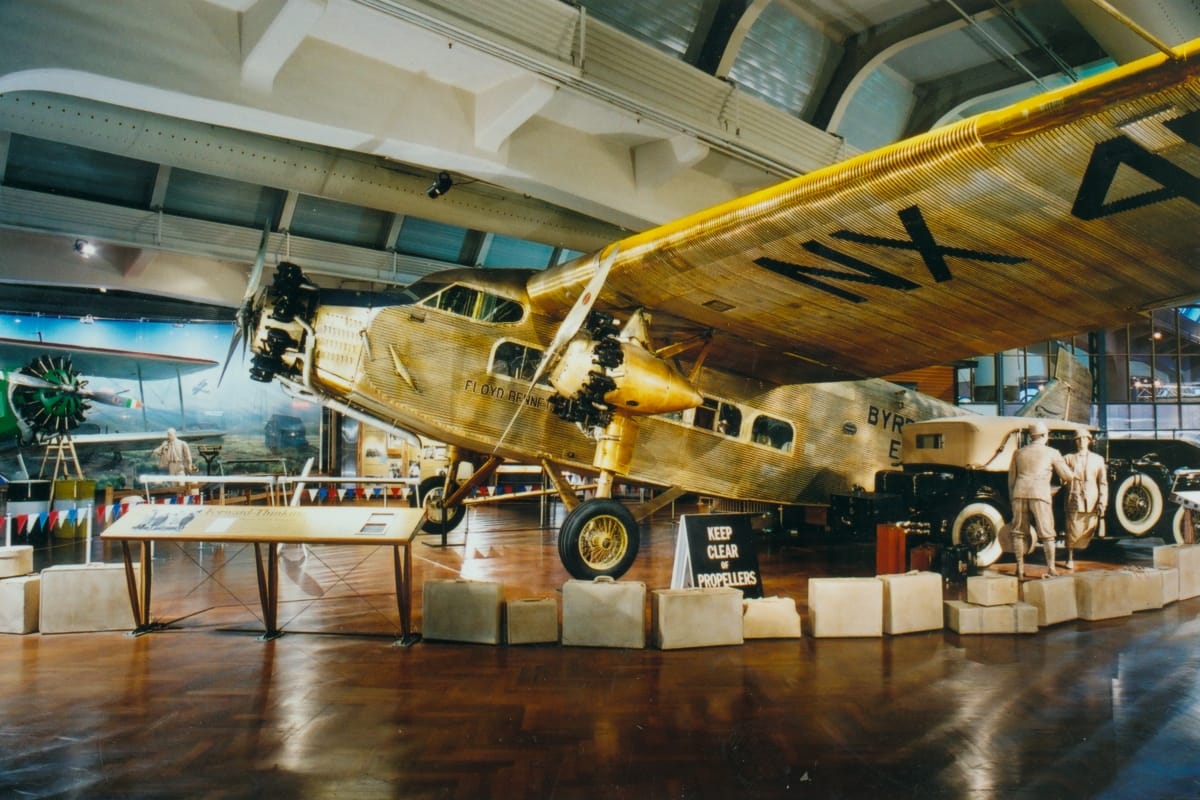
1928 Ford 4-AT-B Tri-Motor Airplane, "Floyd Bennett," Flown Over the South Pole by Richard E. Byrd
The Ford Tri-Motor was the most popular airliner of the late 1920s and early 1930s. Its rugged dependability led Richard Byrd to choose a Tri-Motor for his attempt to be the first person to fly over the South Pole. On November 28-29, 1929, Byrd and a crew of three achieved that goal in this plane.
03
Related Content
 Set
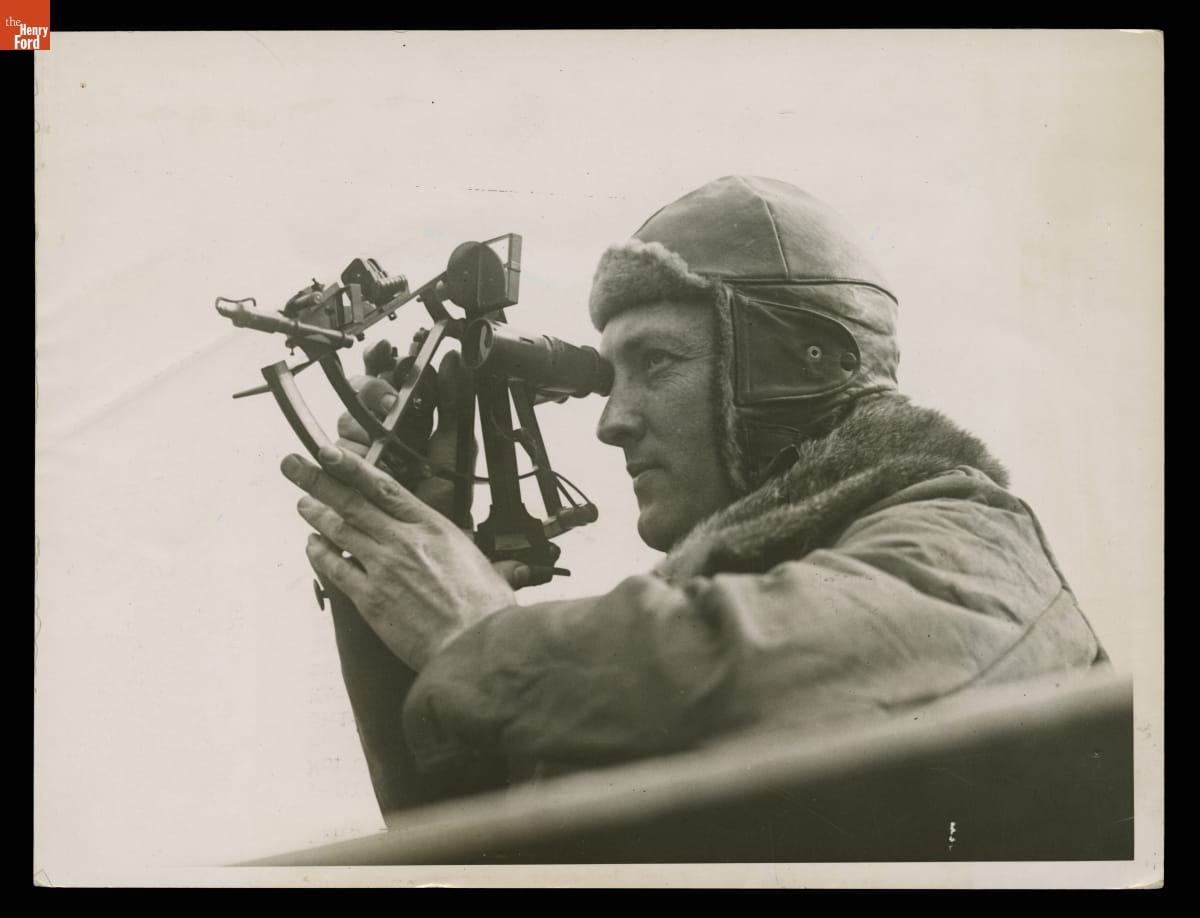
SetPolar Exploration
- 18 Artifacts
In the first four decades of the 20th century, polar explorers set off to discover what lay in the vast cold regions surrounding the North and South Poles. Their expeditions navigated a long-sought-for passage, crossed frozen oceans, charted a continent, and conquered the Earth's poles.