
Cockpit Controls inside a Ford Tri-Motor Airplane, 1927-1930
THF115845 / Cockpit Controls inside a Ford Tri-Motor Airplane, 1927-1930
01
Artifact Overview
With its large, thick wing, the Ford Tri-Motor was very stable in flight. The three engines provided an excellent safety margin. The plane could fly well with two motors, and it could maintain level flight with only one. Cockpit design was efficient. Dual controls allowed either the pilot or co-pilot -- or, in bad weather, both -- to fly the craft.
Artifact Details
Artifact
Photographic print
Date Made
1927-1930
Subject Date
1927-1930
Collection Title
Location
By Request in the Benson Ford Research Center
Object ID
84.1.1660.858
Credit
From the Collections of The Henry Ford. Gift of Ford Motor Company.
Material
Paper (Fiber product)
Linen (Material)
Technique
Gelatin silver process
Color
Black-and-white (Colors)
Dimensions
Height: 7.875 in
Width: 11.5 in
Keywords |
|---|
02
Related Content
 Set
SetFord Tri-Motor
- 14 Artifacts
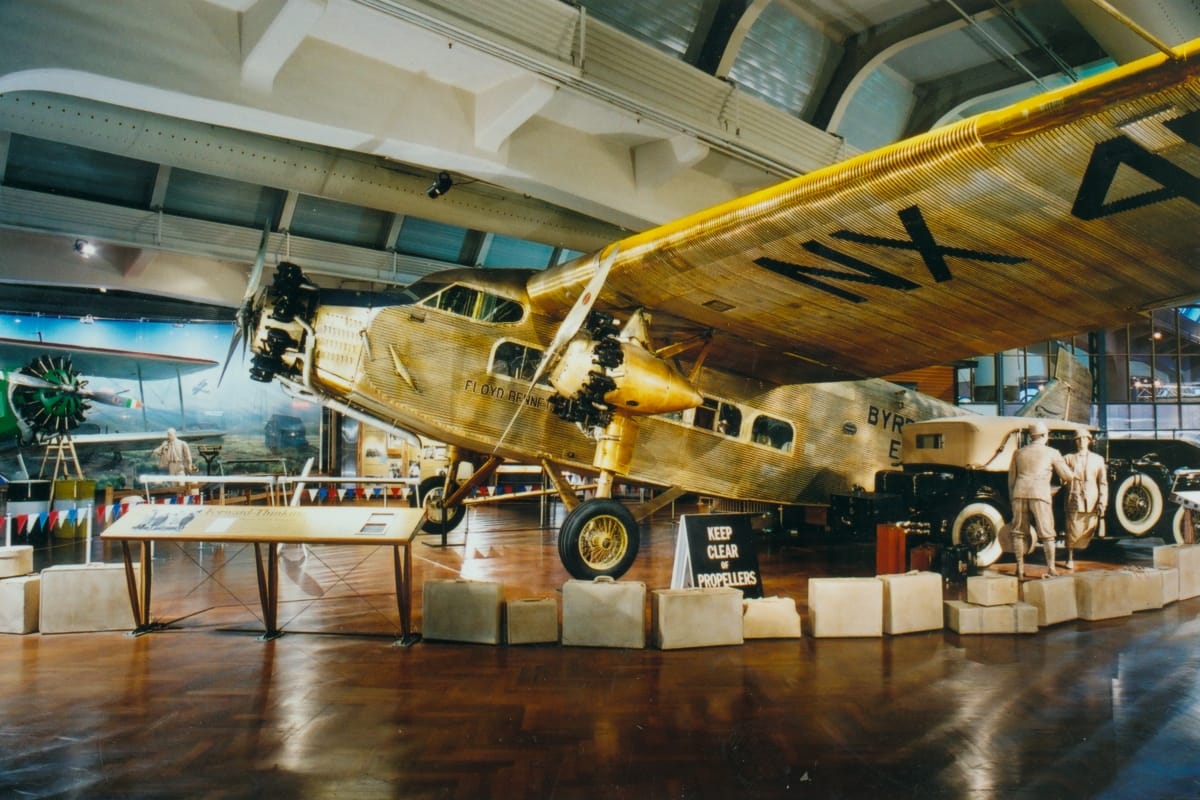
The Ford Tri-Motor was the most popular airliner of the late 1920s and early 1930s. Its rugged dependability led Richard Byrd to choose a Tri-Motor for his attempt to be the first person to fly over the South Pole. On November 28-29, 1929, Byrd and a crew of three achieved that goal in this plane.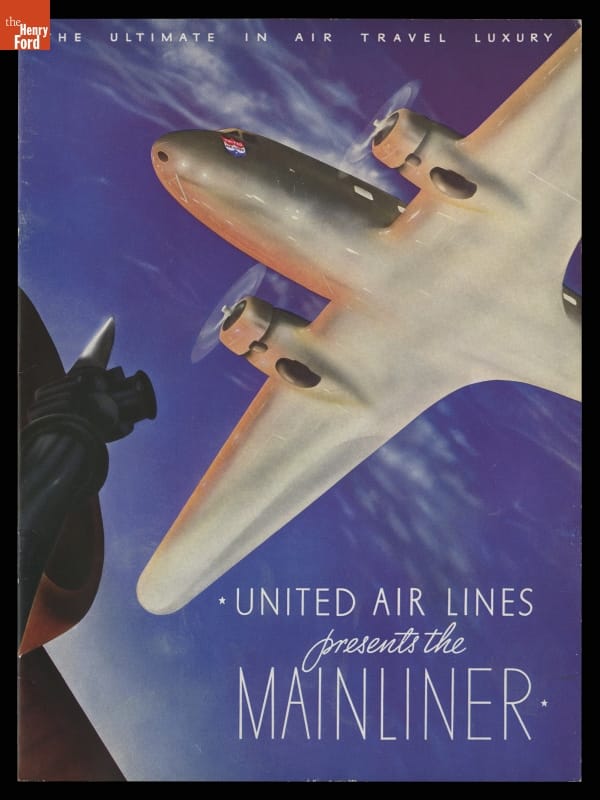 Set
SetThe DC-3: Changing Passengers’ Expectations
- 12 Artifacts
United Airlines promoted its new Douglas DC-3 "Mainliners" in this 1937 brochure. With a range of 1,500 miles, the Mainliners flew from New York to San Francisco in less than 16 hours with only three stops along the way. The planes came in three configurations: standard 21-passenger coaches, sleepers with folding berths for 14, and "Skylounges" with deluxe swiveling seats.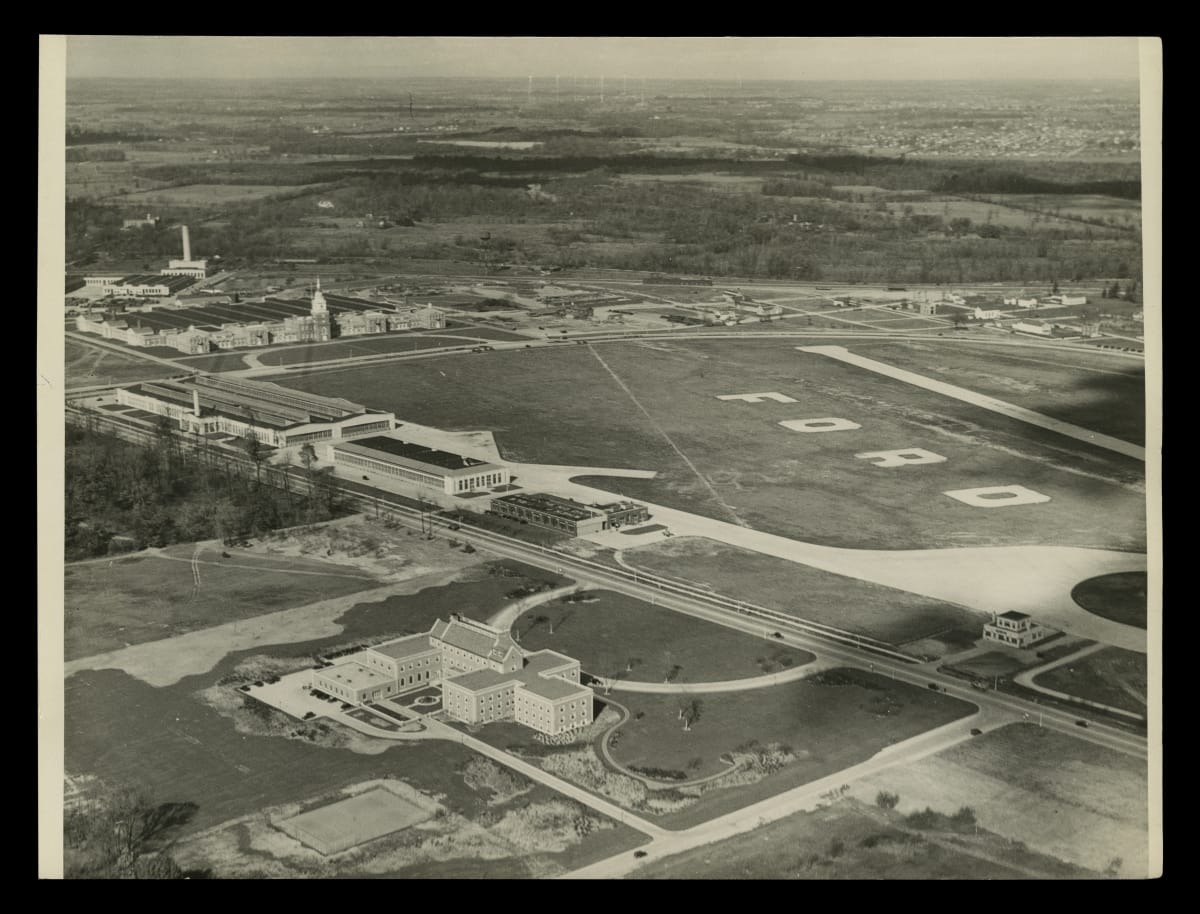 Set
SetHenry Ford: Aviation
- 29 Artifacts
In 1925, an airport opened in Dearborn, Michigan. Edsel and Henry Ford conceived the Dearborn Inn as a business opportunity, a first-class hotel hosting pilots and travelers transiting through the Ford Airport. It is noted as one of the first airport hotels. This aerial photograph shows some of the airfield and the inn (bottom). Also note the Henry Ford Museum's clock tower in the distance.