
Conoco Gasoline Filling Station, 1915
THF101917 / Conoco Gasoline Filling Station, 1915
01
Artifact Overview
Samuel W. Raymond built this filling station in 1915. It serviced automobiles in Adrian, Michigan, providing gas, oil, and water. Raymond used a glass tank to show drivers the amount of gasoline they purchased and claimed to be the first visible-delivery gasoline station. Cars lined the street for service. In 1930, when the street was widened, the station was donated to The Henry Ford.
Artifact Details
Artifact
Service station
Date Made
1915
Creators
Place of Creation
Creator Notes
Designed by S. W. Raymond in Adrian, Michigan.
Location
at Henry Ford Museum in Driving America
Object ID
30.1687.1
Credit
From the Collections of The Henry Ford. Gift of Raymond Auto Sales.
Material
Brick (Clay material)
Wood (Plant material)
Metal
Glass (Material)
Color
Reddish brown
White (Color)
Black (Color)
Red
Dimensions
Height: 130 in
Width: 60 in
Length: 66 in
Inscriptions
On illuminated glass globe, on roof: CONOCO/ REG. U.S. PAT. OFF.
On front door decal: CONOCO
On front door sign: PLEASE RING BELL / FOR SERVICE
Keywords |
|---|
02
Related Artifacts
 Artifact
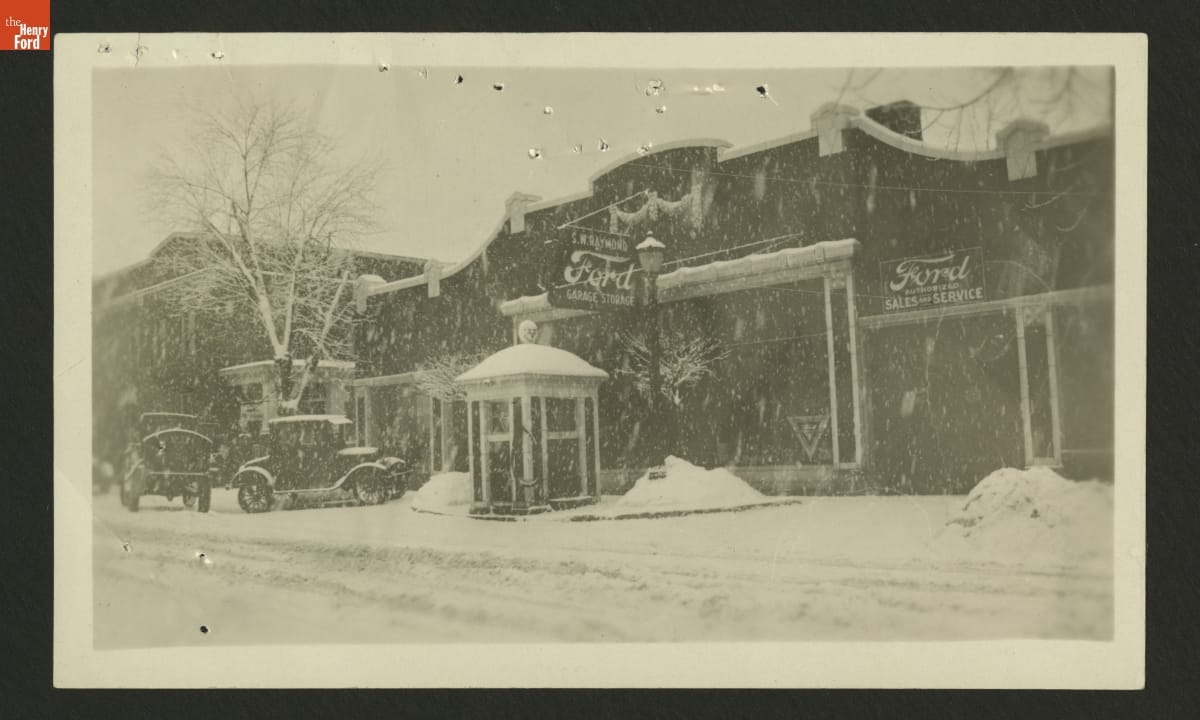
Visible Gasoline Pump and Service Station outside S.W. Raymond Auto Sales, Adrian, Michigan, 1915-1929
This 1920s photograph shows Samuel Raymond's gasoline station on Main Street in Adrian, Michigan. Drivers stopped along the curb to use this street side station. Gas, oil, and water were available. At times, cars lined the street waiting for service. The station was moved to The Henry Ford in 1930 when the street was widened.
03
Related Content
 Set
SetGas Stations
- 25 Artifacts
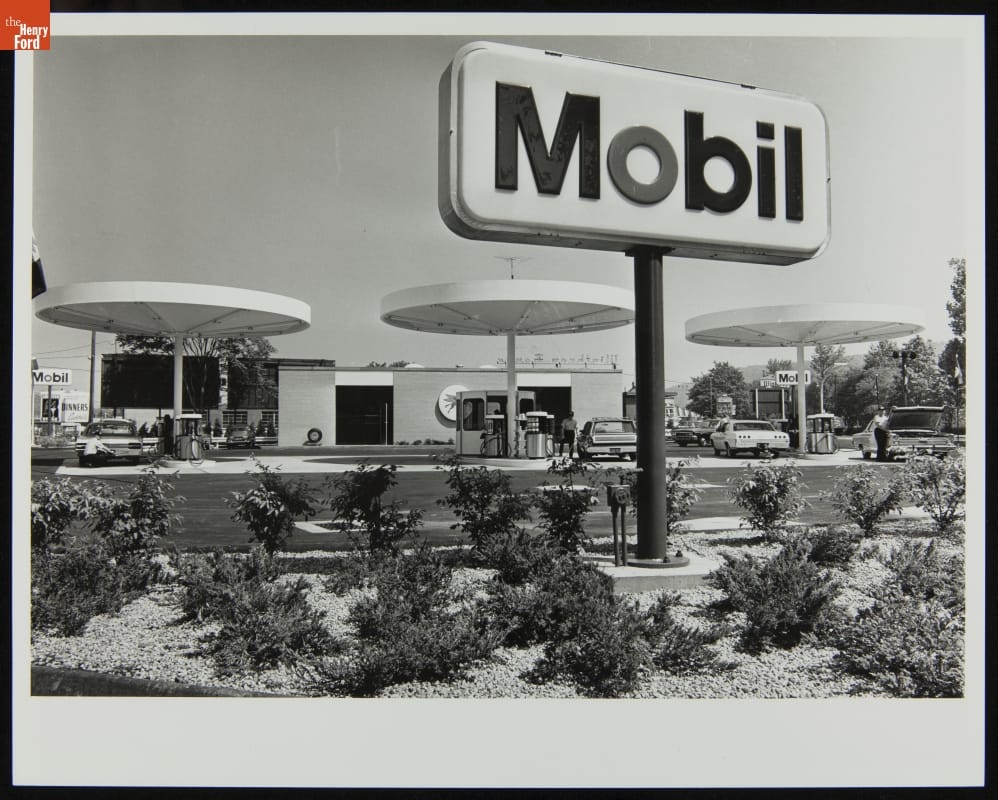
After falling from favor in the mid-1930s due to their cost and complexity, canopy roofs reappeared over American gas stations three decades later. The transition to self-service pumps required that customers be protected from inclement weather. The mushroom-style canopies at this Mobil station also provided plenty of light for motorists filling up their cars at night.