
Birth Control Pill Dispenser, circa 1998
THF305432 / Birth Control Pill Dispenser, circa 1998
01
Artifact Overview
In 1960, the U.S. Food and Drug Administration approved the first oral contraceptive. The "Pill," as it was called, allowed women to gain control of their reproductive system. It made family planning more predictable and helped launch the sexual revolution of the 1960s. The personal and societal effects of hormonal birth control are still surfacing today.
Artifact Details
Artifact
Dispenser
Date Made
circa 1998
Creators
Place of Creation
Location
at Henry Ford Museum in Your Place in Time
Object ID
99.219.2.1
Credit
From the Collections of The Henry Ford.
Material
Plastic
Foil (Metal)
Paper (Fiber product)
Color
Beige (Color)
White (Color)
Dimensions
Height: 0.5 in
Width: 3.375 in
Length: 3.625 in
Inscriptions
Dispenser front: ORTHO |
Dispenser back: 6 (recycle symbol)/PS/Dialpak*/Tablet Dispenser/*TRADEMARK |
Product packaging: TEAR HERE/NDC 0062-1781-27/Dialpak/Tablet Dispenser/28'S/Ortho-Novum 7/7/7 28 Day/Regimen/(norenthindrone/ethinyl estradiol) |
Product literature 1: DETAILED PATIENT LABELING |
Product literature 2: BRIEF SUMMARY/PATIENT PACKAGE INSERT
Keywords |
|---|
02
Related Content
 Set
SetWomen's Equality
- 21 Artifacts
These artifacts provide a small look at the many forms women’s struggles for equal treatment — under the law, at work, and in their private lives — have taken over the years.
 Set
SetSocial Transformation
- 50 Artifacts
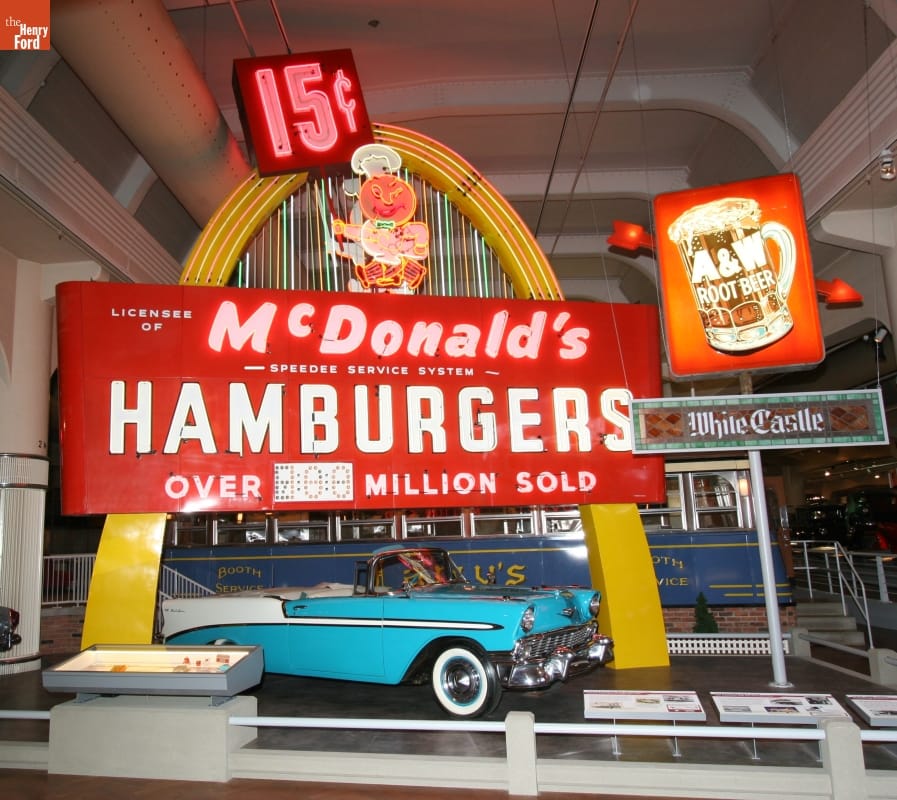
In 1948, the McDonald brothers transformed their Southern California drive-in restaurant with their radical new "Speedee Service System"--assembly-line production of a limited menu at drastically reduced prices. Richard McDonald created this sign design in 1952. In 1955, milkshake machine salesman Ray Kroc franchised the McDonald's concept--prompting numerous imitators and ultimately turning America into a "fast food nation."