
Ford Rouge Plant Administration Building from the Ford Rotunda, Dearborn, Michigan, 1936
THF98601 / Ford Rouge Plant Administration Building from the Ford Rotunda, Dearborn, Michigan, 1936
01
Artifact Overview
The Rouge plant's growing importance to Ford Motor Company was confirmed in 1928 when the automaker moved its administrative headquarters from Highland Park to the Rouge's grounds. The four-story administration building, designed by Albert Kahn and faced with white limestone, housed purchasing, sales, advertising, and accounting offices, in addition to office suites for Henry Ford and Edsel Ford.
Artifact Details
Artifact
Photographic print
Date Made
29 May 1936
Subject Date
29 May 1936
Place of Creation
Collection Title
Location
By Request in the Benson Ford Research Center
Object ID
P.833.66145
Credit
From the Collections of The Henry Ford. Gift of Ford Motor Company.
Material
Paper (Fiber product)
Linen (Material)
Technique
Gelatin silver process
Color
Black-and-white (Colors)
Dimensions
Height: 7.938 in
Width: 11.063 in
Keywords |
|---|
02
Related Content
 Set
SetWillow Run Bomber Plant
- 33 Artifacts
Every American automaker turned its workforce and facilities to military production during World War II. But no project captured the public's imagination like Willow Run, where Ford Motor Company built one B-24 Liberator airplane every 63 minutes. The plant was the embodiment of America's "Arsenal of Democracy" — the enormous manufacturing capacity so vital to the Allies' victory.
 Set
SetThe Rouge
- 22 Artifacts
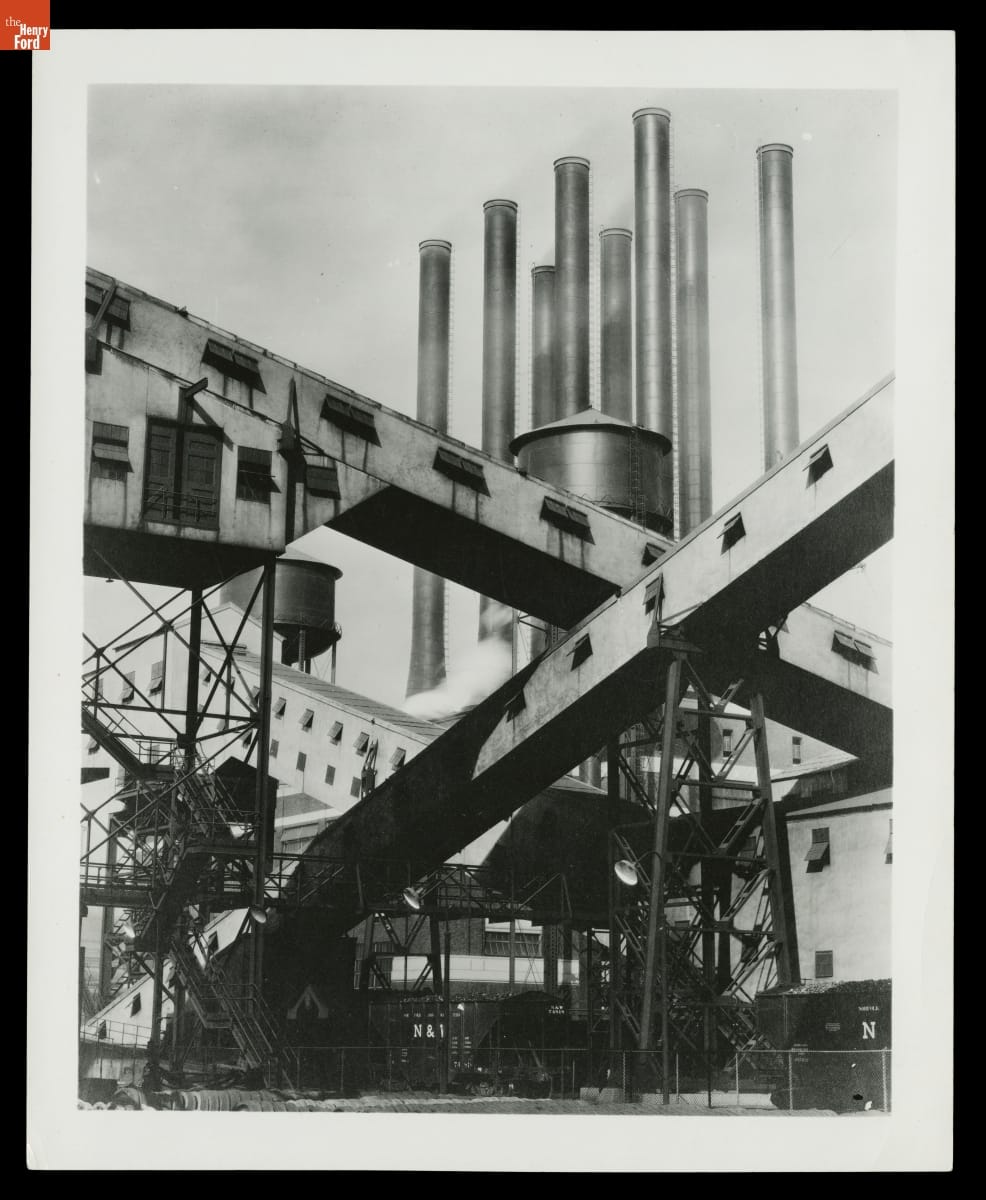
In 1927, Ford Motor Company commissioned Charles Sheeler to do a series of documentary photographs of its River Rouge industrial complex near Dearborn, Michigan. The conveyors moved coal and coke to the pulverizing building and screening stations. Coke made from coal was used in the steelmaking process of the blast furnaces. This vigorous photograph shows Sheeler's ability to form a compelling image from a complicated scene.