
Souvenir Card, "Industrial Products Made from Soy Beans," circa 1934
THF222089 / Souvenir Card, "Industrial Products Made from Soy Beans," circa 1934
01
Artifact Overview
Starting in 1931, Henry Ford invested much money and research into soybeans. He viewed the crop as a bridge between agriculture and industry. Based on this work, soy-based materials were incorporated into Ford Motor Company vehicles. Soybean oil was used in body enamels, for example, while soy meal was used in the plastic for gear shift knobs and horn buttons.
Artifact Details
Artifact
Card (Information artifact)
Subject Date
circa 1934
Creators
Location
By Request in the Benson Ford Research Center
Object ID
2001.64.1
Credit
From the Collections of The Henry Ford.
Material
Paper (Fiber product)
Color
Black-and-white (Colors)
Dimensions
Height: 3 in
Width: 4.25 in
Keywords |
|---|
02
Related Content
 Set
SetHenry Ford: Soybeans
- 15 Artifacts
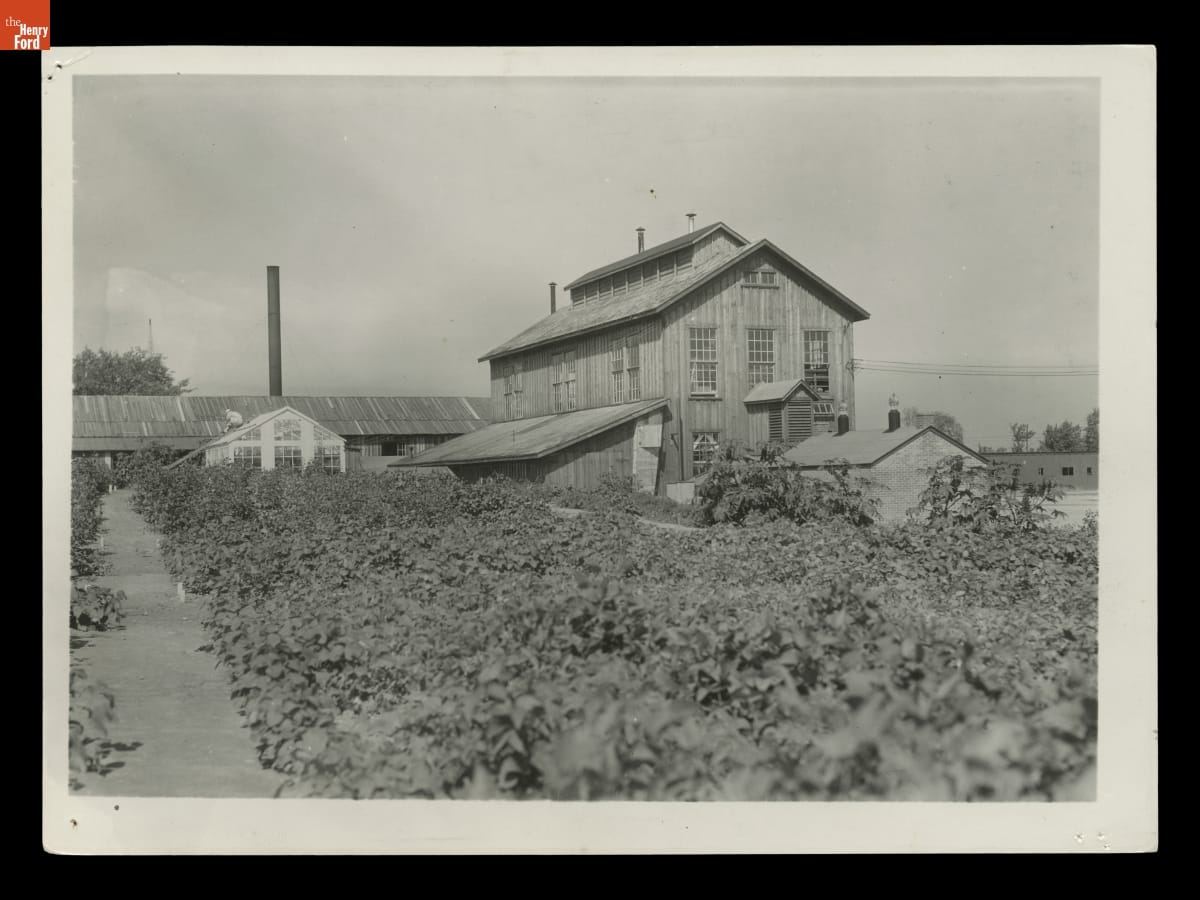
Henry Ford believed that industry and agriculture should complement one another. In the 1930s, he pursued soybeans as a crop that might unite the two. Ford built a soybean laboratory in Greenfield Village. Experiments there led to the use of some soy-based oils and plastics in Ford Motor Company vehicles.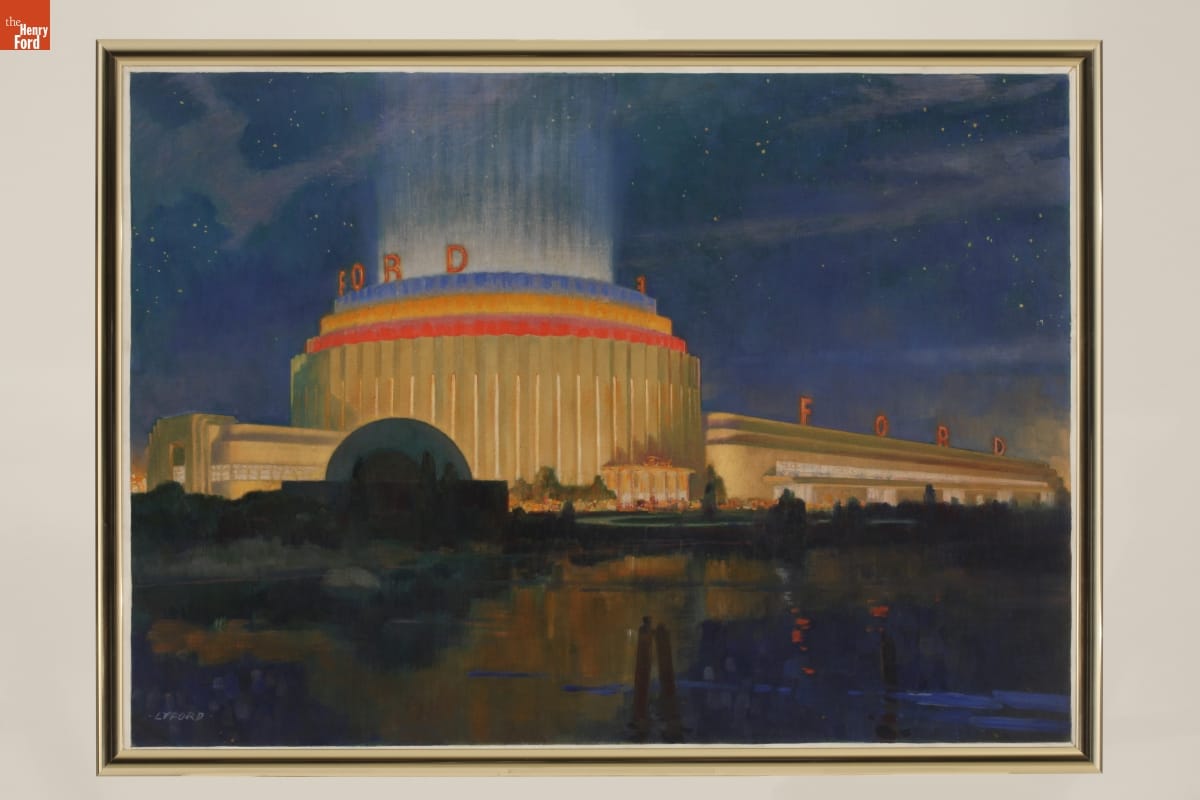 Set
SetFord at the Fair Exhibition
- 86 Artifacts
Chicago's 1933-34 Century of Progress Exposition used the theme of progress to encourage optimism during the Depression. The 11-acre Ford Motor Company exhibit became the most talked-about exhibit of 1934, featuring a central Rotunda designed to simulate graduated clusters of gears. After the fair, this building became an attraction at Ford headquarters in Dearborn, Michigan, until it burned down in 1962.