
Passengers Seated Inside a Ford Tri-Motor Airplane, October 1928
THF121334 / Passengers Seated Inside a Ford Tri-Motor Airplane, October 1928
01
Artifact Overview
Americans initially wondered if air travel was safe. Fatal crashes by barnstorming pilots were well publicized, and wood and cloth airplanes did not inspire confidence. But when Henry Ford began making planes, the industrialist's solid reputation eased people's fears. Ford's all-metal Tri-Motors were rugged, dependable and safe. By the late 1920s these planes were the backbone of the budding airline industry.
Artifact Details
Artifact
Photographic print
Date Made
20 October 1928
Subject Date
20 October 1928
Collection Title
Location
By Request in the Benson Ford Research Center
Object ID
84.1.1660.P.189.5974
Credit
From the Collections of The Henry Ford. Gift of Ford Motor Company.
Material
Paper (Fiber product)
Linen (Material)
Technique
Gelatin silver process
Color
Black-and-white (Colors)
Dimensions
Height: 7.5 in
Width: 11 in
Keywords |
|---|
02
Related Content
 Set
SetThe DC-3: Changing Passengers’ Expectations
- 12 Artifacts
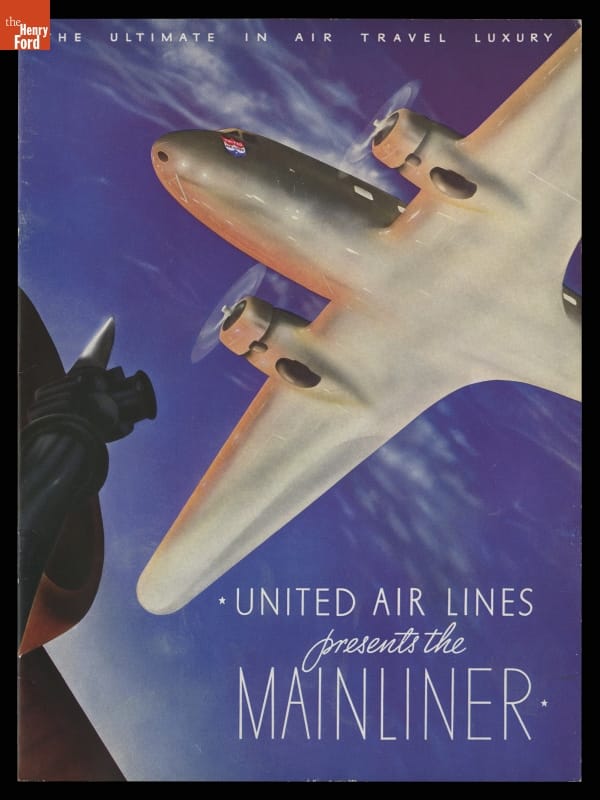
United Airlines promoted its new Douglas DC-3 "Mainliners" in this 1937 brochure. With a range of 1,500 miles, the Mainliners flew from New York to San Francisco in less than 16 hours with only three stops along the way. The planes came in three configurations: standard 21-passenger coaches, sleepers with folding berths for 14, and "Skylounges" with deluxe swiveling seats.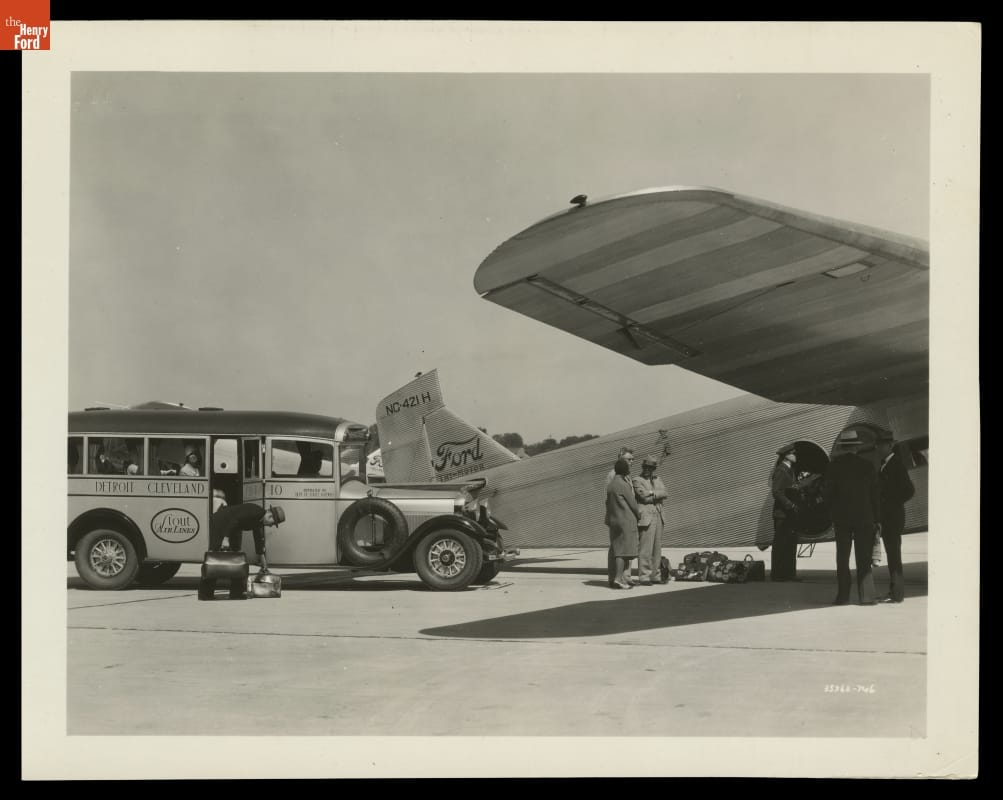 Set
SetFord Tri-Motor: Passenger Travel
- 16 Artifacts
Stout Air Lines advertised direct airplane service between Detroit and Cleveland, but this wasn't strictly true. Stout's "Detroit" terminal was, in fact, Ford Airport in Dearborn, ten miles west of the city. Passengers gathered at a station in Detroit and were shuttled by bus to the Dearborn airport where they boarded the actual plane.