
Child's Table, 1956
THF48909 / Child's Table, 1956
01
Artifact Overview
Children's furniture often reflected up-to-date fashion trends found in full-sized adult versions. Parents in the 1950s could purchase this modern child-sized table with a Formica top as part of a set with patterned vinyl-covered chairs. Children could sit comfortably around this fashionable playset and pretend to be mom and dad, who probably were sitting around a similar adult-sized version in the kitchen.
Artifact Details
Artifact
Table (Support furniture)
Date Made
1956
Creators
Place of Creation
Location
at Henry Ford Museum in Fully Furnished
Object ID
2007.27.1
Credit
From the Collections of The Henry Ford.
Material
Fiberboard
Formica (TM)
Masonite (TM)
Steel (Alloy)
Color
Black (Color)
Cream (Color)
Gray (Color)
Pink (Color)
White (Color)
Dimensions
Height: 19.875 in
Width: 29.625 in
Length: 21.25 in
Keywords |
|---|
02
Related Content
 Set
SetChildren's Furniture
- 20 Artifacts
Children's furniture reflects changes in childrearing. Early American families wanted their children to mature quickly and work as soon as possible. A more romantic view of childhood took hold in the 1800s; well-to-do parents saw their children as precious and molded them for a successful life. In 20th-century America, parents continued to focus on childhood play and development, accepting new materials and modern design in children's furniture.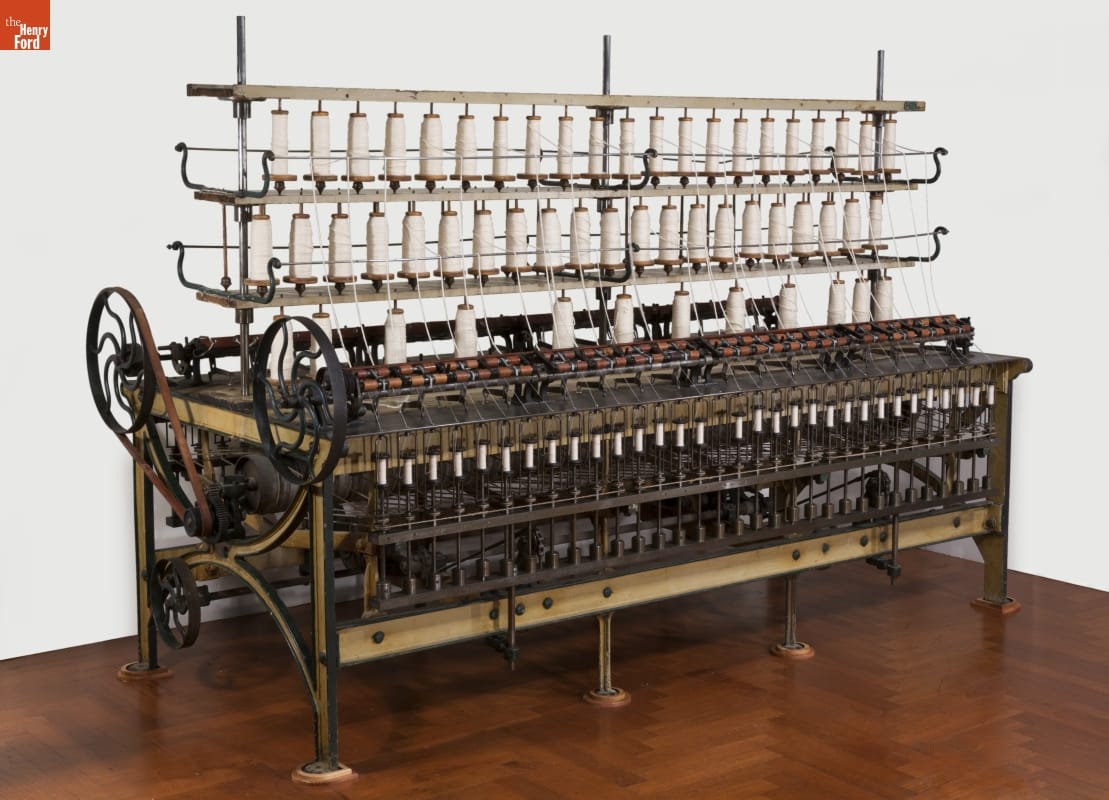 Set
SetFeatured on The Henry Ford's Innovation Nation: Season 8
- 26 Artifacts
Spinning frames spin cotton fiber into yarn and then wind it onto a bobbin. This throstle spinning frame could simultaneously spin 64 strands of yarn. (Throstle -- an old name for a song thrush -- refers to the bird-like sounds the machine made.) Machines like this helped produce the large quantities of yarn that growing industrial weaving operations needed in the early and mid-1800s.