
1960 Meskowski Race Car
THF90084 / 1960 Meskowski Race Car
01
Artifact Overview
Between 1960 and 1963, A.J. Foyt won 13 of the 26 races he drove in this car. Under its hood is a version of the famous Offenhauser engine designed by Harry Miller and refined by Fred Offenhauser. "Offy" engines powered their first Indianapolis 500 winner in 1935 and their last in 1976. The final turbocharged versions pumped out 1,000 horsepower.
Artifact Details
Artifact
Racing car
Date Made
1960
Place of Creation
Creator Notes
Car was built by Wally Meskowski of Indianapolis, Indiana for Bowes Seal Fast team, Indianapolis, Indiana. Paint scheme was devised by Dean Jeffries.
Location
at Henry Ford Museum in Driven to Win: Racing in America
Object ID
2008.101.1
Credit
From the Collections of The Henry Ford.
Material
Aluminum
Steel (Alloy)
Rubber (Material)
Leather
Plexiglas (TM)
Technique
Handmade
Color
White (Color)
Red
Black (Color)
Dimensions
Height: 51 in
Width: 60 in (Front Track)
Length: 161 in
Weight: 1895 lbs
Inscriptions
On front nose: 1
On left and right side of hood: BOWES / SEAL / FAST
On right side near cockpit: [cartoon of hands on steering wheel] A. J. Foyt / [cartoon of wrench] Geo. Bignotti
Decal, on left near cockpit: EQUIPPED / WITH / PERFECT / CIRCLE / PISTON RINGS
On back left and right: 1
Specifications
Make & Model: 1960 Meskowski (oval track racing)
Maker: Wally Meskowski, Indianapolis, Indiana
Engine: Meyer and Drake "Offenhauser" inline-4, double overhead cams, 255 cubic inches
Transmission: 2-speed manual
Height: 51 inches
Width: 60 inches
Wheelbase: 96 inches
Overall length: 161 inches
Weight: 1895 pounds
Horsepower: 400 at 6000 revolutions per minute
Pounds per horsepower: 4.7
Competition History: Winner of 13 100-mile championship races, 1960–63, all driven by A.J. Foyt. Won at DuQuoin, Illinois (three times); Langhorne, Pennsylvania (three times); Indiana State Fairgrounds, Indianapolis (twice); Sacramento, California (twice); Trenton, New Jersey (twice); and Phoenix, Arizona.
Keywords |
|---|
02
Related Content
 Set
SetRacing
- 50 Artifacts
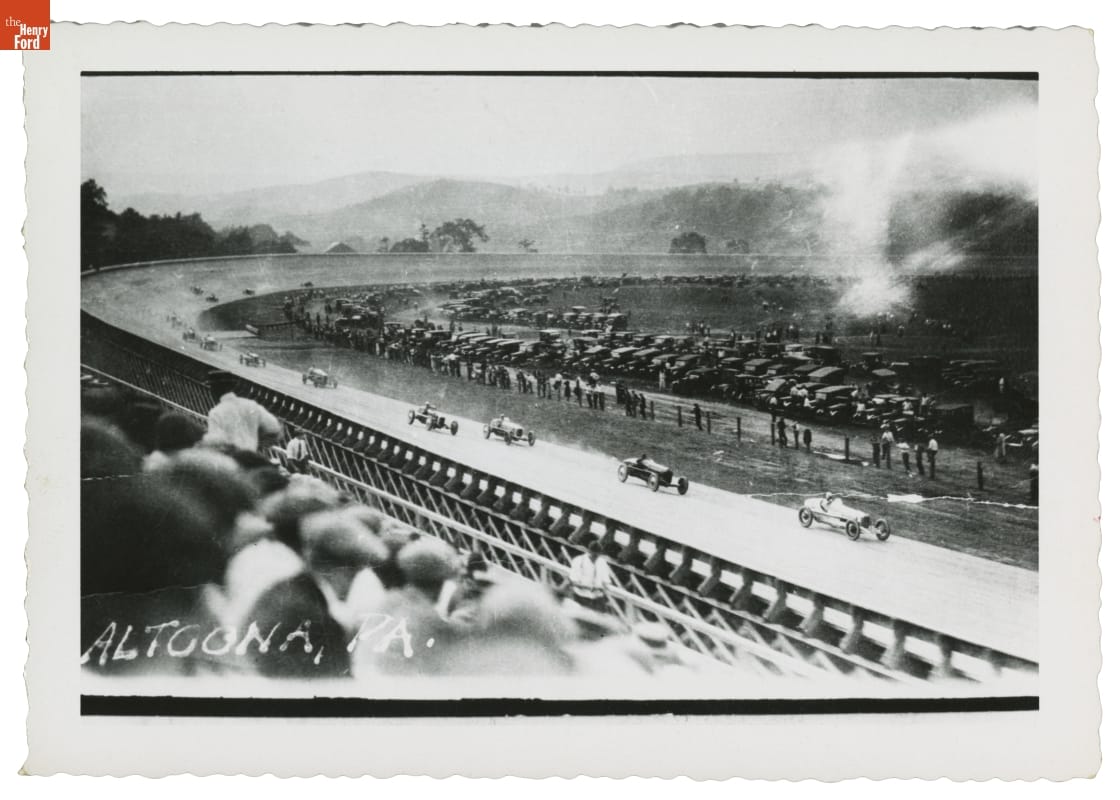
As automobile racing speeds increased, repurposed dirt horse tracks became inadequate. In the 1910s promoters turned to wooden boards, which provided a smooth road surface and were less expensive than bricks or concrete. But rotting wood required frequent replacement. Improvements in concrete and asphalt made board tracks obsolete in the 1930s. The 1.25-mile board track at Altoona, Pennsylvania, operated from 1923-1931.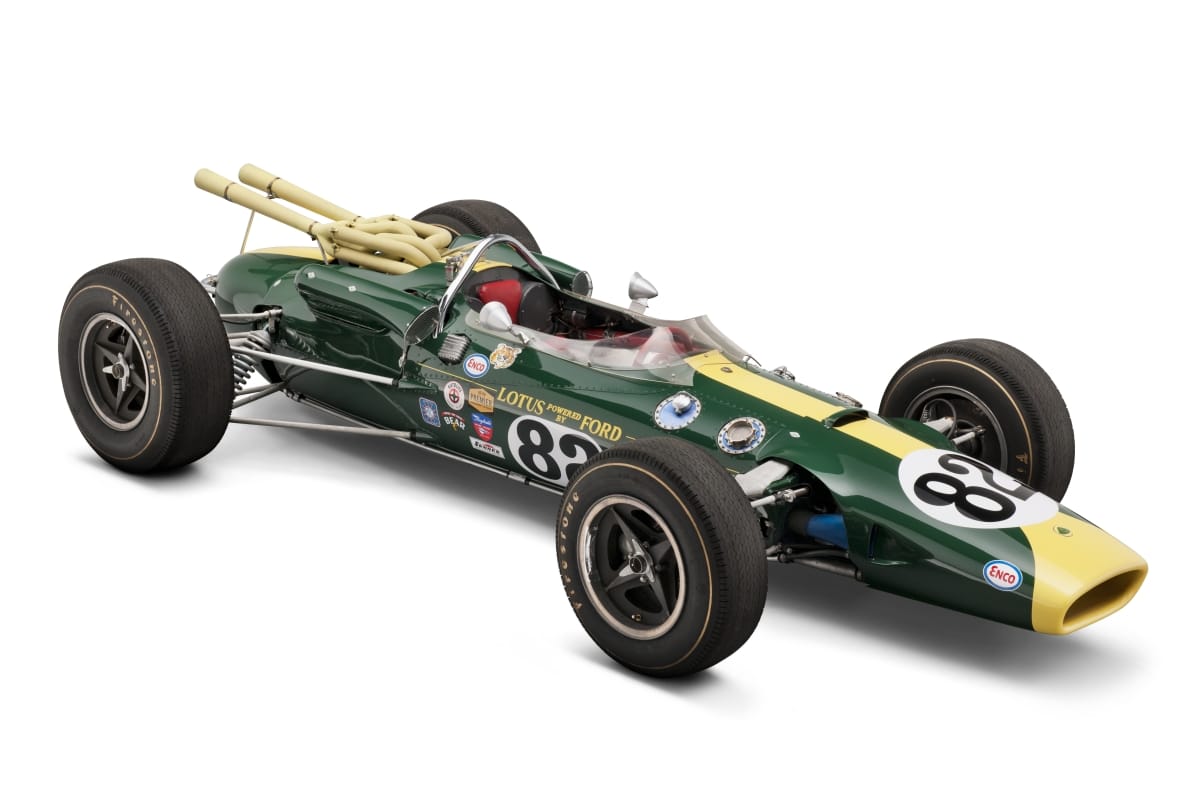 Set
SetRace Cars of Driven to Win
- 23 Artifacts
Scotsman Jim Clark won the Indianapolis 500 with this rear-engine car in 1965. After his victory, a traditional front-engine car never won that race again. The Lotus-Ford combined a European Formula One-inspired lightweight chassis with a big Ford V-8 engine. The Lotus-Ford's success effectively killed the traditional Indy roadster and established a new design for American race cars.