
August Edinger with Horse-Drawn Mail Wagon, circa 1933
THF76621 / August Edinger with Horse-Drawn Mail Wagon, circa 1933
01
Artifact Overview
Officially adopted in 1896, Rural Free Delivery was a boon to residents who were previously required to collect their mail in the nearest town. Rural routes were long and served hundreds of customers, so carriers often purchased horse-drawn wagons to facilitate their perennial labor. Here, August Edinger of Kimmswick, Missouri, poses with the wagon he used from 1902 to 1925.
Artifact Details
Artifact
Photographic print
Date Made
circa 1933
Subject Date
circa 1933
Creator Notes
Photographer is not identified
Location
Not on exhibit to the public.
Object ID
34.150.3
Credit
From the Collections of The Henry Ford. Gift of August Edinger.
Material
Paper (Fiber product)
Technique
Gelatin silver process
Color
Black-and-white (Colors)
Keywords |
|---|
02
Related Artifacts
 Artifact
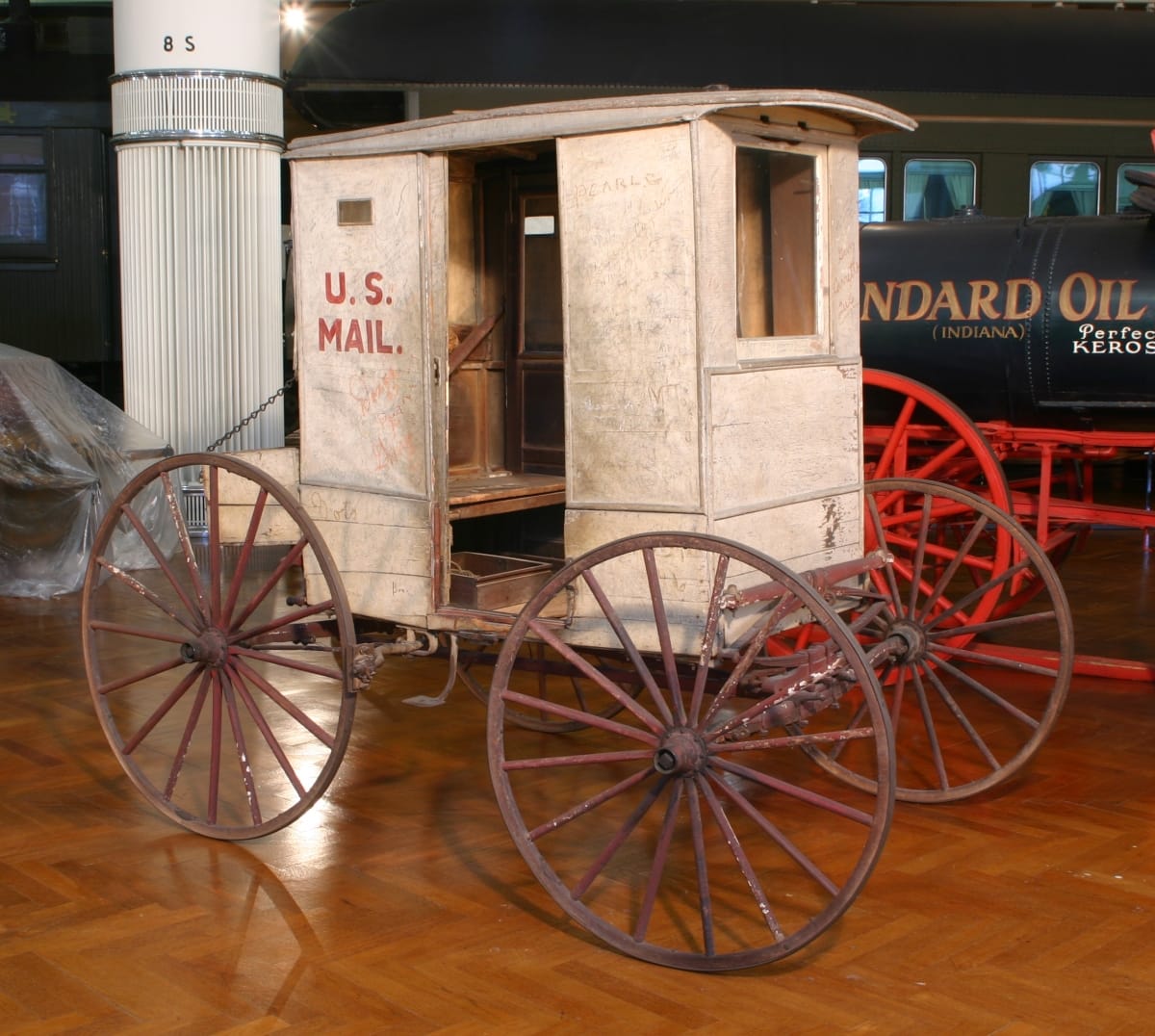
Mail Wagon Used for Rural Delivery in Missouri, 1902-1925
Letter carrier August Edinger used this horse-drawn wagon to deliver mail around Kimmswick, Missouri, for more than 20 years. Sliding doors offered ventilation in summer, and a tiny coal stove provided heat in winter. Rural Free Delivery, instituted by the U.S. Post Office in 1896, eased the isolation felt by rural Americans and boosted mail-order businesses as well.
03
Related Content
 article
The Carriage Era: Horse-Drawn Vehicles
Discover the Carriage Era of horse-drawn vehicles and learn about their unique traits and uses in this insightful blog post from The Henry Ford. Read now!