
Edsel B. Ford, Richard E. Byrd and William B. Stout with Royal Typewriter's Ford Tri-Motor 4-AT-8, 1927
THF135655 / Edsel B. Ford, Richard E. Byrd and William B. Stout with Royal Typewriter's Ford Tri-Motor 4-AT-8, 1927
01
Artifact Overview
One of the most unusual uses of a Tri-Motor was by Royal Typewriter Company of Hartford, Connecticut. Royal purchased its plane in 1927 to deliver typewriters to the company's distributors. To avoid time-consuming landings, Royal dropped the typewriters, three at a time, by parachute. Royal ended the experimental program and sold its Tri-Motor before year's end.
Artifact Details
Artifact
Photographic print
Date Made
01 August 1927
Subject Date
01 August 1927
Place of Creation
Collection Title
Location
By Request in the Benson Ford Research Center
Object ID
84.1.1660.P.189.4504
Credit
From the Collections of The Henry Ford. Gift of Ford Motor Company.
Material
Linen (Material)
Paper (Fiber product)
Technique
Gelatin silver process
Color
Black-and-white (Colors)
Dimensions
Height: 7.625 in
Width: 11 in
Keywords |
|---|
02
Related Content
 Set
SetFord Tri-Motor
- 14 Artifacts
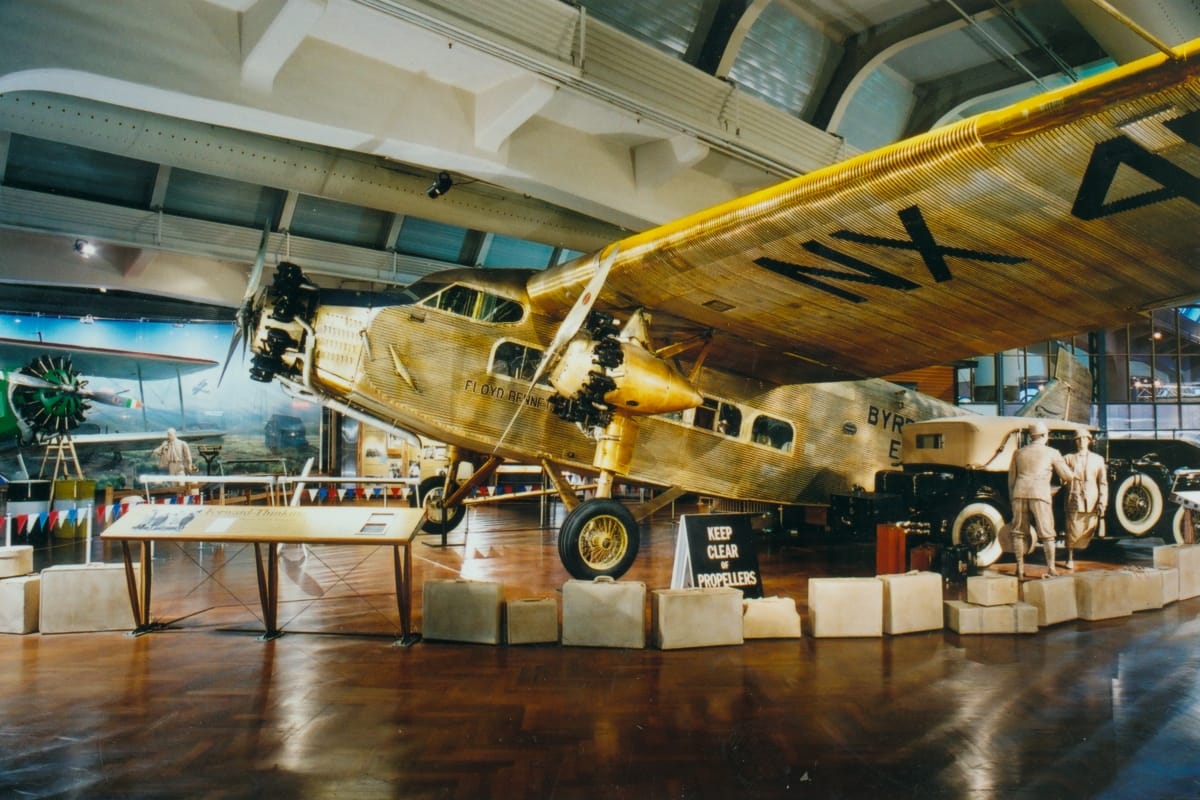
The Ford Tri-Motor was the most popular airliner of the late 1920s and early 1930s. Its rugged dependability led Richard Byrd to choose a Tri-Motor for his attempt to be the first person to fly over the South Pole. On November 28-29, 1929, Byrd and a crew of three achieved that goal in this plane.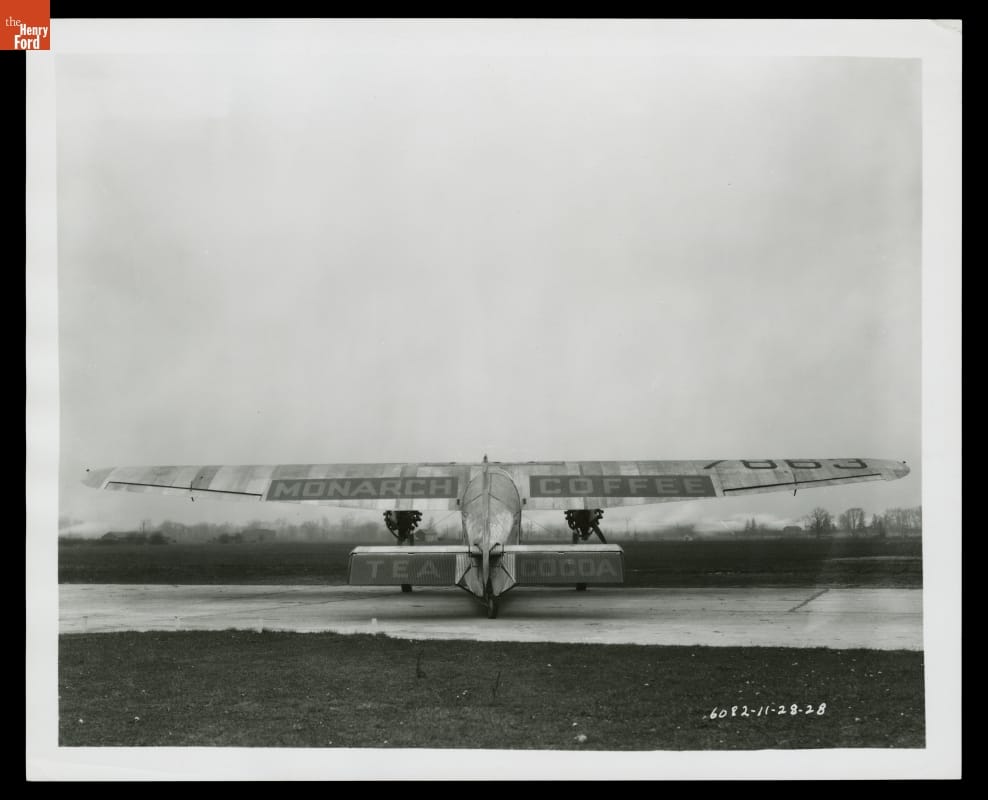 Set
SetFord Tri-Motor: Promotional Use
- 10 Artifacts
From 1928 to 1931, Reid, Murdoch & Company of Chicago used a Ford Tri-Motor to advertise its Monarch Foods brand. Named Independence, the modified plane served as a flying salesroom and carried samples of over 200 different food products to airports throughout the country. On occasion, Monarch's pint-sized advertising characters, "The Teenie Weenies," also accompanied the plane on its stops.