
Air Traffic Control Radar Scope, 1969
THF154728 / Air Traffic Control Radar Scope, 1969
01
Artifact Overview
Federal oversight of air traffic control began in 1938, but radar technology -- greatly improved during World War II -- was not widely implemented until the late 1950s. This computer-integrated radar scope, used at Detroit Metro Airport from 1970 to 2001, was one of the first units capable of displaying an airplane's identification number and altitude directly on the screen.
Artifact Details
Artifact
Radarscope
Date Made
1969
Subject Date
1970-2001
Place of Creation
Creator Notes
Made by Texas Instruments Incorporated, Dallas, Texas, for Univac Division of Sperry Rand Corporation, St. Paul, Minnesota.
Location
Not on exhibit to the public.
Object ID
2013.30.1
Credit
From the Collections of The Henry Ford. Gift of FAA / Detroit Metro ATCT.
Keywords |
|---|
02
Related Artifacts
 Artifact
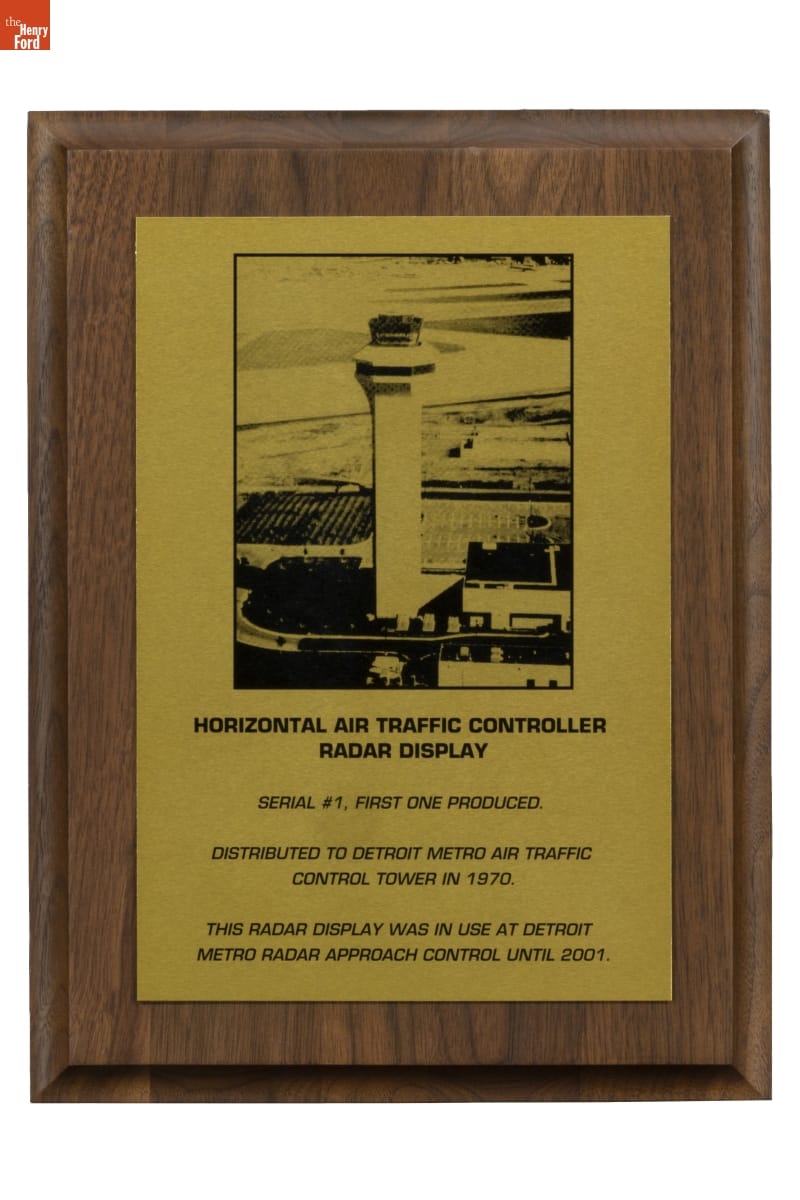
Horizontal Air Traffic Controller Radar Display Plaque, circa 2001
Federal oversight of air traffic control began in 1938, but radar technology -- greatly improved during World War II -- was not widely implemented until the late 1950s. Detroit Metro Airport received one of the first computer-integrated radar scopes capable of displaying an airplane's identification number and altitude directly on the screen. This plaque commemorates that unit, used from 1970 to 2001.
03
Related Content
 Set
SetFeatured on The Henry Ford's Innovation Nation: Season 7
- 26 Artifacts
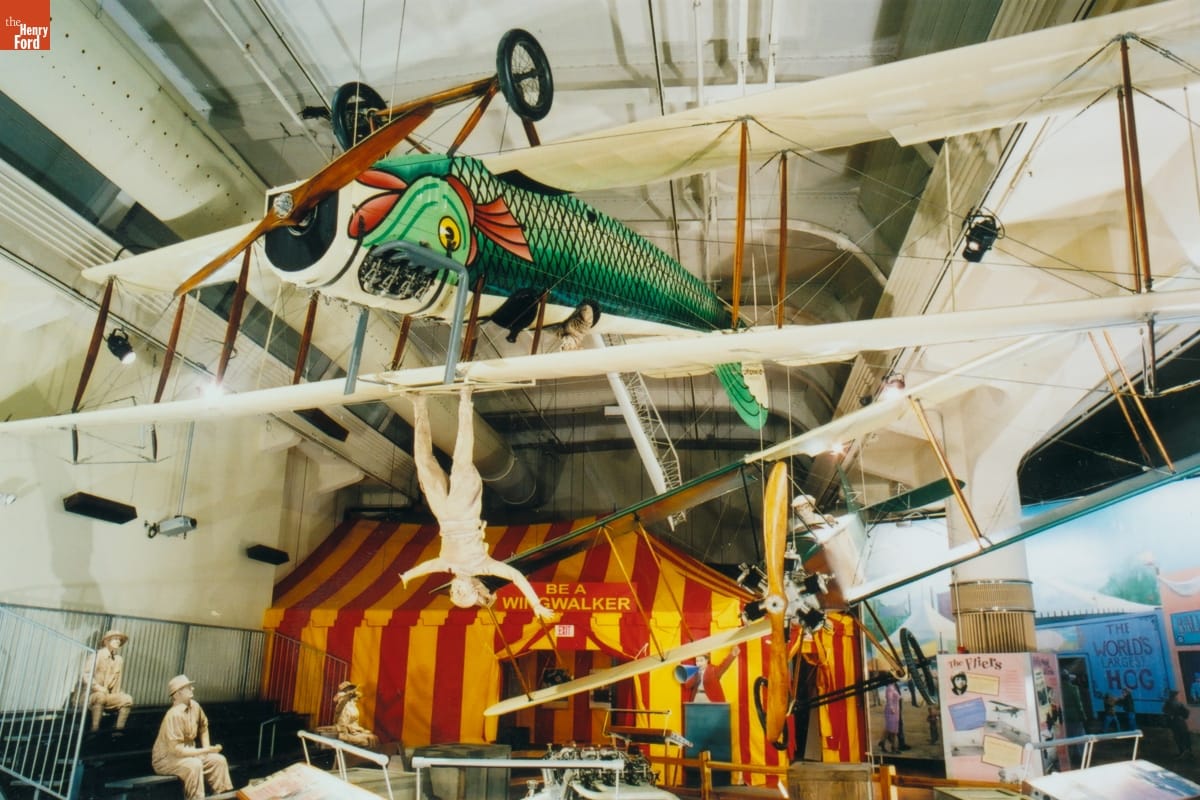
The Curtiss JN-4 "Jenny" was the U.S. Army's primary training aircraft in the World War I era. After the war, surplus Jennys formed the core of America's barnstorming fleet. The JN-4D variation employed a control stick rather than the wheel used in the standard version. The JN-4D originally was built for the Canadian market, explaining its "Canuck" nickname. Set
SetAir-to-Ground Communication
- 10 Artifacts
During his polar expeditions, Richard E. Byrd relied on navigational instruments not much changed in 200 years. Byrd's sextant measured the angle between an astronomical object -- the Sun or a star -- and the horizon. Based on the time of day it was measured, this angle was used to determine Byrd's position on a navigational chart. Set
SetCollecting Mobility
- 31 Artifacts
Modern fans might find the Mustang II undersized and underpowered. But its specifications were typical for the mid-1970s into the mid-1980s, when American automakers struggled with new safety, efficiency and emissions requirements, and against growing competition from high-quality foreign cars. Regardless, buyers embraced the smaller Mustang II and Ford sold more than 1.1 million of them from 1974-1978.