
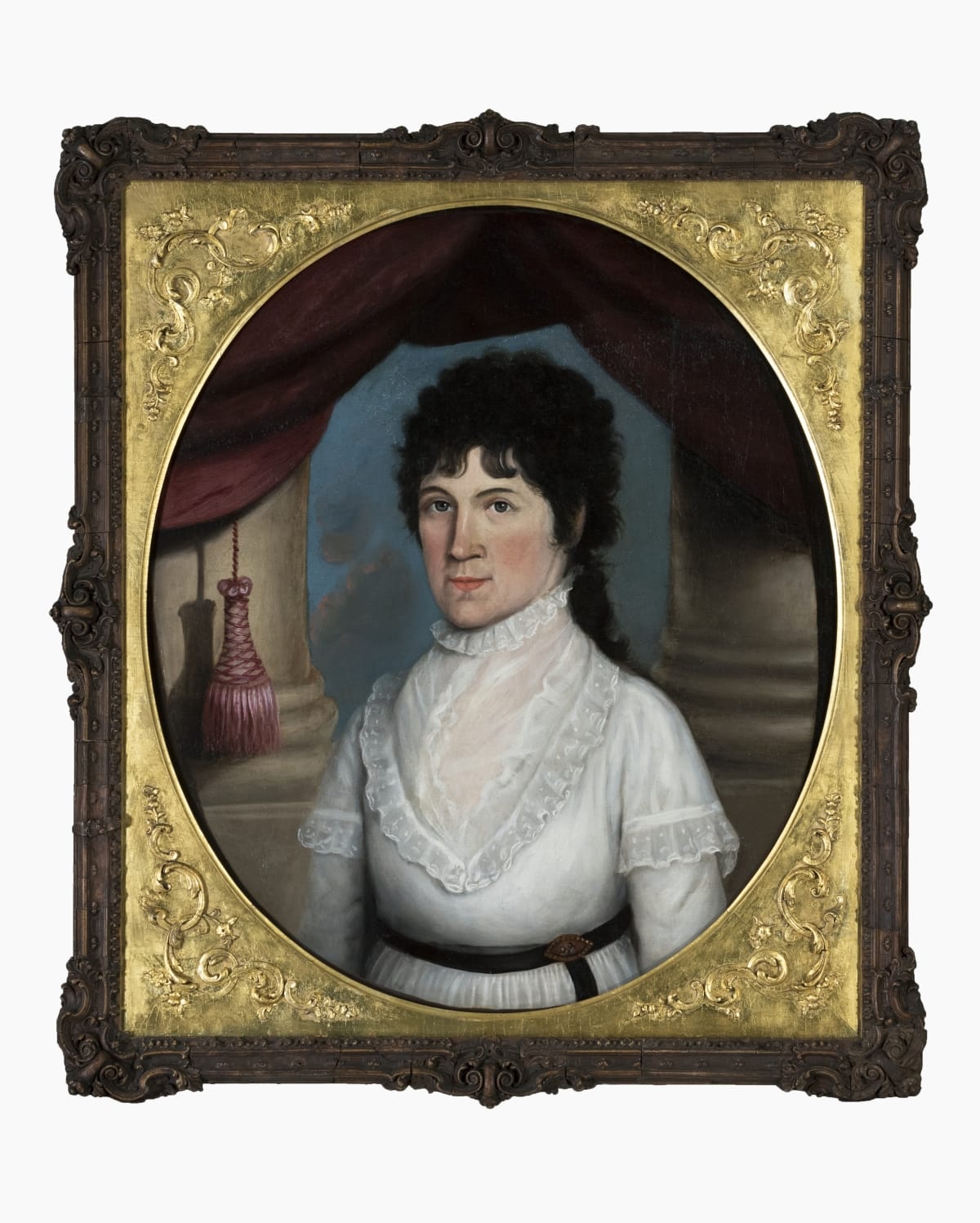
Eliza Webster Jones, Daughter of Noah Webster, circa 1825
THF236423 / Eliza Webster Jones, Daughter of Noah Webster, circa 1825
01
Artifact Overview
This is Eliza Webster Jones, one of Noah Webster's eight children. Webster was a family man, doting on his children and grandchildren and delighting in their activities. Eliza lived with her parents and the younger Webster siblings in the New Haven, Connecticut, home after it was completed in 1823. She married Henry Jones in 1825, probably about the time this painting was done.
Artifact Details
Artifact
Photographic print
Subject Date
circa 1825
Collection Title
Location
Not on exhibit to the public.
Object ID
EI.1929.452
Credit
From the Collections of The Henry Ford.
Material
Paper (Fiber product)
Technique
Gelatin silver process
Color
Black-and-white (Colors)
Dimensions
Height: 10 in
Width: 8.125 in
Keywords |
|---|
02
Related Artifacts
 Artifact
Portrait of Eliza Webster Jones, 1823-1835
This is Eliza Webster Jones, one of Noah Webster's eight children. Webster was a family man, doting on his children and grandchildren and delighting in their activities. Eliza lived with her parents and the younger Webster siblings in the New Haven, Connecticut, home after it was completed in 1823. She married Henry Jones in 1825, probably about the time this painting was done.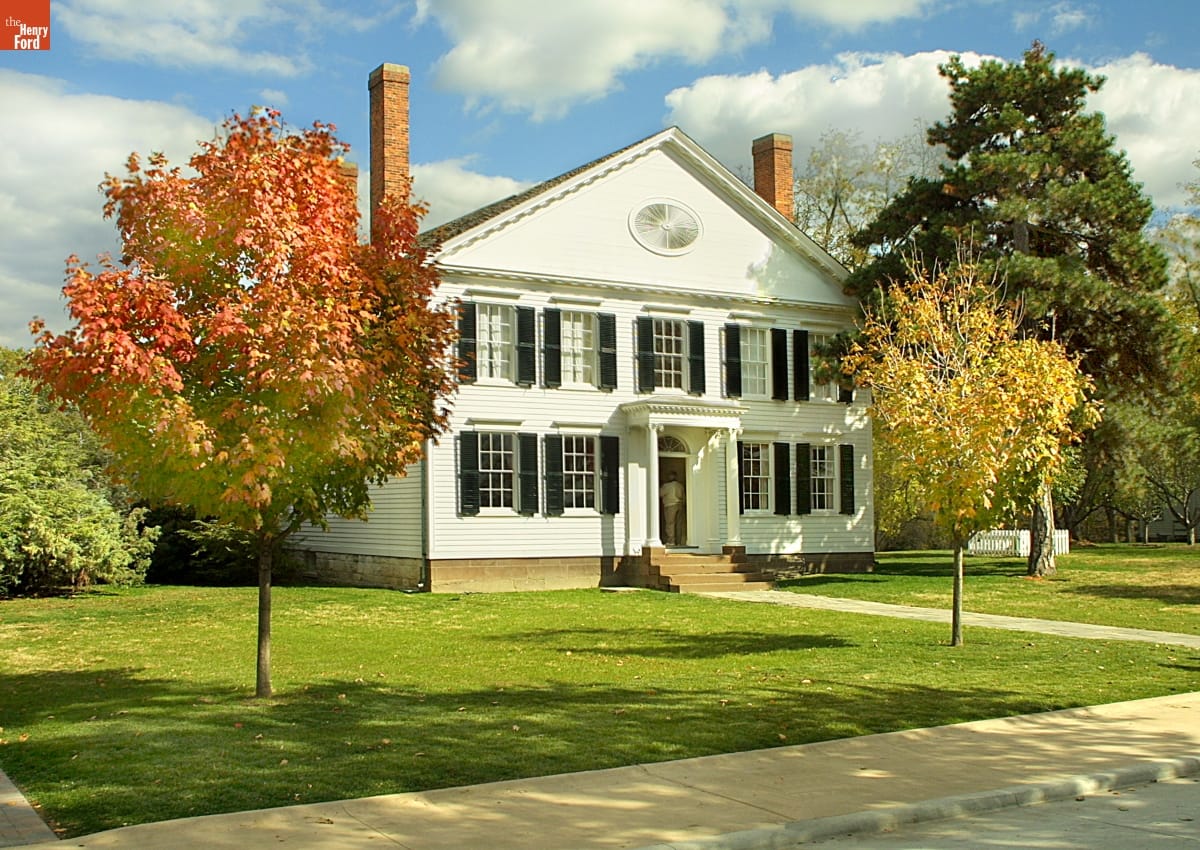 Artifact
Noah Webster Home
Noah Webster and his wife Rebecca had this comfortable New Haven, Connecticut, home built in their later years to be near family and friends, as well as the library at nearby Yale College. While living in this house, Webster published his famous American Dictionary of the English Language in 1828. His dictionary aimed to capture distinctively American words and spellings for the first time.
03
Related Content
 Set
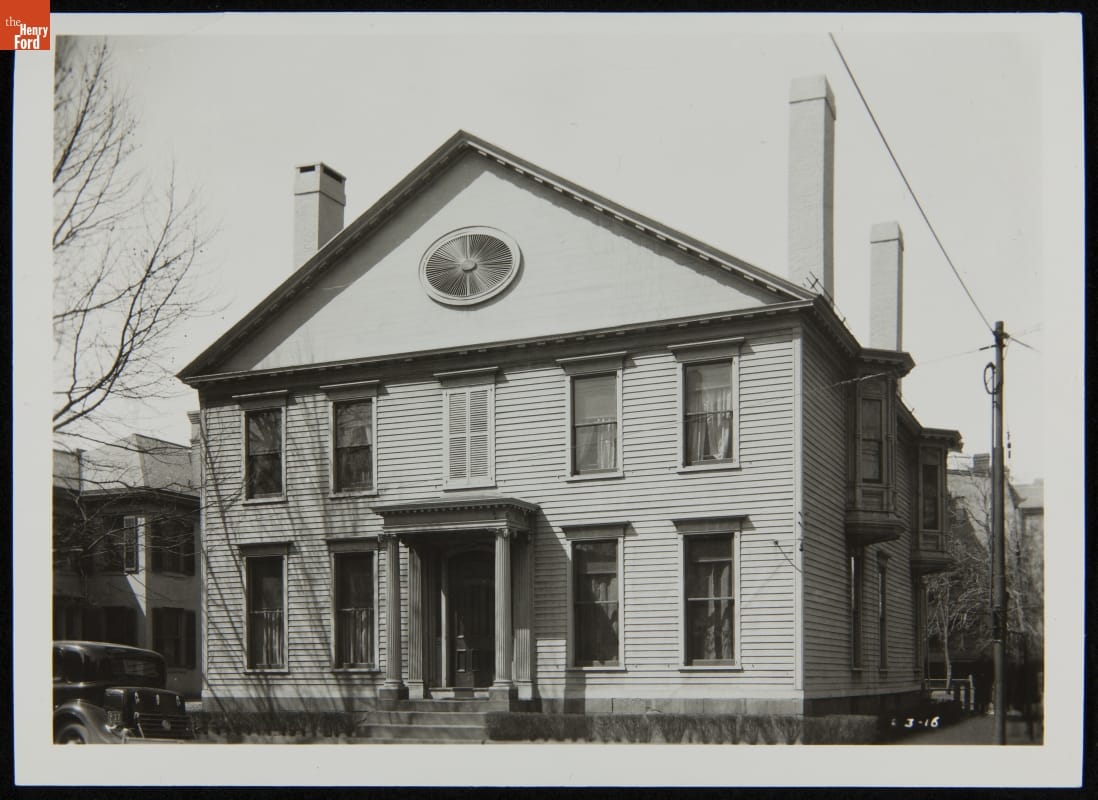
SetNoah Webster and his New Haven, Connecticut Home
- 11 Artifacts
This is textbook pioneer and spelling reformer Noah Webster's home on its original site in New Haven, Connecticut. Henry Ford admired Webster and recognized his house as an important piece of American history. Ford had the building moved to Greenfield Village - his historical outdoor museum in Dearborn, Michigan. This view documents architectural details, including second floor bay windows not moved with the house.