
1994 Mercury Sable Aluminum Intensive Sedan
THF173561 / 1994 Mercury Sable Aluminum Intensive Sedan
01
Artifact Overview
Ford Motor Company built 20 functional 1994 Mercury Sable sedans with unitized bodies and body panels made from lightweight aluminum. During tests in real-world driving conditions, the experimental cars rated better fuel economy and suffered less corrosion than their steel-bodied counterparts. Aluminum Sables never went into regular production, but lessons from the project informed Ford's aluminum F-150 pickup introduced 20 years later.
Artifact Details
Artifact
Automobile
Date Made
1994
Creators
Place of Creation
Location
Not on exhibit to the public.
Object ID
2016.13.1
Credit
From the Collections of The Henry Ford. Gift of Ford Motor Company.
Material
Steel (Alloy)
Aluminum (Metal)
Plastic
Glass (Material)
Rubber (Material)
Color
Grayish blue
Dimensions
Height: 54 in
Width: 71 in
Length: 192 in
Wheelbase: 106 in
Weight: 3035 lbs
Inscriptions
on front of automobile:
AIV
sticker on proper right, upper corner of windshield:
061W620
on back of automobile:
AIV / Aluminium / AIV / MERCURY
Keywords |
|---|
02
Related Content
 Set
SetCollecting Mobility
- 31 Artifacts
Modern fans might find the Mustang II undersized and underpowered. But its specifications were typical for the mid-1970s into the mid-1980s, when American automakers struggled with new safety, efficiency and emissions requirements, and against growing competition from high-quality foreign cars. Regardless, buyers embraced the smaller Mustang II and Ford sold more than 1.1 million of them from 1974-1978.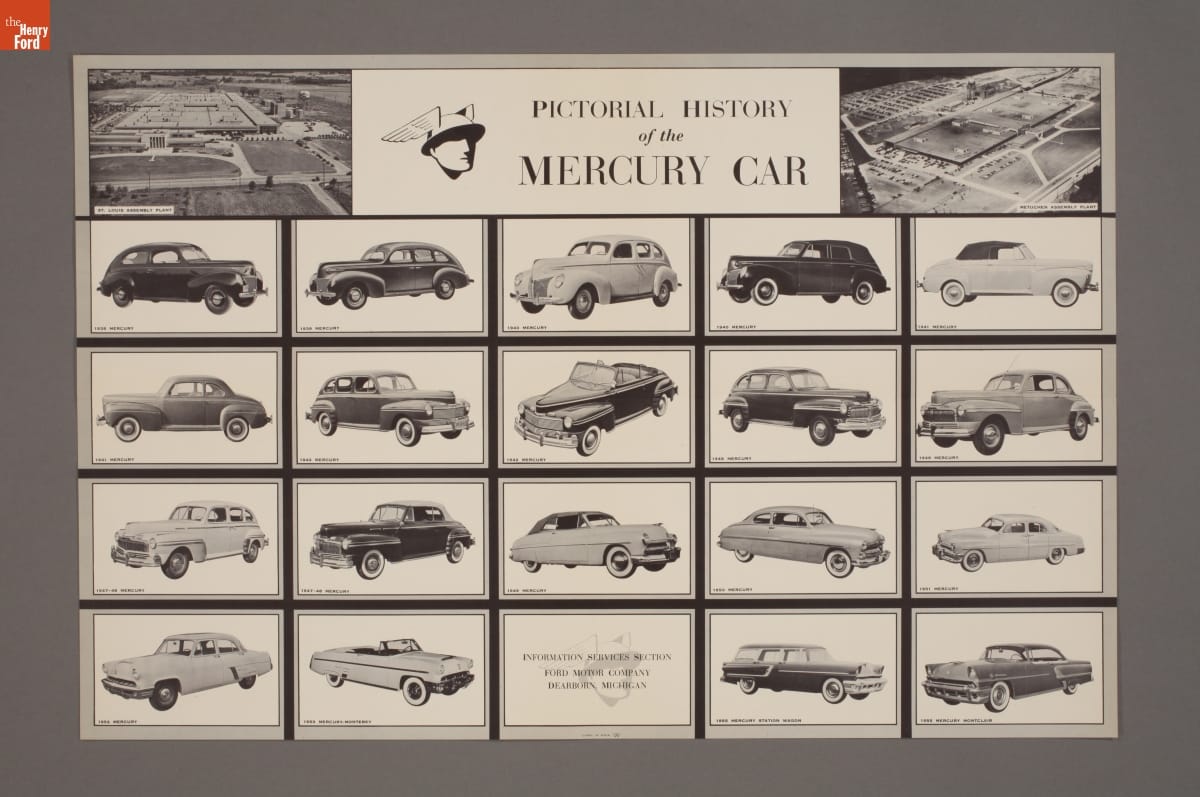 Set
SetMercury
- 23 Artifacts
Ford Motor Company introduced Mercury for 1939. The mid-price make fit neatly between the economical Ford and the extravagant Lincoln, and it broadened the company's product range to better compete with General Motors and Chrysler. In the decades that followed, Mercury offered distinctive sedans, station wagons, muscle cars, and minivans. But the 21st century brought slowing sales and shifting priorities, and Mercury was discontinued in 2011.