
Amelia Earhart with Fellow Pilots Competing at the First Women's Air Derby, August 1929
THF256262 / Amelia Earhart with Fellow Pilots Competing at the First Women's Air Derby, August 1929
01
Artifact Overview
The inaugural Women's Air Derby of 1929 was the first all-female air race in the United States. Most of the 20 competitors suffered some misfortune during the race from Santa Monica to Cleveland, but none was worse than the accident that claimed Marvel Crosson's life. Louise Thaden won the event with a time of 20 hours, 19 minutes, 4 seconds.
Artifact Details
Artifact
Photographic print
Subject Date
August 1929
Collection Title
Location
Not on exhibit to the public.
Object ID
70.12.3.1
Credit
From the Collections of The Henry Ford.
Material
Paper (Fiber product)
Technique
Gelatin silver process
Color
Black-and-white (Colors)
Dimensions
Height: 8.25 in
Width: 10 in
Keywords |
|---|
02
Related Content
 Set
SetAmelia Earhart: Across the Atlantic and into the Headlines
- 40 Artifacts
Amelia Earhart, famous for the 1928 flight that made her the first woman to fly across the Atlantic Ocean, helped inaugurate transcontinental airline service in 1929. She posed with a Ford Tri-Motor in New York City's Pennsylvania Station. This early service had passengers traveling by train at night and by airplane during daylight. Total travel time to California was 51 hours.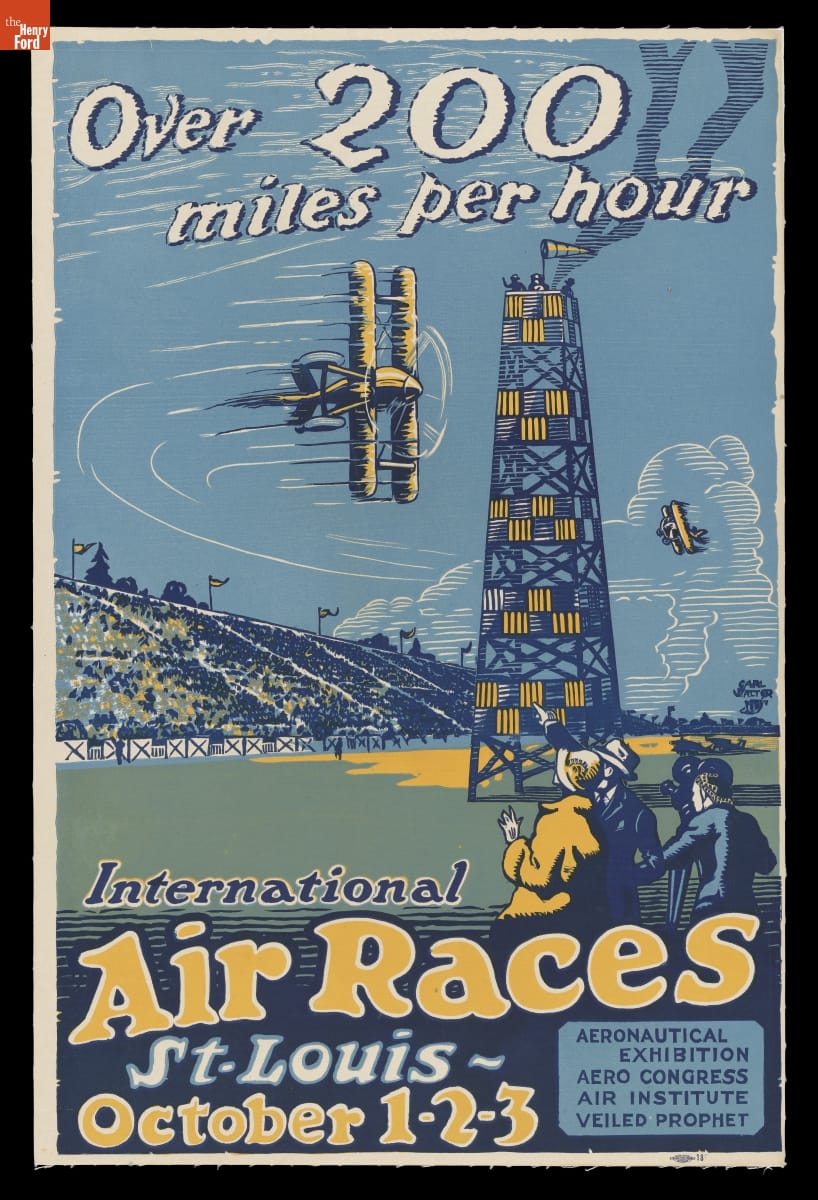 Set
SetExhibition Flying
- 22 Artifacts
Part showmanship and part salesmanship, early aviation meets and air shows improved airplane technology and promoted the aviation industry. Air races celebrated speed, with pilots competing against the clock or against each other on marked courses. Reliability tours focused on stamina, with prizes awarded for dependable flying on specific schedules. Exhibition flying launched great careers for some -- and cut them short for others.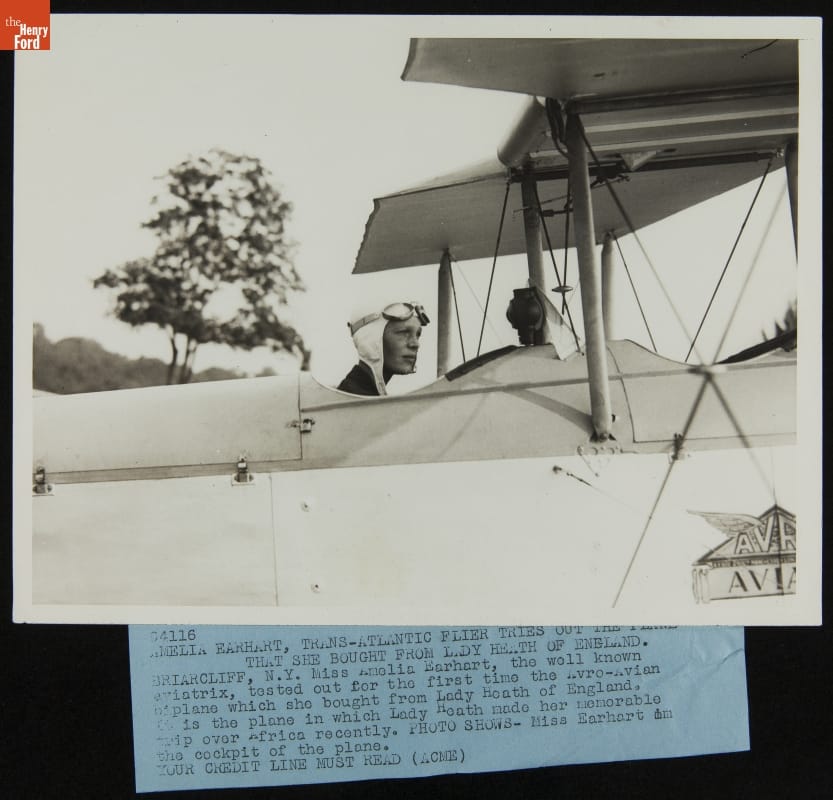 Set
SetPioneering Female Aviators
- 29 Artifacts
World-renowned Irish pilot Mary, Lady Heath, was an inspiration to Amelia Earhart. After Lady Heath took Earhart for a flight in her Avro Avian biplane, which Heath had flown solo from South Africa to Great Britain, Earhart was so impressed that she bought the aircraft and shipped it back to the United States. Soon Earhart's own fame eclipsed Lady Heath's.