
2016 Le Mans Class-winning Ford GT Race Car, On Loan from Ford Motor Company
THF176679 / 2016 Le Mans Class-winning Ford GT Race Car, On Loan from Ford Motor Company
01
Artifact Overview
Drivers Sebastien Bourdais, Joey Hand, and Dirk Muller won their class at Le Mans with this Ford GT in 2016 -- fifty years after Ford Motor Company's first victory in the French endurance race. The GT's carbon-fiber body, direct fuel injection V-6 engine, and flying buttress features were all state-of-the-art, but the car's look recalled the original GT40 of the 1960s.
Artifact Details
Artifact
Racing car
Date Made
2016
Subject Date
2016
Creators
Location
at Henry Ford Museum in Driven to Win: Racing in America
Object ID
IL.274.1
Material
Metal
Plastic
Rubber (Material)
Color
Multicolored
Specifications
Make & Model: 2016 Ford GT (sports car racing)
Maker: Ford Motor Company, Dearborn, Michigan, and Multimatic Motorsports, Markham, Ontario, Canada
Engine: Ford V-6, double overhead cams, twin turbochargers, 213.5 cubic inches
Transmission: 6-speed semi-automatic
Height: 43.5 inches
Wheelbase: 106.5 inches
Width: 79 inches
Overall length: 187.5 inches
Weight: 2646 pounds
Horsepower: 500+
Pounds per horsepower: 5.3
Competition History: Winner, GTE Pro Class, 2016 24 Hours of Le Mans, Le Mans, France
Keywords |
|---|
02
Related Content
 Set
SetRacing
- 50 Artifacts
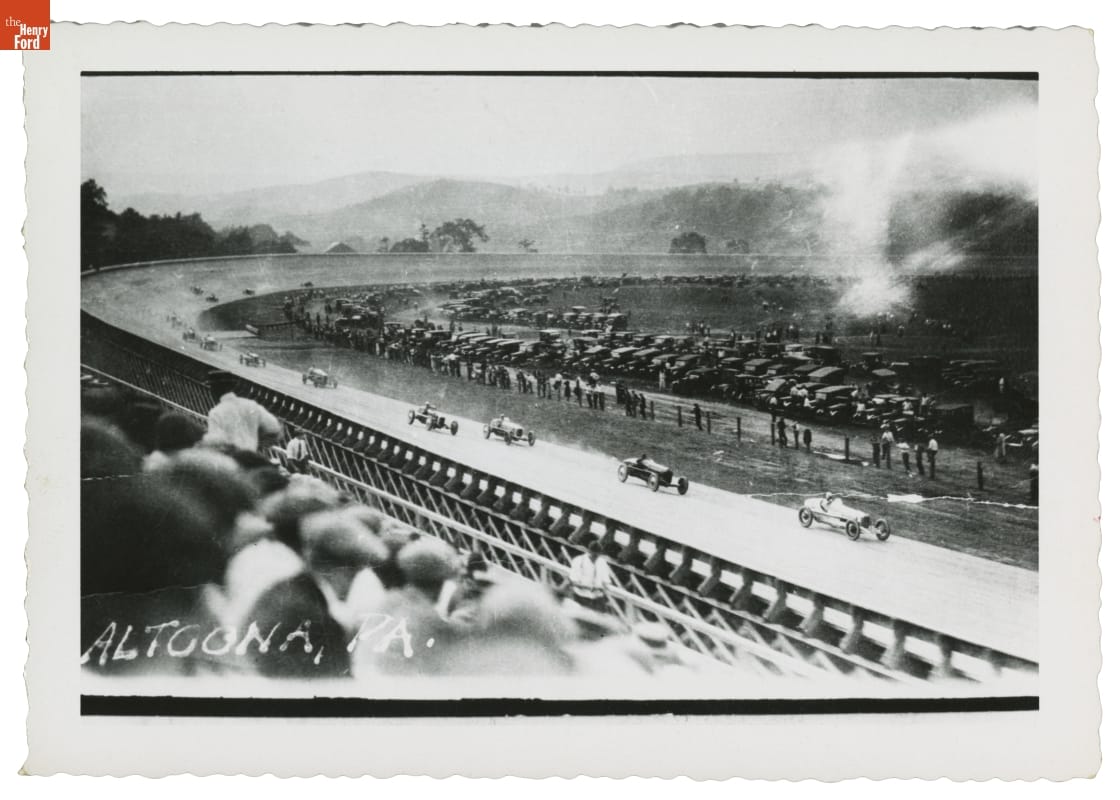
As automobile racing speeds increased, repurposed dirt horse tracks became inadequate. In the 1910s promoters turned to wooden boards, which provided a smooth road surface and were less expensive than bricks or concrete. But rotting wood required frequent replacement. Improvements in concrete and asphalt made board tracks obsolete in the 1930s. The 1.25-mile board track at Altoona, Pennsylvania, operated from 1923-1931.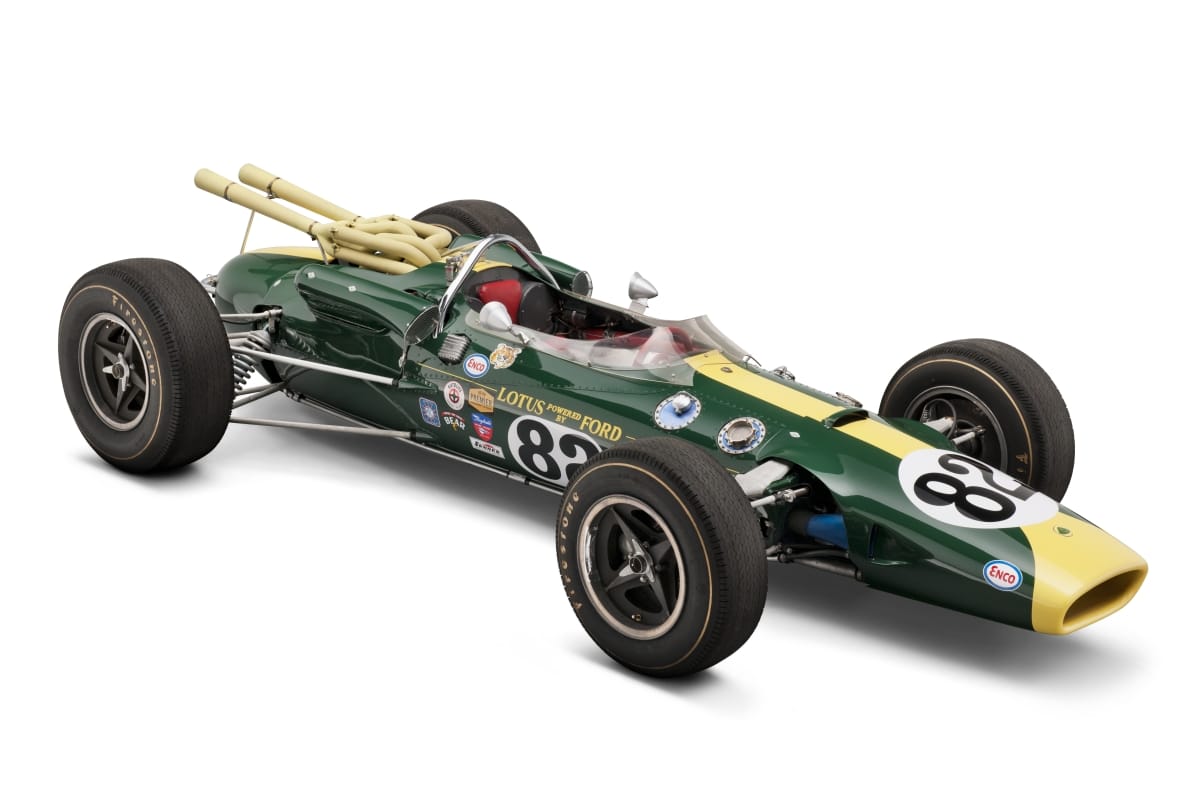 Set
SetRace Cars of Driven to Win
- 23 Artifacts
Scotsman Jim Clark won the Indianapolis 500 with this rear-engine car in 1965. After his victory, a traditional front-engine car never won that race again. The Lotus-Ford combined a European Formula One-inspired lightweight chassis with a big Ford V-8 engine. The Lotus-Ford's success effectively killed the traditional Indy roadster and established a new design for American race cars. article
Driven to Win: Sports Car Performance Center
The Sports Car Performance Center section of our new racing exhibit, Driven to Win: Racing in America, is racing research and development on steroids.