
Fish Pond Game, 1890-1900
THF91842 / Fish Pond Game, 1890-1900
01
Artifact Overview
As color printing technologies improved and became more affordable in the second half of the nineteenth century, many book publishers also began printing toys and games. The McLoughlin Bros. publishing firm patented its version of the "fish pond game" in 1890. Using small wooden poles, players hooked multicolored fish from the "pond." A number printed on each fish indicated its value as competitors vied for the best catch.
Artifact Details
Artifact
Game
Date Made
1890-1900
Creators
Place of Creation
Location
Not on exhibit to the public.
Object ID
85.31.1
Credit
From the Collections of The Henry Ford.
Material
Cardboard
Paper (Fiber product)
Brass (Alloy)
String (Fiber product)
Technique
Lithography
Dimensions
Height: 2 in
Width: 17.55 in
Length: 8.15 in
Inscriptions
NEW / AND / IMPROVED / FISH POND / GAME
Keywords |
|---|
02
Related Content
 Set
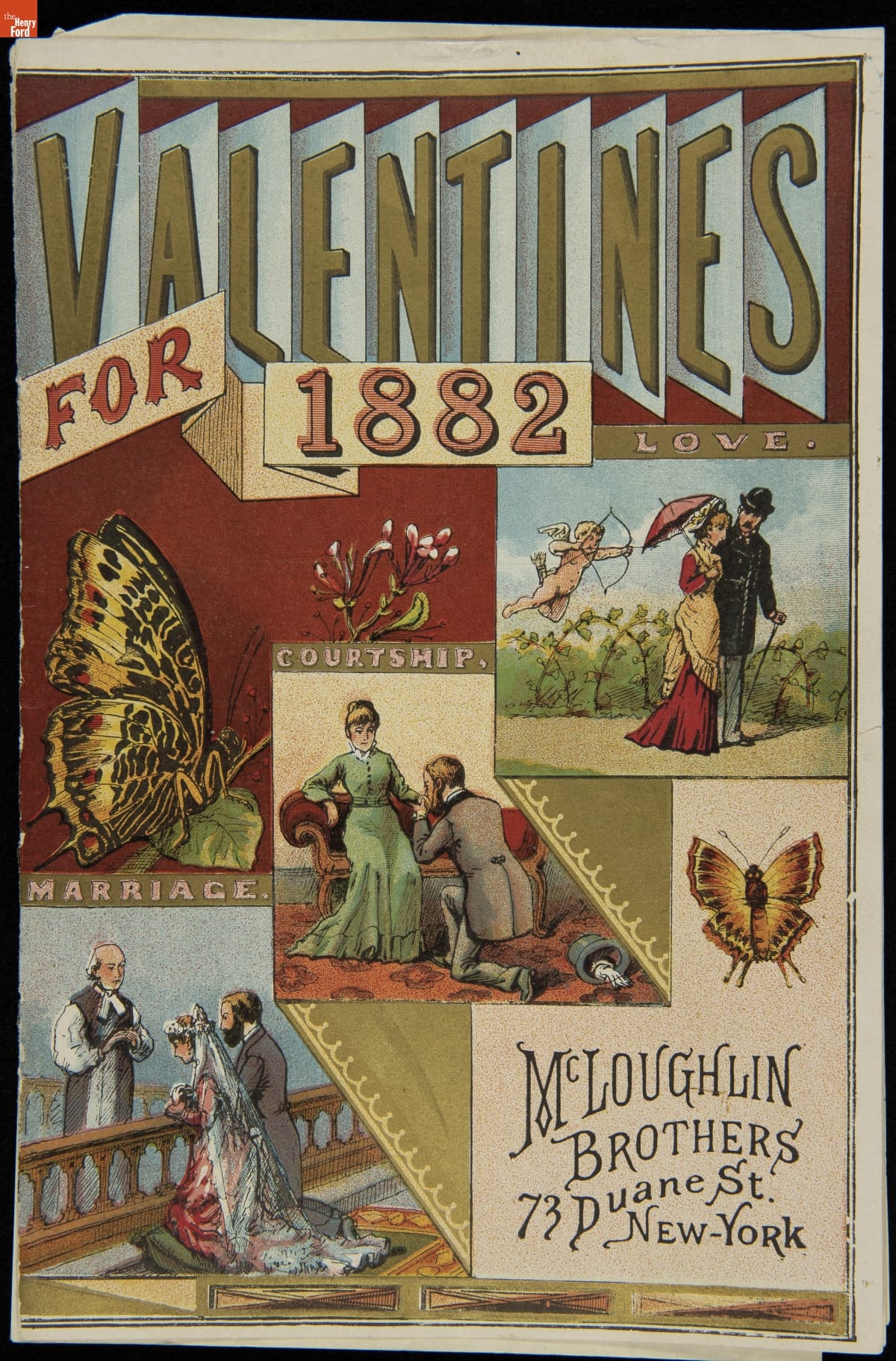
SetMcLoughlin Bros. - Color Printing Pioneers
- 11 Artifacts
John and Edmund McLoughlin's publishing firm became well-known in the mid-1800s for its early adoption and skillful use of new color printing techniques. Realizing success in the emerging market for children's books, the brothers expanded their product line to include toys and games. Products bearing the McLoughlin Bros. name remained popular even after the company’s acquisition by Milton Bradley in 1920. Set
SetThinking Inside the Box: Board Games in America
- 18 Artifacts
Board games have engaged Americans in friendly competition for two hundred years. Reaching their height of popularity from the late 1800s to the mid-1900s, board games remain a widespread leisure activity. Colorful graphics and a playful purpose belie their cultural significance, but a closer look reveals important shifts in American society.