
Andrew Carnegie Bookplate, circa 1915
THF291248 / Andrew Carnegie Bookplate, circa 1915
01
Artifact Overview
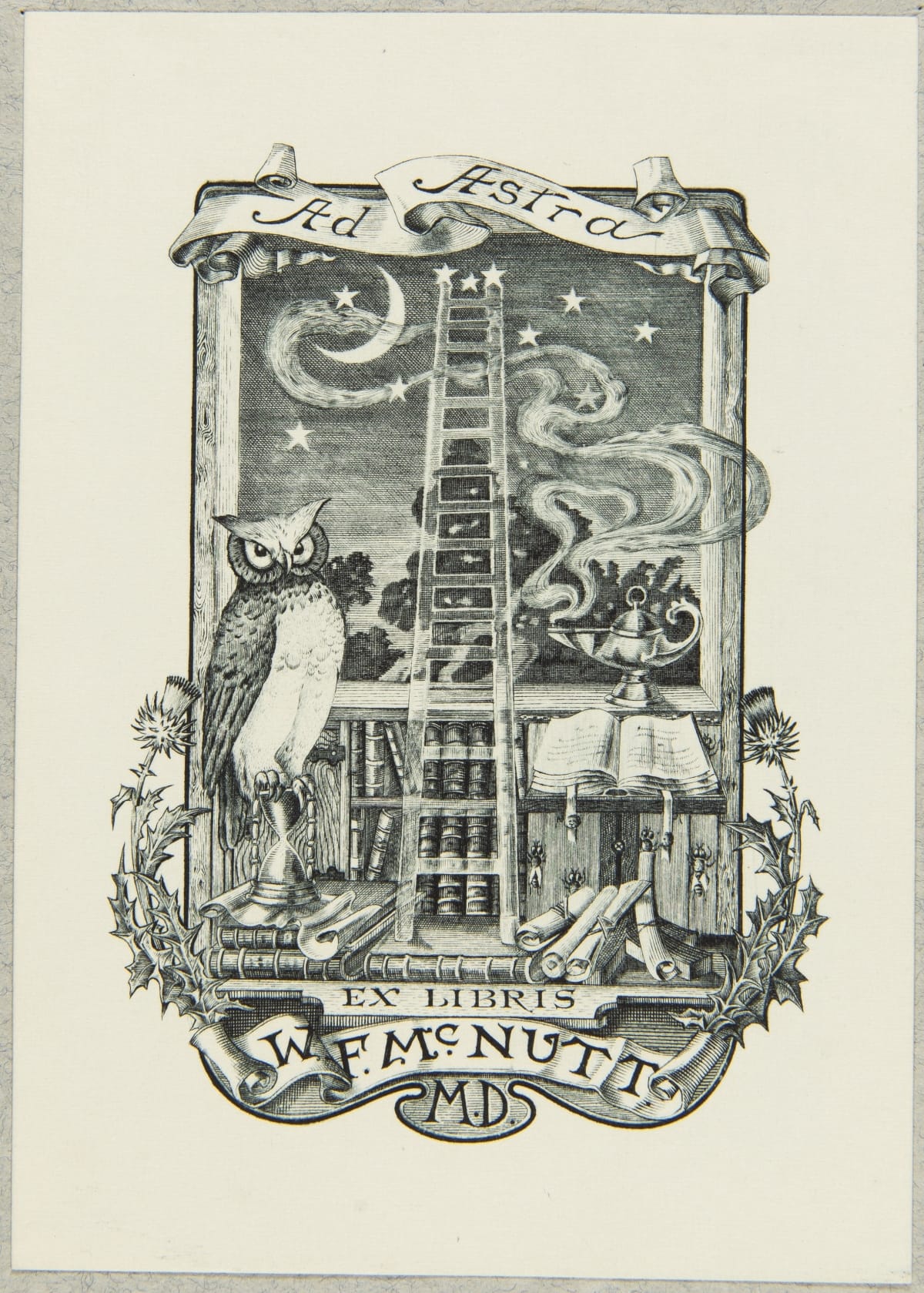
Bookplates show ownership, but they can also tell us more. Often pasted on the inside of a book's front cover or endpaper, these printed labels contain the owner's name and sometimes the words "ex-libris" (Latin for "from the library of"). Coats of arms, crests, other decorative images, poems, mottoes, and even font type provide insight into the beliefs, passions, and interests of the book's owner.
Artifact Details
Artifact
Bookplate
Date Made
circa 1915
Collection Title
Location
By Request in the Benson Ford Research Center
Object ID
RC.1.2
Credit
From the Collections of The Henry Ford.
Material
Paper (Fiber product)
Technique
Printing (Process)
Color
Black-and-white (Colors)
Tan (Color)
Dimensions
Height: 4 in (bookplate)
Width: 3 in (bookplate)
Height: 8 in (mount)
Width: 6 in (mount)
Inscriptions
on front:
"Let There Be Light" / ANDREW CARNEGIE
Keywords |
|---|
02
Related Content
 Set
SetEx Libris
- 26 Artifacts
Bookplates, or ex libris, were commonly used in the late 19th and 20th centuries to mark ownership of books and to express personal style. The bookplates in this set -- only a sampling of those in the collection of The Henry Ford -- capture common design trends, as well as the individual tastes of the influential people who used them. article
Carnegie Libraries: Democratizing Knowledge
Free public libraries spread during the early 20th century, coinciding with new town developments. Learn about Andrew Carnegie's contribution to the growth of these buildings across America.