
Gunsolly Carding Mill Relocation Site during the Greenfield Village Restoration Project, October 2002
THF19218 / Gunsolly Carding Mill Relocation Site during the Greenfield Village Restoration Project, October 2002
01
Artifact Overview
By 2000, Greenfield Village began showing its age. Buildings and crumbling infrastructure desperately needed repair. Museum planners envisioned a revitalized village. They created themed "Historic Districts" by relocating and refurbishing the historic structures. Workers repaved streets and upgraded water, sewer, electric, and gas lines. In June 2003, nine months after restoration began, visitors passed through a new entrance into a reborn Greenfield Village.
Artifact Details
Artifact
Digital photograph
Date Made
October 2002
Subject Date
October 2002
Collection Title
Location
By Request in the Benson Ford Research Center
Object ID
EI.1929.4701
Credit
From the Collections of The Henry Ford.
Color
Multicolored
Dimensions
Height: undefined in
Width: undefined in
Keywords |
|---|
02
Related Artifacts
 Artifact
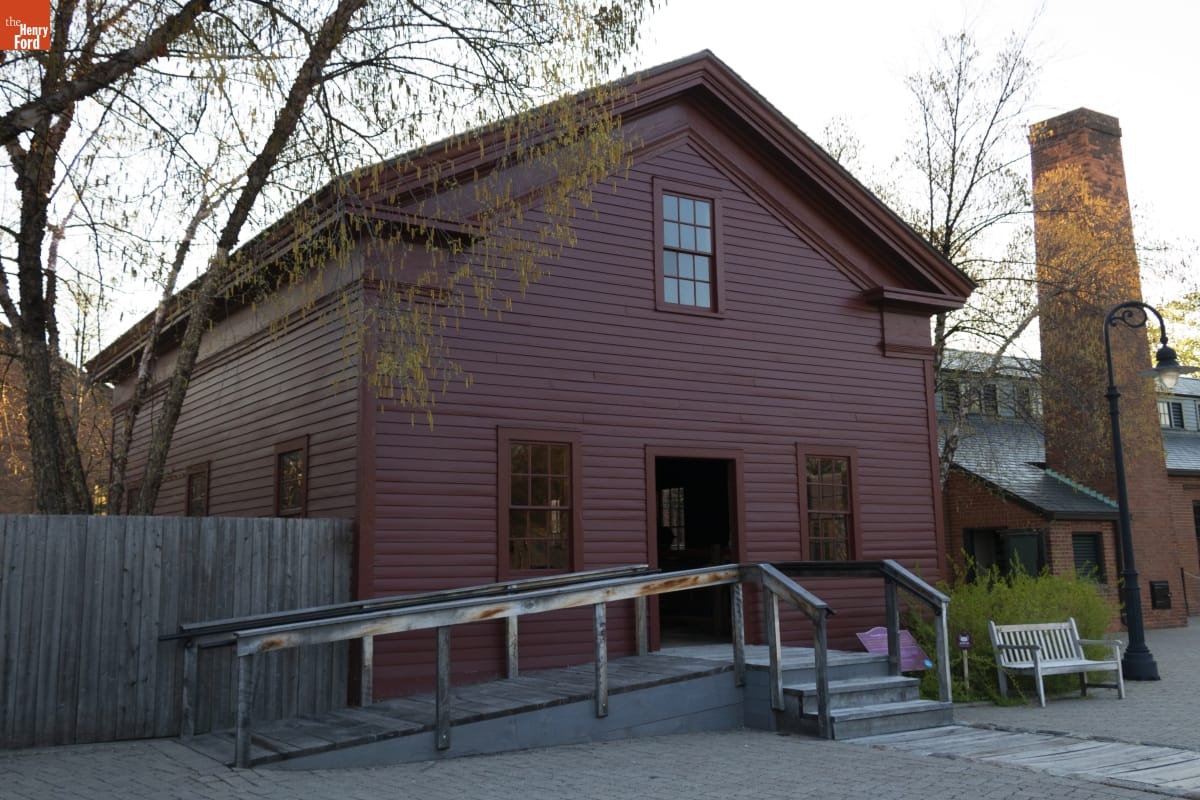
Gunsolly Carding Mill
John Gunsolly operated this water-powered carding mill as well as a saw and cider mill on the Middle Rouge River near Plymouth, Michigan, beginning in the 1850s. Area farmers brought their wool to this mill to have it carded (combed) so it could be spun into thread.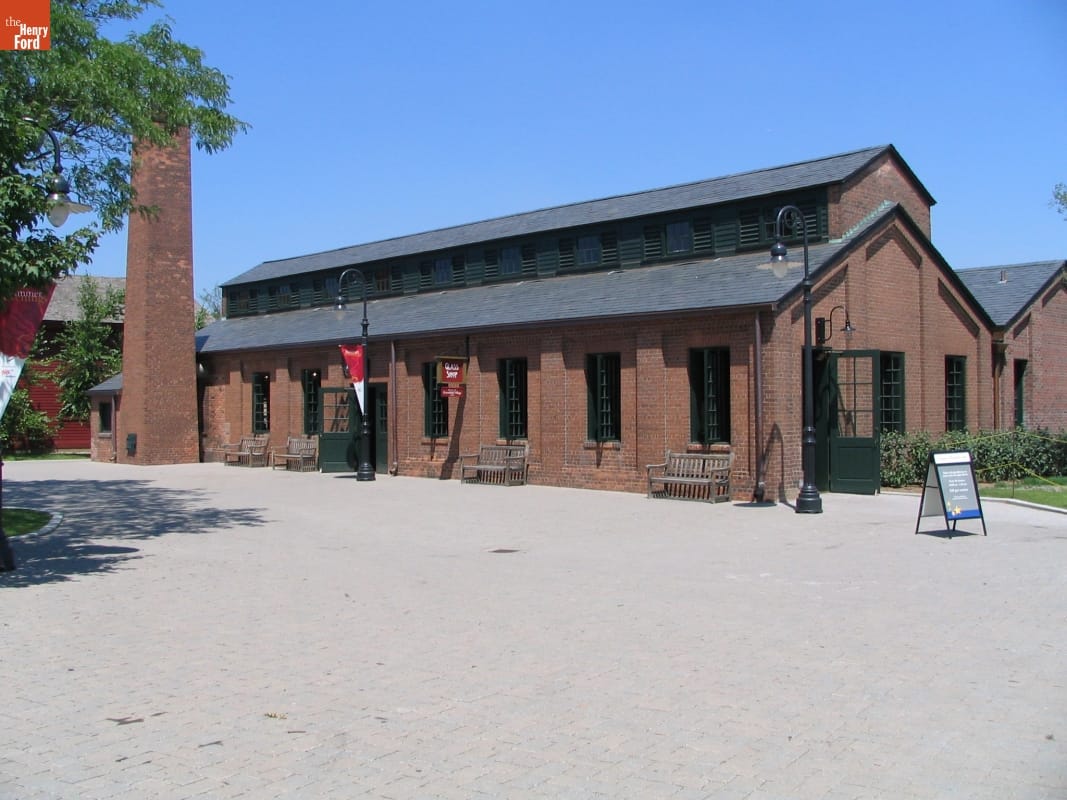 Artifact
Glass Shop
The Glass Shop was constructed in 1930 to demonstrate the art of glass making as practiced in nineteenth century America. It was modeled after the Boston and Sandwich Glass House, located in Cape Cod, Massachusetts. In 2005, the shop was rebuilt, enlarged and updated with modern equipment. Today, our artisans create up to 10,000 pieces of historic and contemporary Studio Glass annually.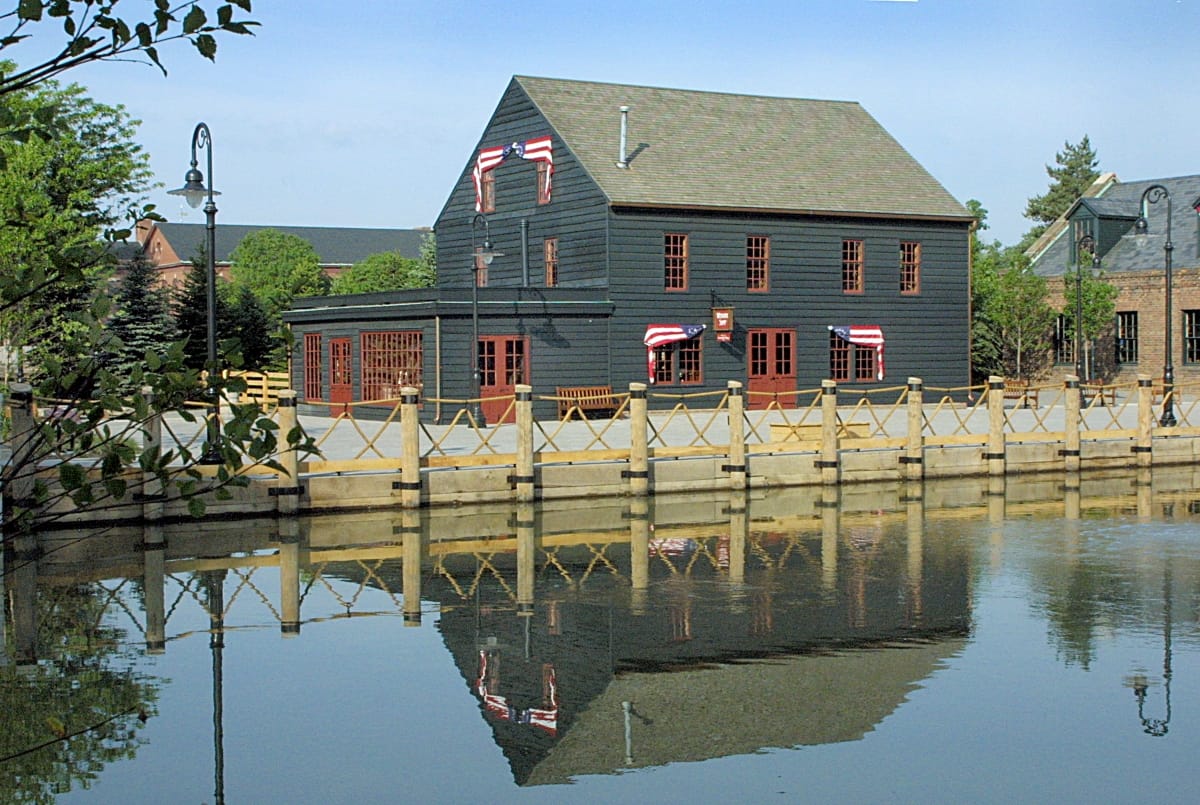 Artifact
Weaving Shop
The Greenfield Village Weaving Shop demonstrates the evolution of textile production from the colonial home and craft shop, through the Industrial Revolution to commercial factory. Housed in a converted 1840s Georgia cotton mill, the Weaving Shop contains a number of working looms, including one of the few operating mechanical Jacquard looms in North America.