
Paving Christie Street during the Greenfield Village Restoration Project, April 2003
01
Artifact Overview
By 2000, Greenfield Village began showing its age. Buildings and crumbling infrastructure desperately needed repair. Museum planners envisioned a revitalized village. They created themed "Historic Districts" by relocating and refurbishing the historic structures. Workers repaved streets and upgraded water, sewer, electric, and gas lines. In June 2003, nine months after restoration began, visitors passed through a new entrance into a reborn Greenfield Village.
Artifact Details
Artifact
Digital photograph
Date Made
April 2003
Subject Date
April 2003
Collection Title
Location
By Request in the Benson Ford Research Center
Object ID
EI.1929.6229
Credit
From the Collections of The Henry Ford.
Color
Multicolored
Dimensions
Height: undefined in
Width: undefined in
Keywords |
|---|
02
Related Artifacts
 Artifact
Sir John Bennett
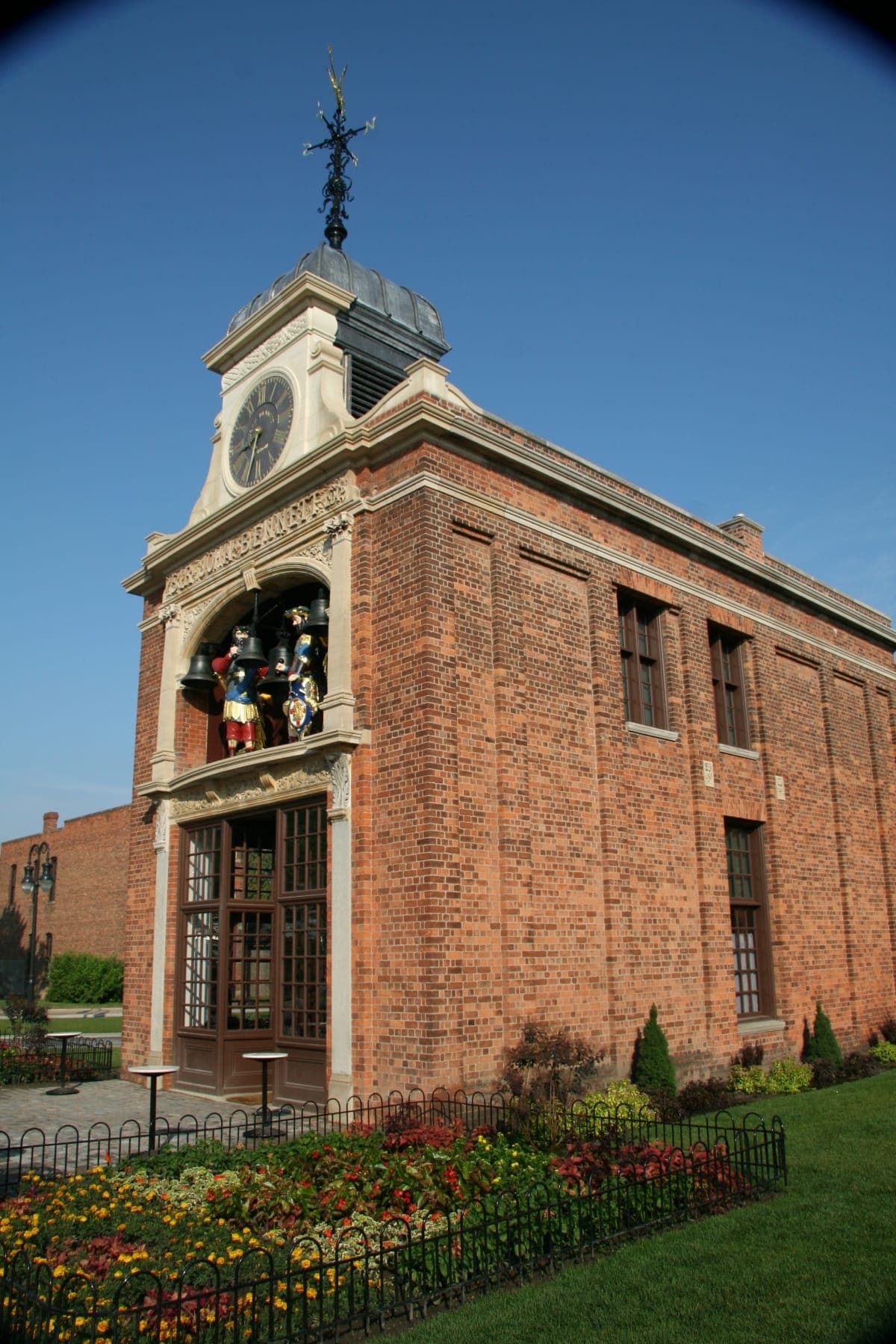
Sir John Bennett's clock, watch and jewelry store in London, England, originally stood five stories. Mr. Ford was especially attracted to the Gog and Magog figures, who strike the clock. Henry Ford, a watch enthusiast, purchased the building for his historical village in 1928. Village architect Edward Cutler reassembled the structure in a two-story scale, making it compatible with other buildings in the Village.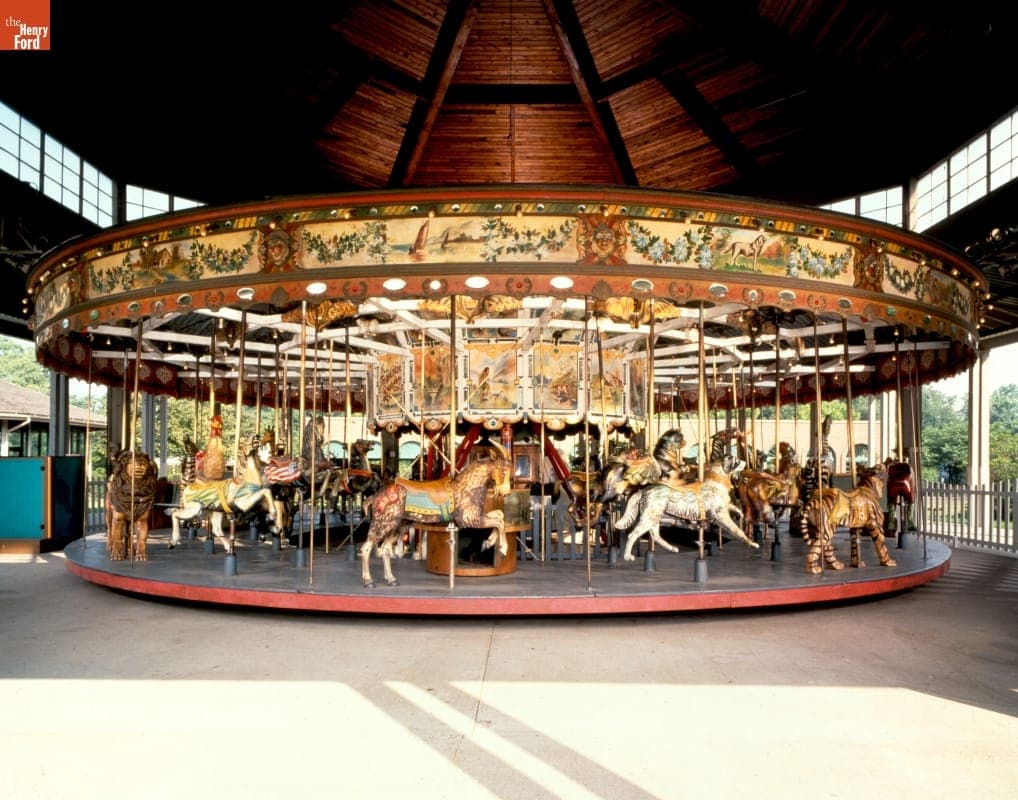 Artifact
Herschell-Spillman Carousel
Colorful carousels were at the height of their popularity during the early 1900s and could be found all across America in amusement parks, city parks, and seaside resorts. Built in 1913, this "menagerie" carousel's hand-carved animals include storks, goats, zebras, dogs, and even a frog. Although its original location is uncertain, this carousel operated in Spokane, Washington, from 1923 to 1961.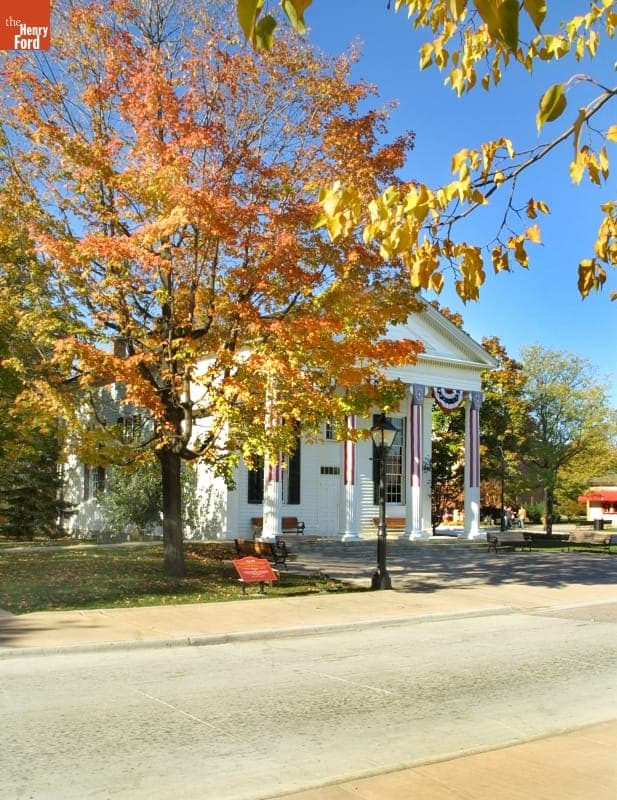 Artifact
Greenfield Village Town Hall
An iconic sight in New England communities, the town hall was the place where local citizens would come together to participate in town meetings. These buildings also became gathering places for political elections, theatrical performances, and social events. Built in Greenfield Village in 1929, this town hall was patterned after New England town halls of the early 1800s.