
Paving Walkways near Plympton Home and Farris Windmill, Greenfield Village Restoration Project, April 2003
THF10797 / Paving Walkways near Plympton Home and Farris Windmill, Greenfield Village Restoration Project, April 2003
01
Artifact Overview
By 2000, Greenfield Village began showing its age. Buildings and crumbling infrastructure desperately needed repair. Museum planners envisioned a revitalized village. They created themed "Historic Districts" by relocating and refurbishing the historic structures. Workers repaved streets and upgraded water, sewer, electric, and gas lines. In June 2003, nine months after restoration began, visitors passed through a new entrance into a reborn Greenfield Village.
Artifact Details
Artifact
Digital photograph
Date Made
April 2003
Subject Date
April 2003
Collection Title
Location
By Request in the Benson Ford Research Center
Object ID
EI.1929.6520
Credit
From the Collections of The Henry Ford.
Color
Multicolored
Dimensions
Height: undefined in
Width: undefined in
Keywords |
|---|
02
Related Artifacts
 Artifact
Farris Windmill
The Farris windmill is said to be the oldest windmill in the United States. It was built in the mid-1600s and operated in Cape Cod, Massachusetts. The Farris family ran it for three generations, starting in 1782. The wind moved the sails of this windmill to operate the grain milling machinery inside. The stone first floor was added at Greenfield Village.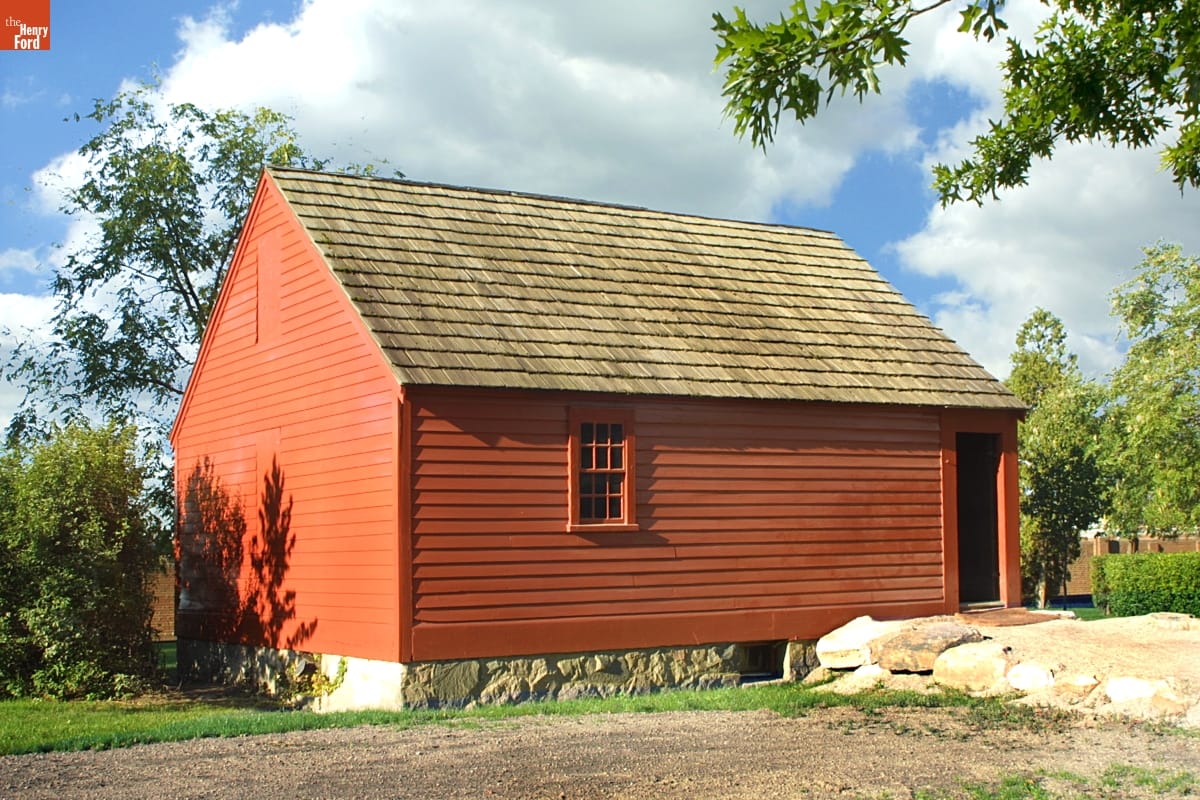 Artifact
Plympton Home
The Plympton House is one room with a loft. The central circular chimney was constructed first and the rest of the house was built around it. This design offered warmth from the harsh New England winters. The continual need to grow or make many of the things they needed left little time for luxuries for these early colonists.