
"Rover" the Dog outside Cotswold Barn in the Snow, Greenfield Village, January 1931
THF623050 / "Rover" the Dog outside Cotswold Barn in the Snow, Greenfield Village, January 1931
01
Artifact Overview
Henry Ford purchased a black Newfoundland puppy in 1930. The dog, named Rover, would help guard sheep at Greenfield Village's Cotswold Cottage. (Ford envisioned the interpretation of the cottage as the home of an English sheepherder.) The dog became a fixture in the Village. Rover was beloved by many: Gus Munchow--his trainer, Ford, and the schoolchildren of the Edison Institute.
Artifact Details
Artifact
Photographic print
Subject Date
12 January 1931
Collection Title
Location
Not on exhibit to the public.
Object ID
EI.1929.P.188.3600
Credit
From the Collections of The Henry Ford.
Material
Paper (Fiber product)
Technique
Gelatin silver process
Color
Black-and-white (Colors)
Dimensions
Height: 8.125 in
Width: 10 in
Keywords |
|---|
02
Related Artifacts
 Artifact
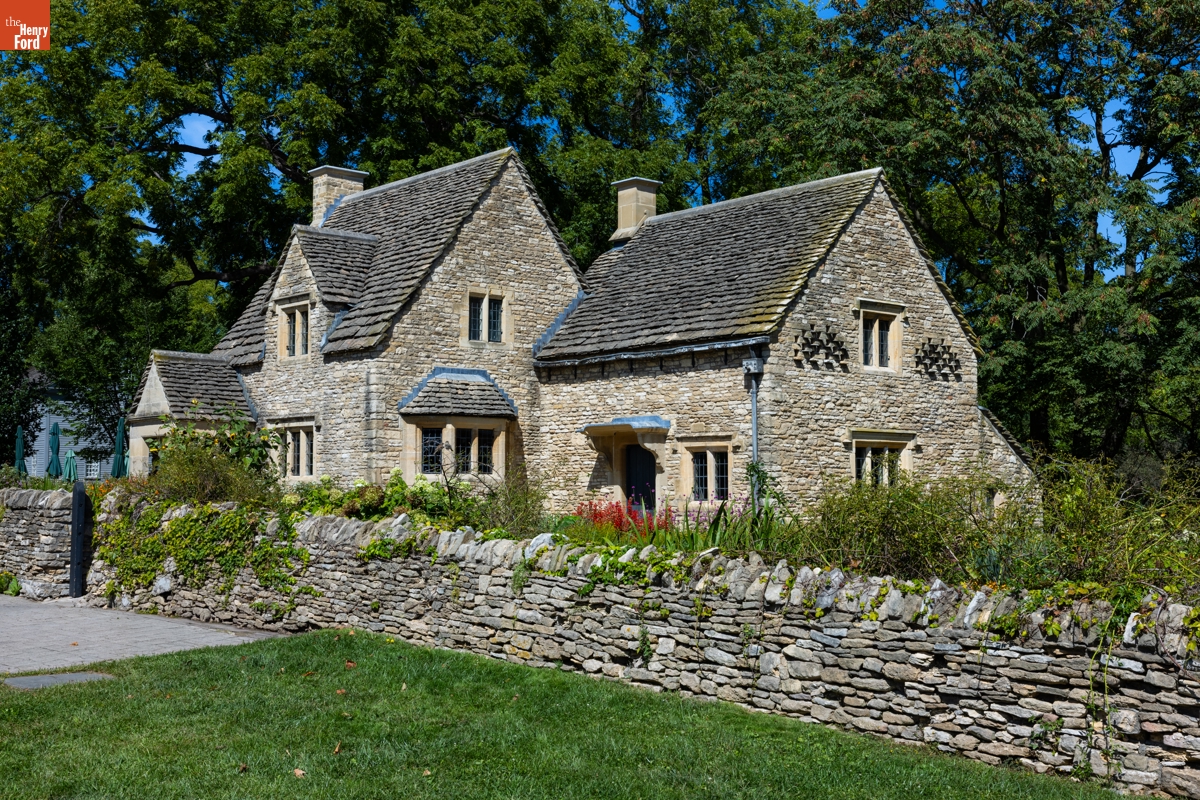
Cotswold Cottage
Cotswold Cottage is from the Cotswold Hills in southwest England. The Fords were attracted to the distinctive character of Cotswold buildings, which are characterized by the yellow-brown stone, tall gables, steeply pitched roofs, and stone ornamentation around windows and doors. Several decorative additions were made to the house in England, before dismantling and re-erecting it in Greenfield Village.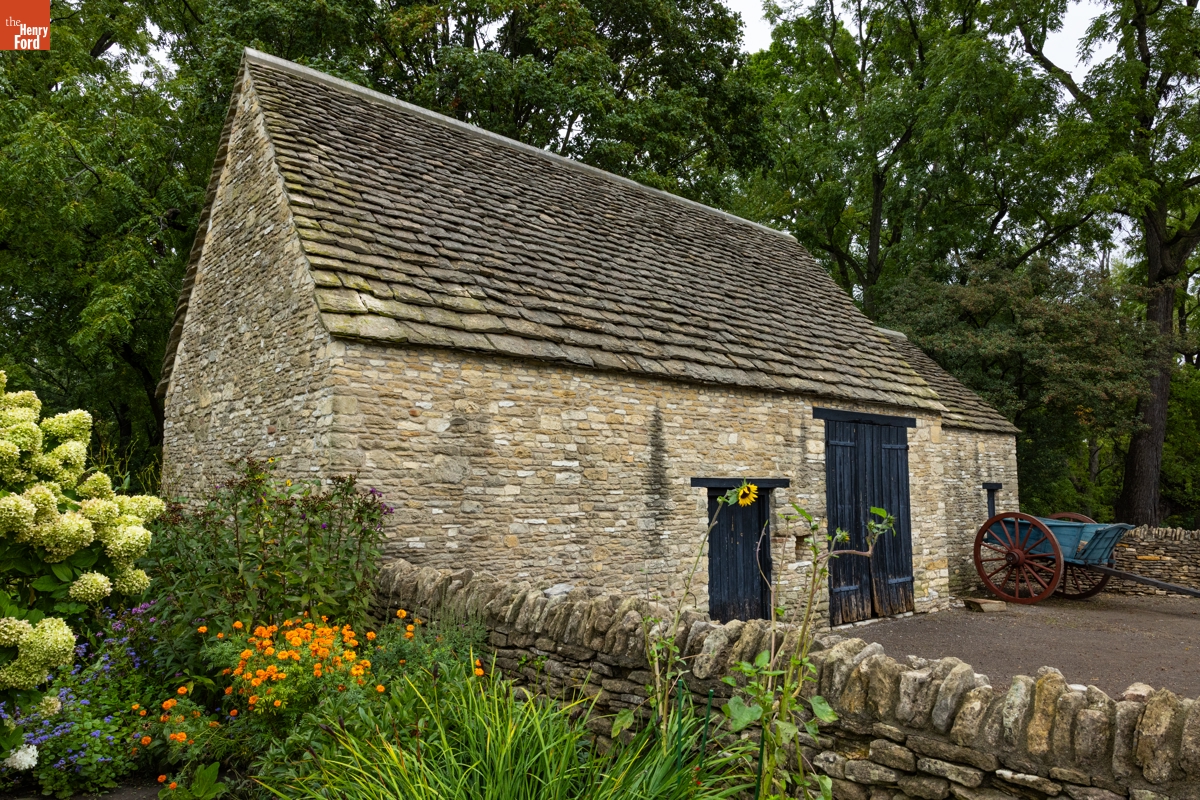 Artifact
Cotswold Stable
This barn and stable were part of the Cotswold Cottage original site. The larger portion was the barn, used for storing and threshing grain. The wide doors and high ceilings gave room for threshing with a flail, or storing a cart. The smaller portion was the stable, likely for a cow or ox. The low ceilings keep the stable warmer.
03
Related Content
 Set
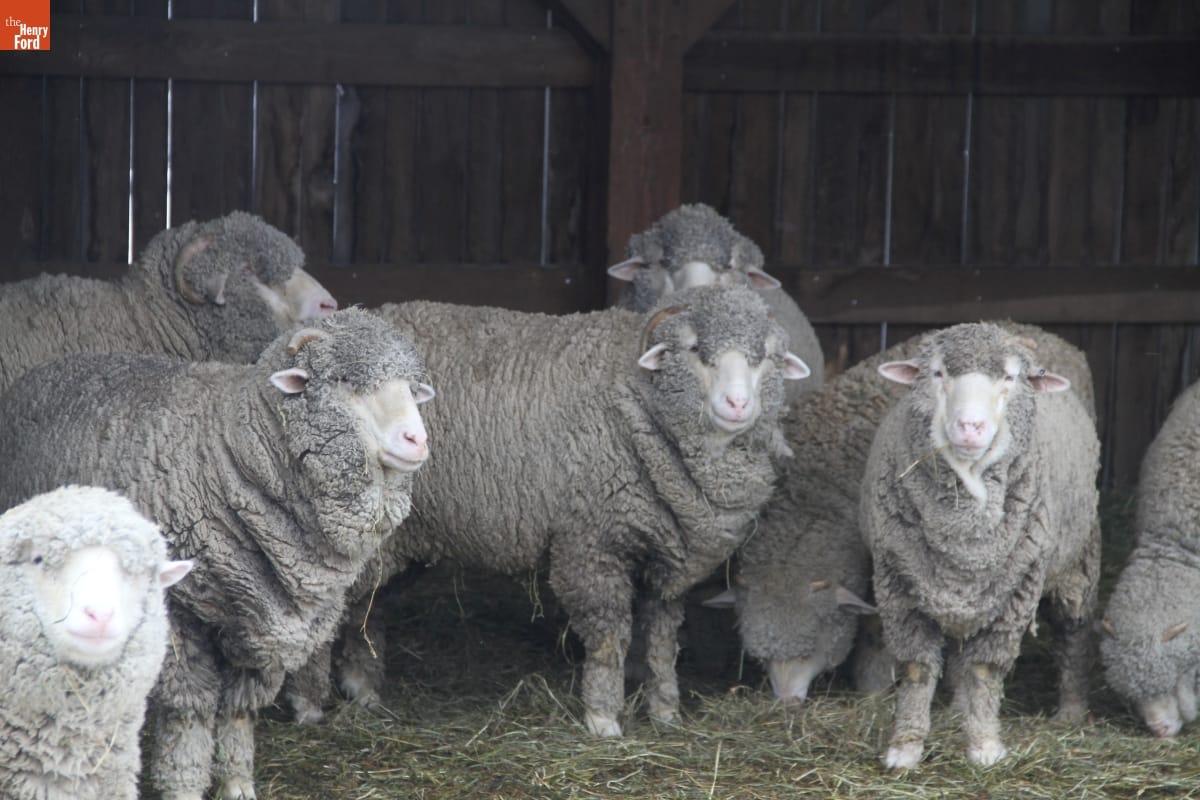
SetSheep
- 12 Artifacts
Sheep supply two items essential for human survival, wool for clothing and meat for food. This makes them a farm asset, but protecting sheep requires vigilance. Sheep are social animals with an instinct to move together as a flock. Shepherds use dogs to help protect their flock and herd animals from pens to pasture and back. The close bond conjures visions of a bucolic rural past, emphasizing human-animal relationships.